

Reviewed · BELéM TOURS
Belém: Lisbon 3-Hour Walking Tour
Belém tells Portugal’s seafaring story in stone. On this three-hour walk, you follow the Tagus River past military defenses, grand squares, and Manueline carvings linked to the Age of Discovery. Jerónimos Monastery and Belém Tower provide the main sights, while a warm Pastel de Belém gives the afternoon a very practical reward.
I like the included two-way tram ride, which saves you the trouble of arranging transport from central Lisbon, and I like the small group limit of 10. The main caution is the amount of historical explanation. Guides such as Nono have been praised for detail and humor, but some people found the talk too long or too fast, with one tour running well past its scheduled three hours.
In This Review
- Key points to know before you book
- Why Belém is the right place for a history walk
- Starting at Praça D. Pedro IV
- Taking the tram from Lisbon to Belém
- Reading the Manueline details at Jerónimos Monastery
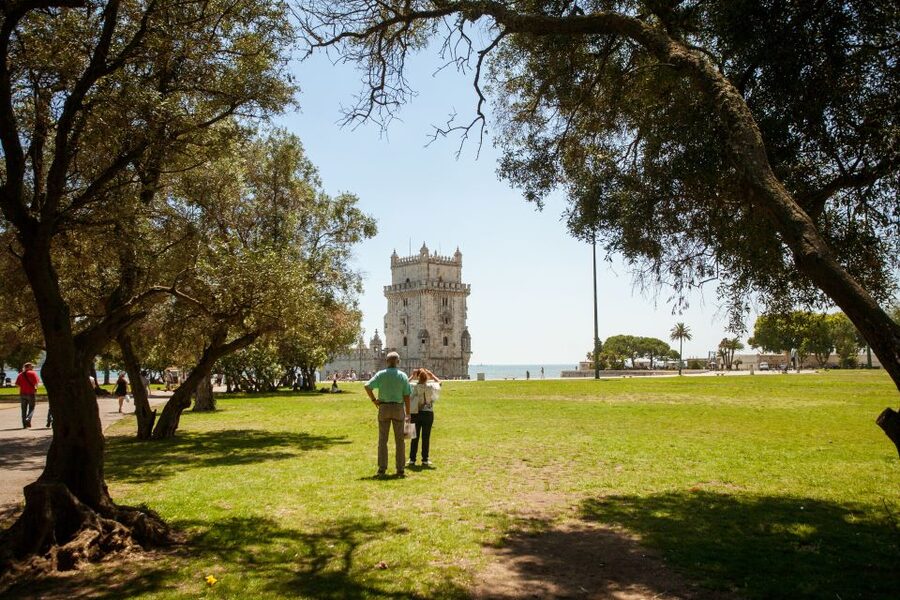
- Seeing Belém Tower beside the Tagus
- The Pastel de Belém stop
- How much history will you hear?
- What the $23 price really covers
- Who will enjoy this Belém walk?
- Should you book the Lisbon Spirit tour?
- FAQ
- Where does the tour meet?
- How do I identify the guide?
- How long does the activity last?
- What language is the tour conducted in?
- How large is the group?
- Is transport to Belém included?
- Is entry to Jerónimos Monastery included?
- Is entry to Belém Tower included?
- Is a Pastel de Belém included?
- What should I bring?
Key points to know before you book
- The tour begins in central Lisbon: Meet at Praça D. Pedro IV, beside the D. Maria II Theatre, then travel by tram to Belém.
- Jerónimos Monastery gets serious attention: Entry is included, and the Manueline stonework is a major part of the tour.
- Belém Tower is viewed from its riverside setting: Monument fees are not included except for the monastery, so confirm what your visit covers if you want to enter the tower.
- The pastry stop is built into the price: You receive one Pastel de Belém at the famous Fábrica de Pastéis de Belém.
- Expect a history-led walk: This suits you if you enjoy context, dates, and political background more than a quick photo tour.
- Wear proper shoes: The route lasts three hours, includes walking, and can become longer when the guide expands on the story.
Why Belém is the right place for a history walk
Belém sits beside the Tagus River, west of Lisbon’s central districts. Its importance grew during Portugal’s great maritime period, when ships left the riverfront for voyages that changed the country’s fortunes and its place in the world.
That story is not presented only through museums. It is built into the district’s churches, towers, paving, military works, and public spaces. You can look at the buildings and understand that Belém was meant to project power, faith, wealth, and national pride all at once.
The area was settled as far back as Paleolithic times, but the tour places most of its attention on the period when Lisbon was tied to ocean voyages and royal ambition. That makes Belém a useful contrast to the steep lanes and tiled façades of central Lisbon. Here, the spaces are broader and the monuments are larger, with the Tagus opening up beside them.
I like this setting because the walk has a clear theme. You are not simply moving from one sight to another. The river, the monastery, and the tower all connect to Portugal’s maritime past.
Still, this is not a light sightseeing stroll with only a few comments along the way. The guide may spend a long time setting up the political and religious background before you reach the most famous monuments. If you prefer to keep moving, you may find the opening portion slow.
More Walking Tours in Lisbon
- Lisbon: History, Stories and Lifestyle Walking Tour
★ 4.8 · 10,902 reviews - Best of Lisbon Small-Group Guided Walking Tour
★ 5.0 · 4,869 reviews - Lisbon: Food and Wine Small Group Walking Tour
★ 4.9 · 4,082 reviews
Starting at Praça D. Pedro IV
The meeting point is Praça D. Pedro IV, the large central square near the D. Maria II Theatre. This is a practical place to begin because it is easy to identify and puts you in central Lisbon before the ride to Belém.
Look for a guide carrying a black backpack with the Lisbon Spirit logo. That detail matters in a busy square, where several groups may be gathering at once. The tour is conducted in English, and the group is limited to 10 participants, which should make it easier to hear the guide and ask questions than on a large coach excursion.
The opening talk sets the stage for Belém. You can expect an explanation of Lisbon’s long past, the city’s connection to the Tagus, and Portugal’s period of maritime expansion. The guide may also discuss the people and institutions connected with the monuments you are about to see.
This is where the tour’s style becomes clear. Guides such as Nono have been praised for strong command of the subject, humor, and a broad account of Lisbon’s history. At the same time, one of the recurring practical concerns is pace. A guide with a great deal to say may speak quickly or leave too little space for questions.
If you need information repeated, ask early. A small group gives you a better chance to do so, and it may help you get more from the talk without feeling you must follow every date and name at once.
Taking the tram from Lisbon to Belém
Your ticket includes the tram ride from central Lisbon to Belém and the return trip. That is a useful part of the package, not just a minor extra. You do not need to arrange separate transport, and the tour begins with the group already together.
The tram also helps you understand the distance between Lisbon’s central core and Belém. The district is not simply another square around the corner. It is a separate historic area along the Tagus, and the ride gives the tour a natural transition from central Lisbon to the monuments west of the center.
The return tram trip is included as well. That makes the experience easier to fit into a day of sightseeing, since you finish with transport back toward central Lisbon rather than having to work out your own route.
The tour information does not provide a detailed tram timetable or a specific vehicle number, so check the available starting time when booking. You should also allow a little flexibility around the three-hour estimate. One participant found the experience ran about an hour and a half longer than planned, apparently because the guide gave extensive explanations.
Reading the Manueline details at Jerónimos Monastery
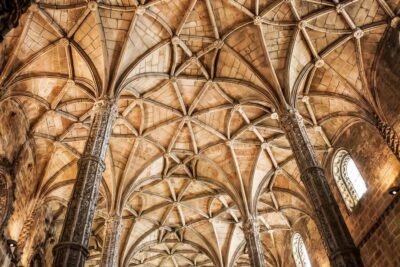
The Mosteiro dos Jerónimos is the architectural centerpiece of the walk. Its ornate Manueline style reflects Portugal’s maritime age through carved stone, religious symbols, and decorative details associated with exploration and royal power.
The monastery was originally home to the Hieronymite religious order. It was built by the Infante Henry the Navigator around 1459, according to the tour’s historical account. The building is also a UNESCO World Cultural Heritage site, so it is not merely a handsome church in a pretty district. It has international importance and a direct connection to the story Belém is meant to tell.
Monument entry to the monastery is included, which improves the value of the $23 price. The information provided does not spell out every interior area visited, but the tour places clear emphasis on the monastery itself, and the guide explains the people, period, tombs, and statues connected with it.
Give yourself time to look up from the guide and study the stonework. Manueline decoration can be easy to reduce to a quick photo, yet the details are the point. The monastery’s style was shaped by the era of discoveries, so the building works as both a religious site and a statement about Portugal’s wealth and reach.
The tradeoff is time. A guide who explains the monastery properly may spend longer inside than you would on your own. That is helpful if you want the story behind the carvings. It is less helpful if your priority is covering as many sights as possible.
One useful question to ask is how much time remains before moving on. That keeps you oriented, especially if the guide’s talk becomes dense. The small group format should make this easier than it would be with 30 or 40 people.
More Belém mornings:
- Lisbon: Jerónimos Monastery Entrance Ticket
★ 4.1 · 14,164 reviews - Private Lisbon Sightseeing Tuk-Tuk Tour: Alfama, Belém & More
★ 5.0 · 4,277 reviews - Age of Discoveries Walking Tour in Belém
★ 5.0 · 1,513 reviews - Bike Tours Lisbon – Center of Lisbon to Belém
★ 5.0 · 686 reviews
Seeing Belém Tower beside the Tagus
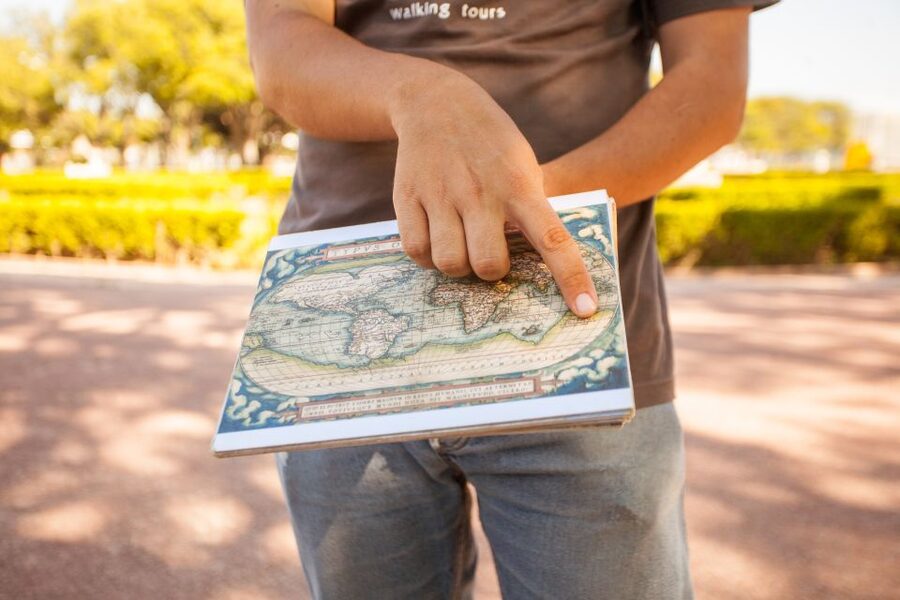
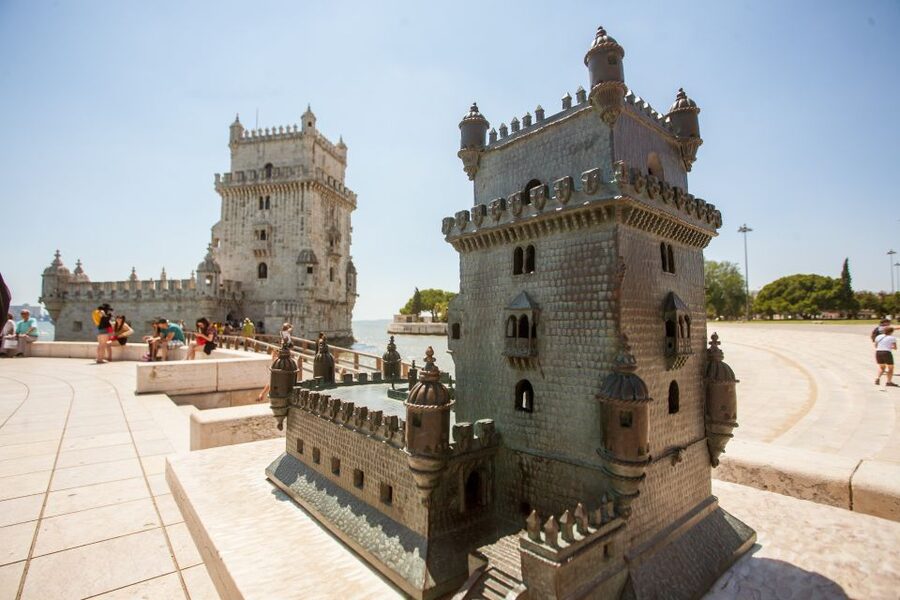
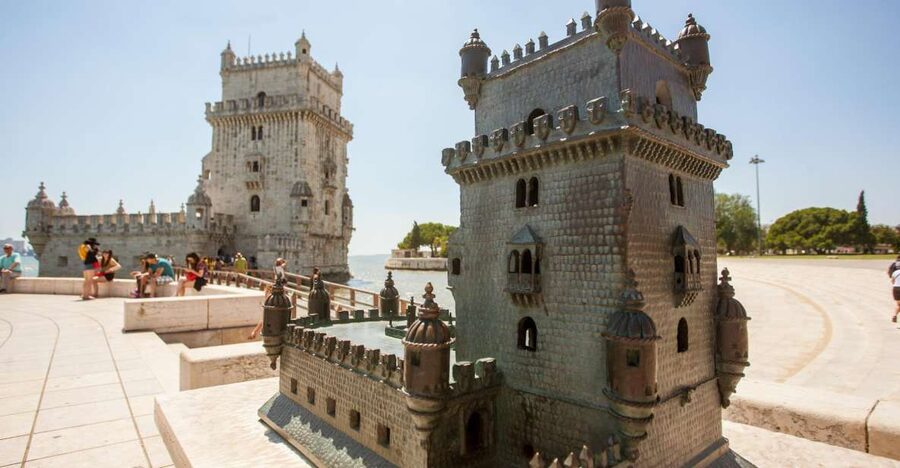
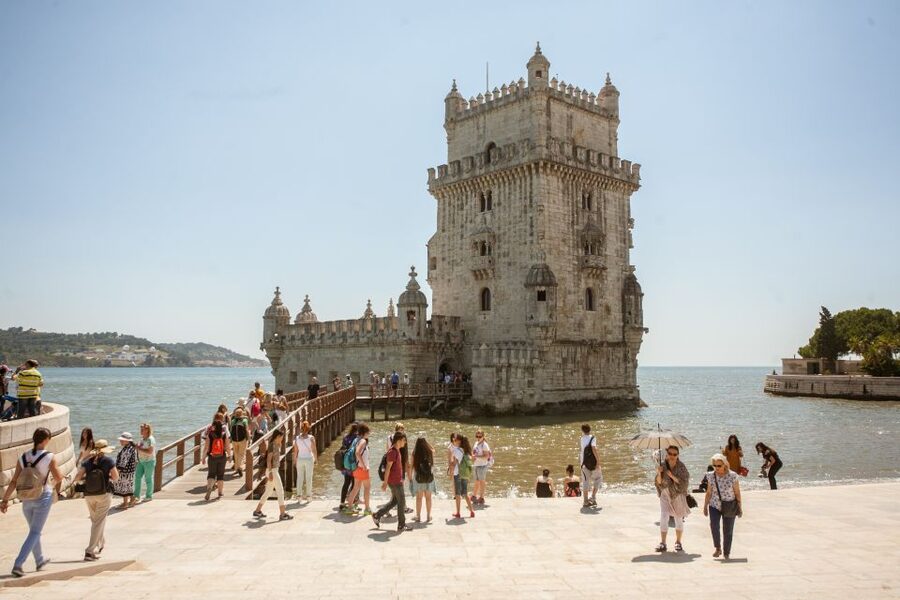
From the monastery, the tour continues toward the Tagus and the Torre de Belém. Built from limestone in the early 16th century, the tower was part of Belém’s military defenses and later became one of the district’s defining symbols.
The tower was declared one of the 7 Wonders of Portugal in 2007 and was inscribed as a UNESCO World Cultural Heritage site in 1983. Its position on the riverbank gives it a different character from the monastery. Jerónimos feels monumental and ceremonial. Belém Tower feels tied to defense, navigation, and the water itself.
The tour specifically promises the iconic quarter façade of the tower. That wording is important. You should expect to see and discuss the exterior riverside setting, not assume that an interior visit is included. Monument fees are not included except for the monastery, so ask the guide about current entry arrangements if entering the tower matters to you.
The riverside walk is one of the most pleasant parts of the outing. You get open views along the Tagus instead of spending the whole time among narrow city streets. I would not treat this as a strenuous hike, but comfortable shoes are still essential. You may be walking for three hours, and the tour can run longer when the historical discussion expands.
Bring water and sun protection as sensible walking gear. A participant from Belgium specifically noted the need for water, sunscreen, and strong legs while visiting Lisbon. That is practical advice for any open-air route beside the river.
The Pastel de Belém stop
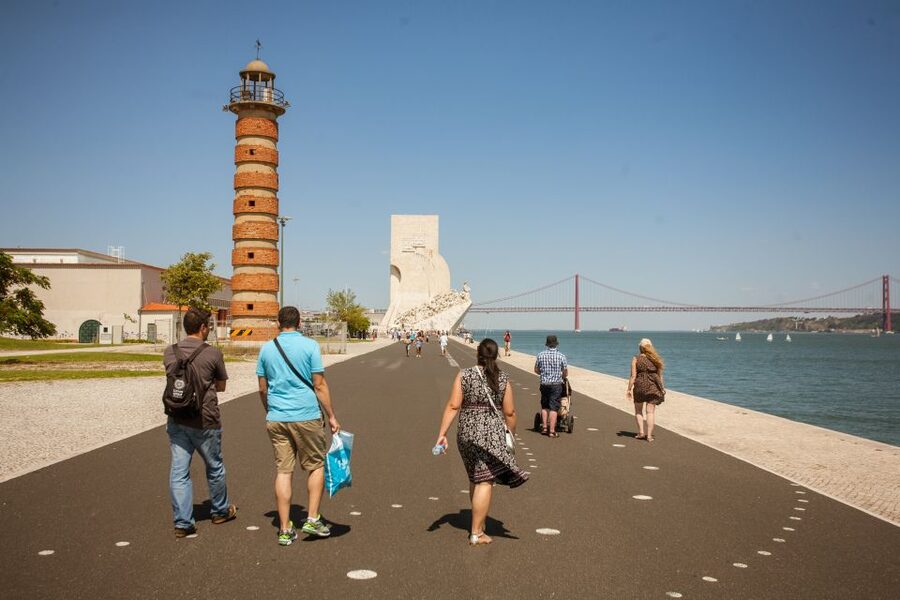
The pastry break is simple, famous, and well chosen. You receive one Pastel de Belém at the Fábrica de Pastéis de Belém on Rua de Belém, a pastry shop with about 160 years of history.
A Pastel de Belém is an egg custard tart in flaky pastry. It is related to the better-known pastel de nata, but this name is tied specifically to the Belém bakery. The point is not a full meal. It is a chance to taste a small local specialty at the place most closely associated with it.
I like that one pastry is included rather than leaving you to decide where to stop during a tightly timed walk. It also gives the tour a welcome change of pace after the monastery and tower. The pastry was one of the most consistently praised parts of the experience.
Do not expect the stop to erase the need for lunch. One tart is a tasting, not a substantial break. If you need more food, the tour information does not promise additional snacks or a meal, so plan around the three-hour schedule.
Rua de Belém also adds useful local color. Its old buildings have survived years of change, and the street helps you see Belém as a lived-in district rather than only a collection of official monuments.
How much history will you hear?
This is the key booking question. The tour’s strongest feature is also its main limitation: the guide gives a great deal of historical context.
If you enjoy detailed explanations, this can be exactly what you want. One participant described the experience as ideal for someone who likes learning history in depth. Another appreciated the broad, clear, and nuanced account of Lisbon. The guide’s humor can help keep the material from becoming dry.
You will hear more than the basic facts printed on a sign. The talk may cover the period, the people linked to the monuments, religious institutions, royal ambition, and the political forces behind Lisbon’s maritime rise. That context helps the monastery and tower make sense as parts of one larger story.
But you should not book this expecting three hours of nonstop walking and quick photo stops. One person felt there was too much history, not enough walking, and too much political discussion. Another found the guide spoke too quickly to absorb everything. A separate participant said the tour lasted about an hour and a half beyond the planned time.
The advertised duration is three hours, so an unusually long tour should not be treated as guaranteed. Still, I would leave some space after the activity, especially if you have a timed reservation elsewhere.
If you prefer a lighter pace, tell the guide that you would like occasional pauses for questions and photographs. The feedback suggests that the amount of information can sometimes crowd out those breaks.
What the $23 price really covers
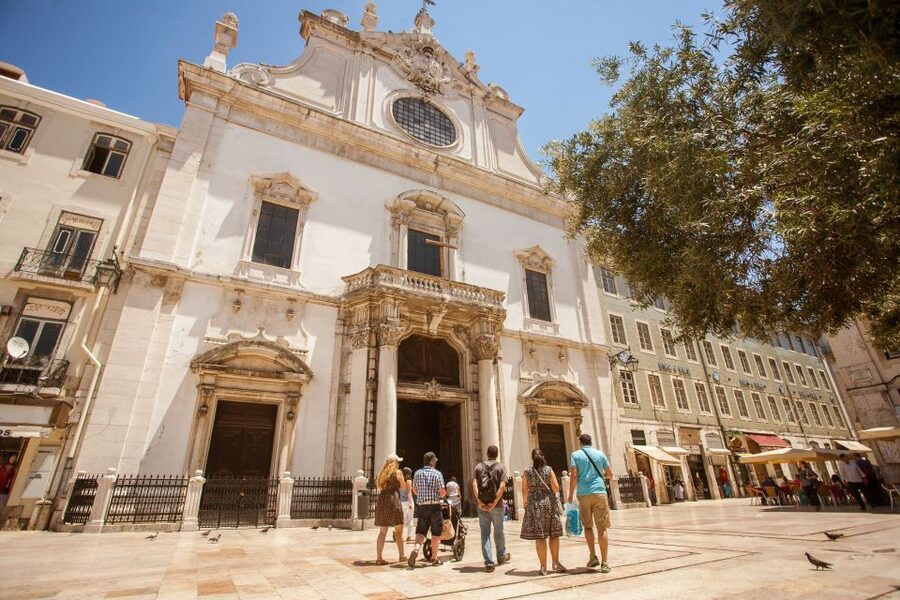
At $23 per person, this is a fairly practical way to see Belém if you want transport and interpretation bundled together. The price includes the tram ride to Belém, the return ride to central Lisbon, the guided walk, and one Pastel de Belém.
The included monastery entry is the biggest value point. You are not paying only for a route through public streets. You also get access to the most important monument on the itinerary, while the guide supplies the historical framework.
The limits are clear. Monument fees are not included except for the Mosteiro dos Jerónimos, so you may have extra costs if you want to enter other sites, including Belém Tower. The activity also does not include a meal, multiple pastries, or private guiding.
The small group limit of 10 adds value for people who want to hear the guide and ask questions. It does not guarantee a quiet or slow tour, since the guide’s speaking style still matters. But it is a better setup for conversation than a large sightseeing group.
Free cancellation up to 24 hours before the start and the option to reserve now and pay later make the booking less rigid. Starting times vary, so check availability before planning the rest of your day.
Who will enjoy this Belém walk?
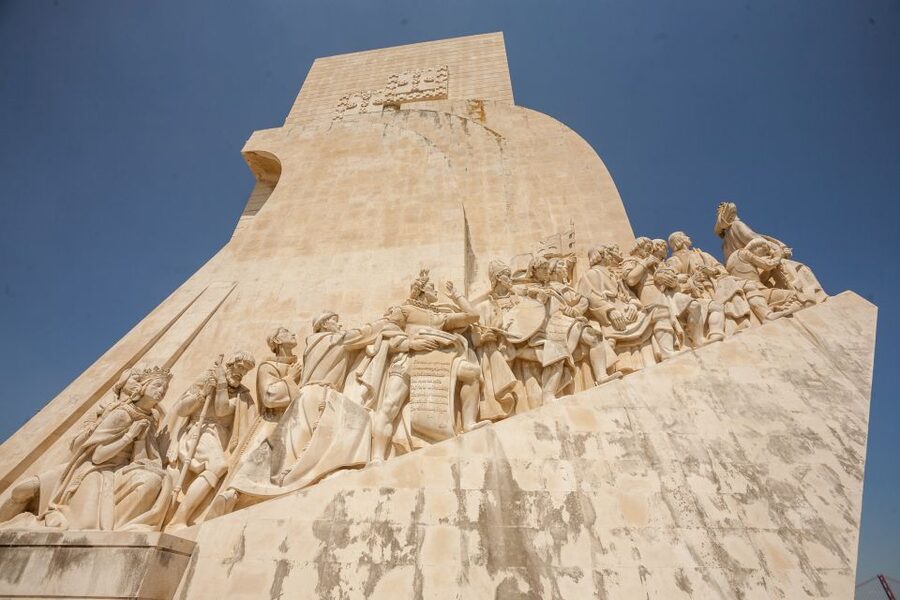
I would choose this tour if you want historical context, a guided visit to Jerónimos Monastery, and an easy transport link from central Lisbon. It is especially suited to first-time visitors who want someone to connect the district’s monuments with Portugal’s maritime past.
It also suits people who enjoy architecture. The Manueline details at the monastery are easier to appreciate when someone explains why the style is linked to the discoveries and the people behind the building.
You may want another kind of outing if you mainly want photographs, free time, or a brisk route. The guide may speak at length, and some explanations may be political or detailed. Families or mixed groups with different attention spans should keep that in mind.
The experience is in English only. Comfortable shoes are required, and you should be ready for a walk beside the river and a possible extension beyond three hours.
Should you book the Lisbon Spirit tour?
Book it if you want Belém explained rather than simply pointed out. The combination of tram transport, monastery entry, the riverside walk, Belém Tower, and a Pastel de Belém gives you a lot for $23.
Skip it if you want a short, photo-first introduction with minimal commentary. In that case, the guide’s long historical talks may test your patience. For history fans, architecture lovers, and curious first-time visitors, though, the detailed approach can turn a famous district into a place with meaning.
FAQ
Where does the tour meet?
The meeting point is Praça D. Pedro IV, near the D. Maria II Theatre in central Lisbon.
How do I identify the guide?
The guide will be wearing a black backpack with the Lisbon Spirit logo.
How long does the activity last?
The stated duration is three hours. You should allow extra time because one reported experience ran about an hour and a half longer than scheduled.
What language is the tour conducted in?
The live guided tour is conducted in English.
How large is the group?
The activity is offered as a small group, limited to 10 participants.
Is transport to Belém included?
Yes. The price includes a two-way tram trip from Lisbon to Belém and back.
Is entry to Jerónimos Monastery included?
Yes. Monument fees are not included generally, but the Mosteiro dos Jerónimos is the exception.
Is entry to Belém Tower included?
The provided information does not include a tower entry fee. The tour specifically highlights the tower’s façade, and monument fees are generally excluded except for the monastery.
Is a Pastel de Belém included?
Yes. Each participant receives one Pastel de Belém.
What should I bring?
Bring comfortable shoes. Water and sunscreen are also sensible for a three-hour walk beside the Tagus, particularly on a sunny day.
More 3-Hour Experiences in Lisbon
- Lisbon: 3-Hour Tour by E-Bike
★ 4.8 · 1,150 reviews - 3-Hour Lisbon 7 Hills Electric Bike Tour
★ 5.0 · 818 reviews - 3-Hour Guided Street Art Walking Tour of Lisbon
★ 5.0 · 278 reviews - Lisbon: 3-Hour The Slave Trade – An Historical Walking Tour
★ 4.9 · 179 reviews
Fresh finds around Lisbon
- Lisbon: Tuk Tuk City Tour★ 3.6 · 7 reviews
- Fatima Full day Private Tour★ 5.0 · 7 reviews
- Lisbon: Highlights and Hidden Gems Tour★ 5.0 · 7 reviews
- Private Tour to Evora and Monsaraz from Lisbon★ 5.0 · 7 reviews
- Discover Sintra Beauty with a Guided Journey from Lisbon★ 5.0 · 7 reviews
- Private Half-Day Tour to Sintra★ 3.4 · 7 reviews
- Lisbon: Sunset and Wine Catamaran Tour★ 5.0 · 7 reviews
- Nazaré: Beaches of Nazaré Guided E-Bike Tour★ 4.9 · 7 reviews
Belém Tours, compared.

Private Lisbon Sightseeing Tuk-Tuk Tour: Alfama, Belém & More
Read our review →


Lisbon: Jerónimos Monastery E-Ticket and Audio Guide
Read our review →
Lisbon Bike Tour: Downhill Downtown Lisbon to Belém
Read our review →
Lisbon: Belem Walking Tour with Jeronimos Monastery Ticket
Read our review →
Lisbon: Belem, Jeronimos Monastery, and Coach Museum Tour
Read our review →Browse the lists this tour appears in