
Reviewed · CRUISES & BOAT TOURS
Traditional Lisbon Boat Experience – Exclusive
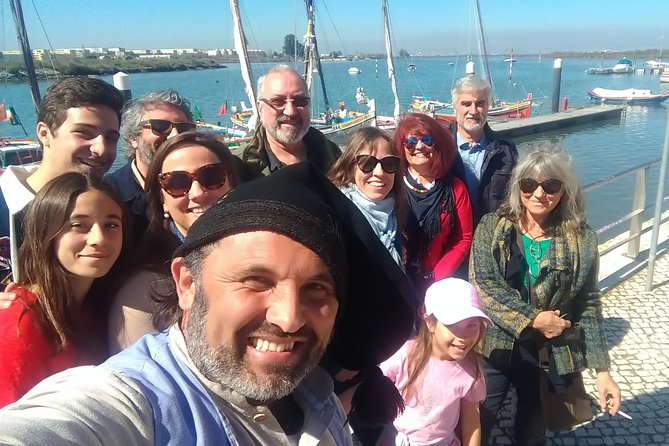
Lisbon’s best surprise here is not simply the view. It is the chance to help sail a traditional boat on the Tagus while the crew shares the river’s working past, from cargo barges to the ships built for Portugal’s voyages to India. Luis and Ricardo keep the outing personal, and the ride feels far removed from a standard sightseeing cruise.
I especially like two things: you get close views of major sights from an unusual angle, and you may be invited to steer the boat yourself. Sweet Portuguese wine, homemade cod cakes, bottled water, and Fado music add a warm local touch. The main consideration is that this is not a polished, English-only presentation. One guide may speak mainly Portuguese, while the English explanations are informal rather than scripted.
In This Review
- Key points at a glance
- Sailing Lisbon on a Traditional Tagus Barge
- Christ the King, Estrela Basilica, and the April 25th Bridge
- Cais do Sodré and the River’s Cargo Trade
- Ribeira das Naus and the Age of Discoveries
- Cais das Colunas and the Commerce Square View
- Alfama, the Cathedral, and St. Apolónia
- Wine, Cod Cakes, and Fado on the Water
- A Private Boat That Still Feels Social
- Finding Doca da Marinha
- Language, Comfort, and the Right Expectations
- Who Should Book This Lisbon Boat Ride?
- Should You Book the Traditional Lisbon Boat Experience?
- FAQ
- Where does the boat tour begin and end?
- How long does the experience last?
- What landmarks can I see from the boat?
- Is this a private tour?
- What refreshments are included?
- Is English available?
- What happens if the weather is poor?
Key points at a glance
- Hands-on sailing: You may learn the basics of sailing and take a turn at the wheel.
- Historic working boat: The traditional barge offers a more characterful ride than a modern sightseeing vessel.
- Lisbon from the Tagus: See Alfama, the National Pantheon, Christ the King, the April 25th Bridge, and more from the water.
- Small private setting: Your booking is for your own group, with a maximum of 12 people, or 11 on the barge.
- Local refreshments: Sweet wine or liquor, homemade cod cakes, and bottled water may be served during the ride.
- Weather matters: The trip needs good conditions, and the advertised timing varies between about 90 minutes and two hours.
Sailing Lisbon on a Traditional Tagus Barge
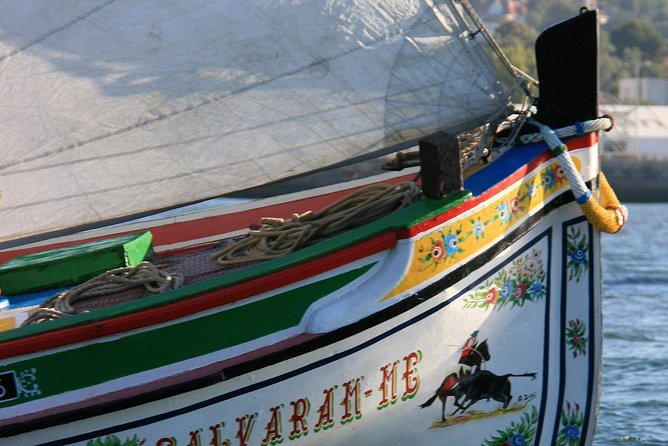
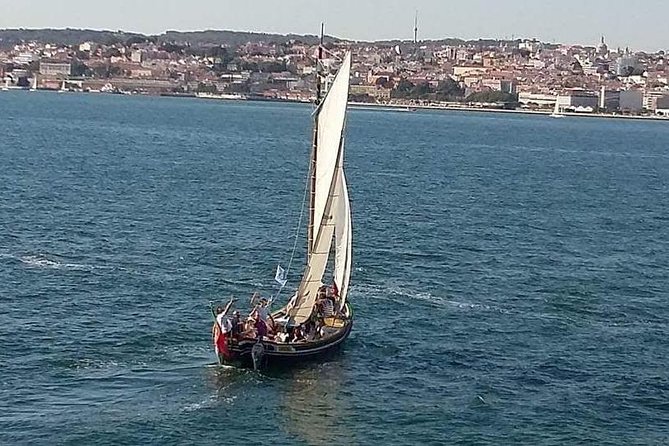
This experience begins at Doca da Marinha, beside Lisbon’s waterfront in the eastern part of the center. You meet at Marinha Harbor and board a traditional sailing barge, a boat with an old-fashioned shape and a clear connection to the Tagus’s working life.
The first part is called a baptism of sailing. That means you are not only sitting back while someone else handles the boat. The crew teaches you how to sail and steer, then gives you a chance to take part. The amount of hands-on time can vary, but the central idea is simple: this is an active boat ride, not a floating bus with a recorded voice.
The boat leaves the harbor, passes the tugboat pier, and heads west toward the open part of the river. From the deck, Lisbon begins to spread out in layers. You see the waterfront at eye level, the hills behind it, and the broad Tagus opening toward the Atlantic.
I like this start because it gives you a sense of how the river works. The Tagus is not just a pretty foreground for photographs. It is a route for ferries, cargo, fishing, sailing, and city life. The traditional barge makes that point in a way a modern motorboat cannot.
A handful more Lisbon ideas to compare
- Lisbon City Center Tour – The Unmissable Lisbon
★ 5.0 · 22,234 reviews - Lisbon: Sintra, Pena, Regaleira, Cabo da Roca & Cascais
★ 4.7 · 19,656 reviews - Lisbon: Jerónimos Monastery Entrance Ticket
★ 4.1 · 14,164 reviews
Christ the King, Estrela Basilica, and the April 25th Bridge
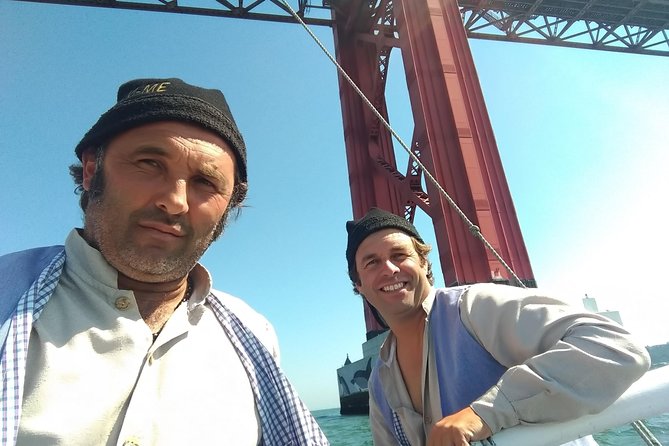
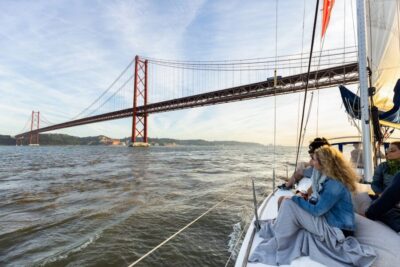
As the boat moves west, look south across the water for the Christ the King statue. It rises on the opposite bank, with the river between you and the monument. You also see the April 25th Bridge, Lisbon’s famous red suspension bridge, from below and from an angle that is hard to get on land.
The bridge is one of the visual anchors of the trip. From the Tagus, its size becomes clearer, especially when you are close enough to look up at the structure. The boat also gives you a useful view back toward Lisbon, where Estrela Basilica appears on the northern side of the city.
This is a good section for photographs, but keep your camera away for part of it. You are likely to get more from the tour if you listen to the crew and watch the river traffic instead of spending every minute framing the next picture.
The bridge and statue are familiar sights, yet the water changes their scale. Christ the King no longer feels like a distant hilltop landmark, and Lisbon’s waterfront looks less like a line of attractions and more like a living port.
Cais do Sodré and the River’s Cargo Trade
The boat approaches Cais do Sodré, a central waterfront area where the city and river meet. Here, the crew explains how goods once moved between the two banks of the Tagus.
Old barges were used to unload cargo for the Ribeira market. Cork, fresh produce, salt, and wine crossed the river as part of everyday trade. This detail gives the ride a useful sense of place. You are not only looking at Lisbon’s monuments. You are seeing the route by which food and materials reached the city.
This part will appeal to you if you enjoy practical history. The story is about work, transport, and markets rather than just kings and grand buildings. It also helps explain why Lisbon grew around the river. The Tagus was a road, a workplace, and a link to the wider world.
The experience does not promise a formal lecture, and the English commentary may be uneven. One guide has been described as speaking mostly Portuguese, while the other made a clear effort to explain the sights in English. If you need polished narration at every moment, this may feel rough around the edges. If you are comfortable with a more relaxed exchange, the style can feel more personal.
Ribeira das Naus and the Age of Discoveries
From the water, you pass Ribeira das Naus, the historic shipbuilding area near the center of Lisbon. This was where fleets were built during Portugal’s Age of Discoveries, including ships used for voyages to India.
The location matters because it connects the modern waterfront to Lisbon’s maritime power. From the deck, you can consider the practical side of those voyages: ships had to be constructed, loaded, repaired, and supplied. The riverfront was a place of skilled labor and heavy movement, not simply a scenic promenade.
The boat gives you a strong position for understanding the relationship between Lisbon and the sea. The city’s grand squares and churches sit behind the waterfront, but the river explains why Lisbon became a major port. The crew’s focus on trade and sailing adds useful context to the buildings you see from shore.
Nearby in Lisbon, a different day entirely:
- Sintra: Pena Palace and Park Entrance Ticket
★ 4.2 · 17,410 reviews - Lisbon: History, Stories and Lifestyle Walking Tour
★ 4.8 · 10,902 reviews - Lisbon: Sunset Boat Party Cruise with DJ and Open Bar
★ 4.5 · 10,378 reviews - Lisbon: Pena Palace, Sintra, Cabo da Roca, & Cascais Daytrip
★ 4.7 · 9,981 reviews
Cais das Colunas and the Commerce Square View
A short stop is made at Cais das Colunas, the formal waterfront landing beside Commerce Square. You have about five minutes here, mainly for photographs. It is a natural selfie point, with the broad square, the river, and the stone columns creating a classic Lisbon frame.
Do not expect a long shore visit. The stop is brief, and admission is not included, although there is no separate attraction entry described as part of the boat ride. The value is the view and the pause, not an extended tour of the square.
From this part of the Tagus, you can look back toward the old pier and Commerce Square. The square’s open design makes more sense from the river, where you can see how directly the city faces the water. It is also a good moment to put your camera away and notice the contrast between the formal waterfront and the working boats nearby.
Alfama, the Cathedral, and St. Apolónia
After the Cais das Colunas stop, the boat turns upriver toward Alfama. This section brings the historic hillside into view, with Lisbon Cathedral, the National Pantheon, St. Vincent Monastery, and the old St. Apolónia train station along the northern bank.
Alfama looks especially different from the water. On foot, you experience steep lanes and tight streets. From the Tagus, you see the district as a wall of hills, church towers, pale façades, and layered rooftops. The National Pantheon is easy to pick out, while St. Vincent Monastery helps anchor the eastern end of the old city.
The view toward St. Apolónia adds another useful piece of Lisbon’s transport story. The railway station and river sit close together, showing how the city’s main routes have long met at the waterfront.
This is also a calm stretch for conversation. The crew can point out landmarks and explain how the river relates to the city. Since the boat is private for your group, you can ask questions without trying to catch a guide’s words over a large crowd.
Wine, Cod Cakes, and Fado on the Water
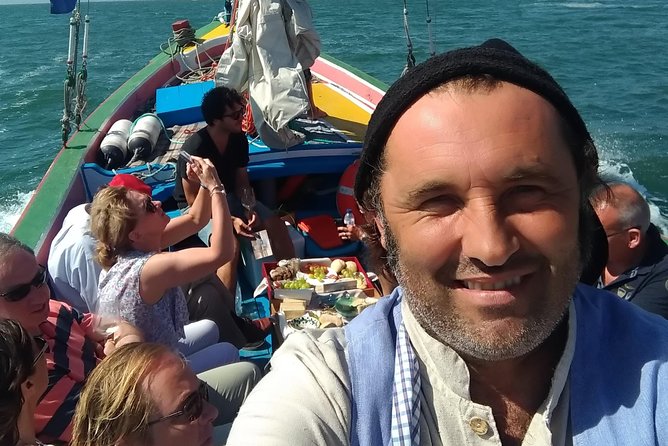
Food and drink are an important part of the mood. The crew may serve traditional sweet wine or liquor, along with cod fishcakes and bottled water. The fishcakes have been a particular favorite, and one group of eight found them substantial enough to delay lunch until much later.
The refreshments are not presented as a full meal, so plan to eat before or after if you need lunch. Still, homemade cod cakes and a small glass of sweet wine make the experience feel connected to Portugal rather than generic. The cakes may be prepared by Luis’s wife, adding a family touch that you do not get on a large commercial cruise.
Traditional Fado music may also be played during the ride. On one birthday outing, the crew sang to the birthday sister in Portuguese and let her wear the skipper’s hat. That kind of personal gesture is possible because the boat is small and the crew has room to respond to your occasion.
You should not assume every trip will include the exact same performance or celebration. The supplied details confirm the presence of refreshments and describe Fado music and singing during one outing, but they do not promise a set entertainment program. Think of these touches as part of the boat’s character, not a scheduled stage show.
A Private Boat That Still Feels Social
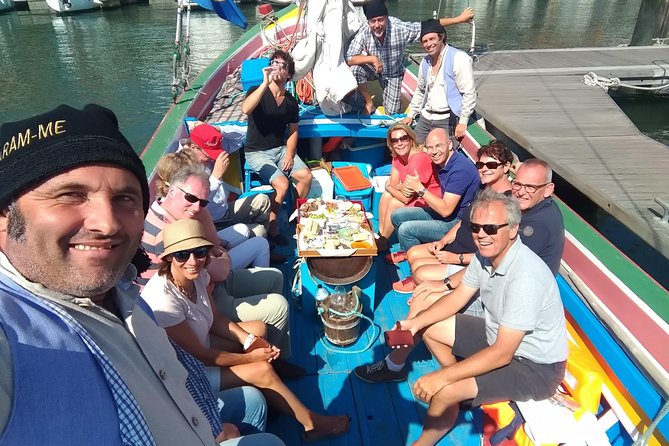
The experience is described as private, meaning only your group participates in the booking. The capacity is up to 12 people, with 11 people on the barge, and at least two people are required to book.
That setup is useful for families, couples booking with friends, and small groups marking a birthday or another special day. You can ask questions, move around the boat, and take your turn steering without competing with a large crowd.
There is one detail to understand: the word exclusive does not mean a silent, isolated cruise. The boat can hold a sizeable small group, and the crew may be warm and social. If you want complete solitude for two people, confirm the exact boat arrangement at booking.
The listed price is $301.03 per group, but the booking information also says a minimum of two people is required and allows up to 12. Since the price display says per group up to one while the participation rules say otherwise, check the final amount for your party before paying. For a full private boat, the cost can make sense when divided among several people. For only two people, it is a more significant splurge.
Finding Doca da Marinha
The meeting point is Doca da Marinha A on Avenida Infante Dom Henrique, postal code 1100-279, Lisbon. The boat returns to the same harbor at the end, so you do not need to arrange a separate transfer back to the city center.
Finding the exact berth may take a little patience. One group had trouble locating the boat and called the listed number for help. I would save the contact details before setting out and leave extra time to reach the marina.
Public transportation is nearby, but transport to and from other attractions is not included. The mobile ticket is useful, and confirmation is provided at booking. Children must be accompanied by an adult, and most people can take part.
The listed duration is also worth noting. The summary gives approximately one hour and 30 minutes, while the route description calls it a two-hour adventure. Plan around two hours so you are not rushing to another appointment, especially if the boat leaves late or the sailing conditions slow the trip.
Language, Comfort, and the Right Expectations
English is offered, but the style is informal. Luis and Ricardo are described as friendly and attentive, with one making a special effort to explain Lisbon and the river in English. The other may speak mainly Portuguese.
That is not a flaw for everyone. I like tours where the crew’s personality remains visible, and a less scripted conversation can feel more genuine. But you should choose this outing for the boat, the river, and the personal contact, not for perfectly timed English commentary.
The route includes open water, sailing activity, and a traditional vessel. Most people can participate, but the information does not promise special accessibility features. If you have mobility concerns or need specific assistance, ask the provider before booking.
Good weather is required. If conditions force a cancellation, you are offered another date or a full refund. You can also cancel for a full refund up to 24 hours before the start time. Changes or cancellations within 24 hours are not accepted for a refund.
Who Should Book This Lisbon Boat Ride?
I would choose this experience if you want a small-scale look at Lisbon and enjoy being part of the activity. It fits families, groups of friends, and anyone who prefers a local boat with character over a large sightseeing vessel.
It is especially appealing for:
- People curious about sailing and traditional boats
- Small groups sharing the cost of a private outing
- Anyone who wants river views of Alfama and Lisbon’s landmarks
- Birthday groups and other small celebrations
- Visitors who enjoy informal conversation, local food, and music
I would hesitate if you need a tightly scripted tour in fluent English, a guaranteed two-hour schedule, or a luxury yacht setting. The boat is traditional, the narration is relaxed, and the experience depends on weather and the crew’s natural style.
Should You Book the Traditional Lisbon Boat Experience?
Book it if your priority is an authentic, hands-on river outing rather than a checklist of monuments. Steering the barge, hearing how cargo once moved along the Tagus, tasting cod cakes, and seeing Lisbon from the water create a more memorable hour and a half than a standard cruise for many people.
Before booking, confirm the exact price for your group, the expected duration, and the English-language arrangements. Then save the meeting-point phone number and allow time to find Doca da Marinha.
For a group of friends or a family celebrating something, this is a strong choice. For two people, it is best treated as a special splurge. Either way, the boat gives you a close look at Lisbon’s river life, with enough history and local flavor to make the experience feel like more than a scenic ride.
FAQ
Where does the boat tour begin and end?
The tour begins at Doca da Marinha A, Av. Infante Dom Henrique, 1100-279 Lisboa, Portugal. It ends back at the same meeting point.
How long does the experience last?
The booking information gives an approximate duration of one hour and 30 minutes, while the route description refers to a two-hour adventure. Allow about two hours in your schedule.
What landmarks can I see from the boat?
The route includes views of Christ the King, the April 25th Bridge, Estrela Basilica, Ribeira das Naus, Commerce Square, St. George’s Castle, Lisbon Cathedral, the National Pantheon, St. Vincent Monastery, and the old St. Apolónia train station.
Is this a private tour?
Yes. Only your group participates. The maximum is 12 people per booking, with 11 people on the barge.
What refreshments are included?
Bottled water is included. The experience also describes sweet wine or liquor and cod fishcakes served during the ride, with Fado music included as part of the traditional atmosphere.
Is English available?
The experience is offered in English. Commentary may be informal, and one guide may speak mainly Portuguese while another explains the sights in English.
What happens if the weather is poor?
The tour requires good weather. If it is canceled because of poor conditions, you are offered a different date or a full refund. You can cancel up to 24 hours before the start time for a full refund.
Fresh finds around Lisbon
- Lisbon: Tuk Tuk City Tour★ 3.6 · 7 reviews
- Fatima Full day Private Tour★ 5.0 · 7 reviews
- Lisbon: Highlights and Hidden Gems Tour★ 5.0 · 7 reviews
- Private Tour to Evora and Monsaraz from Lisbon★ 5.0 · 7 reviews
- Discover Sintra Beauty with a Guided Journey from Lisbon★ 5.0 · 7 reviews
- Private Half-Day Tour to Sintra★ 3.4 · 7 reviews
- Lisbon: Sunset and Wine Catamaran Tour★ 5.0 · 7 reviews
- Nazaré: Beaches of Nazaré Guided E-Bike Tour★ 4.9 · 7 reviews
Cruises & Boat Tours, compared.

Lisbon: Sunset Boat Party Cruise with DJ and Open Bar
Read our review →
Lisbon: Daytime/Sunset/Night City Sailboat Tour with Drink
Read our review →
Lisbon: Sunset Cruise with Welcome Drink and Snacks
Read our review →
Lisbon: Tagus River Cruise to the Ocean & Dolphin Watching
Read our review →
Lisbon: Sunset Boat Tour with Music and Drinks
Read our review →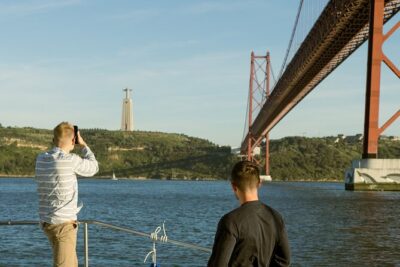
Lisbon: Sunset Catamaran Boat Tour with Music and Drinks
Read our review →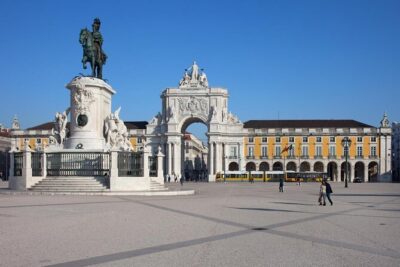
Browse the lists this tour appears in