Reviewed · LISBON TOURS
The Portuguese Tiles
The Portuguese Tiles tour turns Lisbon’s decorated walls into a guidebook. With Miguel Cardoso, you trace the city’s tile tradition from 16th-century church panels to 20th-century ceramic work, while the route also opens up Portugal’s religious, royal, artistic, and political past. I especially like that the tour begins with an unusual Moorish-style interior at Casa do Alentejo rather than jumping straight to the best-known sights.
I also like the small maximum of nine people, which gives Miguel room to adjust the pace and answer questions. His route adds useful extras: a viewpoint, local food suggestions, and rides on Lisbon transport such as the Gloria funicular or subway. The main drawback is the three-and-a-half-hour walking schedule, which can feel long in hot weather or rain, especially since one person found a mid-tour rest stop would have helped.
In This Review
- Key details that make this tour different
- Why Lisbon’s tiles tell more than an art story
- Casa do Alentejo begins with Moorish-style drama
- São Pedro de Alcântara shows the rise of blue and white
- São Roque holds Lisbon’s oldest tile panels in place
- Trindade and Largo Rafael Bordalo Pinheiro reveal tile in daily life
- Bertrand bookstore and Alcôa add commerce and craft
- Rossio Square puts the details into city history
- Viúva Lamego connects Lisbon to tile production
- Rua da Misericórdia finishes with many periods in one place
- A walking tour that uses Lisbon’s hills wisely
- What Miguel adds beyond the route
- Is $60.24 a fair price?
- Who should book this Lisbon tile walk?
- The final call
- FAQ
- Where does The Portuguese Tiles tour begin?
- What time does the tour start?
- How long does the experience last?
- What language is the tour offered in?
- How many people can join the tour?
- Is admission included?
- Does the tour require good weather?
- What is the cancellation policy?
Key details that make this tour different
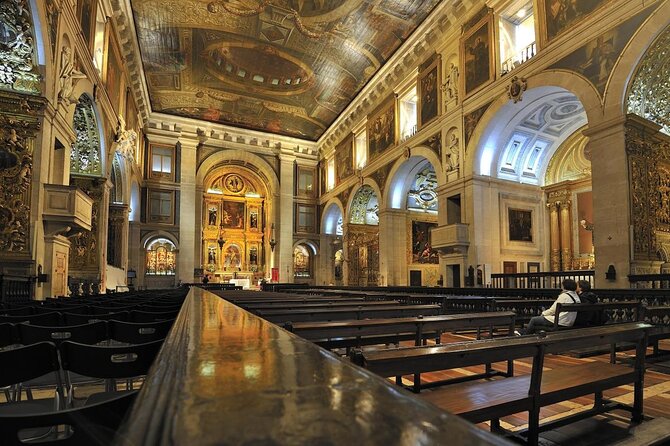
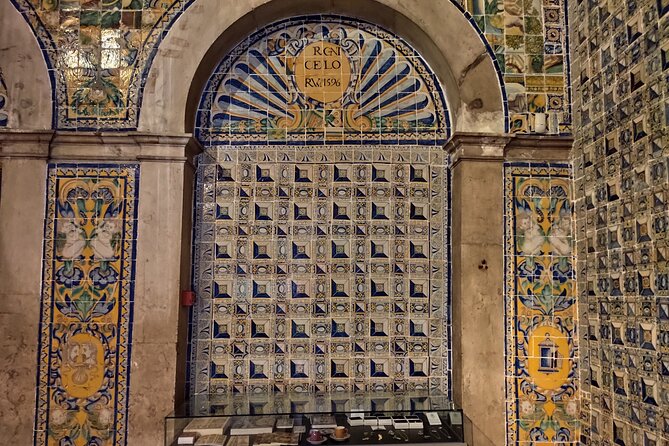
- 16th-century tile panels: See some of Lisbon’s oldest tile work still in its original church settings at Igreja de São Roque.
- A wider Lisbon story: Miguel connects tiles with Phoenician, Roman, Arabic, Christian, and Jewish influences, the 1755 earthquake, and the 1974 move to democracy.
- Small group format: The tour accepts no more than nine people, allowing for a more personal pace.
- Tile façades beyond the obvious: Look for Masonic symbols, a tiled brewery, a former lottery shop, and a historic bookstore.
- Useful first-day orientation: The route includes city views, transport, food advice, and suggestions for the rest of your stay.
Why Lisbon’s tiles tell more than an art story
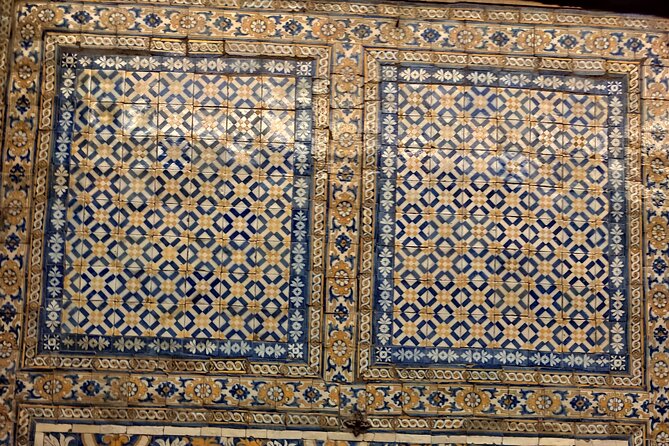
Lisbon’s azulejos are not just pretty blue patterns stuck onto old buildings. They record changing tastes, technology, religion, commerce, and national identity. This tour gives you a way to read them instead of simply walking past them.
Miguel explains how Portuguese tile work grew out of earlier Moorish decoration and then developed its own forms. You’ll see the shift from patterned surfaces to large painted panels, and from church decoration to tile-covered commercial façades. The period covered runs broadly from the 16th through the 21st centuries.
That broad time span is one of the tour’s best features. You do not spend three hours looking at one kind of blue-and-white panel. Instead, you compare different periods and settings. A church tile panel asks for a different reading than a brewery façade or a shop interior.
This is also a history walk with a clear theme. Along the way, Miguel places Lisbon in the hands of Phoenician, Roman, Arabic, Christian, and Jewish communities, then explains later events such as the 1755 earthquake and the 1974 revolution. If you want a narrow art lesson, the tile focus delivers. If you want a useful introduction to Lisbon, the history gives the tour more weight.
More tile-painting tables:
- Lisbon: Azulejos’ Design Create Your Own Tile Workshop
★ 4.9 · 420 reviews - Sintra: Hispanic Moorish Tile Workshop
★ 5.0 · 51 reviews - Private Lisbon Wine & Tile Painting Tour – Sesimbra & Traditions
★ 5.0 · 38 reviews
Casa do Alentejo begins with Moorish-style drama
The meeting point is at Avenida da Liberdade 6, with the tour starting at 10 a.m. The first stop is Casa do Alentejo, a former aristocratic house later remodeled in the 19th century as Lisbon’s first casino.
The building’s decoration reflects the romantic fascination with Moorish design. Its interior provides a strong opening because it shows how later Portuguese architects and decorators looked backward for inspiration. The ten-minute visit is brief, but it sets up an important idea: Portuguese tile culture does not exist in isolation. It reflects many centuries of contact and changing artistic fashion.
Admission is free. Since this is an interior stop, it also gives you a useful shelter early in the route if the weather is unsettled, though the tour requires good weather overall.
São Pedro de Alcântara shows the rise of blue and white
At the Church of São Pedro de Alcântara, you move into the late 17th and early 18th centuries. This is where Miguel introduces the beginnings of Portugal’s famous blue-and-white tile style.
The stop lasts about 15 minutes and admission is free. That is enough time for a focused explanation rather than a long church visit. Pay attention to how the color scheme changes the mood of the decoration. Blue and white became one of the visual signatures most people associate with Portugal, but the tour helps you place that style in a real historical sequence.
The church stop also breaks up the outdoor walking. You get art, religious history, and a chance to study tile in the setting for which it was made.
São Roque holds Lisbon’s oldest tile panels in place
Igreja de São Roque is one of the most important stops for anyone serious about tile. It contains Lisbon’s oldest tile panels still in situ, with signed examples from the 16th century.
The panels mark a transition from Moorish traditions toward a distinctly Portuguese approach to tile. That transition is easier to understand when you see the work in its original location rather than in a museum display. The church itself provides the setting, scale, and purpose that shaped the art.
The planned visit lasts about 15 minutes, so this is not an exhaustive church tour. Instead, Miguel directs your attention to the tile panels and explains why they matter. If your interest is art or ceramics, this stop may be the intellectual high point of the morning.
A handful more Lisbon ideas to compare
- Lisbon City Center Tour – The Unmissable Lisbon
★ 5.0 · 22,234 reviews - Lisbon: Sintra, Pena, Regaleira, Cabo da Roca & Cascais
★ 4.7 · 19,656 reviews - Lisbon: Jerónimos Monastery Entrance Ticket
★ 4.1 · 14,164 reviews - Lisbon: History, Stories and Lifestyle Walking Tour
★ 4.8 · 10,902 reviews
Trindade and Largo Rafael Bordalo Pinheiro reveal tile in daily life
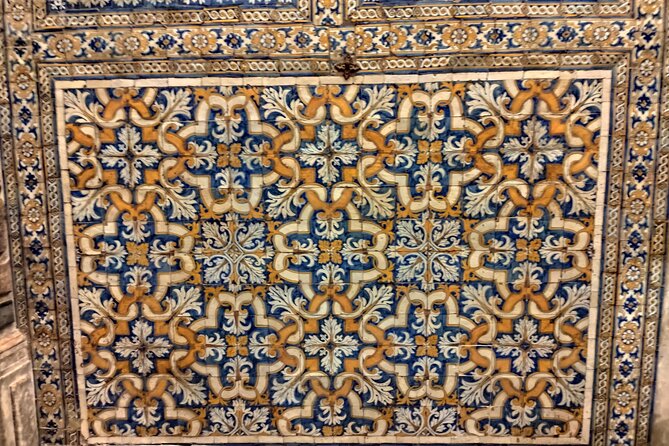
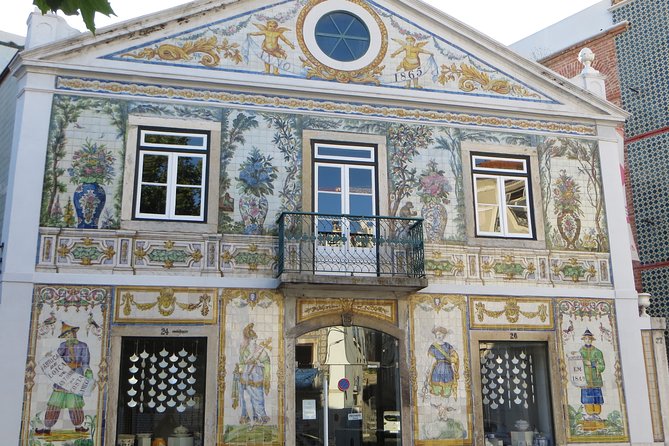
The route then shifts from churches to the city’s commercial and civic face. At Trindade, you see Lisbon’s oldest brewery, covered in 19th-century tiles. The stop lasts only about five minutes, but it makes an important point: tile was not reserved for sacred buildings or grand palaces.
The brewery’s exterior shows how ceramics became part of everyday urban identity. It is the sort of detail that is easy to miss when you are hurrying between major sights.
At Largo Rafael Bordalo Pinheiro, Miguel explains a 19th-century façade decorated with Masonic motifs. The five-minute stop introduces the man behind this well-known Lisbon façade and gives you another way to read the city’s symbols.
This part of the walk is especially useful after the church visits. You can compare religious panels with commercial and symbolic decoration, then begin spotting the difference yourself on later walks.
Bertrand bookstore and Alcôa add commerce and craft
In Chiado, the route reaches Livraria Bertrand, recognized as the oldest bookstore in the world still operating. The building’s luxurious façades are covered with 19th-century blue-and-white tiles.
The visit is short, about five minutes, but the setting combines literature, architecture, and ceramic decoration. If you are already planning time in Chiado, this stop helps you notice the building rather than entering only to browse the shelves.
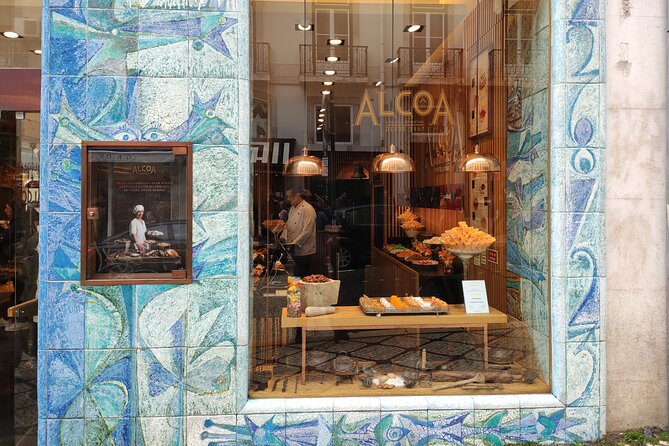
Next comes Alcôa, a well-known pastry shop that once operated as a lottery shop. Its ceramic decoration was made by one of Portugal’s major 20th-century potters. This ten-minute stop is a good reminder that tile can carry a business story as well as an artistic one.
The route does not treat façades as isolated artworks. Miguel connects them to the businesses and public life around them. That makes the tile tradition easier to remember, and it gives you a reason to look closely at storefronts during the rest of your time in Lisbon.
Rossio Square puts the details into city history
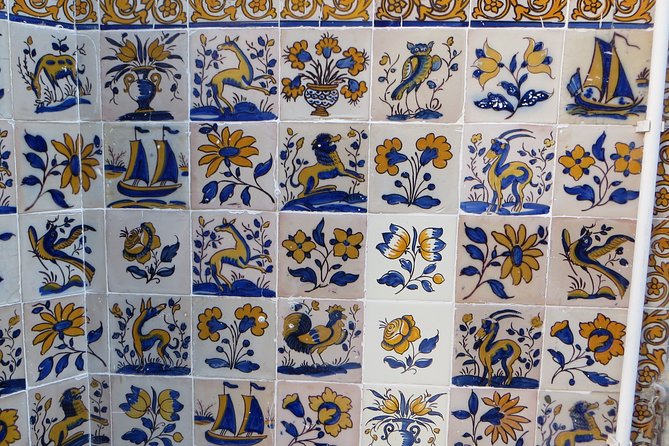
Praça Dom Pedro IV, usually called Rossio, is Lisbon’s most important square and one of the route’s larger public spaces. The scheduled stop lasts about ten minutes.
Here, the tile lesson broadens into city history. A major square gives Miguel room to explain how Lisbon developed as a public and political center. This is also a useful orientation point for your own sightseeing, since the route has already introduced you to parts of Avenida da Liberdade, Chiado, and the central historic area.
The tour is not only a checklist of tiled walls. At Rossio, you get the larger setting in which those walls function. The square helps connect architecture, movement, public events, and the city’s long past.
Viúva Lamego connects Lisbon to tile production
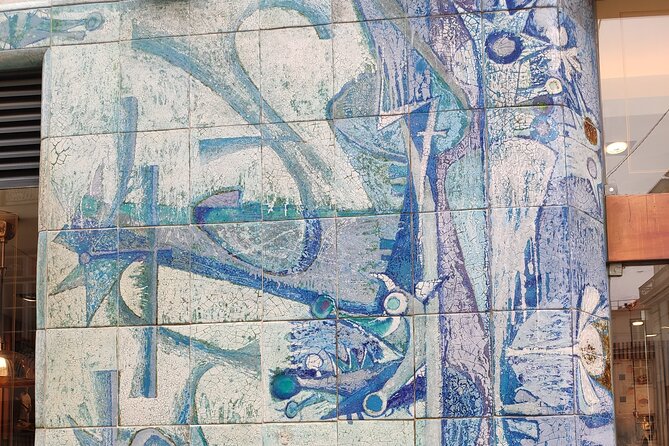
At Viúva Lamego, you visit the showroom of one of Lisbon’s two most important historic tile factories. The factory site is no longer serving its original role, but the showroom keeps the production story present.
This is the only listed stop with an admission ticket included, while the other stated admissions are free. The visit lasts about ten minutes. For anyone interested in how tiles move from workshop to building façade, it provides a useful bridge between finished art and the people who made it.
The stop is particularly valuable if you are a potter, ceramic artist, or simply interested in craft. One person with years of experience making tiles found the tour especially rewarding because Miguel took them to places they would not have found alone. You do not need a professional background to benefit, but an interest in materials and making will add another layer.
Rua da Misericórdia finishes with many periods in one place
The final listed stop is a store on Rua da Misericórdia that is almost a museum. It contains tiles from nearly every period, and the visit lasts about 20 minutes.
This is a fitting finish because you can compare the periods introduced throughout the morning. Instead of remembering each church, façade, and showroom separately, you can look across a wider range and see changes in color, pattern, subject, and purpose.
The store setting also gives the tour a practical angle. You are seeing ceramic work in a place connected to buying and display, not only preservation. The activity ends in a different location from the starting point, but the exact final address is not provided, so plan your next appointment with some flexibility.
A walking tour that uses Lisbon’s hills wisely
Lisbon is not flat, and three and a half hours on foot can be demanding. The route includes city streets, churches, commercial districts, and viewpoints, and the guide has also used transport such as the Gloria funicular and subway during the experience.
That variety matters. You are not simply marching from one address to the next. A funicular ride can give you a memorable view of the city and a break from climbing, while the subway shows you a less postcard-focused part of Lisbon. The exact transport used may depend on the day and route, so do not treat every added ride as guaranteed.
Miguel is also attentive to pace. He has adjusted schedules, checked how people were handling the walking, and adapted plans during difficult weather. Still, you should wear comfortable shoes and allow time for stops. One person found the full length tiring and suggested a planned break halfway through.
The route works best when you are willing to slow down. Stops range from five to 20 minutes, and the shortest ones may feel almost too quick if you want photographs or close study. The reward is coverage: you see many parts of central Lisbon and several types of tile in one morning.
What Miguel adds beyond the route
Miguel Cardoso is the guide named for this experience, and the strongest feature running through the tour is his enthusiasm for Lisbon’s history and art. He explains tile as part of the city rather than as a separate subject.
His practical help is just as useful. He has offered restaurant suggestions, pointed out artisan shops, helped with photographs at a viewpoint, and shown people where a local grocery store is. One group also stopped midway for a cod cake and Super Bock, with a nonalcoholic choice available. That food stop appears to be part of the flexible experience rather than a clearly guaranteed inclusion, so ask when booking if it matters to you.
The guide’s flexibility is valuable for families and older people. Plans have been adjusted after missed appointments, schedule changes, jet lag, and heavy rain concerns. That does not remove the need to arrive on time, but it suggests you can discuss reasonable needs rather than expect a rigid script.
The tour is offered in English. Most people can participate, and service animals are allowed. It operates near public transportation, which makes reaching the start easier, but the supplied details do not state hotel pickup.
Is $60.24 a fair price?
At $60.24 per person for about three hours and 30 minutes, the cost is reasonable if you want a guide who can connect scattered details into a clear story. Most stops have free admission, and one stop includes admission, so you are mainly paying for Miguel’s time, route planning, explanations, and local advice rather than entrance tickets.
The small group limit of nine improves the value. You are less likely to be lost in a crowd, and there is more room to ask about a particular façade or period. Group discounts are available, though the exact terms are not provided.
The price makes less sense if you only want a quick photo walk or already know Lisbon’s ceramic history well. It is strongest as an early-trip purchase, when the city’s churches, façades, viewpoints, and neighborhoods are still new to you. The explanations can change how you notice buildings for the rest of your stay.
Who should book this Lisbon tile walk?
I would choose this tour if you like architecture, ceramics, history, or local streets that do not appear on every standard sightseeing route. It also suits first-time visitors who want a morning introduction to central Lisbon without taking a broad bus tour.
Families can benefit from Miguel’s conversational approach and willingness to adjust the pace. Older adults should be realistic about the walking time and discuss the possibility of a rest stop. Ceramic artists and serious tile fans will appreciate the period comparisons and the Viúva Lamego connection, but the tour is not too specialized for a curious first-time visitor.
You should be comfortable with a long urban outing and changing locations. The experience requires good weather, and poor weather can lead to a new date or a full refund. If you cancel at least 24 hours before the 10 a.m. start, you can receive a full refund. Cancellations or changes inside that window are not accepted for a refund.
The final call
Book The Portuguese Tiles if you want Lisbon explained through the walls, churches, shops, and public squares you are already here to see. Miguel Cardoso’s strongest contribution is the connection between tile, Portuguese history, and practical city advice.
Skip it if your schedule is tight, you dislike walking, or you want a tour devoted only to major monuments. For most curious visitors, though, this is a smart first or second morning in Lisbon. You leave with more than photographs: you gain a way to recognize old and new tile work whenever you turn a corner.
FAQ
Where does The Portuguese Tiles tour begin?
The tour begins at Av. da Liberdade 6, 1250-144 Lisboa, Portugal.
What time does the tour start?
The stated start time is 10:00 a.m.
How long does the experience last?
The tour lasts approximately three hours and 30 minutes.
What language is the tour offered in?
The experience is offered in English.
How many people can join the tour?
The maximum group size is nine people.
Is admission included?
The listed admissions are free at the churches and other stops, while admission is included at Viúva Lamego. The price does not describe additional entrance costs beyond those stated.
Does the tour require good weather?
Yes. If poor weather causes cancellation, you will be offered another date or a full refund.
What is the cancellation policy?
You can cancel at least 24 hours before the experience start time for a full refund. Cancellations or changes made less than 24 hours before the start are not accepted for a refund.
Fresh finds around Lisbon
- Sanctuary of Fátima and Coimbra City Tour★ 4.5 · 51 reviews
- Sintra/Lisbon: Sintra & Quinta da Regaleira Tour with Ticket★ 4.4 · 51 reviews
- Jeronimos Monastery Guided Tour – Small Groups – Tickets Included★ 5.0 · 51 reviews
- Lisbon: Private Christmas Lights Tour by Eco Tuk Tuk★ 4.9 · 51 reviews
- Peniche: Berlengas Island Catamaran Tour – Round Trip★ 4.6 · 51 reviews
- Half day Spa Water Therapy experience at THE SPA at Corinthia Lisbon★ 4.5 · 51 reviews
- Lisbon: Private Tuk-Tuk Tour for 2 hours★ 4.7 · 51 reviews
- Premium Lisbon Airport Transfer to Lisbon★ 5.0 · 51 reviews
Lisbon Tours, compared.
Lisbon City Center Tour – The Unmissable Lisbon
Read our review →
Lisbon: Sintra, Pena, Regaleira, Cabo da Roca & Cascais
Read our review →
Lisbon: History, Stories and Lifestyle Walking Tour
Read our review →
Lisbon: Sunset Boat Party Cruise with DJ and Open Bar
Read our review →
Lisbon: Pena Palace, Sintra, Cabo da Roca, & Cascais Daytrip
Read our review →