
Reviewed · TRANSFERS
Private Transfer Lisbon-Porto with 2 (two) visits
The clever idea here is turning a necessary Lisbon to Porto journey into a sightseeing day. Instead of spending the whole trip on the road, you can use two stops to see places such as Óbidos and Nazaré, or Fátima and Aveiro, with a private driver handling the route and your luggage.
I like the door-to-door pickup from hotels, hostels, and Airbnb addresses in Lisbon. I also like the flexibility of a private vehicle, especially when you want to choose your own two stops rather than follow a fixed group schedule. The main thing to check before booking is the itinerary wording: the advertised duration is about seven and a half hours, while six possible places are described at 90 minutes each. In practical terms, this is a transfer with two visits, not a realistic six-stop tour.
In This Review
- Key points to know before booking
- A transfer that uses your travel day well
- Understanding the two-stop plan
- Óbidos: Portugal in compact medieval form
- Nazaré: Atlantic views and giant waves
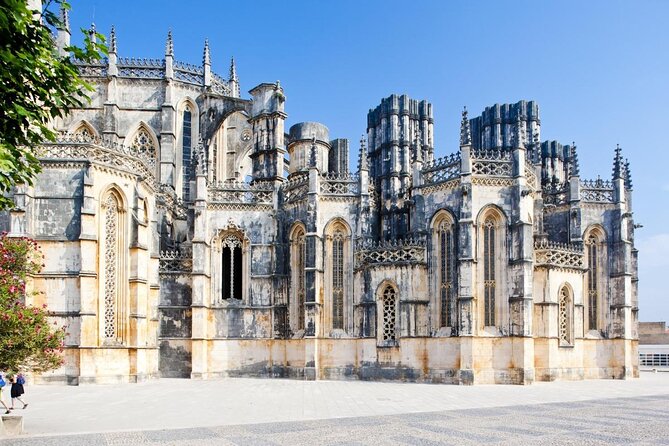
- Batalha: a major monument with limited time
- Fátima: Portugal’s best-known pilgrimage site
- Aveiro: canals, moliceiros, and Art Nouveau
- Coimbra: university tradition and royal history
- The human side of the ride
- What the $350.90 price means
- Who should book this Lisbon to Porto route
- Booking advice for a smoother day
- Should you book it?
- FAQ
- How long does the private Lisbon to Porto transfer take?
- How many sightseeing stops are included?
- Can I choose which places to visit?
- Where can pickup take place?
- Is lunch included?
- What is included in the transfer?
- What is the cancellation policy?
Key points to know before booking
- Choose two stops: Óbidos, Nazaré, Batalha, Fátima, Aveiro, and Coimbra are all listed, but the experience is designed around two visits.
- Useful on a checkout day: Pickup in Lisbon and drop-off in Porto turn a long travel day into part of your holiday.
- Private vehicle included: Only your party participates, with air conditioning, WiFi, and private transportation.
- Strong guide emphasis: Antonio, Hugo, and Diogo are named in the feedback, with praise for their local advice, care, and flexibility.
- Free entry listed: The stops have no admission charge included in the supplied details, though meals and any optional paid activities are separate.
- Allow for a long day: The advertised duration is approximately 7 hours and 30 minutes, so two well-chosen stops are the sensible plan.
A transfer that uses your travel day well
Lisbon and Porto are far enough apart that moving between them usually takes a good part of a day. This service makes that travel time useful by letting you stop at two towns or religious sites on the way north.
I think this format works best for a couple, family, or small group that has already checked out of Lisbon but cannot check in to Porto until later. One piece of feedback describes exactly that situation, with a morning departure from Lisbon and a late-afternoon arrival in Porto. That is the sweet spot for this experience.
The private setup matters. You do not need to wait for a large group, follow a guide holding a flag, or spend time collecting people from several unrelated hotels. You can travel with your own party, ask questions as you go, and shape the day around the two places that interest you most.
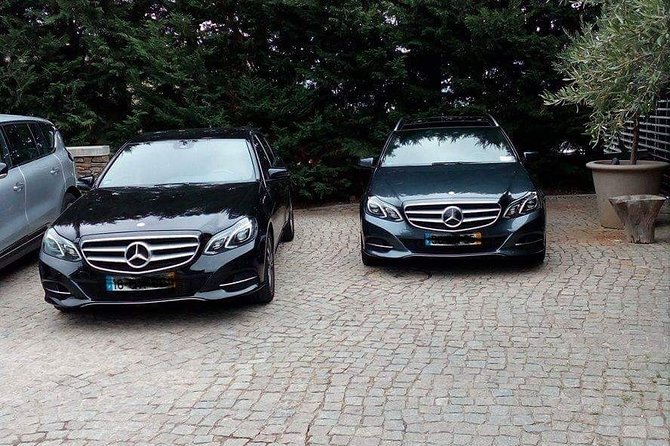
The vehicle is air-conditioned and includes WiFi. That may sound basic, but it makes a difference on a full transfer day. You can cool down between stops, check directions or messages, and keep your attention on the towns rather than on driving and parking.
More transfers and connections:
- Airport Private Transfer to/from Lisbon
★ 5.0 · 1,284 reviews - Lisbon Airport or Cruise Port: Private Arrival Transfer to hotels
★ 4.0 · 529 reviews - Lisbon Small-Group Sightseeing City Tour with Transportation
★ 4.5 · 349 reviews
Understanding the two-stop plan
The six locations listed for the route are not six scheduled stops within the seven-and-a-half-hour duration. Each is described as a 90-minute visit, which alone would take nine hours before adding driving time between Lisbon, the towns, and Porto.
I would treat the choices as a menu. Before departure, confirm the two stops you want and ask how much time will be allowed at each. If you try to fit in too much, you risk reducing every visit to a quick photo stop and arriving in Porto late.
For a first trip, Óbidos and Nazaré make a good pair because they offer very different experiences. Óbidos gives you a compact medieval town, while Nazaré brings the Atlantic coast and its famous giant waves. Fátima and Batalha suit someone more interested in religious landmarks and Portuguese history. Aveiro and Coimbra create a good pairing for canals, architecture, and university culture.
Óbidos: Portugal in compact medieval form
Óbidos is described as one of Portugal’s best-preserved medieval villages, and its small scale is exactly what makes it useful on a transfer day. You can get a strong sense of the place without needing a full day.
The appeal is visual and immediate: old streets, traditional village character, and a setting that feels far removed from modern Lisbon. A 90-minute stop should give you time to walk around and take in the town at an easy pace, though it is not designed for a long museum visit or a slow lunch.
I would choose Óbidos if you want the most picturesque stop on the list. It is also a practical choice for people who prefer a walk through an old town to a formal religious site or a longer city visit.
Keep your pace sensible. The route is compact, but a short stop can pass quickly if you spend too long taking photographs or browsing. Since lunch is not included, you also need to decide in advance whether to eat during a stop or wait until later.
Nazaré: Atlantic views and giant waves
Nazaré is a small fishing village north of Lisbon that became internationally famous for its giant waves. The attraction here is the coast, the fishing-town setting, and the chance to see the place associated with some of Portugal’s most dramatic surf.
The giant waves are seasonal and weather-dependent, so you should not book this stop expecting a guaranteed spectacle on the day. Even without record-breaking surf, Nazaré gives the route a completely different feel from inland Óbidos, Batalha, or Fátima.
A 90-minute visit is enough for a short look at the village and coastal setting. It is not enough for a long beach day, a relaxed seafood meal, and extensive sightseeing. I would pick Nazaré when you want open-air views and a coastal break rather than another historic monument.
The spelling appears in the supplied details as both Nazaré and Narazè. When confirming your choices, use Nazaré so there is no confusion about the intended stop.
A handful more Lisbon ideas to compare
- Lisbon City Center Tour – The Unmissable Lisbon
★ 5.0 · 22,234 reviews - Lisbon: Sintra, Pena, Regaleira, Cabo da Roca & Cascais
★ 4.7 · 19,656 reviews - Lisbon: Jerónimos Monastery Entrance Ticket
★ 4.1 · 14,164 reviews - Lisbon: History, Stories and Lifestyle Walking Tour
★ 4.8 · 10,902 reviews
Batalha: a major monument with limited time
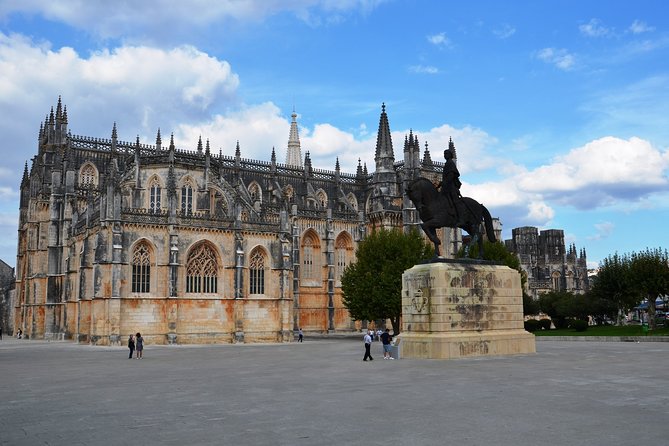
Batalha was founded in the 14th century after a Portuguese victory in battle. Its main attraction is the monastery, a late Gothic building that is also a UNESCO World Heritage Site.
This is one of the strongest choices for anyone who wants architecture and national history in the same stop. The monastery gives the journey a more substantial cultural focus than a simple scenic pause.
The listed 90 minutes should allow time to see the exterior and visit the site area, but you should not assume that a full, unhurried exploration is possible within the transfer schedule. The supplied details list admission as free, yet the overall booking information does not spell out every possible paid activity or entry arrangement. Ask the operator what is covered if going inside the monastery is essential to your plans.
Batalha pairs well with Fátima because both are important religious destinations, though they offer different experiences. It also works with Óbidos if you want two historic places rather than a coastal stop.
Fátima: Portugal’s best-known pilgrimage site
Fátima has been associated with the apparitions of the Virgin Mary since 1917. Construction of the chapel began in 1919, and the site has become one of Portugal’s major places of pilgrimage and spirituality.
You should choose Fátima because it matters to you, not simply because it is famous. For people with a religious connection, the stop can be the central reason to choose this route. For others, it offers an important look at modern Portuguese religious life and a place with a very different atmosphere from the country’s old towns and coastal villages.
The 90-minute stop is useful for seeing the main area and gathering your bearings. It is still a short visit, so anyone wanting extended prayer, a service, or a slower personal experience should confirm whether the timing fits.
Fátima is inland, and its appeal is not based on picturesque streets or seaside scenery. I would not choose it if your main goal is charming architecture or outdoor views. I would choose it if pilgrimage and spirituality are central to your trip.
Aveiro: canals, moliceiros, and Art Nouveau
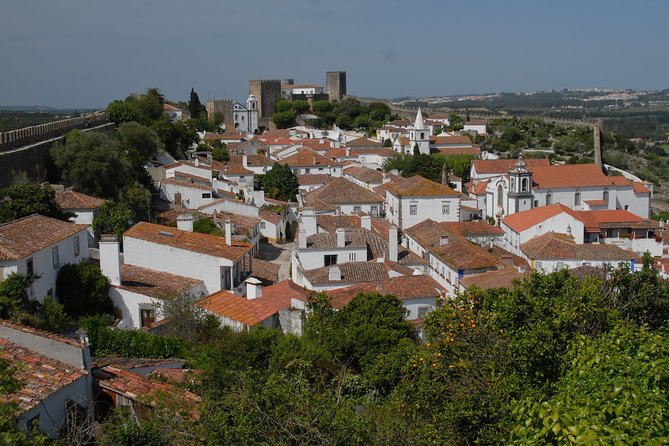
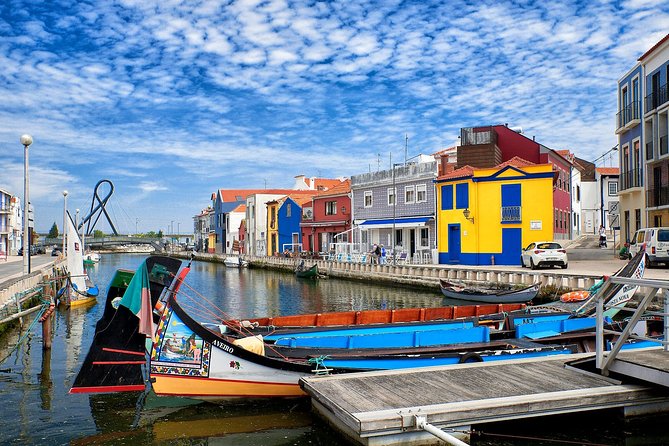
Aveiro is often called the Portuguese Venice because several canals cross the city. Its moliceiro boats add a distinctive touch, while Art Nouveau buildings give the center a different look from the medieval towns on the route.
This is a good option if you want variety. After seeing old stone streets or religious monuments, Aveiro offers canals, decorative architecture, and a more urban setting.
The listed 90 minutes is enough for a first look, but it leaves little room for a leisurely boat outing, a full meal, and a broad walk around town. The details mention the moliceiros, but they do not say that a boat ride is included. Treat any boat trip as something to confirm and budget separately.
I would pair Aveiro with Coimbra if you want two city-based stops. If your priority is getting to Porto with plenty of time to settle in, choose only one of them and avoid trying to rush both.
Coimbra: university tradition and royal history
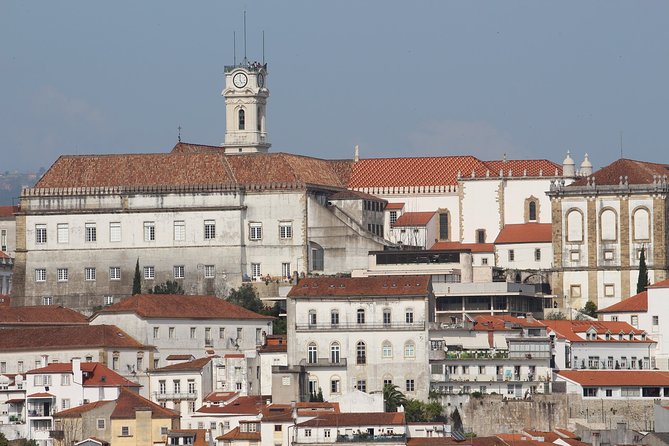
Coimbra is the largest city in central Portugal, with about 150,000 inhabitants. It is also one of the country’s most historic cities, home to Portugal’s oldest university and the burial place of the first two Portuguese kings.
That gives Coimbra a strong cultural identity. The university adds an academic side, while the royal burials connect the city to the early story of Portugal.
A 90-minute visit can introduce you to the city, but it is a short amount of time for a place with several major sights. The supplied details do not specify a guided university entry or any admission tickets, so ask what your stop will include if the university is your main reason for choosing Coimbra.
Coimbra is a thoughtful choice for repeat visitors to Portugal or anyone who prefers a city with layers of education, monarchy, and national history. It is less immediately compact than Óbidos, so the driver’s local advice can be especially useful in deciding where to spend your limited time.
The human side of the ride
The strongest praise focuses on the drivers and guides rather than on the vehicle alone. Antonio is described as kind and attentive, while Hugo is repeatedly associated with good local suggestions, care for the group, and an ability to keep everyone involved. Diogo is also singled out for creating a pleasant route from Lisbon to Porto, including a final view of Porto before drop-off.
You should not assume that a particular person will be assigned unless the provider confirms it. Still, these names help explain what to value in the service: a driver who does more than point the car north.
Hugo is specifically praised for suggesting suitable stops and offering recommendations for time in Porto. That is useful because your arrival city is part of the experience. A good recommendation at the end of the transfer can save you time after check-in.
The service is offered in English, and confirmation is received at booking. Service animals are allowed, and most people can participate. Pickup is available from hotels, hostels, and Airbnb addresses in Lisbon, with pickup also offered in Sintra, Estoril, and Cascais on request.
What the $350.90 price means
The listed price is $350.90 per person. That is a serious cost compared with taking a standard train or bus between Lisbon and Porto, so the value depends on how much you care about the private sightseeing format.
You are paying for private transportation, hotel or accommodation pickup, an air-conditioned vehicle, WiFi, insurance, and the ability to stop at two places along the route. For a solo traveler, the price may feel steep. For a group sharing the vehicle, group discounts may improve the calculation, and the convenience becomes easier to justify.
I would compare the price with three separate costs: transport between cities, local transfers to and from stations, and the time spent visiting one or two places independently. The private option can be worthwhile if you have luggage, limited time, or a group with mixed interests.
Lunch is not included. That is important because the schedule covers most of a day. Plan to buy food during a stop or ask the driver how meal timing is normally handled. Do not assume that admission to every possible interior or activity is part of the price simply because the listed stops show no admission charge.
Who should book this Lisbon to Porto route
I would recommend it most strongly to:
- Couples or families changing cities on the same day
- Small groups that want a private vehicle
- People with luggage who do not want station transfers
- First-time visitors choosing between several central Portugal sights
- Anyone who values local recommendations and a flexible conversation with the driver
I would be more cautious if you want a slow, detailed tour of one place. The 90-minute format keeps the day moving, but it cannot replace a full guided visit to Batalha, Fátima, Coimbra, or Aveiro.
I would also think twice if your Porto check-in is strict or late arrival would cause trouble. The duration is approximate, and traffic or a longer stop can affect the arrival time. Choosing two nearby or straightforward stops is safer than trying to cover the widest possible area.
Booking advice for a smoother day
Choose your two stops before the morning begins. Óbidos and Nazaré offer a balanced old-town and coast combination, while Batalha and Fátima focus more on monuments and religious sites. Aveiro and Coimbra are better for city culture, but fitting both into a transfer day may feel hurried.
Tell the provider your preferred pickup address clearly. Pickup is offered in Lisbon, and Sintra, Estoril, and Cascais can be requested, but those additional locations should be confirmed before you rely on them.
Ask three practical questions at booking:
- Which two stops are confirmed?
- Does the 90-minute allowance include parking and walking time?
- Are any interior admissions or boat rides included?
The cancellation policy is friendly but strict near departure. You can cancel for a full refund up to 24 hours before the start time. Changes or cancellations within 24 hours are not accepted for a refund.
Should you book it?
Book this transfer if you want to make your Lisbon to Porto travel day useful, prefer a private car, and can choose only two stops. I especially like it for Óbidos and Nazaré, or for Fátima paired with Batalha, depending on your interests.
The price is hardest to justify for one person traveling alone, but it becomes more reasonable for a group that values convenience, luggage handling, and local advice. Confirm the exact two-stop plan and timing before paying. If you do that, this can be a comfortable bridge between Portugal’s two major cities rather than a day lost on the road.
FAQ
How long does the private Lisbon to Porto transfer take?
The advertised duration is approximately 7 hours and 30 minutes.
How many sightseeing stops are included?
The experience is described as a private transfer with two visits. The possible locations listed are Óbidos, Nazaré, Batalha, Fátima, Aveiro, and Coimbra.
Can I choose which places to visit?
The information presents six possible stops for a two-visit route. Confirm your preferred pair with the provider before the journey.
Where can pickup take place?
Pickup is offered from hotels, hostels, and Airbnb addresses in Lisbon. Pickup in Sintra, Estoril, and Cascais can be requested.
Is lunch included?
No. Lunch is not included in the price.
What is included in the transfer?
Insurance, an air-conditioned vehicle, private transportation, and WiFi on board are included.
What is the cancellation policy?
You can cancel up to 24 hours before the experience start time for a full refund. Cancellations or changes made less than 24 hours before departure are not accepted for a refund.
Fresh finds around Lisbon
- Lisbon: Tuk Tuk City Tour★ 3.6 · 7 reviews
- Lisbon: Highlights and Hidden Gems Tour★ 5.0 · 7 reviews
- Fatima Full day Private Tour★ 5.0 · 7 reviews
- Private Tour to Evora and Monsaraz from Lisbon★ 5.0 · 7 reviews
- Discover Sintra Beauty with a Guided Journey from Lisbon★ 5.0 · 7 reviews
- Private Half-Day Tour to Sintra★ 3.4 · 7 reviews
- Lisbon: Sunset and Wine Catamaran Tour★ 5.0 · 7 reviews
- Nazaré: Beaches of Nazaré Guided E-Bike Tour★ 4.9 · 7 reviews
Transfers, compared.


Lisbon Airport or Cruise Port: Private Arrival Transfer to hotels
Read our review →
Lisbon Small-Group Sightseeing City Tour with Transportation
Read our review →

Shared Arrival Transfer: From Lisbon Airport to Hotels
Read our review →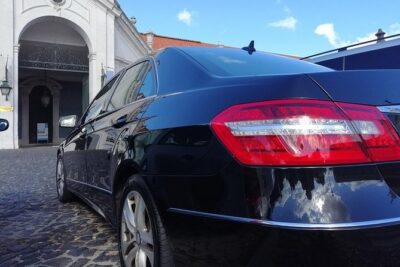

Sintra: Official Public Bus Transport: All Palaces & Castles
Read our review →
Private Round-Trip Transfer – Lisbon Airport & City Center
Read our review →Browse the lists this tour appears in