

Reviewed · HISTORICAL TOURS
Private Half-Day Tour of Historic Lisbon
Lisbon’s story comes into focus on this private route through seven historic stops, from Roman Olissipo at Praça do Comércio to the grand dome of Basilica da Estrela. I like that the tour connects major turning points, including Moorish rule, Portugal’s monarchy, the 1755 earthquake, and modern democracy, rather than treating each monument as an isolated photo stop.
I also like the one-group format and the relaxed pace praised by guests who toured with Diogo and Mr. Mezzadri. You get room for questions and local context, plus a chance to enjoy Portuguese tarts along the way. The main drawback is simple: four hours is not long enough for deep visits inside every site, and the route includes several hilltop viewpoints.
In This Review
- Key things to know before booking
- Praça do Comércio: Lisbon begins beside the river
- Portas do Sol: Alfama from above
- Senhora do Monte: the route reaches its highest view
- The Marquis of Pombal and the city rebuilt
- Carmo Convent: Gothic ruins and the memory of 1755
- Parliament at São Bento: from monastery to democracy
- Basilica da Estrela: a grand finish in white and marble
- Why the private format matters on a four-hour route
- Pace, hills, and what to expect on the day
- What the $108.37 price means for value
- The strongest part of the guiding
- Who should book this Lisbon tour
- Should you book it?
- FAQ
- How long is the Private Half-Day Tour of Historic Lisbon?
- How much does the tour cost?
- Is the tour private?
- Is pickup available?
- What language is the tour offered in?
- Can I cancel for a full refund?
- What happens if bad weather cancels the tour?
Key things to know before booking
- Seven Lisbon landmarks in four hours: The route covers Praça do Comércio, two viewpoints, Carmo, Parliament, and Estrela.
- Private guiding: Only your group participates, so the pace can feel more personal than a large coach tour.
- History with a clear timeline: You move from Roman, Visigothic, and Moorish Lisbon to the monarchy, earthquake recovery, and modern government.
- Strong guide focus: Diogo and Mr. Mezzadri are specifically identified as engaging guides who connect national history with daily life.
- Views come with hills: Portas do Sol and Senhora do Monte offer memorable city outlooks, but the route reaches Lisbon’s upper districts.
- Flexible cancellation: You can receive a full refund if you cancel at least 24 hours before the start time.
Praça do Comércio: Lisbon begins beside the river
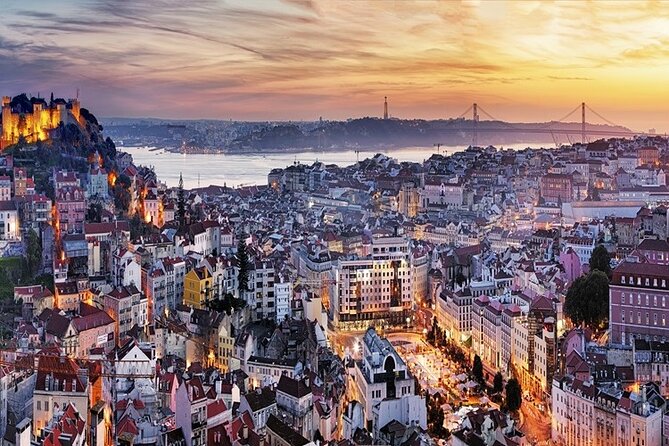
The tour opens at Praça do Comércio, also called Terreiro do Paço. This broad square is more than an attractive place to begin. It is presented as the starting point for secular Olissipo, linking the modern city to Roman, Visigothic, and Moorish periods.
I like this opening because it gives your guide a wide historical frame before the route climbs into older neighborhoods. Instead of beginning with a single church or palace, you start with the idea of Lisbon as a city repeatedly shaped by different rulers and cultures.
You have about an hour here, the longest stop on the tour. That matters. It gives your guide time to explain the early city and to establish the themes that return later: power, religion, destruction, rebuilding, and the changing role of Lisbon as Portugal’s capital.
Admission is listed as free, so this portion is about interpretation and setting rather than a ticketed interior. If you want a quick sense of Lisbon’s scale before heading uphill, this is a useful place to begin.
More history-first plans:
- Lisbon: History, Stories and Lifestyle Walking Tour
★ 4.8 · 10,902 reviews - Lisbon: Live Fado Show with Port Wine in Historic Center
★ 4.7 · 4,166 reviews - Lisbon: Fado Show with Wine in a Historic Venue
★ 4.8 · 1,294 reviews
Portas do Sol: Alfama from above
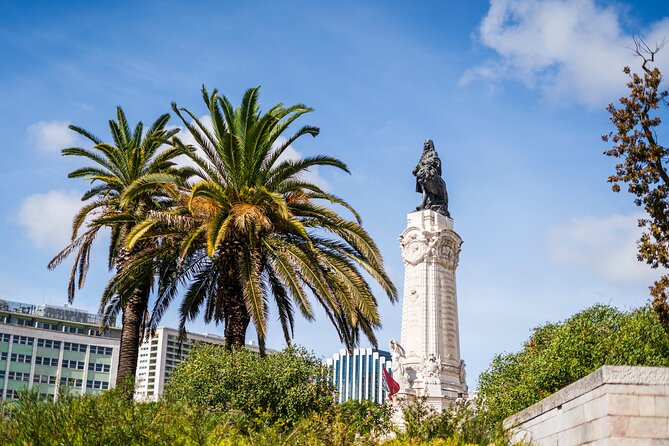
After Praça do Comércio, the route moves to Miradouro das Portas do Sol, where you get a different view of Lisbon. The outlook brings together São Vicente, Castelo dos Mouros, the Judiaria, Mouraria, and Alfama.
The half-hour stop is short, but the viewpoint helps you understand how Lisbon’s neighborhoods fit together. Alfama is not treated merely as a maze of lanes. From above, you can see it as part of a wider historic center shaped by communities, fortifications, religion, and the city’s steep ground.
This is one of the tour’s most useful stops for orientation. Lisbon can be confusing on foot because streets rise, bend, and change character quickly. A guide who explains what you are looking at can save you from seeing only rooftops and pretty tiles.
The tradeoff is that half an hour passes quickly. You should not expect a long walk through Alfama on this itinerary. Instead, you get a focused viewpoint and a concise explanation of the district’s place in Lisbon’s story.
Senhora do Monte: the route reaches its highest view
Miradouro da Senhora do Monte is described as the apex of the route, both in elevation and in historical scope. From here, the historic center and the wider capital come into view, along with the story of Portugal’s four dynasties.
I like the way this stop expands the discussion from Lisbon’s neighborhoods to the monarchy that governed the country. The guide can place the capital’s streets, churches, and royal institutions within a longer national story.
The viewpoint also recalls the city’s periods of revolution and military attack, as well as its survival through the earthquake. That combination gives the stop more weight than a simple lookout. You are looking across a city that has been rebuilt, contested, and reshaped many times.
Plan for another 30 minutes. As with Portas do Sol, this is an interpretive stop rather than a long neighborhood walk. If your mobility is limited, ask about the exact pickup and route details before booking, since the itinerary includes Lisbon’s upper districts and two elevated viewpoints.
The Marquis of Pombal and the city rebuilt
At the Estátua do Marquês de Pombal, the focus shifts to one of the figures most closely tied to Lisbon’s 18th-century rebuilding. The stop covers his role and influence during the reign of King José I.
This is a smart point in the route. The earthquake is not left as a dramatic disaster story at Carmo later on. Here, you get a chance to consider the political response and the person associated with Lisbon’s transformation after that crisis.
The half-hour visit should suit you if you prefer a guide who explains cause and effect. Pombal’s presence becomes a bridge between the older city seen from the viewpoints and the more ordered areas that followed the earthquake.
The information provided does not promise entry into any attraction at this stop. Expect a guided explanation around the statue, with the value coming from context rather than an extended monument visit.
A handful more Lisbon ideas to compare
- Lisbon: 7 Hills Half-Day Electric Bike Tour
★ 4.9 · 1,592 reviews - Lisbon Private And Customizable Half-Day Tour
★ 5.0 · 633 reviews - Sintra Half-Day Private Tour – A Journey through Wonderland
★ 5.0 · 601 reviews - Lisbon: Half-Day Sintra Tour with Pena Palace and Regaleira
★ 4.9 · 570 reviews
Carmo Convent: Gothic ruins and the memory of 1755

Convento do Carmo is one of the route’s most striking stops. Its imposing Gothic ruins recall the 1755 earthquake, and the surrounding Largo do Carmo offers a quieter setting with historic palaces, the GNR, and picturesque cafés.
I like this stop because it lets you feel the earthquake’s effect through architecture. A written account of destruction can seem distant, but roofless Gothic remains make the event easier to grasp. The contrast between the ruins and the calm square around them is part of the appeal.
You have 30 minutes here. That is enough for an explanation and a look at the setting, but possibly not enough for a slow, detailed visit if you also want to explore every feature of the convent. The listed admission is free, but you should confirm with the operator if you expect a separate interior visit or a longer stop.
This is also a good place to pause from the city’s hills and traffic. The square offers a more relaxed mood than the major viewpoints, and its cafés make the area feel lived-in rather than preserved only for sightseeing.
Parliament at São Bento: from monastery to democracy
The route continues to Assembleia da República, installed in the former Monastery of St. Benedict. The building’s Neoclassical facade and its location on Estrela give the stop a different tone from the medieval ruins and hilltop outlooks.
Here, the subject is Portuguese democracy and the country’s political life. That makes the tour feel broader than a circuit of old churches and viewpoints. You see how a former religious building now serves a modern national institution.
I find this change of subject useful. The route moves from kings, earthquakes, and old neighborhoods into the government Portugal uses today. The building itself carries both architectural and civic importance.
Again, the scheduled time is 30 minutes. The tour information does not say that an interior parliamentary visit is included, so you should expect to view and discuss the building rather than assume a guided session inside. The free admission note applies to the listed stops, but the precise access arrangements are worth checking when confirming pickup.
Basilica da Estrela: a grand finish in white and marble
The final stop is Basilica da Estrela, one of Lisbon’s major churches. Its large white dome dominates the city skyline, and its design combines Baroque and Neoclassical elements.
The basilica was built in the 18th century by order of Queen Maria I. Inside, the details described include a cork nativity scene by Machado de Castro and colorful marble covering the floor and walls. These are the sort of details you might miss if you simply walked in, took a quick photograph, and left.
The stop also includes the Jardim da Estrela across from the basilica, a refined green space where you can rest. That gives the tour a gentler finish after the viewpoints and political landmarks.
You have about 30 minutes here, so the visit is likely best understood as a concise introduction. If the basilica is especially important to you, you may want to return later for more time. The tour gives you the guide’s context and the key visual details, but four hours cannot provide a full treatment of every church and monument.
Why the private format matters on a four-hour route
This is a private activity, so only your group participates. That changes the feel of a half-day tour. You are not waiting for a large group to gather, and the guide can adjust explanations to your interests.
The two named guides associated with the experience are Diogo and Mr. Mezzadri. Diogo is described as experienced, relaxed in pace, and able to explain both Portuguese and Lisbon history. Mr. Mezzadri is described as personable and enthusiastic, with a knack for connecting the past to modern daily life.
Those qualities matter more than a long list of dates. Lisbon’s history can quickly become a parade of kings, battles, and earthquakes. A guide who can relate those events to the streets and buildings around you will make the route easier to follow.
The private setting also gives you a better chance to ask practical questions. You might ask why one neighborhood developed differently from another, how the earthquake changed the city, or what you should see later on your own. The tour is still only four hours, but the conversation can make those hours more useful.
Pace, hills, and what to expect on the day
The scheduled times add up to roughly four hours: one hour at Praça do Comércio followed by six stops of about 30 minutes each. That is a tidy plan, but it leaves little room for long unscheduled breaks.
The route includes two prominent viewpoints, Senhora do Monte is specifically described as the highest point, and it continues through central and upper areas of Lisbon. You should be comfortable with a route that involves changes in elevation, or confirm the transport arrangements with Outing Portugal before booking.
Pickup is offered, but the supplied pickup note is not specific about the exact locations covered. You need to provide your pickup location when confirming your presence. Ask for the precise pickup details if you are staying outside the central areas or need a particular meeting arrangement.
The tour is offered in English and includes a mobile ticket. Confirmation is received at booking. Service animals are allowed, and most people can participate, but the route’s hills and short stop times make it sensible to mention any mobility needs in advance.
What the $108.37 price means for value
At $108.37 per person, this is not the cheapest way to see Lisbon’s center. You are paying for a private four-hour service, a guide, pickup availability, and a route that joins several parts of the city without requiring you to plan the sequence yourself.
The value is strongest for couples, families, or small groups who want personal attention. A private guide can keep the pace relaxed, answer questions, and connect the stops into one story. That is harder to achieve on a basic sightseeing bus or a self-guided walk.
The price is less attractive if you want long interior visits or a slow neighborhood stroll. Most stops receive only 30 minutes, and the route covers a lot of ground. You may still need separate visits to Carmo, Basilica da Estrela, or other sites if you want to study them carefully.
Group discounts are available, which could improve the per-person value for a larger private party. Since the tour is private, compare the total cost for your group rather than judging the price only as an individual ticket.
The strongest part of the guiding
The most praised quality is the human side of the tour. The guiding is described as enthusiastic, personable, and engaging, with explanations that connect Portugal’s past to modern life.
That is exactly what this itinerary needs. A viewpoint can give you a fine photograph, but it cannot by itself explain São Vicente, the Moorish period, the four dynasties, Pombal’s influence, the earthquake, and the role of Parliament. The guide supplies the links between those subjects.
Diogo’s relaxed pace is especially useful for a route with seven stops. The Portuguese tart detail also adds a welcome local touch. It is a small part of the outing, but food can make a history lesson feel more connected to present-day Lisbon.
The tour has an average rating of 5 from 11 ratings, with 100 percent recommending it. That is a very positive record, though the sample is small. I would treat it as strong evidence of satisfaction with the guides, not as a guarantee that every group will have the same experience.
Who should book this Lisbon tour
I would recommend this tour if you have only half a day and want a guided introduction to Lisbon’s main historical layers. It suits first-time visitors who want help with orientation, especially if you prefer a private conversation to a fixed large-group script.
It also fits history-minded families and small groups. The route gives children and adults several visual anchors: a huge square, hilltop views, Gothic ruins, a former monastery, and a domed basilica.
You may want a different plan if your main goal is shopping, nightlife, or extended time inside museums. This is a broad city overview with historical interpretation, not a slow specialist visit to one neighborhood.
The experience also works well near the start of a Lisbon stay. After seeing the city from Portas do Sol and Senhora do Monte, you will have a clearer sense of where Alfama, Carmo, São Bento, and Estrela fit. You can then return to the places that deserve more time.
Free cancellation is available up to 24 hours before the start time. Changes or cancellations inside that window are not refunded, and the tour requires good weather. If poor weather cancels the outing, you are offered another date or a full refund.
Should you book it?
Book this private Lisbon tour if you want a well-paced historical overview with a personal guide, especially during a first visit or a short stay. The route covers more than postcard scenery, and the strongest part is the way the guides connect old Lisbon with the city you see today.
Skip it if you want lengthy interior visits, a long walk through Alfama, or a low-cost group excursion. At $108.37 per person, the best value comes when you share the private service with family or friends and make full use of the guide’s time and local perspective.
FAQ
How long is the Private Half-Day Tour of Historic Lisbon?
The tour lasts approximately four hours.
How much does the tour cost?
The listed price is $108.37 per person. Group discounts are available.
Is the tour private?
Yes. Only your group participates in the activity.
Is pickup available?
Yes, pickup is offered. You are asked to provide your pickup location when confirming your presence.
What language is the tour offered in?
The tour is offered in English.
Can I cancel for a full refund?
Yes, if you cancel at least 24 hours before the experience start time. Cancellations made less than 24 hours in advance are not refunded.
What happens if bad weather cancels the tour?
Because the tour requires good weather, you will be offered another date or a full refund if poor weather causes cancellation.
Fresh finds around Lisbon
- Lisbon: Tuk Tuk City Tour★ 3.6 · 7 reviews
- Fatima Full day Private Tour★ 5.0 · 7 reviews
- Lisbon: Highlights and Hidden Gems Tour★ 5.0 · 7 reviews
- Discover Sintra Beauty with a Guided Journey from Lisbon★ 5.0 · 7 reviews
- Private Tour to Evora and Monsaraz from Lisbon★ 5.0 · 7 reviews
- Private Half-Day Tour to Sintra★ 3.4 · 7 reviews
- Lisbon: Sunset and Wine Catamaran Tour★ 5.0 · 7 reviews
- Nazaré: Beaches of Nazaré Guided E-Bike Tour★ 4.9 · 7 reviews
Historical Tours, compared.
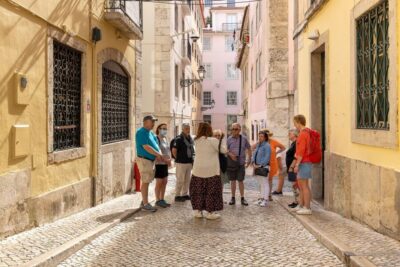
Lisbon: History, Stories and Lifestyle Walking Tour
Read our review →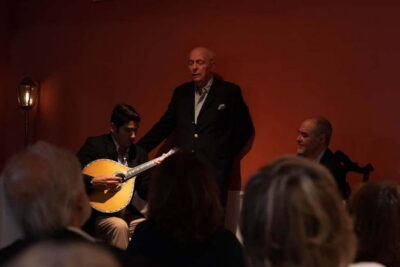
Lisbon: Live Fado Show with Port Wine in Historic Center
Read our review →
Lisbon: Fado Show with Wine in a Historic Venue
Read our review →
Explore Lisbon by Tuk Tuk: History and Viewpoints
Read our review →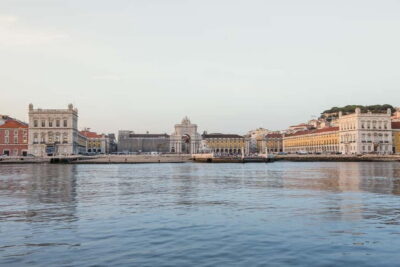
Lisbon: Daytime or Sunset Boat Cruise with History and Wine
Read our review →
Private Tuk Tuk Tour Through Lisbon’s Historical Streets
Read our review →
Lisbon Sunset Sailing with Portuguese Wine and History
Read our review →
Lisbon: Guided Tuk-Tuk Tour Along the Historic Tram Line 28
Read our review →Browse the lists this tour appears in