
Reviewed · WINE TOURS
Private Food and Wine Tour: From Street to Gourmet
Lisbon’s best food tours do more than move you from one snack to the next. This four-hour private walk links viewpoints, old neighborhoods, historic churches, and local eateries, so every bite comes with a sense of place. You may taste seafood, meat, fish, cheese, pastries, beer, Port, and Portuguese wines while learning how Mediterranean, African, and Indian influences shaped the country’s cooking.
I like the generous range of up to 16 tastings, and I like the private format. Your guide can adjust the pace and food choices for your group, including pescatarian, vegetarian, no-pork, and non-alcoholic needs. The main caution is that the advertised tasting count and drinks may vary, so confirm the exact menu before you go.
In This Review
- Key points at a glance
- A food tour that also explains Lisbon
- Starting above the rooftops at Senhora do Monte
- Two viewpoints and the old Alfama maze
- Lisbon Cathedral and the castle quarter
- Mouraria, Fado, and a changing food culture
- Igreja de São Domingos and the rebuilt center
- What you will actually eat and drink
- Why the private format is worth the price
- Who will enjoy this route most
- Booking details worth checking
- Is this Lisbon food tour worth booking?
- FAQ
- How long is the Private Food and Wine Tour?
- How much does the tour cost?
- Where does the tour start?
- Where does the tour finish?
- Is this a private tour?
- How many tastings are included?
- What types of food are included?
- What drinks are included?
- Can the tour accommodate dietary restrictions?
- Is cancellation free?
Key points at a glance
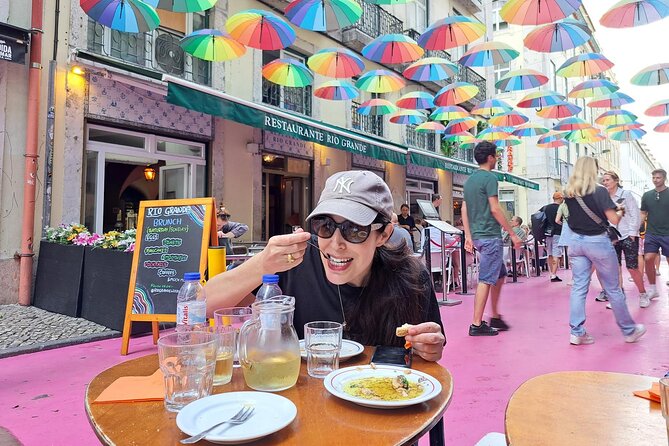
- Sixteen tastes across Lisbon: Expect a broad mix of seafood, meat, fish, cheese, pastries, coffee, local drinks, and a secret dish.
- A food tour with serious views: Senhora do Monte and Portas do Sol give you two of Lisbon’s finest city outlooks.
- Private guiding matters: Guides such as Antonio, Thomas, Lourenço, Carolina, Martim, and George have been singled out for combining food with local history and practical tips.
- A useful first-day activity: The route introduces Graça, Alfama, Mouraria, Rossio, Baixa, and Rua Augusta in one outing.
- Food needs can be handled: Vegetarian, pescatarian, no-pork, and non-alcoholic options are available if arranged in advance.
- Bring your walking shoes: This is a real city walk through hilly districts, not a seated tasting session.
A food tour that also explains Lisbon
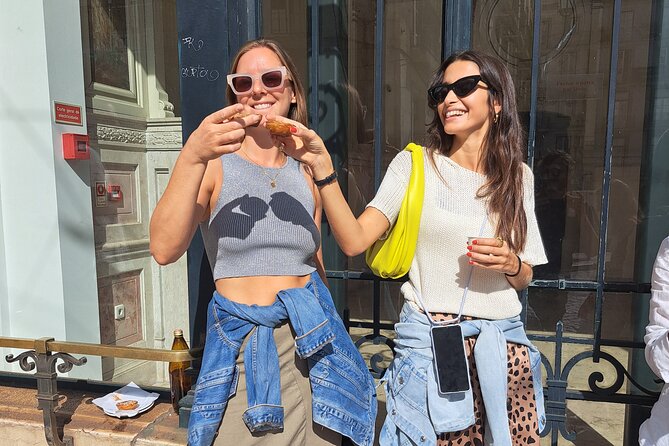
The smart idea here is the pairing of food with geography. You begin high in Graça, pass through old quarters shaped by Moorish and Portuguese history, and finish around Rossio after walking down toward the city center.
That route gives the meal a natural rhythm. A viewpoint helps you understand Lisbon’s hills. A narrow Alfama lane shows how older neighborhoods fit together. Mouraria adds the story of Fado and the city’s many immigrant communities. Then Rua Augusta brings you into the broad, rebuilt center shaped by the 1755 earthquake.
This is especially useful if you are new to Lisbon. In four hours, you get an introduction to places you might otherwise visit separately, plus a list of food stops and restaurants to return to later.
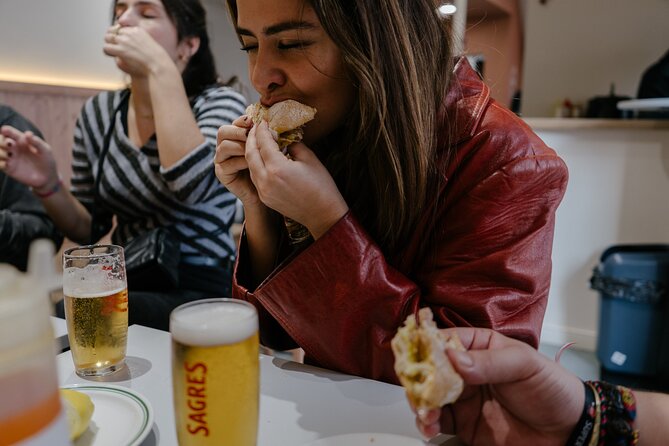
The food itself is designed as a survey of Portuguese eating. The stated plan includes up to 16 samples, with seafood, fish, meat, cheese, pastries, and drinks paired along the way. You may also try Port wine, white, red, and green wine, local beer, and a famous Portuguese liqueur.
The word up to matters. One participant reported receiving about nine tastings, one beer, and one white wine rather than the full advertised range. The overall experience was still considered strong, but you should ask what will be served on your date if the precise food and drink lineup matters to you.
More Lisbon wine afternoons:
- Winner 2025 Undiscovered Lisbon Food & Wine Tour by Eating Europe
★ 5.0 · 6,390 reviews - Lisbon: Live Fado Show with Port Wine in Historic Center
★ 4.7 · 4,166 reviews - Lisbon: Food and Wine Small Group Walking Tour
★ 4.9 · 4,082 reviews
Starting above the rooftops at Senhora do Monte
The meeting point is Largo da Graça 98, and the first stop is Miradouro da Senhora do Monte. This is a fine place to begin because the view gives you a quick visual map of Lisbon.
From here, you can look toward the castle, the river, and the colorful houses spread across the hills. Allow about 20 minutes at the viewpoint. There is no admission charge, but reaching the meeting point means dealing with Lisbon’s slopes and cobbled streets.
The high starting point also sets up the walking route. Much of the journey from Graça toward Rossio is downhill or less demanding than the opening climb, though the paving can still be uneven. Wear shoes with a firm sole, especially if you plan to take the tour early in your visit and then keep walking afterward.
Your guide may begin explaining Lisbon’s food traditions here. Portugal is small, yet its cooking varies by region and reflects centuries of contact with the Mediterranean, Africa, and India. That wider story helps make a plate of seafood or a spice-laced dish more interesting than a simple food sample.
Two viewpoints and the old Alfama maze
The next major outlook is Miradouro das Portas do Sol. It faces Alfama and offers views toward São Vicente Monastery and the National Pantheon.
I like having two viewpoints built into the tour. Senhora do Monte gives you a broad city view, while Portas do Sol brings you closer to the old eastern districts. Together, they show why Lisbon is best understood from above before you explore it on foot.
From Portas do Sol, the route enters Alfama. The neighborhood is often described as a traditional village inside a large city, and that comparison makes sense as you wander through its tight streets and irregular lanes. You may see colorful murals and small details that are easy to miss from a sightseeing vehicle.
The planned Alfama visit lasts about 30 minutes. It is not enough time to inspect every corner, but it works well as part of a food walk. You get a feel for the area rather than a formal architectural lecture.
There is a practical tradeoff here. Narrow lanes, hills, and cobbles are part of Alfama’s charm, but they can make the route tiring for anyone with mobility limits. Most people can take part, and service animals are allowed, but contact the operator before booking if your group has specific access needs.
Lisbon Cathedral and the castle quarter
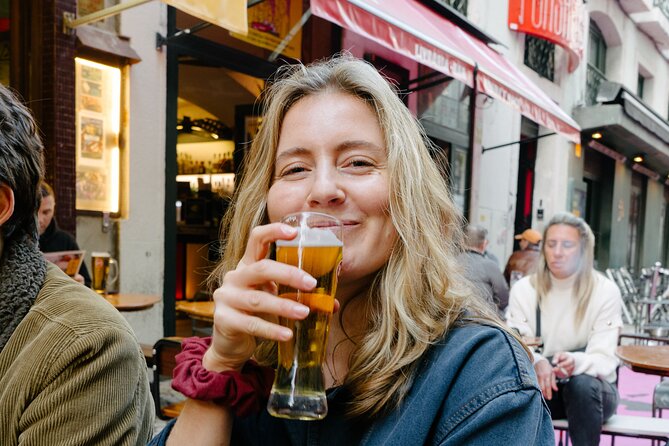
Lisbon Cathedral follows, with about 20 minutes set aside. The cathedral was built on the site of the main mosque during Moorish rule and became the city’s first Roman Catholic cathedral after the Portuguese conquest in 1147. It is also Lisbon’s oldest and principal church.
The stop gives the food a useful historical frame. Lisbon’s cuisine is not separate from the city’s past. Religious change, trade, overseas contact, and the movement of people all affected what was grown, sold, cooked, and eaten.
The tour then moves through Castelo, Alfama, and Mouraria, with about 40 minutes in this part of the route. São Jorge Castle is tied to the conquest led by Portugal’s first king, Afonso Henriques, in 1147. The castle area is one of Lisbon’s defining sights, even though this experience is not described as a full castle admission tour.
If you want a long, detailed castle visit, this tour may not be the right substitute. If you want the castle district folded into a larger food and walking route, it is a good use of time.
The route is also useful for orientation. You see how the old hilltop areas connect with the lower city, and your guide can point out places to revisit. Several guides have been praised for giving restaurant and sightseeing suggestions for the rest of a Lisbon stay.
A handful more Lisbon ideas to compare
- Lisbon City Center Tour – The Unmissable Lisbon
★ 5.0 · 22,234 reviews - Lisbon: Sintra, Pena, Regaleira, Cabo da Roca & Cascais
★ 4.7 · 19,656 reviews - Lisbon: Jerónimos Monastery Entrance Ticket
★ 4.1 · 14,164 reviews - Lisbon: History, Stories and Lifestyle Walking Tour
★ 4.8 · 10,902 reviews
Mouraria, Fado, and a changing food culture
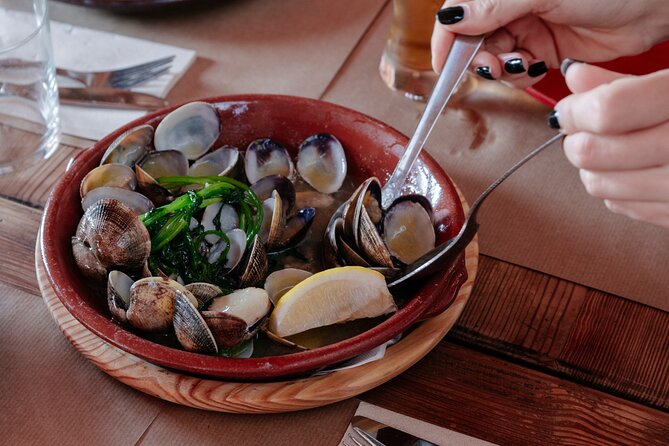
Mouraria receives its own stop, including the Monumento Mouraria Berço do Fado. The neighborhood is associated with the birth of Fado and is now home to one of Lisbon’s most varied populations.
That makes Mouraria one of the most interesting parts of the experience. The tour does not present Portuguese food as a sealed, unchanging tradition. Instead, it connects local dishes with the people and cultures that have shaped Lisbon.
The stop lasts about 20 minutes. You will not attend a full Fado performance as part of the information provided, but you will learn why this district matters to the music and identity of the city.
This is also where the tour’s Mediterranean, African, and Indian theme feels most relevant. Your guide can explain the influences while you taste, rather than offering them as a list of historical facts. The best guides on this route, including Antonio, Thomas, and Martim, have been praised for bringing food, culture, and social context together.
Igreja de São Domingos and the rebuilt center
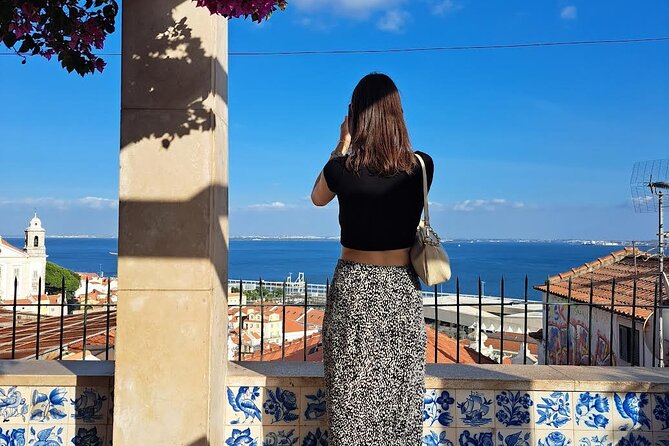
The short stop at Igreja de São Domingos lasts about 10 minutes. The church is known for surviving multiple fires, an earthquake, and other disasters. Its damaged interior gives it a character unlike the polished churches you may see elsewhere in Lisbon.
Ten minutes is brief, but that is enough for a quick look and an explanation of why the church is unusual. It also breaks up the food stops with a reminder that Lisbon has repeatedly had to rebuild itself.
The route then reaches Rua Augusta for about 20 minutes. This is the central pedestrian thoroughfare leading through the lower city and its large squares. The area was rebuilt and reorganized after the 1755 earthquake under the direction of the Marquês de Pombal.
Rua Augusta is a fitting final chapter. The earlier neighborhoods feel tight, old, and steep. Here, the streets become broad and orderly. You can see the practical response to disaster in the city plan.
The advertised end point is Rossio Square, while the wider description also names Baixa and Cais do Sodré among the areas explored. Since the listed route ends at Rossio, ask your guide how much time will be spent in Cais do Sodré if that district is important to you.
What you will actually eat and drink
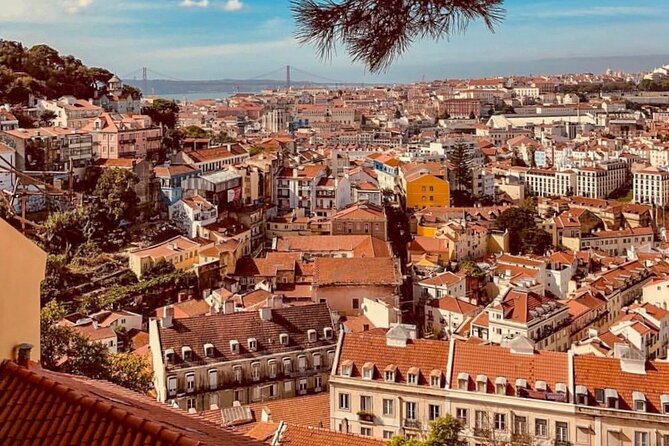
The tour is built around quantity and variety rather than one large meal. You should expect several small portions spread across the walk, with drinks matched to the tastings.
The food categories include:
- Seafood and fish
- Meat
- Portuguese cheese
- Pastries and other sweets
- A secret dish
- Coffee or other local items, depending on the day’s stops
The drink list includes local beers, Port wine, white wine, red wine, green wine, and a Portuguese liqueur. Vegetarian, pescatarian, and non-alcoholic drink options are available. Vegetarian guests have been accommodated successfully, but you should tell the operator about food restrictions before the tour begins.
The tour description refers to both lunch and dinner food. That suggests the experience may be scheduled around either meal period, but the exact start time is not provided here. Do not assume it replaces a full restaurant lunch or dinner for every group. With as many as 16 samples, it may leave you very full, but the portion size and menu can change.
The seafood focus is a major draw. The experience includes a dish described as having been chosen as the best seafood dish in the world. Since the specific dish is not named, ask your guide what it is on your date rather than building your expectations around a particular recipe.
Why the private format is worth the price

At $193.57 per person, this is not a budget snack walk. The price makes more sense for a small group that values a private guide, a flexible route, a history lesson, and a meal’s worth of samples in one package.
A shared food tour can cost less, but it may give you less control over pace and dietary choices. Here, only your group participates, and the guide can adapt the tastings for different ages and preferences. All ages from 1 to 99 are accepted, subject to the walking demands.
The private format is particularly useful for families, couples, and groups with mixed diets. It also gives you room to ask questions. Guides such as Thomas, Antonio, John F., George, Gabby, Carolina, Lourenço, and Martim have been praised for humor, local recommendations, and the ability to connect food with Lisbon’s past.
The value is strongest when you take the tour near the start of your stay. You can use the restaurant suggestions, neighborhood orientation, and food notes during the rest of your time in Portugal.
The tour is often booked well ahead, around 58 days in advance on average. That does not guarantee every date will sell out, but it is a good reason to reserve early if you need a certain day or have dietary requirements.
Who will enjoy this route most
I would recommend it to first-time Lisbon visitors who want a fast, tasty orientation. You get major viewpoints, old neighborhoods, churches, city history, and local food in one half-day.
It also suits people who prefer small local stops to a formal cooking class. You will not be preparing recipes or sitting in one venue for hours. You will be walking, tasting, listening, and moving through the city.
Food-focused visitors should enjoy the range, especially if they want more than the usual pastry-and-cod introduction. The route covers wine, Port, beer, cheese, seafood, meat, and sweets.
Families can benefit from the private setup because the guide can adapt the tastings. Still, the hills and cobblestones may be hard for very young children or anyone who struggles with walking.
This is less suitable if you want a quiet, slow meal, a full guided visit inside every monument, or a guaranteed list of exactly 16 full-sized dishes. It is also not ideal for someone who avoids all alcohol unless the non-alcoholic arrangements are made in advance.
Booking details worth checking
The tour is offered in English and includes a mobile ticket. It begins at Largo da Graça 98 and ends at Rossio Square. Both points are near public transportation, but you should check the meeting address carefully before setting out.
One serious practical warning: a booking confirmation has reportedly shown the wrong meeting address. A guide waited for the delayed party, but the group had to spend 30 euros on transport after following the map attached to the ticket. Contact Picta Travel before the day of the tour and confirm the exact starting point directly.
Free cancellation is available up to 24 hours before the start time for a full refund. Changes or cancellations inside that window are not accepted, and poor weather may lead to a new date or a full refund.
Is this Lisbon food tour worth booking?
Book it if you want a private Lisbon introduction built around food, especially during your first few days. The mix of viewpoints, Alfama, Mouraria, Rua Augusta, local eateries, wine, beer, and Portuguese dishes gives you far more context than a stand-alone tasting session.
The strongest reason to choose it is the guide. The experience depends heavily on the person leading it, and the guides associated with this tour have been praised for warmth, historical detail, food knowledge, and useful advice for the rest of your trip.
Before paying, confirm the meeting address, the likely tasting count, the drink pairings, and any dietary needs. If you are happy with some flexibility, the price can be fair for a private half-day outing with a substantial amount of food and personal guiding. If you need a fixed menu or a strictly scheduled monument tour, choose something more structured.
FAQ
How long is the Private Food and Wine Tour?
The tour lasts approximately four hours.
How much does the tour cost?
The listed price is $193.57 per person.
Where does the tour start?
The meeting point is Largo da Graça 98, 1170-135 Lisboa, Portugal.
Where does the tour finish?
The listed end point is Rossio Square, Praça do Rossio, 1100-200 Lisboa, Portugal.
Is this a private tour?
Yes. Only your group participates in the activity.
How many tastings are included?
The experience includes up to 16 typical tastings, covering food and paired drinks. The exact number can vary, so confirm the menu with the operator.
What types of food are included?
The tastings may include seafood, meat, fish, cheese, pastries, a secret dish, and other local foods.
What drinks are included?
Included drinks can include Port wine, white, red, and green Portuguese wines, local beer, and a Portuguese liqueur.
Can the tour accommodate dietary restrictions?
Yes. Vegetarian, pescatarian, no-pork, and non-alcoholic options are available if you contact the operator in advance.
Is cancellation free?
You can cancel at least 24 hours before the start time for a full refund. Cancellations or changes made less than 24 hours before the tour are not accepted.
Fresh finds around Lisbon
- Jeronimos Monastery Guided Tour – Small Groups – Tickets Included★ 5.0 · 51 reviews
- Sanctuary of Fátima and Coimbra City Tour★ 4.5 · 51 reviews
- Sintra/Lisbon: Sintra & Quinta da Regaleira Tour with Ticket★ 4.4 · 51 reviews
- Lisbon: Private Christmas Lights Tour by Eco Tuk Tuk★ 4.9 · 51 reviews
- Peniche: Berlengas Island Catamaran Tour – Round Trip★ 4.6 · 51 reviews
- Half day Spa Water Therapy experience at THE SPA at Corinthia Lisbon★ 4.5 · 51 reviews
- Lisbon: Private Tuk-Tuk Tour for 2 hours★ 4.7 · 51 reviews
- Premium Lisbon Airport Transfer to Lisbon★ 5.0 · 51 reviews
Wine Tours, compared.

Winner 2025 Undiscovered Lisbon Food & Wine Tour by Eating Europe
Read our review →
Lisbon: Live Fado Show with Port Wine in Historic Center
Read our review →
Lisbon: Food and Wine Small Group Walking Tour
Read our review →
2-Hour Lisbon Traditional Boats Sunset Cruise with White Wine
Read our review →
Lisbon Food Tour with 10+ Tastings of Local Delicacies & Wines
Read our review →
Lisbon: Fado Show with Wine in a Historic Venue
Read our review →Browse the lists this tour appears in