
Reviewed · ÉVORA TOURS
Marble Tour in Vila Viçosa
Vila Viçosa is a town where marble is not just used for grand buildings or polished floors. It shapes the whole place. This two-hour tour takes you from the Marble Interpretive Center to working quarries, a processing factory, and artisan workshops, showing how stone moves from the ground to homes and art around the world.
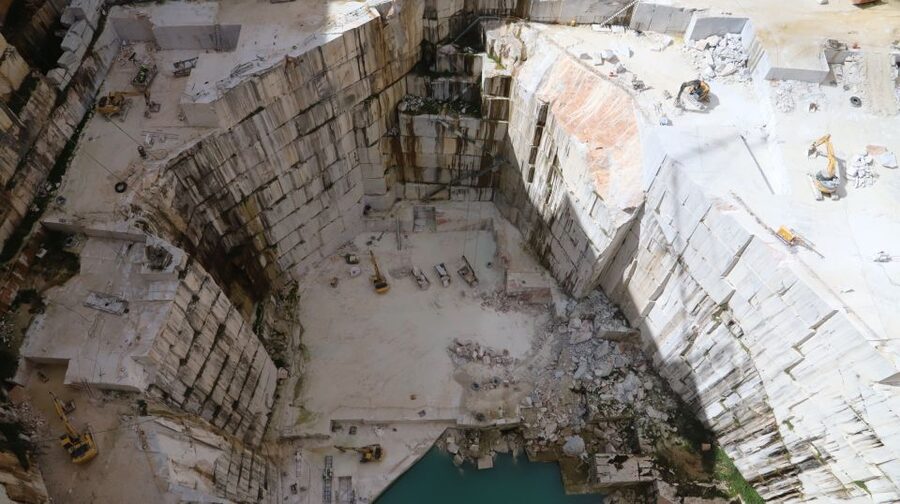
I like the tour for two clear reasons: you get close to an industry most people only see in finished form, and guides such as João explain both the geology and the human side of quarry work. The views over the huge excavations are unforgettable, with some quarries growing larger and deeper as you go.
The main catch is practical: you need your own private vehicle to move between stops. The tour is also not suitable for wheelchair users or people with mobility impairments, and closed-toe shoes are required.
In This Review
- Key points to know before booking
- Vila Viçosa, where marble shapes the town
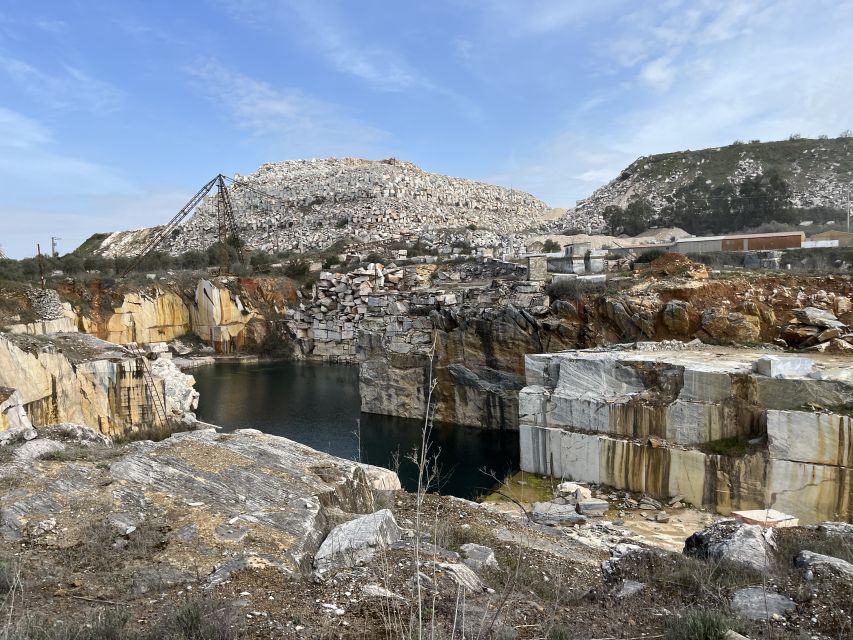
- The quarry views are the tour’s big moment
- Inside the factory, raw blocks become usable stone
- Artisan workshops show marble’s creative side
- What the guides add to the experience
- Is $29 a fair price for two hours?
- Who will enjoy this marble tour most?
- Should you book the Vila Viçosa marble tour?
- FAQ
- Where does the Marble Tour in Vila Viçosa begin?
- How long does the tour last?
- What languages are available?
- Do I need my own transportation?
- What does the tour price include?
- What should I wear and bring?
- Is the tour suitable for wheelchair users?
- Can I cancel or pay later?
Key points to know before booking
- Follow marble from rock to finished product: See extraction, cutting, washing, polishing, shaping, and packing.
- Visit several quarry sites: The enormous excavations give you a clear sense of the machinery, risks, and scale involved.
- Meet the local marble story: The interpretive center covers geology, geography, history, and the industry’s role in community life.
- Look for João: He has guided many tours in English and explains technical subjects in a clear, lively way.
- See handmade marble art: Artisan workshops show how stone becomes decorative work rather than just tiles or countertops.
- Bring sensible gear: Wear comfortable closed shoes, carry water, and consider a mask for dusty workshop areas.
Vila Viçosa, where marble shapes the town
The tour begins at Rota do Mármore AE, in the center of Vila Viçosa. Find the white building with three brick arches and the Rota do Mármore AE and CECHAP logos. This is an easy starting point if you are already exploring town, but do not arrive expecting the quarry itself to be right outside the door.
Vila Viçosa is known as Portugal’s Marble Capital, and the material appears throughout the town. Here, marble is part of local identity and employment, not merely a luxury building material. That gives the tour more weight than a simple industrial stop. You are learning why the town developed as it did and why the work still matters to families and businesses.
The first section lasts about 30 minutes and takes place at the Marble Interpretive Center. It sets up the rest of the afternoon with basic geology, local geography, and the history of marble extraction. I like this order. Without it, a quarry can look like a giant hole in the ground. With the background, you begin to understand why the stone occurs here, how people choose where to extract it, and why different colors and patterns have long been valued.
Portuguese marble has been appreciated since Roman rule on the Iberian Peninsula. From Vila Viçosa and nearby Alentejo quarries, it has been used and sent abroad for centuries. The center also explains the social importance of the industry. That matters because quarrying affects more than the local economy. It connects to work, family life, technical skills, and the character of the town.
More Évora and Alentejo days:
- Évora and Megaliths Full-Day Tour from Lisbon
★ 4.7 · 456 reviews - Marble Tour in Vila Viçosa
★ 5.0 · 308 reviews - From Lisbon: Évora and Monsaraz Day Tour with Wine Tasting
★ 4.8 · 279 reviews
The quarry views are the tour’s big moment
After the introduction, you travel by private vehicle toward the quarry sites. The next section lasts roughly 45 minutes and includes guided sightseeing, photo stops, and views along the way. The route itself is part of the experience, since centuries of quarry openings have changed the surrounding scenery.
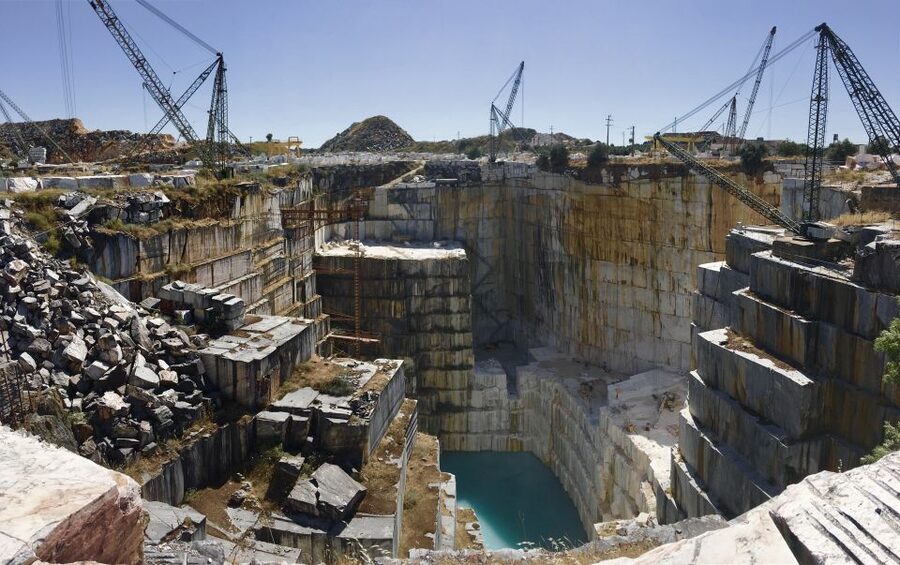
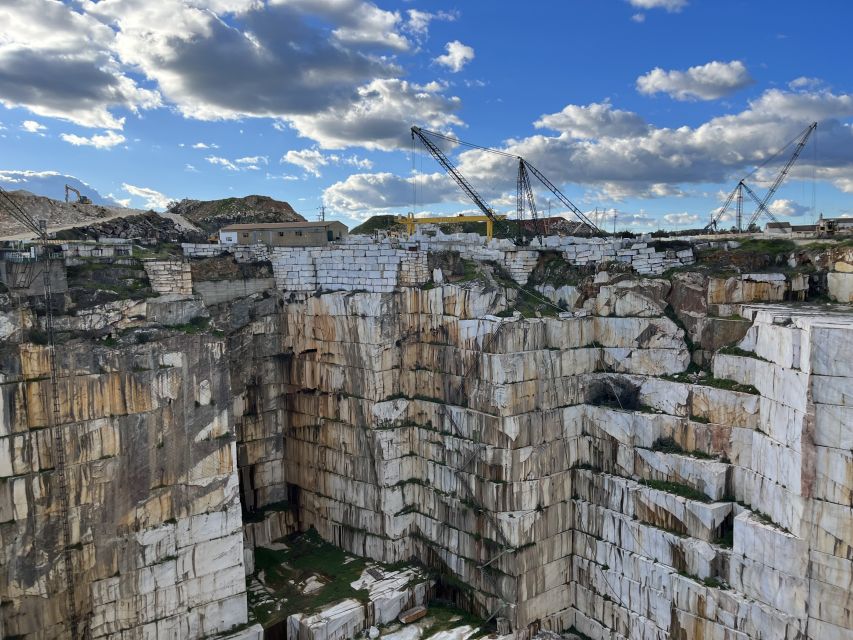
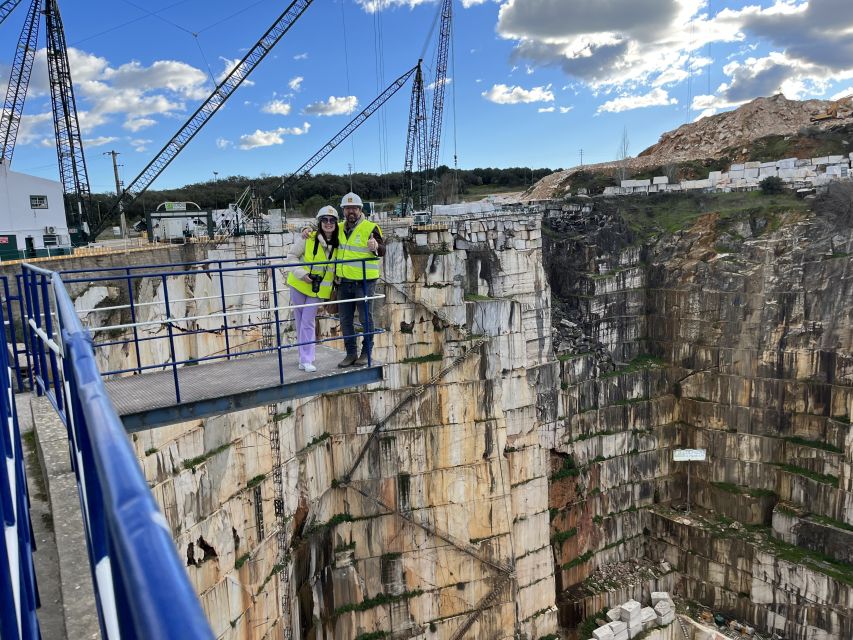
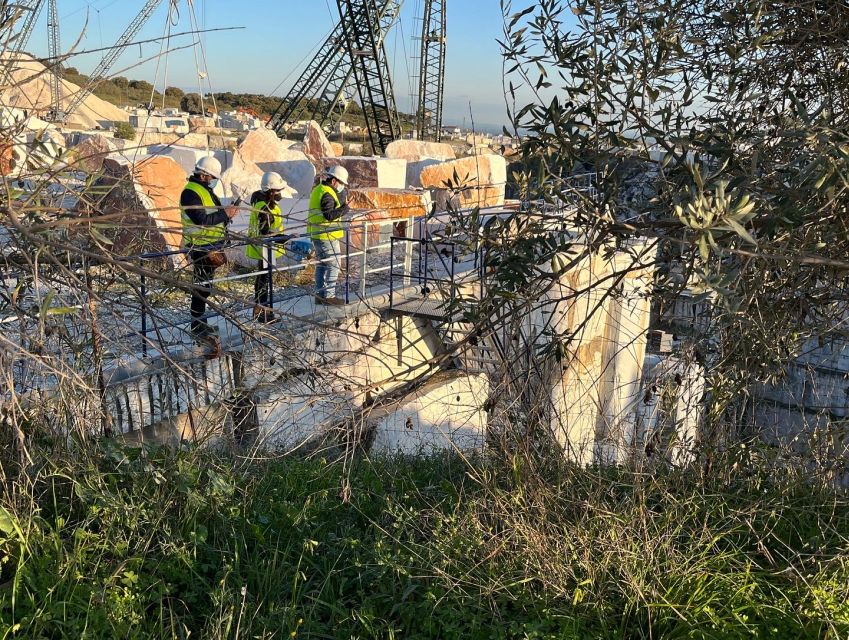
The quarry areas can feel startling in scale. Huge cuts in the ground reveal layers and walls of marble, while machinery and work areas show that this is an active industry rather than an abandoned archaeological site. Several quarry visits may be included, with each one giving you a different view of the work. One detailed tour described three quarries, each larger and deeper than the one before.
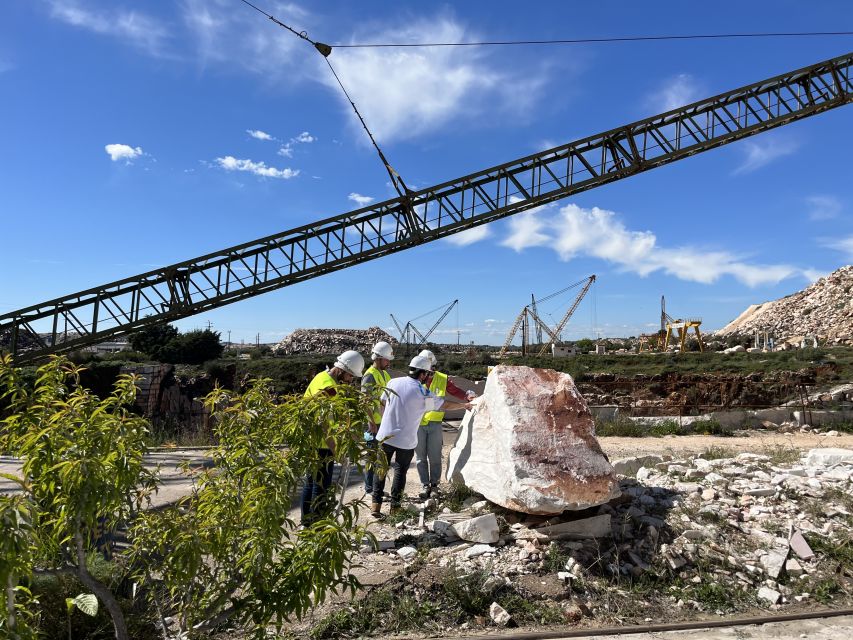
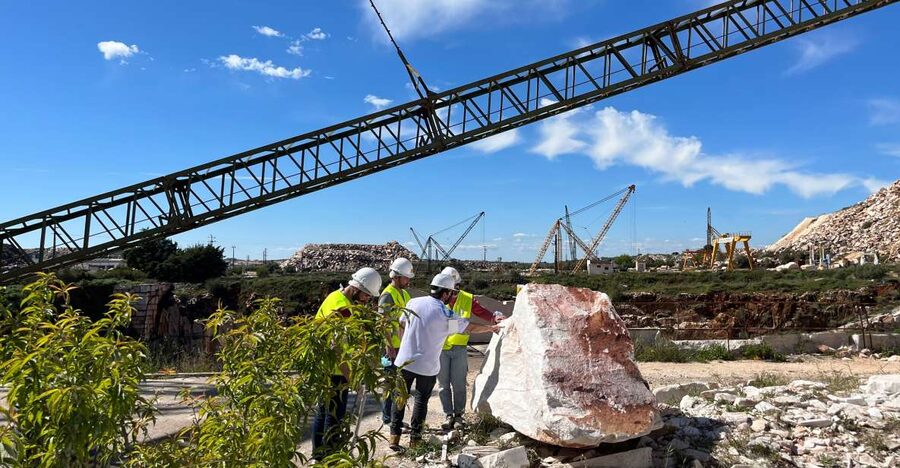
This is where a guide makes a real difference. João, whose English is described as very clear, explains the machinery and the methods used to separate large blocks from the rock. You can watch workers handling massive slabs and see why quarry work demands care. The equipment is impressive, but the tour does not treat the work as a spectacle without risks. It also explains the dangerous conditions linked to extraction.
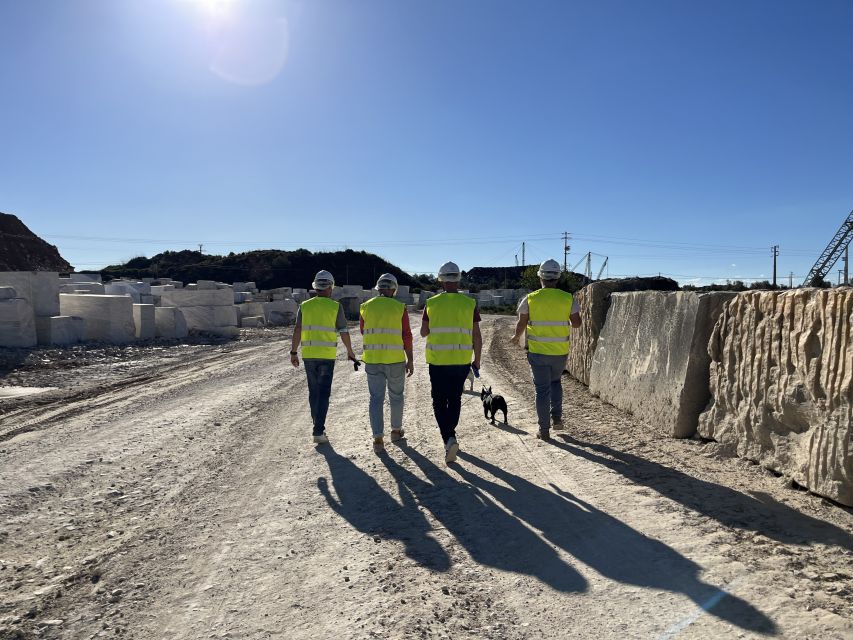
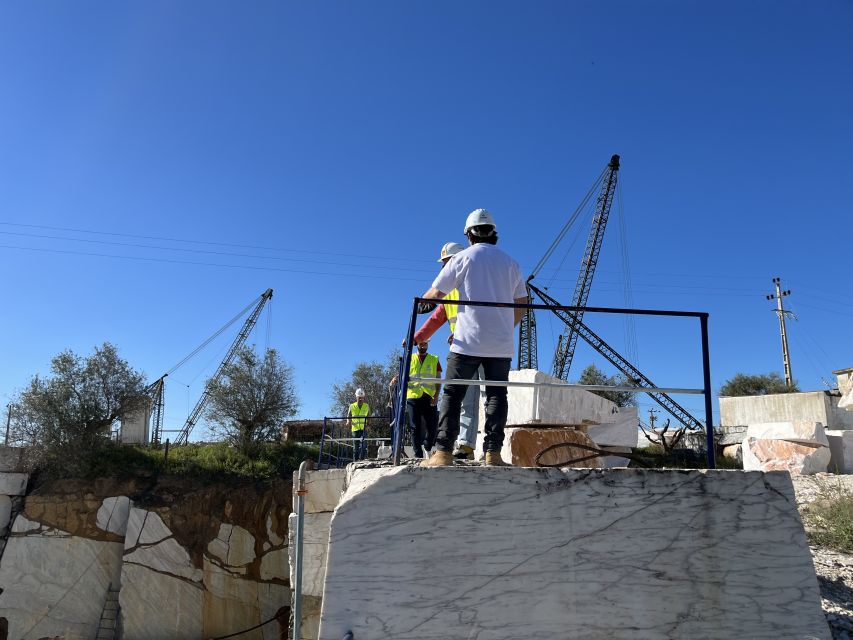
Take your time with photographs, but listen closely to instructions. This is a working industrial area, not a viewpoint built only for sightseeing. Safety equipment is included, and you should wear sturdy closed shoes. Sandals and flip flops are not allowed.
The quarry views are also useful for understanding waste. A block does not always emerge in a shape ready for a building project, and not every piece becomes a polished slab. One guide has discussed attempts to reduce waste, an important topic in an industry that removes large amounts of rock. You might also hear about the long future of the local quarries, with one tour discussion pointing to roughly 300 years of mining still available.
Inside the factory, raw blocks become usable stone
The factory visit lasts about 30 minutes. This is a strong part of the tour because it fills the gap between extraction and the finished marble you see in a hotel, church, kitchen, or shop.
Freshly removed marble cannot usually be installed right away. At the factory, you can see the stages that prepare it for sale or use. The process may include cutting large blocks down, washing the stone, polishing surfaces, and producing tiles or other final pieces. Seeing these steps in person makes a countertop or floor tile feel far less anonymous.
You may also see the machinery working at close range. The contrast is useful: the quarry shows the force required to remove marble, while the factory shows the precision needed to make it practical. A rough block is gradually turned into a measured, smooth, marketable product.
Dust is worth considering. One visitor specifically advised bringing a mask for the workshop or factory areas because of airborne dust. The tour provides safety equipment, but a personal mask could still make the visit more comfortable if you are sensitive to dust. Water and comfortable clothing are also sensible choices, especially in warm weather.
I find this factory stop particularly good for anyone interested in architecture, building materials, engineering, or design. You do not need specialist knowledge. The guide explains enough to help you understand the work without turning the visit into a technical lecture.
Artisan workshops show marble’s creative side
The final stop lasts around 15 minutes and turns from industrial production to handwork. At local artisan workshops, you can watch marble being shaped by hand and see finished pieces made for decoration and art.
This short visit gives the tour a welcome change of pace. After seeing enormous machines and quarry walls, you get a closer look at the patience and control needed to make smaller objects. Marble is not limited to slabs, walls, and tiles. It can also become a carefully shaped art piece.
The workshop portion is brief, so it is best viewed as a finishing touch rather than a full craft class. You will not have hours to practice carving or compare every local style. Still, it helps explain why the material has such lasting appeal. Its colors, veins, weight, and polish allow both industrial workers and artisans to use the same stone in very different ways.
If you are shopping, personal expenses are not included, and the tour does not promise that purchases are part of the experience. The value here is seeing the work and understanding the stages, not automatically leaving with a marble souvenir. One playful comment from a motorhome visitor about not having room for a one-ton pallet captures the scale of some finished orders.
Nearby in Evora, a different day entirely:
- Évora and Monsaraz with Regional Wine Tasting from Lisbon
★ 4.5 · 229 reviews - Évora: Private walking tour with tickets to main monuments
★ 5.0 · 223 reviews - Private Day Tour With Guide to Évora and Monsaraz
★ 5.0 · 134 reviews - From Lisbon to Alentejo: Évora and Megaliths Full-Day Tour
★ 4.5 · 131 reviews
What the guides add to the experience
The guide is central to this tour. João is repeatedly singled out for clear English, enthusiasm, friendliness, and strong knowledge of marble. He explains geology before taking you into the quarry areas, which makes the later stops easier to follow. He also connects local production with the wider marble trade.
The tour can be conducted in Portuguese, English, or Spanish. A multilingual guide may be assigned, so you should check your selected language when booking. The explanations cover more than machinery. You learn how the ground is assessed, how marble is extracted, why the work can be hazardous, how the stone is finished, and why the industry matters socially in Vila Viçosa.
I like that the experience includes both practical facts and local context. A guide whose family has a connection to quarry work can also give the subject a personal angle, though the specific guide you meet may vary. The best questions to ask are about quarry selection, waste, safety, the different marble colors, and where the finished stone goes.
Is $29 a fair price for two hours?
At $29 per person, the tour offers good value if you are interested in places and industries that are difficult to understand on your own. The price includes a professional local guide and safety equipment. It does not include transportation between locations, food, drinks, hotel pickup, or personal expenses.
The need for a private vehicle is the main cost and planning issue. If you are already driving through the Alentejo, the tour fits easily into a road trip. If you are staying in Vila Viçosa without a car, you need to solve the transport question before booking. The tour is not a door-to-door excursion.
Two hours is enough to sample the full marble chain, but not enough for a leisurely town tour, a long quarry walk, or extensive shopping. I see the short length as an advantage for a road-trip schedule, especially if you want to combine it with Vila Viçosa’s other sights. It also means the pace is purposeful. The center, quarry sites, factory, and workshops each have a set role.
The free cancellation policy allows cancellation up to 24 hours in advance for a full refund, and you can reserve now and pay later. Those terms are useful if your Alentejo route is still changing, but the vehicle requirement remains the key practical detail.
Who will enjoy this marble tour most?
I would recommend it first to people interested in geology, architecture, industrial history, design, photography, and local economies. It also suits anyone looking for an experience beyond the usual monuments and food stops.
The quarry views are the strongest reason to book. They are visually dramatic and unlike anything you can see from a finished building. The factory and artisan workshop then give the views meaning by showing what happens after extraction.
Families with older children may find the machinery and scale engaging, though the tour is not designed as a children’s activity. Anyone with limited mobility should take the restrictions seriously. The experience includes quarry and industrial sites, and it is not suitable for wheelchair users or people with mobility impairments.
Wear comfortable clothes and closed-toe shoes. Bring water. Avoid sandals and flip flops. A mask may help in dusty workshop areas. Since no food or drinks are provided, plan those separately.
Should you book the Vila Viçosa marble tour?
Book it if you want to see how one local material shapes a town, a workforce, and an international trade. The strongest parts are the quarry visits and the clear explanations from guides such as João. You get access to working places that would be hard to understand or reach on your own, while the factory and artisan stop complete the story.
Skip it if you do not have a private vehicle, if industrial sites hold little interest, or if mobility limitations make quarry and factory visits unsuitable. Also keep your expectations realistic: this is a compact, guided introduction, not a full-day technical course.
For $29, it is a sensible choice for a curious road-tripper passing through the Évora District. You will leave with a better eye for marble in Portuguese buildings and a much clearer idea of the labor hidden behind a polished surface.
FAQ
Where does the Marble Tour in Vila Viçosa begin?
The tour begins at Rota do Mármore AE in central Vila Viçosa. Look for the white building with three brick arches and the Rota do Mármore AE logo beside the CECHAP logo.
How long does the tour last?
The tour lasts two hours. Starting times depend on availability.
What languages are available?
The live tour guide can conduct the experience in Portuguese, English, or Spanish.
Do I need my own transportation?
Yes. You need a private vehicle to travel between the different sights during the tour. Transportation is not included.
What does the tour price include?
The $29 price includes a professional local guide and safety equipment. Food, drinks, hotel pickup and drop-off, transportation, and personal expenses are not included.
What should I wear and bring?
Bring water and wear comfortable clothing and comfortable closed-toe shoes. Sandals and flip flops are not allowed. A mask may be useful in dusty workshop areas.
Is the tour suitable for wheelchair users?
No. The tour is not suitable for wheelchair users or people with mobility impairments.
Can I cancel or pay later?
You can cancel up to 24 hours in advance for a full refund. You can also reserve your place and pay later, which lets you keep your plans flexible.
Fresh finds around Evora
- From Lisbon: Small-Group Day Tour to Évora and Monsaraz★ 4.6 · 54 reviews
- Évora (with Sé & Bones), Evoramonte & Arraiolos: From Lisbon★ 4.7 · 57 reviews
- Évora: Private tour with entrance tickets to main monuments★ 5.0 · 57 reviews
- Half Day Megaliths Cromlech Tour from Evora by Archaeologists★ 5.0 · 69 reviews
- From Lisbon to Alentejo: Évora and Megaliths Full-Day Group Tour★ 4.5 · 111 reviews
- From Lisbon to Alentejo: Évora and Megaliths Full-Day Tour★ 4.5 · 131 reviews
- Skip the Lines & Sip the Wines: Évora’s Ultimate Walking Tour!★ 5.0 · 19 reviews
- Évora: Private walking tour, By Local Guide★ 5.0 · 87 reviews
Évora Tours, compared.

From Lisbon: Évora and Monsaraz Day Tour with Wine Tasting
Read our review →
Évora and Monsaraz with Regional Wine Tasting from Lisbon
Read our review →
Évora: Private walking tour with tickets to main monuments
Read our review →
Private Day Tour With Guide to Évora and Monsaraz
Read our review →
From Lisbon to Alentejo: Évora and Megaliths Full-Day Tour
Read our review →
Browse the lists this tour appears in