
Reviewed · FáTIMA TOURS
Lisbon: Shrine of Fátima Half Day Tour
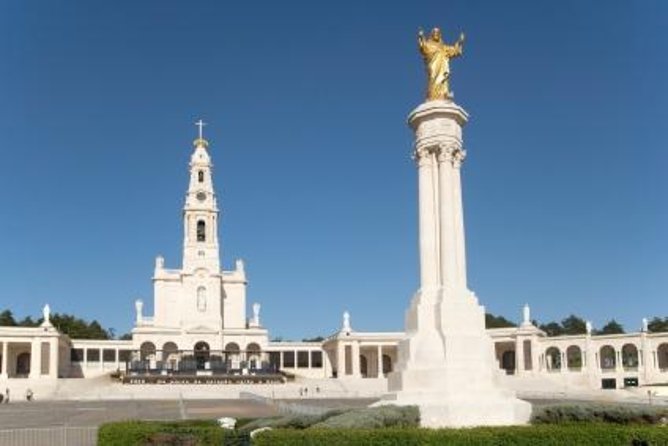
Fátima is one of Portugal’s most powerful pilgrimage sites, and this afternoon trip gets you there without the work of arranging buses, trains, and local transport. You’ll see the Chapel of Apparitions, the basilica containing the tombs of Francisco and Jacinta, and the vast sanctuary square built for millions of worshippers.
I like the easy central pickup at Marquês de Pombal and the afternoon timing, which can let you see the shrine in softer evening light. I also like the comfortable coach ride and the chance to attend Mass or explore on your own. The catch is time: multilingual guiding and ceremony schedules can leave you with only 75 to 90 minutes of useful free time.
In This Review
Key points to know before booking
- Fátima is a major pilgrimage site: The sanctuary commemorates the 1917 apparitions reported by Lucia, Francisco, and Jacinta.
- The afternoon schedule is practical: Departure is at 2:30 p.m. from Marquês de Pombal, with return to the same meeting point.
- The Chapel of Apparitions is the emotional center: It marks the place associated with the appearance of Our Lady of Fátima.
- Your guide may speak several languages: This helps mixed groups, but explanations take longer and English commentary may feel brief.
- Plan for a short visit on site: The advertised tour lasts about 5 hours and 30 minutes, but the road journey takes a large share of that time.
- Dress respectfully: Smart casual clothing is required, and necklines or mini-skirts are not allowed inside the sanctuary.
Fátima lies well outside Lisbon, so the first thing to understand is the shape of this excursion. You spend much of the half-day on the road, then get a concentrated visit to the sanctuary before returning to Lisbon.
The meeting point is Praça do Marquês de Pombal, a central and familiar location in Lisbon. From there, you board an air-conditioned vehicle and head north through rural Portugal. The drive is usually described as about an hour to an hour and a half each way, depending on traffic and the vehicle used.
I like this arrangement for a simple reason: it removes the awkward parts of a do-it-yourself visit. You do not need to locate the correct train, figure out onward transport, or navigate a huge religious complex alone. The coach drops you close to the church area, and the trip ends back at the same meeting point.
Still, this is not a full exploration of central Portugal. It is a focused visit to Fátima. If you want the sanctuary, the apparition chapel, and a brief look at the basilicas, the schedule can work. If you want time for every chapel, museum, religious service, monument, and quiet corner, five and a half hours will not be enough.
Fátima was once a small farming village. Its international importance began in 1917, when three young shepherds, Lucia dos Santos and siblings Francisco and Jacinta Marto, reported seeing the Virgin Mary.
The apparitions became associated with the site now called Our Lady of Fátima. The Catholic Church recognized the apparitions in 1930, and Fátima developed into one of the world’s major Marian pilgrimage centers. The sanctuary now receives more than four million worshippers each year.
You do not need to be Catholic to understand the place. The scale alone tells part of the story. The large open square, the basilicas, the candle area, and the steady flow of people praying or walking toward the chapel all show how deeply the site matters to believers.
Your guide gives background during the drive and after arrival. The quality of this part can vary. Guides such as Felipa and Adrianna have been praised for clear organization, smooth transport, and thoughtful explanations. Adrianna, in particular, has been described as giving background in four languages and helping people find their way through the large grounds.
That multilingual format has a downside. If the guide repeats every point in two, three, or four languages, a great deal of the available time disappears. Some passengers have found the commentary helpful, while others felt they received only basic facts and too little explanation once inside the sanctuary.
The Basilica of Our Lady of the Rosary is the main historic church in the sanctuary complex. Its connection to the three shepherd children gives the building a personal focus, rather than making it simply another grand religious structure.
The tombs of Francisco and Jacinta are inside the basilica. Lucia, the third visionary, is also part of the story of Fátima, though the supplied tour information specifically highlights the graves of two of the children. Seeing the tombs helps connect the large institutional site with the lives of the children at its center.
Take a moment to look at the architecture instead of rushing straight through. The basilica forms one side of a very large complex, and the scale can be surprising if you arrive expecting a small village shrine. Sculptures and monuments across the grounds also relate to the story of Fátima and later Catholic history.
A guide can make a real difference here. The basic facts are easy to find, but details about the children, their lives after the apparitions, the basilica, and the surrounding monuments add meaning. Several comments about the tour point to a lack of explanation at the site, so you should be prepared to explore some of it independently.
The Chapel of Apparitions marks the place where the Virgin Mary is said to have appeared to the children. For many people, this is the most important stop of the afternoon.
The chapel is not simply a sightseeing point. It is an active place of prayer, and its atmosphere can change quickly depending on the service schedule and the number of pilgrims present. You may see people kneeling, lighting candles, or quietly moving through the area.
The tour specifically includes a visit here, but do not assume you will receive a long guided talk at the chapel. The guide may provide an orientation, then give you time to continue alone. That can be welcome if you want silence and personal reflection, but it is less satisfying if you are visiting for the story and expect a detailed explanation.
This is also where careful timing matters. The sanctuary is large, and the chapel is not always a quick walk from every other point of interest. If you spend too long at the basilica, shop for religious items, or stop for food, you can lose the time needed for the chapel and Mass.
The sanctuary includes more than the older basilica and the apparition chapel. The Basilica of the Holy Trinity is a modern church with a very different scale and design. The Prayer Hall, retreat houses, and the Paul VI Pastoral Center are also part of the wider complex.
The official outline allows time at the main sanctuary, but the total tour length and return schedule limit how much of the grounds you can cover. You might see the principal buildings and get a sense of the site without having time to study every feature.
This is the central trade-off of the excursion. The tour is useful for a first look, but it is not designed for a slow, detailed pilgrimage. If you want to attend a particular Mass, pray at length, light candles, or visit more than the central buildings, check the timing before you leave Lisbon.
One useful tip comes from the practical side of the visit: Mass times may be listed differently depending on the source, with some references showing services on the hour and others on the half hour. Ask your guide for the current schedule as soon as you arrive. Do not wait until the last few minutes.
Free time is built into the experience, and you may use it to attend Mass at the Sanctuary of Our Lady of Fátima. This is a major reason to choose the afternoon departure. You can receive an introduction during the ride, see the principal sites with the group, and then spend a little time in personal prayer.
But Mass is optional, and the tour cannot guarantee that the service you want will fit the schedule. The return departure is fixed, and confusion over the meeting time has caused problems for people trying to remain in church.
For that reason, you should treat Mass as a possibility rather than the sole purpose of the booking. If attending a specific service is your main reason for going to Fátima, confirm the time with the guide immediately and keep your watch visible. A delay, vehicle problem, or changed schedule can reduce your options.
The open time also gives non-Catholic visitors room to take in the architecture and public spaces without being required to join a religious service. You can observe respectfully, visit the chapel, and learn about the site’s role in Portuguese life.
The vehicle is air-conditioned, and the group can be as large as 25 people. Some departures use a large motorcoach, while others may use a smaller vehicle, including a 16-seat bus.
The ride itself has received strong praise when the driver and guide are organized. The road journey is long enough that comfort matters, especially on a warm afternoon. The coach does not have a bathroom, though the drive is generally short enough for most people. A stop may be made if needed.
The countryside outside Lisbon gives the guide a chance to explain Portugal beyond Fátima. You may pass olive groves, cork trees, and farming areas. Some guides use the drive well, discussing Portuguese history and the religious story of Fátima. Others provide only limited commentary.
There may also be a brief stop at a gift shop near the entrance. One account describes about ten minutes there. Do not count on this as a full meal break. Food and drinks are not included, so bring water and consider eating before departure.
A small but important practical point: arrive early at Marquês de Pombal. Pickup problems and waits in direct sun have caused frustration. The meeting point is central, but the exact boarding area can still be busy.
At $65.28 per person, the tour is reasonably priced if you value transport and a guide’s introduction. You are paying for the return coach, an air-conditioned vehicle, certified guiding, and the convenience of going directly from central Lisbon to Fátima.
The price is less convincing if you receive little explanation and spend only 75 to 90 minutes at the sanctuary. In that case, the experience can feel like an expensive ride to a site you then explore alone.
A group limit of 25 people is helpful. It is smaller than a large city sightseeing bus, and a good guide can keep track of the group around the wide sanctuary square. Felipa has been praised for making the process easy and dropping the group close to the church. That sort of organization is worth money when you have only one afternoon.
The strongest value comes when you have limited time in Lisbon and do not want to arrange the journey yourself. If you have a full free day, compare this half-day trip with a longer independent visit or a full-day excursion. The extra time could matter if you want Mass, a slower look at the grounds, or more background.
The supplied schedule also identifies the Church of Our Lady of Fátima as a stop. It describes this as the first Catholic temple built in Lisbon after the Portuguese Republic was established in 1910, and notes its stained glass by Almada Negreiros.
However, the practical details of the afternoon focus strongly on the journey from Lisbon to the Fátima sanctuary and the return to Marquês de Pombal. The description of the church stop may refer to the broader Fátima program or a listed site connected with the tour, so confirm the exact route on your chosen date.
If this church is included, its stained glass gives the itinerary an interesting Lisbon connection. It is a different experience from the pilgrimage complex outside the city, with a more urban setting and a separate place in Portugal’s religious and artistic story.
I would choose this excursion if you have only one open afternoon in Lisbon, want direct coach transport, and mainly care about seeing the sanctuary and Chapel of Apparitions.
It also suits you if you prefer a guided introduction before having some private time. The short format can be a strength. You get a meaningful look at Fátima without giving up an entire day of sightseeing in Lisbon.
You should think twice if you are making a special pilgrimage from far away, need to attend a particular Mass, or want detailed explanations at every building. The schedule may feel too tight, especially when the guide speaks several languages.
The tour can work for non-Catholic visitors too, but your expectations matter. This is a religious site first and a sightseeing attraction second. You will see a major place of Catholic devotion, but the visit is most rewarding when you respect its quiet, prayerful purpose.
Dress smart casual. Avoid low necklines and mini-skirts inside the sanctuary. Expect a moderate amount of walking across a broad complex, and wear comfortable shoes.
I recommend this Fátima tour when convenience is your priority. The central pickup, direct ride, small maximum group, comfortable vehicle, and afternoon departure make it a practical way to reach the sanctuary from Lisbon.
I would not book it expecting a full account of every part of Fátima or guaranteed time for a particular Mass. The guide may be excellent, as Felipa and Adrianna have shown, but multilingual commentary can shorten the visit and the site is too large for a rushed schedule.
Book it if you want a first visit with transport handled for you. Skip it, or seek a longer option, if your main goal is prayer, extended Mass attendance, or a careful study of the whole sanctuary. Free cancellation is available up to 24 hours before departure, but changes or cancellations inside that window are not refunded.
FAQ
More Fátima and monastery runs:
- From Lisbon: Fátima, Nazaré, Batalha, and Óbidos Guided Tour
★ 4.7 · 3,060 reviews - From Lisbon: Fatima Batalha Nazaré & Óbidos Small-Group Tour
★ 4.7 · 2,563 reviews - From Lisbon: Fatima, Batalha, Nazare, Obidos – Small Group
★ 4.8 · 2,031 reviews
Where does the Fátima tour start?
The tour starts at Marquês de Pombal, Praça do Marquês de Pombal, 1250-096 Lisbon, Portugal.
What time does the tour depart?
The scheduled start time is 2:30 p.m.
How long does the experience last?
The tour lasts approximately 5 hours and 30 minutes, including the coach journey between Lisbon and Fátima.
A handful more Lisbon ideas to compare
- Lisbon City Center Tour – The Unmissable Lisbon
★ 5.0 · 22,234 reviews - Lisbon: Sintra, Pena, Regaleira, Cabo da Roca & Cascais
★ 4.7 · 19,656 reviews - Lisbon: Jerónimos Monastery Entrance Ticket
★ 4.1 · 14,164 reviews - Lisbon: History, Stories and Lifestyle Walking Tour
★ 4.8 · 10,902 reviews
Is transportation included?
Yes. An air-conditioned vehicle is included, and the tour returns to the original meeting point in Lisbon.
Can I attend Mass during the visit?
You may use your free time to attend Mass at the Sanctuary of Our Lady of Fátima, but the tour does not guarantee that a particular service will fit the schedule. Ask the guide for current Mass times after arrival.
Is there a dress code?
Yes. Smart casual clothing is required. Necklines and mini-skirts are not allowed inside the sanctuary.
Fresh finds around Lisbon
- Sanctuary of Fátima and Coimbra City Tour★ 4.5 · 51 reviews
- Sintra/Lisbon: Sintra & Quinta da Regaleira Tour with Ticket★ 4.4 · 51 reviews
- Jeronimos Monastery Guided Tour – Small Groups – Tickets Included★ 5.0 · 51 reviews
- Lisbon: Private Christmas Lights Tour by Eco Tuk Tuk★ 4.9 · 51 reviews
- Peniche: Berlengas Island Catamaran Tour – Round Trip★ 4.6 · 51 reviews
- Half day Spa Water Therapy experience at THE SPA at Corinthia Lisbon★ 4.5 · 51 reviews
- Premium Lisbon Airport Transfer to Lisbon★ 5.0 · 51 reviews
- Private Tour Romantic Sintra, Cabo da Roca & Cascais★ 5.0 · 51 reviews
Fátima Tours, compared.
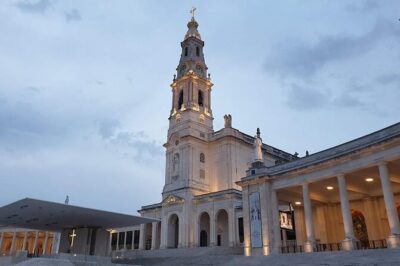
From Lisbon: Fátima, Nazaré, Batalha, and Óbidos Guided Tour
Read our review →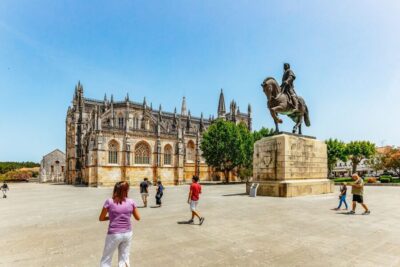
From Lisbon: Fatima Batalha Nazaré & Óbidos Small-Group Tour
Read our review →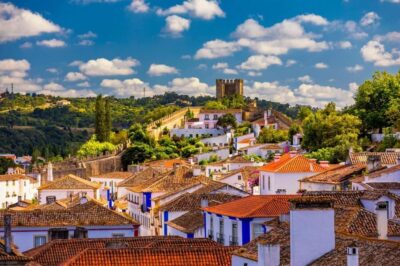
From Lisbon: Fatima, Batalha, Nazare, Obidos – Small Group
Read our review →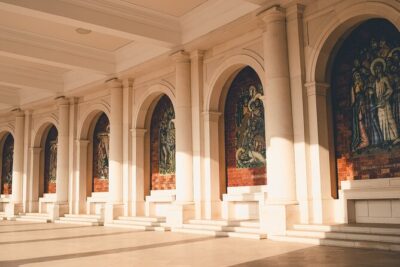
Fatima, Nazare, Obidos 8-People Small Group, Day-Tour from Lisbon
Read our review →From Lisbon: Fátima, Nazaré, Batalha and Óbidos Guided Tour
Read our review →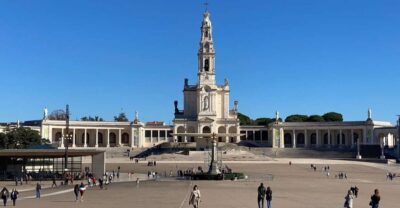
From Lisbon: Fátima, Batalha, Nazaré, and Obidos Tour by Van
Read our review →
From Lisbon: Fátima, Batalha, Nazaré & Óbidos Full-Day Tour
Read our review →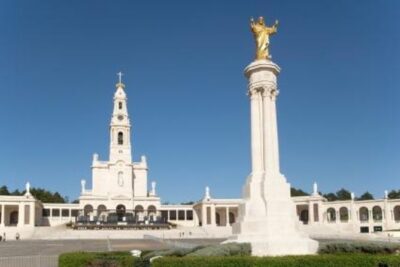
The Best of the West – Fátima, Nazaré, Óbidos & Batalha
Read our review →Browse the lists this tour appears in