Reviewed · TICKETS
Lisbon: Lisbon Cathedral Entry Ticket
Lisbon Cathedral is not just a church you pop into for a quick photograph. Its Romanesque towers, later chapels, Treasury, High Choir, and balcony take you through 800 years of Portuguese history in one compact visit. I like the chance to see the building from above, especially the view down the nave and the close look at the great rose window.
I also like the freedom of a one-day ticket. You can move at your own pace, sit quietly in the pews, and spend more time in the Treasury if religious art interests you. The main drawback is that this is an entry ticket, not a guided tour or guaranteed skip-the-line pass. You may still need to queue to collect or validate your ticket, and the signs are often in Portuguese.
In This Review
- Key things to know before you go
- Lisbon Cathedral puts 800 years inside one visit
- The main nave and ambulatory reward a slow pace
- The High Choir changes your view of the cathedral
- The balcony behind the rose window has the best city view
- The Treasury is more than a display of old church objects
- Architectural changes are part of the attraction
- How the $8 ticket holds up
- Timing, access, and what to expect on arrival
- Who will get the most from this cathedral ticket
- A simple way to plan your visit
- Should you book the Lisbon Cathedral ticket?
- FAQ
- How much does the Lisbon Cathedral entry ticket cost?
- How long is the ticket valid?
- What does the ticket include?
- Is this a guided tour?
- Does the ticket skip the line?
- Is the cathedral accessible for wheelchair users?
Key things to know before you go
- The Upper Choir gives you a rare view down the cathedral: Look from above toward the central nave and chancel, rather than only admiring them from floor level.
- The balcony sits behind the rose window: Access is narrow, but it offers a memorable view across Lisbon.
- The ticket includes the Treasury: See goldwork, vestments, sculpture, and paintings, including objects still used in worship.
- The building brings several styles together: Romanesque foundations sit alongside changes made during later centuries.
- You have the day to visit: The ticket is valid for one day, so you are not tied to a timed guided group.
- Plan for limited interpretation: Most signs are in Portuguese, and the audio guide may add little useful context.
Lisbon Cathedral puts 800 years inside one visit
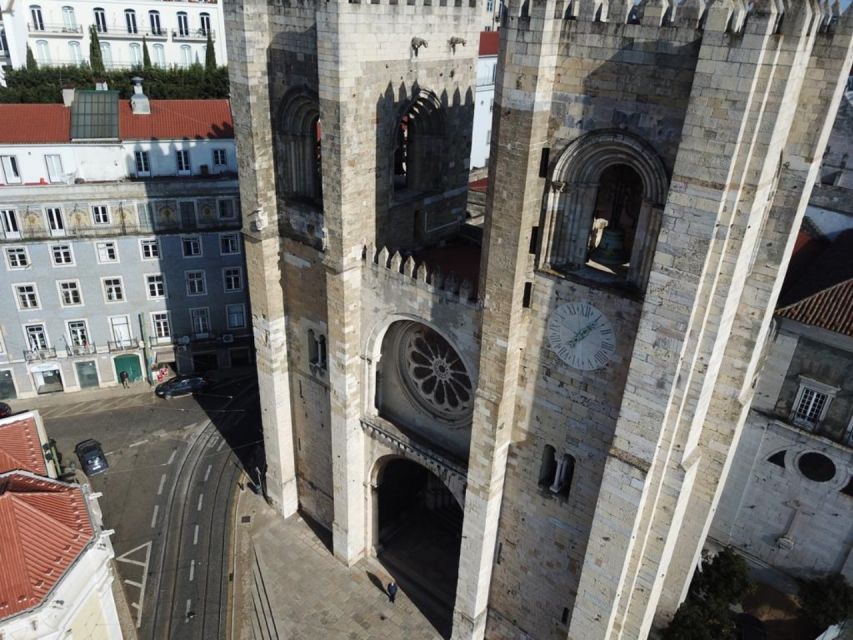
The Sé de Lisboa, or Lisbon Cathedral, is one of the city’s most important religious buildings. The appeal is not only its age. It is the way the cathedral lets you read Portugal’s past through stone, ritual objects, chapels, and changing architectural details.
The visit takes you through the basilica’s naves and ambulatory, from the high choir to the chancel and onward to the radiant chapels. You also see the baptistry and the Patriarch’s dressing room, spaces that help explain how the cathedral functioned as both a place of worship and an important religious institution.
I would give yourself time to look up and around. The central nave can appear simple at first, but the building becomes more interesting as you notice how different periods have left their mark. This is not a polished museum arranged around a single theme. It is a working religious building with layers of use.
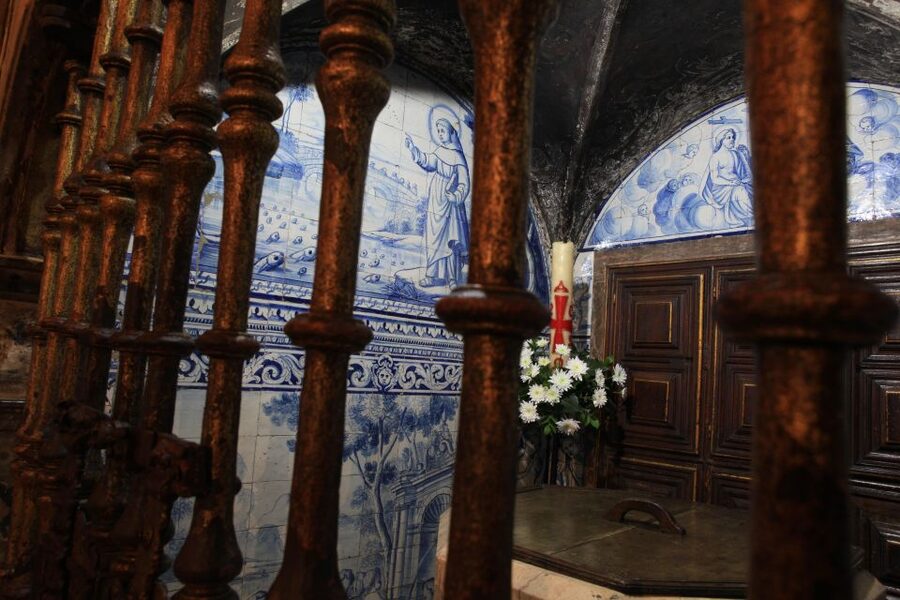
The cathedral is also linked with Saint Anthony, the Lisbon-born saint who grew up in the city, and it keeps relics associated with Saint Vincent. Those connections give the visit a local meaning that a quick exterior photograph cannot provide. You are seeing a place tied to Lisbon’s religious identity, not just another old European church.
A handful more Lisbon ideas to compare
- Lisbon City Center Tour – The Unmissable Lisbon
★ 5.0 · 22,234 reviews - Lisbon: Sintra, Pena, Regaleira, Cabo da Roca & Cascais
★ 4.7 · 19,656 reviews - Lisbon: Jerónimos Monastery Entrance Ticket
★ 4.1 · 14,164 reviews
The main nave and ambulatory reward a slow pace
Start with the main body of the cathedral. The central nave leads your eye toward the chancel, while the side areas and ambulatory open up smaller spaces for altars, chapels, and devotional details.
The ambulatory is especially useful for understanding the cathedral’s layout. Instead of walking straight in and out, you can move around the chancel and see the surrounding chapels from several angles. The radiant chapels are worth a slower look, particularly if you care about religious art or the way medieval churches direct attention toward the altar.
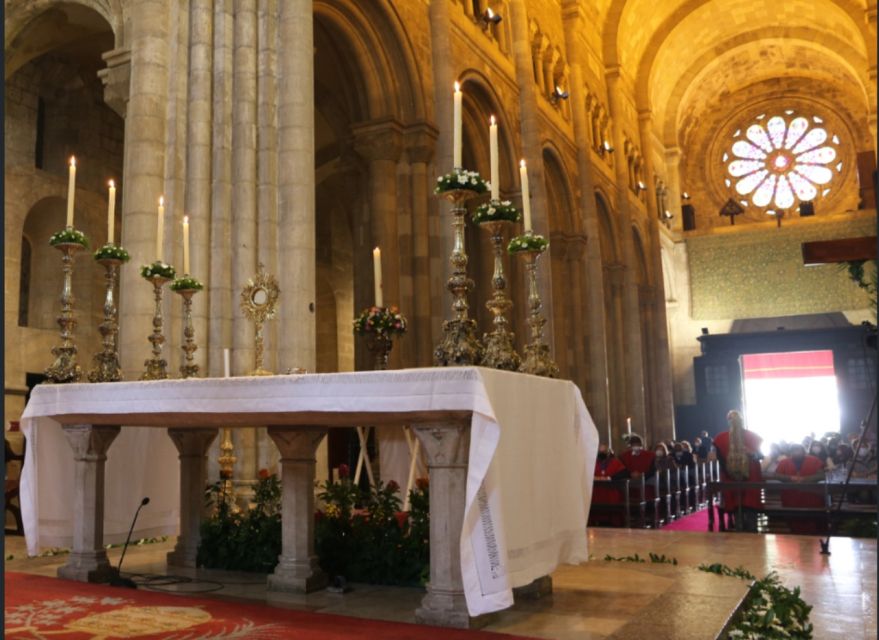
I like this part of the visit because it does not require a guide to feel worthwhile. You can pause at your own speed, sit in the pews, or take a quiet moment when the main sanctuary is calm. One visitor described hearing a woman sing in the sanctuary, with the building’s acoustics making the moment particularly striking. That sort of unplanned atmosphere can be one of the best reasons to avoid rushing through.
The cathedral is well monitored and carefully maintained, but it remains a place of worship. Be prepared for a quieter tone than you might find at a major secular attraction. Dress and behave respectfully, and remember that services or religious activity may affect how freely you can move through certain areas.
The High Choir changes your view of the cathedral
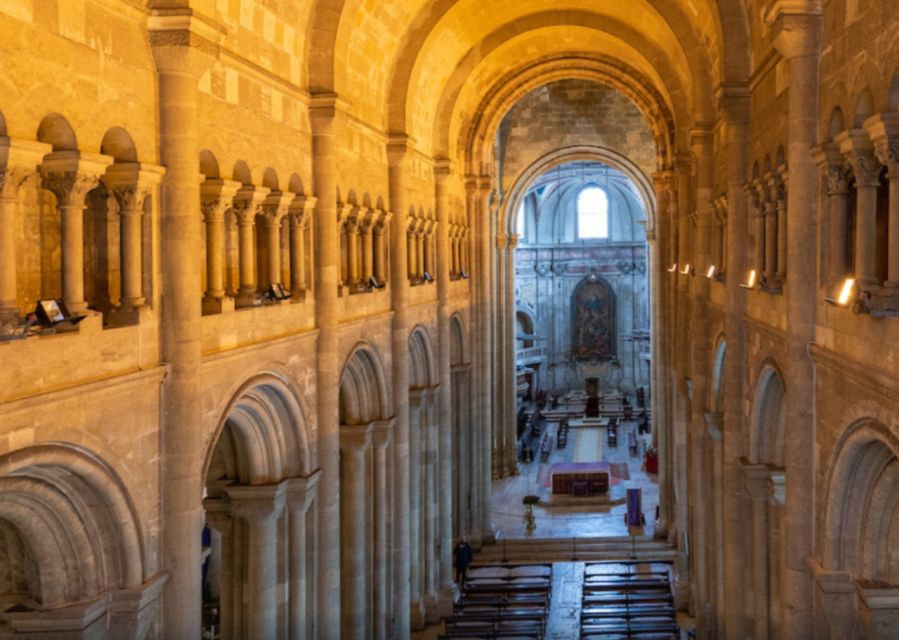
The Upper Choir is one of the strongest reasons to buy this ticket rather than viewing the cathedral only from the entrance. Built in 1952 and supported by concrete beams, it gives you a raised view across the full central nave toward the chancel.
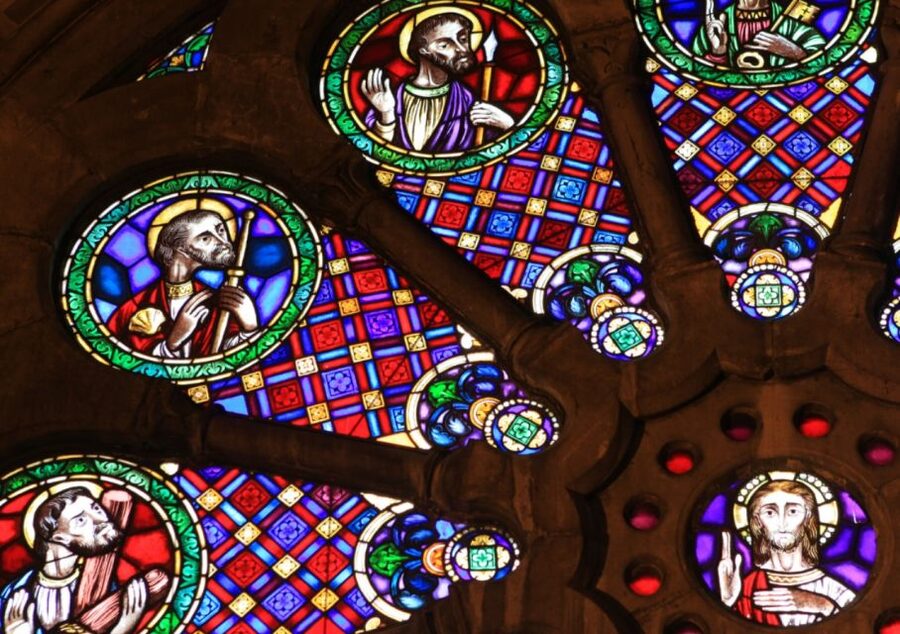
From floor level, the nave feels tall and imposing. From the High Choir, you can see how the whole interior fits together. The perspective also brings the rose window into focus. It ornaments the Romanesque facade between the cathedral’s two heavy towers and looks particularly impressive when viewed from inside and above.
This is a good stop for photographers, though the available space may not let you linger as freely as you would in the nave. Take a moment to look outward and then back into the cathedral. The contrast between the broad interior and the detailed window is the point.
The raised position also helps you understand the cathedral’s scale. You are not simply looking at an old wall or a decorative feature. You are seeing how light, height, and structure work together. If you have limited time, I would prioritize the High Choir along with the balcony and Treasury.
The balcony behind the rose window has the best city view
The balcony, reached from behind the rose window, offers an impressive view over Lisbon. This is the most outward-looking part of the experience, a chance to shift from religious architecture to the city beyond the cathedral.
Access can be tight. One review specifically noted that the outside viewpoints have very small access points and require some squeezing through. If narrow passages make you uncomfortable, this may be the least pleasant part of the visit. For most people, the short passage is balanced by the view.
The information provided does not promise a full panoramic tower climb, so treat this as a balcony viewpoint rather than a separate tower tour. Some ticket holders describe reaching the top, but the clear inclusion is the Upper Choir and balcony. That distinction matters if you are booking mainly for a high lookout.
I would visit the balcony after seeing the interior. First, study the rose window and the cathedral’s Romanesque facade from inside. Then step behind it and look across Lisbon. The sequence makes the architecture easier to appreciate because you see both the object and the view it frames.
Nearby in Lisbon, a different day entirely:
- Sintra: Pena Palace and Park Entrance Ticket
★ 4.2 · 17,410 reviews - Lisbon: History, Stories and Lifestyle Walking Tour
★ 4.8 · 10,902 reviews - Lisbon: Sunset Boat Party Cruise with DJ and Open Bar
★ 4.5 · 10,378 reviews - Lisbon: Pena Palace, Sintra, Cabo da Roca, & Cascais Daytrip
★ 4.7 · 9,981 reviews
The Treasury is more than a display of old church objects
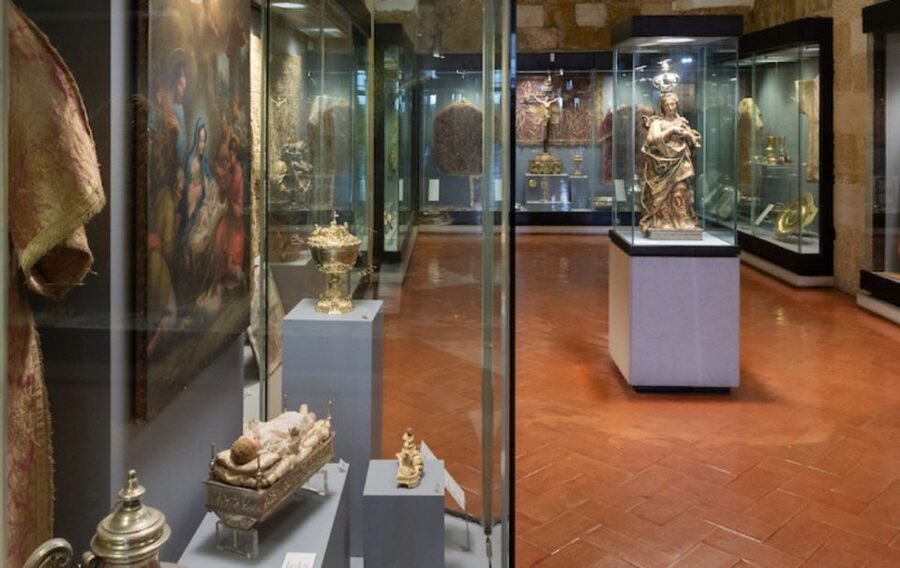
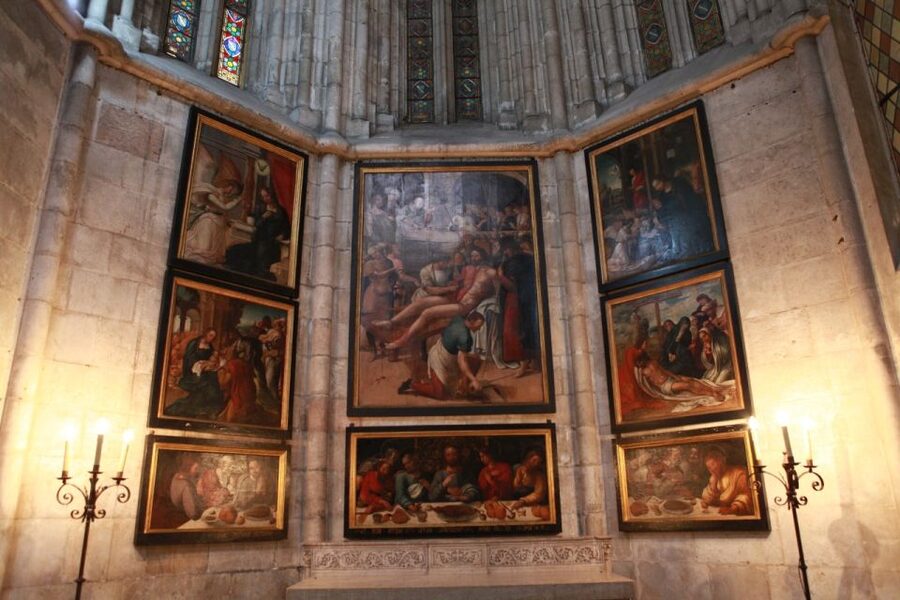
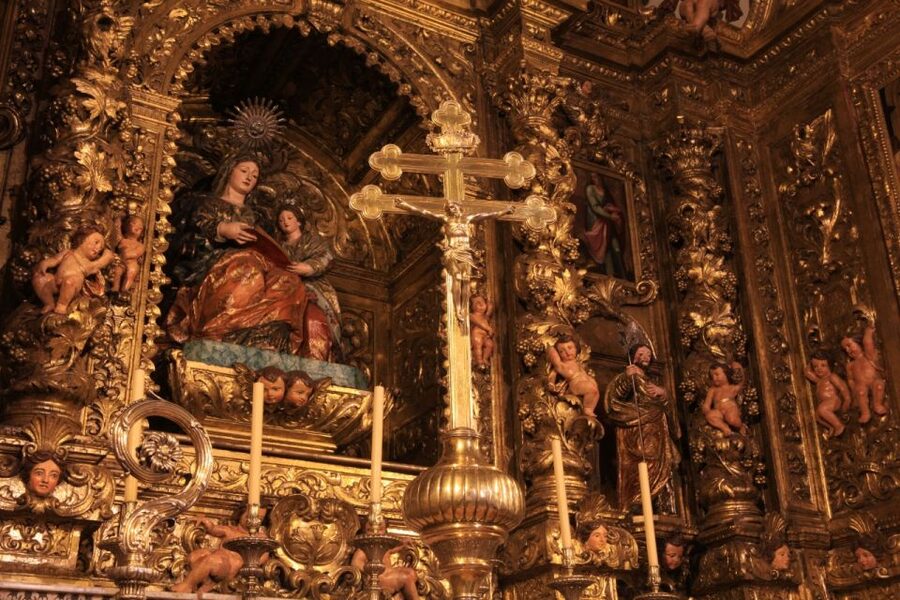
The Cathedral Treasury contains religious works and cultural objects from the past, but it is not presented simply as a storage room. Its purpose is tied to worship and continued faith. Some objects remain in use during liturgical celebrations in the cathedral.
The collection covers several kinds of work:
- Goldsmithing and other precious metal objects
- Religious clothing and vestments
- Sculpture
- Painting
- Items connected with the cathedral’s ceremonies
The Patriarch’s dressing room adds another layer. It helps you picture the practical side of religious life, including the preparation and clothing involved in worship. The Treasury and dressing room make the visit more personal than a walk through a grand nave alone.
I would not expect a large national museum. The Treasury is one part of the cathedral visit, and the display is focused. Still, at $8 per person, having it included makes the ticket more appealing. You get architecture, a city viewpoint, and a small collection of religious art without paying separately for each element.
The labels may be a weak point. Most information signs are in Portuguese, and the audio guide has been described as very limited. If you do not read Portuguese, you may need to rely on the objects, the setting, and your own preparation. That does not ruin the visit, but it reduces the amount of explanation you receive on site.
Architectural changes are part of the attraction
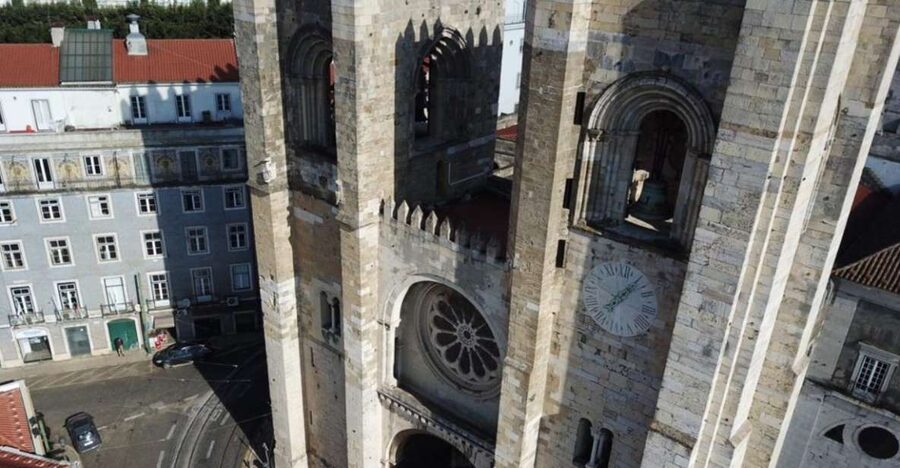
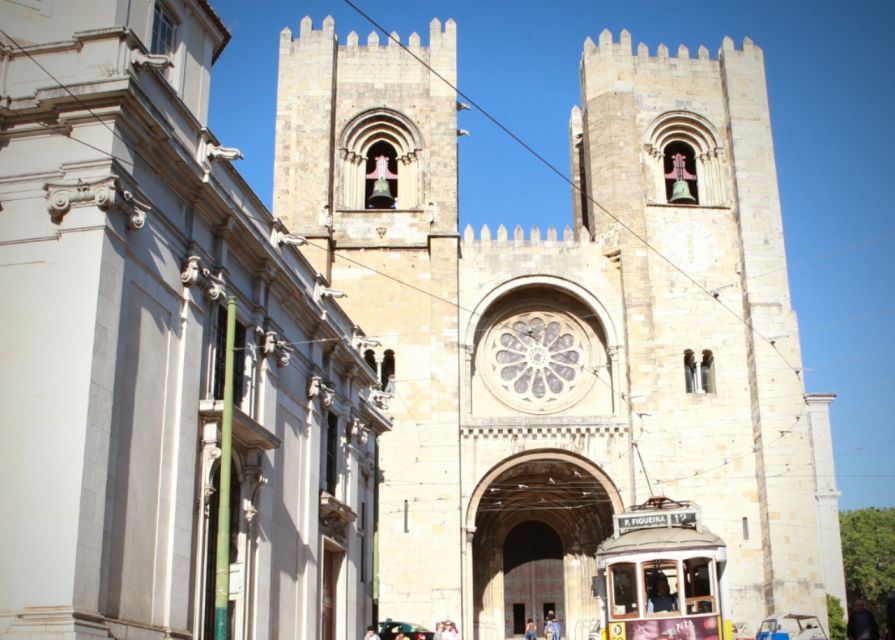
The cathedral lets you see several architectural styles in one building. Its Romanesque facade, with two imposing towers and a large rose window, gives the exterior a strong medieval character. Inside, later alterations and additions show that the building was not frozen in one period.
You will notice the difference between the sturdy, defensive feel of the facade and the more varied interior spaces. The chancel, chapels, baptistry, ambulatory, and upper areas each serve a different purpose. Together, they tell you how a major cathedral changes as religious practice, taste, and repair needs change.
This is a good experience for anyone who likes architecture but does not want a formal lecture. You can make your own comparisons as you move through the building. Look at the heavy Romanesque forms, then pay attention to the details added or altered over time.
The tradeoff is that the cathedral does not offer extensive interpretation in multiple languages. If you want dates and detailed explanations for every feature, bring some background reading or use a separate guidebook. The ticket gives you access to the spaces, not a full history lesson.
How the $8 ticket holds up
At $8, the ticket is fairly priced if you plan to see all the included areas. The value comes from the combination of the main cathedral, Upper Choir, balcony, Treasury, basilica naves, and ambulatory. You are not paying only to enter the nave for five minutes.
The one-day validity improves the value. You can fit the cathedral around other plans instead of racing through it at a fixed time. That is useful in Lisbon, where you may want to pause for a meal, return to a hotel, or combine the cathedral with nearby sights.
Still, the ticket is less useful if you only want to step inside, take one photograph, and leave. The building is most rewarding when you allow time for the Treasury and upper levels. I would also avoid buying it solely because you expect priority entry. A pre-purchased QR ticket can make the process easier, but it does not necessarily remove the queue.
One visitor found the purchase simple but had to queue to collect the ticket using the QR code. Other ticket holders entered quickly by showing the ticket at the turnstile. The practical lesson is simple: keep the QR code ready, but allow a little extra time in case the entrance process involves a line.
Timing, access, and what to expect on arrival
The activity is valid for one day, with availability shown when you check dates and starting times. The supplied information does not describe a fixed guided itinerary, so you should expect to explore independently rather than follow a guide from room to room.
Last admission is 30 minutes before closing. That rule matters because the ticket includes several sections, and arriving near closing could leave you with too little time for the Treasury, High Choir, and balcony. I would arrive well before the final admission period.
The attraction is not suitable for wheelchair users. The upper areas and narrow access points are important considerations, especially if you have difficulty with stairs, tight passages, or uneven movement. If accessibility is essential for your visit, confirm the current conditions before purchasing, since the ticket is non-refundable.
Merchandise is not included. That is a minor issue unless you specifically want a souvenir from the cathedral shop. The ticket covers entry and the listed spaces, not purchases made on site.
Who will get the most from this cathedral ticket
I would recommend this visit to you if you enjoy historic churches, religious art, architecture, or city viewpoints. It also works well for independent sightseeing because you can wander without being tied to a group schedule.
It suits couples and solo visitors who like quiet stops, as well as families with older children who can appreciate the upper-level view and the cathedral’s changing design. The High Choir gives younger visitors something specific to look for, while the Treasury adds objects beyond the usual rows of pews.
You may want a different option if you need detailed explanations in English, full wheelchair access, or a guaranteed skip-the-line entry. The audio guide may not fill the language gap, and the Portuguese-only signs can make the collection harder to understand without preparation.
This is also not the right choice if you want a full-day guided tour of Lisbon. The one-day validity means you have flexibility, not that you receive a guide or a broader city itinerary. It is a focused cathedral visit.
A simple way to plan your visit
I would begin in the main nave, then walk through the ambulatory and chapels. This gives you a sense of the building at ground level before the raised viewpoints change your perspective.
Next, visit the Treasury and the Patriarch’s dressing room. Look for the contrast between objects made for ceremony and the plain spaces used to prepare for worship. Give yourself enough time to read what you can, but do not expect every display to have extensive English explanation.
Finish with the High Choir and balcony. From the choir, look down the nave toward the chancel. Then take in the rose window and pass behind it for the city view. If the access point feels cramped, move carefully and do not rush.
Allow time to sit in the cathedral if the space is quiet. The building’s acoustics and atmosphere are part of the experience, even though they cannot be listed as a formal attraction. A few minutes in the pews can make the visit feel less like a checklist.
Should you book the Lisbon Cathedral ticket?
Book it if you want more than the exterior facade and you value independent exploration. For $8, the combination of cathedral interiors, the Treasury, High Choir, and Lisbon viewpoint gives you solid value, especially if you use the full one-day validity.
Go with realistic expectations. This is not a guided history tour, and the QR ticket may not mean instant entry. English information is limited, the audio guide may disappoint, and the upper areas are not suitable for wheelchair users.
My advice is to book when the cathedral’s architecture and religious art genuinely interest you, then arrive well before the last admission time. If you are mainly chasing a city view, the balcony alone may not justify the ticket. If you want a compact look at Lisbon’s faith, architecture, and past, this is one of the better small-ticket visits in the city.
FAQ
How much does the Lisbon Cathedral entry ticket cost?
The ticket costs $8 per person.
How long is the ticket valid?
The ticket is valid for one day. You should check availability for the starting times offered when booking.
What does the ticket include?
It includes entry to Sé de Lisboa and Lisbon Cathedral, the Upper Choir and balcony, the Treasury, and a visit through the basilica’s naves and ambulatory.
Is this a guided tour?
No guided tour is included in the activity description. You explore the cathedral and its included areas independently.
Does the ticket skip the line?
Not necessarily. The ticket is a pre-purchase, but you may still need to queue to collect or validate it with the QR code. Last admission is 30 minutes before closing.
Is the cathedral accessible for wheelchair users?
The activity is not suitable for wheelchair users. The upper areas also include narrow access points, so consider your mobility needs before purchasing.
Fresh finds around Lisbon
- Sanctuary of Fátima and Coimbra City Tour★ 4.5 · 51 reviews
- Sintra/Lisbon: Sintra & Quinta da Regaleira Tour with Ticket★ 4.4 · 51 reviews
- Jeronimos Monastery Guided Tour – Small Groups – Tickets Included★ 5.0 · 51 reviews
- Lisbon: Private Christmas Lights Tour by Eco Tuk Tuk★ 4.9 · 51 reviews
- Peniche: Berlengas Island Catamaran Tour – Round Trip★ 4.6 · 51 reviews
- Half day Spa Water Therapy experience at THE SPA at Corinthia Lisbon★ 4.5 · 51 reviews
- Lisbon: Private Tuk-Tuk Tour for 2 hours★ 4.7 · 51 reviews
- Premium Lisbon Airport Transfer to Lisbon★ 5.0 · 51 reviews
Tickets, compared.

Sintra: Pena Palace and Park Entrance Ticket
Read our review →

Quinta da Regaleira Skip-the-Ticket-Line Entry & Audioguide
Read our review →
From Lisbon: Sintra & Cascais Small Group Tour with Tickets
Read our review →
Lisbon: São Jorge Castle E-Ticket and Audio Guide
Read our review →
Lisbon: 72/96-Hour Hop-On Hop-Off Bus, Tram & Boat Ticket
Read our review →