
Reviewed · CITY TOURS
Lisbon City of Spies Tour
Lisbon’s spy story is far more tangled than a movie plot. During World War II, refugees, secret agents, businessmen, gold traders, and double agents crossed paths in the city, and this walking tour places those stories on the streets where the intrigue unfolded. The real-life James Bond is only one character in a larger tale involving tungsten, Jewish gold, dictatorship, and international politics.
I like the small group of no more than 15 people, which gives guides such as José, Filipa, and Zé room to answer questions. I also like the route itself: it connects major central squares with lesser-known wartime stories, so you get both a useful introduction to downtown Lisbon and a fresh way to read the city.
The main drawback is the length. At 2 to 3 hours, the walk is easy to follow but can feel tiring near the end, especially if the tour runs closer to three hours or the weather turns wet.
In This Review
- Key points about Lisbon’s spy walk
- Why Lisbon became a spy city
- Starting at Praça do Comércio
- Municipal Square and the beginning of the Republic
- Jewish gold and the tungsten trade
- Praça da Figueira and the real James Bond
- Praça Dom Pedro IV and Lisbon’s refugee years
- The spy hotels of central Lisbon
- Finishing at Praça dos Restauradores
- What the guides add to the experience
- Pace, weather, and physical demands
- Is $30.17 a fair price?
- Who should book this tour?
- Should you book Lisbon City of Spies?
- FAQ
- How long does the Lisbon City of Spies Tour last?
- What language is the tour offered in?
- Where does the tour begin?
- Where does the tour end?
- What is the maximum group size?
- Is admission to the walking stops included?
- Are service animals allowed?
- Can I cancel for a full refund?
Key points about Lisbon’s spy walk
- The real-life James Bond: Learn about the man and wartime setting that helped inspire one of espionage’s best-known fictional figures.
- Tungsten and Jewish gold: See how Portugal’s neutrality created room for trade, finance, and secret dealings during World War II.
- Famous spy hotels: Hear how Lisbon’s hotels became meeting places for agents, refugees, and people trying to leave Europe.
- A useful downtown orientation: Walk from Praça do Comércio through several central squares to Restauradores.
- Guides with strong storytelling skills: José and Filipa are among the named guides praised for clear explanations and engaging delivery.
- Good value for history fans: At $30.17, the price covers 2 to 3 hours with a professional art historian and a group capped at 15.
Why Lisbon became a spy city
Lisbon’s role in World War II came from a mix of geography, neutrality, money, and uncertainty. Portugal was not a battlefield, yet it sat at the edge of Europe with access to the Atlantic. That made the capital a place where people could wait, negotiate, gather information, and try to escape.
The tour uses this setting to explain why so many different groups ended up in the same city. Refugees needed papers and routes out. Intelligence agents needed contacts. Businesses dealt in materials that mattered to the war. Governments watched one another while Portugal managed its own difficult political position.
That wider setting matters because this is not only a parade of spy anecdotes. You will also hear about Lisbon under dictatorship, the social and economic pressures of the period, and the way international politics shaped daily life. The strongest part of the experience is the connection between large events and ordinary places: a square, a hotel, a café, or a government building becomes part of the story.
Guides José and Filipa are praised for handling this background without losing the human element. They explain interpersonal relationships as well as political decisions, which helps you understand why espionage was not simply a matter of coded messages and secret meetings.
A handful more Lisbon ideas to compare
- Lisbon City Center Tour – The Unmissable Lisbon
★ 5.0 · 22,234 reviews - Lisbon: Sintra, Pena, Regaleira, Cabo da Roca & Cascais
★ 4.7 · 19,656 reviews - Lisbon: Jerónimos Monastery Entrance Ticket
★ 4.1 · 14,164 reviews
Starting at Praça do Comércio
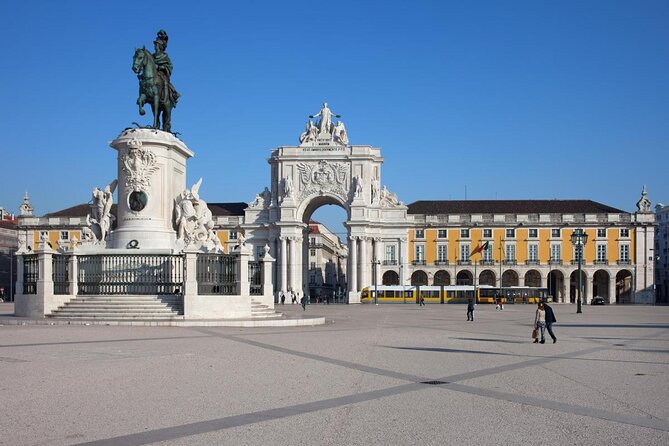
The walk begins at Cervejaria Antártida, at the western side of the royal palace area on Praça do Comércio, also called Terreiro do Paço. This is a practical meeting point because the square is one of Lisbon’s clearest central landmarks.
The first section lasts about 20 minutes and presents the square as Lisbon’s enduring center of power. That phrase is useful here. The broad riverside plaza is not just a pretty opening view. It represents government, commerce, and Portugal’s connection with the wider world, all themes that return throughout the tour.
You get your first sense of scale here. Lisbon’s wartime story was not confined to a shadowy back street. It involved officials, merchants, banks, foreign visitors, and people moving through the capital’s main public spaces.
This stop also helps you get your bearings. If this is your first day in Lisbon, you will leave with a clearer idea of how the lower city fits together. The tour ends at Restauradores, so the route takes you across the central downtown area rather than sending you back to the starting point.
Municipal Square and the beginning of the Republic
The next stop is Municipal Square, where the guide discusses the beginning of the Republic in Portugal. The visit lasts about 10 minutes and adds political context before the tour moves fully into its World War II stories.
This is important because Portugal’s wartime position did not appear out of nowhere. The country’s political changes and later dictatorship help explain the atmosphere in which Lisbon’s spy networks operated. You will hear how public power, private business, and foreign interests could overlap in a politically tense setting.
I like this part of the route because it prevents the tour from becoming a narrow spy thriller. The guide is building a timeline, showing how Portugal arrived at the conditions that made Lisbon such an unusual wartime meeting point.
There is no admission charge at the stop, since the tour takes place outdoors. As with the other squares, the value comes from the guide’s explanation and the setting rather than from entering a museum or monument.
Jewish gold and the tungsten trade
Between the major squares, the tour turns to two difficult subjects: Jewish gold and tungsten traffic. These details give the walk much of its historical weight.
Tungsten was valuable because it was important to wartime industry. Portugal’s role in the trade placed business and political interests under pressure, while the movement of gold tied the country to the wider financial system of the war. The tour connects these commercial subjects with espionage, showing that secret work often depended on money, materials, and access rather than only on dramatic acts of courage.
The reference to Jewish gold brings the human cost into sharper focus. Lisbon was a place of passage for people fleeing persecution, but it was also part of a complicated wartime economy. A good guide has to explain both the transactions and the people affected by them, and this is where Filipa and José are especially useful, based on the way their tours are described.
You should expect serious material here. The presentation includes political, social, and economic history, not just colorful tales about agents in hotel rooms. That makes the tour a better choice for someone who wants context, but perhaps less suitable if you are looking only for light entertainment.
Nearby in Lisbon, a different day entirely:
- Sintra: Pena Palace and Park Entrance Ticket
★ 4.2 · 17,410 reviews - Lisbon: History, Stories and Lifestyle Walking Tour
★ 4.8 · 10,902 reviews - Lisbon: Sunset Boat Party Cruise with DJ and Open Bar
★ 4.5 · 10,378 reviews - Lisbon: Pena Palace, Sintra, Cabo da Roca, & Cascais Daytrip
★ 4.7 · 9,981 reviews
Praça da Figueira and the real James Bond
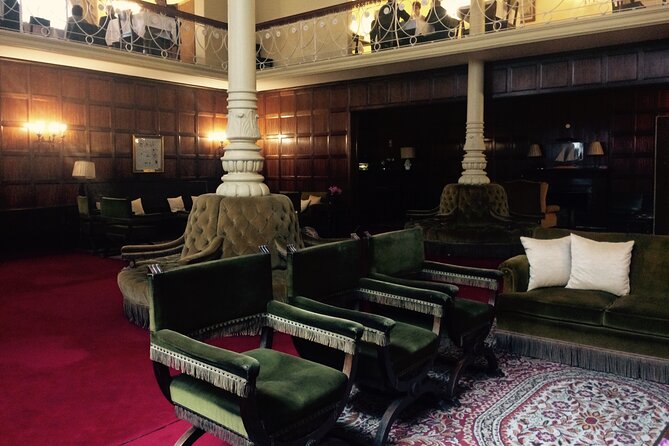
Praça da Figueira is the setting for the tour’s story about the real James Bond. The stop lasts around 10 minutes, but the subject gives it more drama than the short time suggests.
The guide explains the real person and the Lisbon connection behind this famous spy figure. You will not simply get a name and a quick comparison to fiction. The point is to show how real wartime personalities, locations, and habits could later feed popular culture.
This is likely to be one of the easiest sections for a mixed-age group to enjoy. Families and groups with different interests can follow the story even if not everyone is a World War II specialist. At the same time, the guide uses the character as a doorway into the wider spy network rather than treating him as the entire subject.
Praça da Figueira is also a useful urban stop. It keeps the tour moving through recognizable downtown spaces, so the experience never feels like a lecture detached from Lisbon. You are learning while walking, with each square offering a new piece of the city’s political and wartime puzzle.
Praça Dom Pedro IV and Lisbon’s refugee years
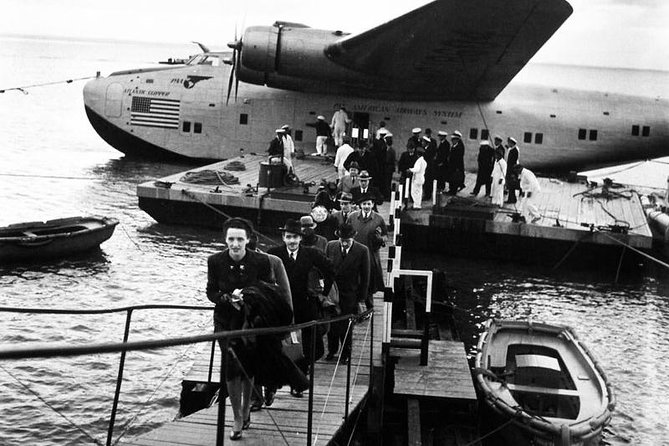
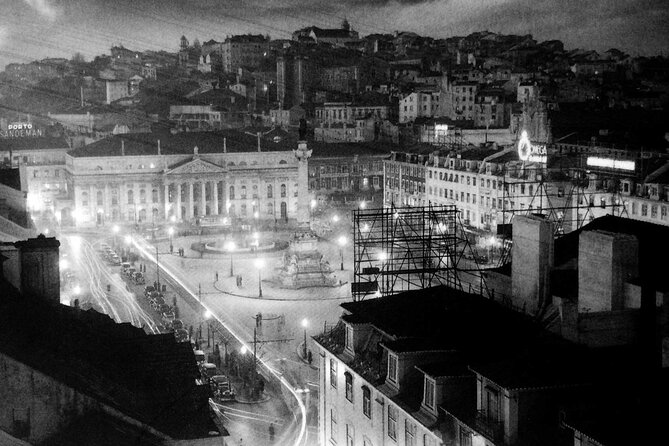
Praça Dom Pedro IV, commonly known as Rossio, receives about 15 minutes. Here the focus shifts to refugees and European fashion trends, two subjects that may sound unrelated until the guide explains how people and ideas moved through Lisbon.
Rossio was a public crossroads, and the refugee story makes the city’s role easier to picture. People arriving from elsewhere in Europe needed a place to wait, find contacts, secure documents, and hope for onward travel. Some were in transit for only a short time; others faced uncertainty that lasted much longer.
The discussion of fashion adds a lighter cultural note. Lisbon was not isolated from Europe, even under political restrictions. Styles, habits, and social signals moved across borders along with people and news. This helps you see wartime Lisbon as a living city, not merely a stage for secret agents.
I find this one of the more useful stops for understanding the human side of the tour. The story is not only about states and intelligence services. It is also about people trying to make choices in a dangerous period, often with limited information.
The spy hotels of central Lisbon
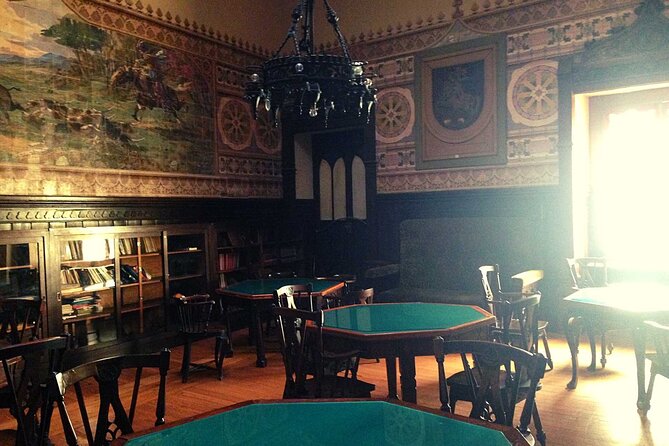
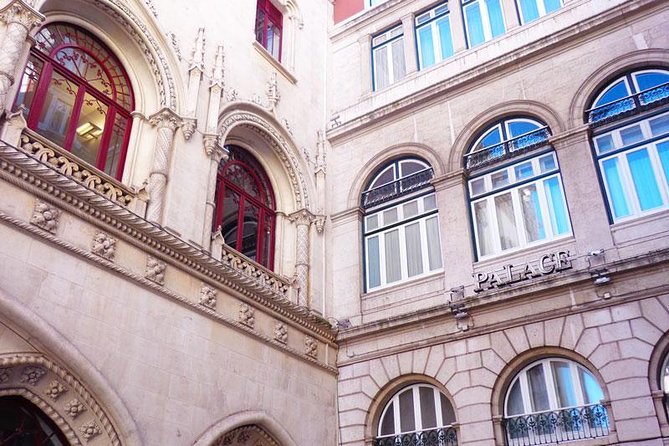
The route also points out several of Lisbon’s most famous spy hotels. These hotels were important because they brought different kinds of people into the same enclosed world: agents, refugees, businessmen, officials, and those attempting to escape Europe.
The guide explains the hotel connections as part of the larger network. You will learn why hotels mattered, how they could serve as places for contact and observation, and how the city’s temporary population added to the atmosphere of uncertainty.
This is one of the tour’s most atmospheric elements, but you should keep your expectations realistic. The supplied information does not promise hotel interiors, private rooms, or access to restricted areas. The experience is an outdoor walking tour, so the interest lies in the stories attached to the buildings and streets.
That approach has an advantage. You see the city as it is today while learning how ordinary-looking places carried extraordinary pressure during the war. The contrast between modern Lisbon and its former role as a center of intrigue is part of the pleasure.
Finishing at Praça dos Restauradores
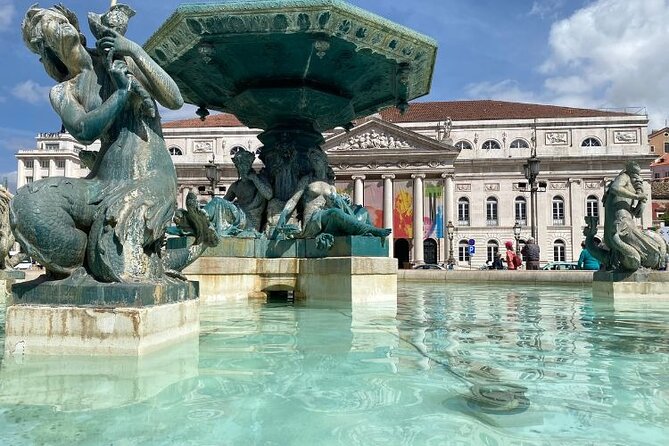
The final named stop is Praça dos Restauradores, where the guide discusses Garbo, also known as Arabel, described as the most important double agent of World War II. The stop lasts about 10 minutes, and the tour ends here.
Ending with a double agent gives the walk a strong final chapter. Garbo’s story brings together deception, trust, and the power of carefully shaped information. It also reinforces the central idea of the tour: Lisbon’s wartime importance came from people operating between countries, loyalties, and identities.
Restauradores is a useful endpoint because it is a prominent central square and a practical place to continue exploring Lisbon. The guide may also be able to answer final questions about the city, culture, or the historical subjects covered during the walk. One guide even pointed a group toward a less obvious spot inside an old casino after the tour, showing how a good conversation can extend the experience beyond the official route.
The finish is not a major monument visit, so the final value again rests on interpretation. If you want a tour built around entering grand buildings, this may feel limited. If you enjoy walking through the city and attaching stories to its streets, it works well.
What the guides add to the experience
The guide is the key part of this tour. The included professional art historian brings a trained eye to Lisbon’s buildings and public spaces, while the strongest guide comments also point to clear storytelling and a firm grasp of wartime politics.
José is praised for telling detailed stories without losing his audience. Filipa is noted for explaining political, social, and economic subjects in an engaging way. Zé is described as bringing Lisbon during World War II to life, including stories that even someone raised in Lisbon had not heard before.
The guide names may vary depending on the departure date, so you should not book solely expecting one person. What you can expect is an English-language tour led by a professional guide, with the style likely to combine historical explanation, personal anecdotes, and questions from the group.
The small maximum of 15 people matters. You are less likely to be lost at the back of a large crowd, and the guide has more room to respond when you ask about Portugal, Lisbon, or the period beyond the planned route.
Pace, weather, and physical demands
The route is designed to be walkable and is described as manageable for older age groups. Most people can participate, and the tour takes place near public transportation. Service animals are allowed.
Still, you should allow for a real walking commitment. The stated duration is about 2 to 3 hours, and one account found that tiredness began around the two-hour mark when the tour ran longer. Wear comfortable shoes and consider the weather before booking. Rain does not automatically stop the experience, but it can make a long outdoor presentation less pleasant.
The route moves through central squares, so you are not facing a demanding hike. The main challenge is staying on your feet while listening for an extended period. If you have limited stamina, an earlier start in your Lisbon visit may be wiser than booking after a full day of sightseeing.
Is $30.17 a fair price?
At $30.17 per person, this is a reasonable price for a 2 to 3-hour guided walk, particularly if you value history and small groups. There are no attraction admission costs built into the route, but the fee pays for the guide’s preparation, storytelling, and ability to connect scattered places into one clear story.
The value is strongest if you would otherwise walk through Praça do Comércio, Rossio, and Restauradores without knowing how they relate to Portugal’s wartime past. You are also getting more than a standard city orientation. The tour adds the refugee experience, tungsten trade, Jewish gold, hotel networks, and double-agent history.
The price is less compelling if you want a quick overview of Lisbon’s main monuments or a tour with indoor visits. This is a specialist walking tour with a broad political backdrop, not a general sightseeing bus ride or a museum ticket.
Because it is booked an average of 29 days in advance, you should plan ahead if your dates are fixed. Confirmation is sent within 48 hours, subject to availability, and the group maximum is 15.
Who should book this tour?
I would choose this walk if you enjoy World War II history, espionage, political stories, or the way major events affect ordinary city life. It also suits repeat visitors who already know Lisbon’s main sights and want a different way to understand the downtown area.
It works for mixed-age groups too. The real James Bond, hotel stories, and double-agent material provide an easy entry point, while the political and economic background gives history fans more to think about.
You may want to skip it if you dislike long outdoor tours, need frequent indoor breaks, or prefer only cheerful, visual sightseeing. The subjects include dictatorship, persecution, refugees, and wartime trade, so the tone is sometimes serious.
Should you book Lisbon City of Spies?
Book it if you want Lisbon to make more sense as a European crossroads rather than simply a collection of scenic squares. The route is easy to place on your first or second day in the city, and the stories can change how you see several familiar downtown locations.
The best reason to go is the guide-led storytelling. José, Filipa, and Zé are praised for making a complicated period understandable, while the group size keeps the walk personal. Just protect enough time and energy for the full 2 to 3 hours, and bring suitable clothing for changing weather.
At $30.17, I consider it good value for a history-focused visitor. It is not the right pick for everyone, but for anyone curious about spies, refugees, business, and Portugal’s uneasy wartime position, this is a smart and memorable Lisbon walk.
FAQ
How long does the Lisbon City of Spies Tour last?
The tour lasts approximately 2 to 3 hours.
What language is the tour offered in?
The tour is offered in English.
Where does the tour begin?
It begins at Cervejaria Antártida Lisboa, at Ala Poente do Palácio Real, Praça do Comércio, R. C 20-23, 1100-038 Lisbon.
Where does the tour end?
The tour ends at Restauradores in Lisbon.
What is the maximum group size?
The tour has a maximum of 15 travelers.
Is admission to the walking stops included?
The listed stops, including Praça do Comércio, Municipal Square, Praça da Figueira, Praça Dom Pedro IV, and Praça dos Restauradores, have no admission charge.
Are service animals allowed?
Yes, service animals are allowed.
Can I cancel for a full refund?
Yes. You can cancel at least 24 hours before the experience starts for a full refund. Cancellations or changes made less than 24 hours before the start time are not accepted for a refund.
Fresh finds around Lisbon
- Sanctuary of Fátima and Coimbra City Tour★ 4.5 · 51 reviews
- Sintra/Lisbon: Sintra & Quinta da Regaleira Tour with Ticket★ 4.4 · 51 reviews
- Jeronimos Monastery Guided Tour – Small Groups – Tickets Included★ 5.0 · 51 reviews
- Lisbon: Private Christmas Lights Tour by Eco Tuk Tuk★ 4.9 · 51 reviews
- Peniche: Berlengas Island Catamaran Tour – Round Trip★ 4.6 · 51 reviews
- Half day Spa Water Therapy experience at THE SPA at Corinthia Lisbon★ 4.5 · 51 reviews
- Lisbon: Private Tuk-Tuk Tour for 2 hours★ 4.7 · 51 reviews
- Premium Lisbon Airport Transfer to Lisbon★ 5.0 · 51 reviews
City Tours, compared.
Lisbon City Center Tour – The Unmissable Lisbon
Read our review →
Lisbon: Daytime/Sunset/Night City Sailboat Tour with Drink
Read our review →
Lisbon: City Highlights and Viewpoints E-Bike Tour
Read our review →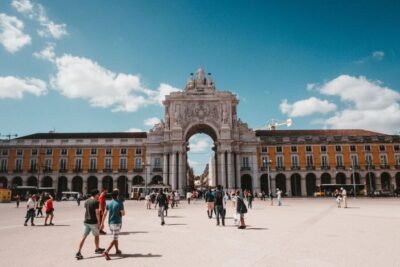

Lisbon: City Sightseeing Hop-On Hop-Off Bus Tour
Read our review →
Browse the lists this tour appears in