
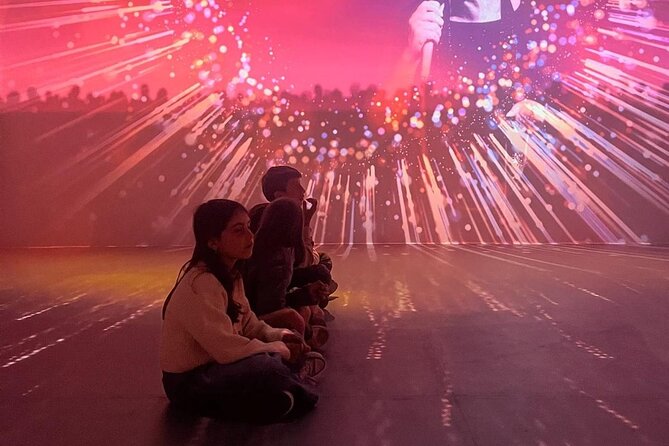
Reviewed · FADO SHOWS
Experience the Queen of Fado at Ah Amália Living Experience
Amália Rodrigues comes alive here through music, holograms, and moving images, not just wall labels. This compact Lisbon experience traces the singer’s artistic life and connection to fado with period scenery, digital effects, and a final performance that gives the visit its emotional punch.
I like the quick format and the mix of old and new. You learn about traditional Portuguese music while moving through a changing series of rooms, then see how a hologram and sound design can make a historic performer feel present. Prebooking also removes the worry of arriving to a full venue.
The main drawback is location. The attraction sits in Lisbon’s Marvila area, away from the city center’s classic sights, so you may need a taxi or ride-hailing service. If you prefer a full live fado evening in a traditional restaurant, this is an introduction and theatrical presentation, not a replacement.
In This Review
- Key points to know before you go
- Meeting Amália through sound, light, and image
- The first rooms: a gentle introduction to fado
- Period settings and Amália’s material legacy
- VR and interactive rooms keep the pace moving
- The hologram concert is the main payoff
- Why the one-hour format works
- Is $24.20 a fair price?
- Getting to the Marvila venue
- Who will enjoy Ah Amália most?
- Practical tips for a better visit
- Cancellation and booking flexibility
- Should you book Ah Amália Living Experience?
- FAQ
- Where is Ah Amália Living Experience located?
- How much does the experience cost?
- How long does the visit last?
- Is the experience offered in English?
- What is included with the ticket?
- Can I cancel for a full refund?
- Is the venue near public transportation?
Key points to know before you go
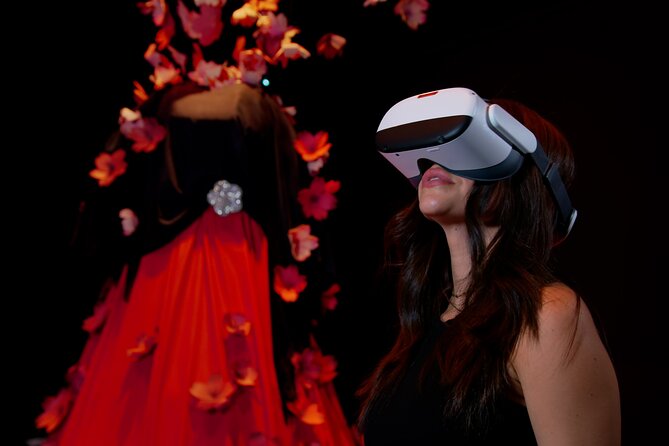
- Amália’s story is told through technology: Expect digital projections, interactive content, VR goggles, and a hologram performance.
- The visit lasts about one hour: Some schedules may run closer to 75 minutes, so leave a little extra time.
- The finale is the emotional highlight: A staged hologram concert brings Amália’s voice and presence to the front.
- It works well for families: Children and teenagers can stay engaged with the quick changes in setting and visual effects.
- The price is $24.20 per person: That is fair if you want a focused cultural experience rather than a long evening of music.
- The venue is outside the main sightseeing core: Pair it with another attraction in eastern Lisbon or plan a direct ride.
Meeting Amália through sound, light, and image

Ah Amália Living Experience is built around a simple idea: Amália Rodrigues is best understood through feeling as well as facts. Instead of presenting her life as a conventional museum display, the experience uses scenery, sound, projections, and digital technology to create a series of short encounters.
That format suits Amália and fado. Fado is emotional music, and a room full of text panels would miss part of its power. Here, you move from information to atmosphere, then back to music. The result is more like a small museum, theater piece, and multimedia show combined.
You should not expect a long guided lecture. The visit moves at a steady pace, with an accompanying guide helping you through the spaces and explaining what you are seeing. The guide may answer questions and provide context, while the rooms do much of the storytelling through sound and visual effects.
The experience is offered in English, which makes it a practical choice if you want an introduction to Amália without needing Portuguese. The material is designed to be accessible to people who know little about fado. You can arrive with no background in the music and still follow the main story.
More fado evenings:
- Lisbon: Live Fado Show with Port Wine in Historic Center
★ 4.7 · 4,166 reviews - Lisbon: Fado Show and Portuguese Dinner
★ 4.5 · 1,531 reviews - Lisbon: Fado Show with Wine in a Historic Venue
★ 4.8 · 1,294 reviews
The first rooms: a gentle introduction to fado
The opening part gives you a foundation in Amália’s place within Portuguese music. You will find information on the walls, along with visual material that connects the singer to the world of fado. This section matters because the later effects work better once you understand why Amália is such an important figure.
I appreciate that the experience does not assume you already know the difference between a fado performance and other Portuguese music. You receive enough context to understand the mood, the role of lyrics, and the importance of Amália as an ambassador for the tradition.
You may need to pause and read some of the written material. That makes this section less suitable for very young children who cannot read, though older children and teenagers can follow the visit more easily. Families with children around school age and above should find enough movement and variety to keep the experience from feeling like a static museum.
The exact amount of time you spend with the text depends on your group and guide. If you are fascinated by Amália’s career, you can linger. If you mainly want the music and visual presentation, the experience keeps moving toward the more theatrical sections.
Period settings and Amália’s material legacy
The physical sets help place Amália in a recognizable world. Rather than relying only on screens, the exhibit combines period scenery with objects and visual details that give the rooms texture. This physical element is important: you are not simply watching a film in a dark theater.
The presentation also refers to both Amália’s material and immaterial legacy. In practical terms, that means you encounter the visible side of her career alongside the less tangible elements that made her powerful: her voice, lyrics, stage presence, and emotional connection to fado.
The rooms change pace and mood. One moment you may be absorbing written information, and the next you are surrounded by projected color or sound. That quick movement is one reason the experience works for mixed-age groups. It also means you should not expect a quiet, traditional museum visit.
If you prefer original objects, detailed archival displays, and long periods of independent study, you may find the technology-heavy approach a little light on those things. The strength here is presentation. It gives you an accessible way to feel the subject rather than offering a large research collection.
VR and interactive rooms keep the pace moving
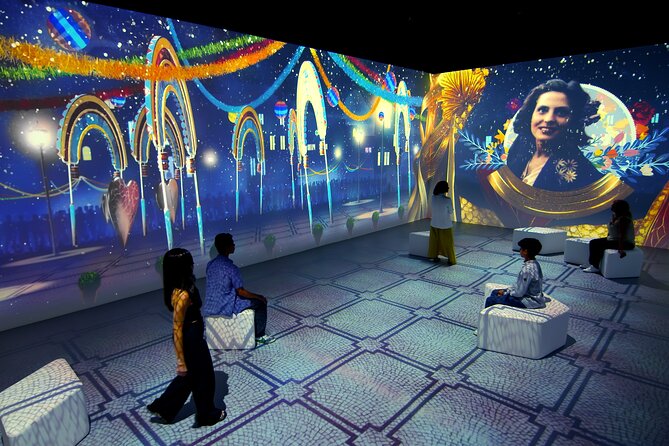
The interactive elements are not just decoration. They give you different ways to approach Amália’s work. VR goggles provide one of the more memorable moments for younger visitors, while rooms filled with changing orange and blue light create a strong visual shift from the text-based displays.
You may appreciate this variety if your sightseeing group has different interests. One person can focus on the facts, another on the music, and a child can respond to the visual effects. The visit does not depend on everyone having the same attention span.
The technology also gives you a sense of participation. You are not only looking at a portrait or reading a biography. You become part of the exchange between performer, image, sound, and audience, which is central to the attraction’s design.
There is a tradeoff. Interactive technology can date faster than a good photograph or recording, and some people prefer the directness of a live musician in a small Lisbon fado house. Go here for a carefully staged introduction to Amália, not for the spontaneous atmosphere of a late-night performance.
A handful more Lisbon ideas to compare
- Lisbon City Center Tour – The Unmissable Lisbon
★ 5.0 · 22,234 reviews - Lisbon: Sintra, Pena, Regaleira, Cabo da Roca & Cascais
★ 4.7 · 19,656 reviews - Lisbon: Jerónimos Monastery Entrance Ticket
★ 4.1 · 14,164 reviews - Lisbon: History, Stories and Lifestyle Walking Tour
★ 4.8 · 10,902 reviews
The hologram concert is the main payoff
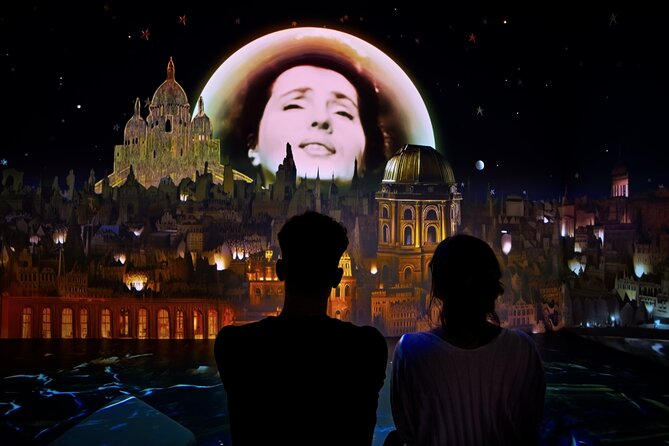
The final show is the part I would plan around. The hologram performance brings Amália to the center of the room and uses sound, image, and stage effects to suggest the experience of seeing her perform.
It is not the same as attending a live concert, but it answers the question at the heart of the visit: what made Amália so compelling? The hologram gives you a stronger sense of her presence than a recording alone. Her voice and lyrics become the focus after the earlier displays have supplied the background.
This ending also gives the visit a clear shape. You begin with context, move through interactive rooms, and finish with performance. That structure helps the experience feel like more than a collection of screens.
If you already know and love Amália, the finale may be the most rewarding part because it lets you hear familiar music within a new setting. If you are new to fado, it gives you a concentrated first taste. You will not hear a full evening of music, but you may leave with enough curiosity to seek out a live fado house later.
Why the one-hour format works
The advertised duration is about one hour, though you should allow up to roughly 75 minutes if you read the displays carefully or move at a relaxed pace. I consider that a useful length for Lisbon. It is long enough to provide context but short enough to fit between other plans.
This is especially helpful on a day when you have limited time before heading to the airport or moving to another part of the city. You can learn something substantial without committing an entire afternoon to a museum or a concert.
The compact schedule also suits families. Children may lose interest during a long biography, but the changing rooms, VR, color effects, and hologram give the visit several fresh starting points. Older children and teenagers can also connect with the lyrics and story of Amália’s career.
The short length has a limitation: the subject is bigger than the presentation. You will receive an introduction, not a complete study of Amália Rodrigues, Portuguese music, or the full development of fado. If you want detailed dates, recordings, and historical background, plan to continue your research elsewhere.
Is $24.20 a fair price?
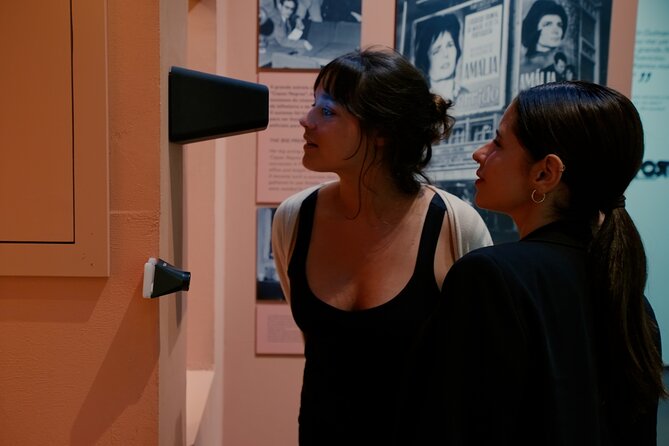
At $24.20 per person, this is not the cheapest cultural stop in Lisbon. The value depends on what you want from the visit.
I think the price is reasonable if you want several things in one package: an English-language introduction to fado, a biographical presentation of Amália, interactive technology, and a short performance. Buying ahead also gives you the practical benefit of a reserved place, rather than arriving and hoping there is room.
The cost is harder to justify if you want a full live concert. A traditional fado evening offers musicians performing in real time, often with food or drinks and a more intimate setting. Ah Amália gives you polished production and historical context instead.
For families, the value improves because the experience can appeal to adults and children at once. A parent interested in Portuguese culture does not have to choose between a serious museum and an activity that holds a child’s attention. The VR and visual rooms add variety, while the final performance gives the adults a stronger musical connection.
Getting to the Marvila venue
The ticket redemption point is Ah Amália Living Experience at Praça David Leandro da Silva 16, 1950-242 Lisboa. The venue is near public transportation, but it is not beside the most familiar central Lisbon sights.
Give yourself time to reach the attraction, especially if you are staying around Baixa, Chiado, Alfama, or Belém. A direct Uber or taxi can be the simplest option when your schedule is tight. Public transportation is also possible, but check your route and allow time for connections.
The location makes more sense as part of an eastern Lisbon day. You can pair it with the aquarium or the National Tile Museum, both suggested as useful nearby additions by people who have planned the visit. Do not treat Ah Amália as a casual stop between Praça do Comércio and the castle unless you have checked the travel time first.
Prebooking is sensible. The experience is popular and is booked an average of 16 days ahead, so reserving early is wise if you have a fixed Lisbon schedule. Confirmation arrives at booking, and admission is included in the ticket price.
Who will enjoy Ah Amália most?
I would recommend this experience to you if you want a manageable cultural activity with a clear beginning and end. It is particularly good for:
- First-time visitors who want a simple introduction to fado
- Adults who already enjoy Amália’s music
- Families with children or teenagers
- People who prefer visual storytelling to long museum labels
- Visitors with only an hour or so available
- Anyone interested in how technology can present a musical figure
You may want something else if your priority is a traditional fado house, a long live set, or a large collection of original artifacts. The attraction is polished and theatrical. It offers a modern presentation of Amália rather than the feeling of sitting close to a singer in a small, candlelit room.
The experience can also be a good choice for a mixed group. One person does not need to be a fado expert for everyone to enjoy the visit. The guide provides a path through the material, and the visual sections offer a break from reading.
Practical tips for a better visit
Reserve ahead, particularly if your Lisbon dates are firm. Since the attraction is booked around two weeks in advance on average, last-minute availability should not be assumed.
Plan for 60 to 75 minutes inside. The official estimate is about one hour, but reading the displays and allowing for the full ending can extend the visit.
Think about your route before you leave. The venue is near public transportation but away from central Lisbon. Pair it with the aquarium or tile museum if those are already on your list, or use a direct ride to avoid losing time.
Do not skip the final show. The earlier rooms explain Amália, but the hologram performance is where the music takes over. If you have limited patience for display text, move at a comfortable pace but stay through the ending.
Families should keep very young children in mind. The visual effects may hold their attention, but the written sections require reading. Older children and teenagers are more likely to enjoy the full sequence.
The experience is offered in English, making it easier to follow if you do not speak Portuguese. Confirmation is provided at booking, and most people can participate.
Cancellation and booking flexibility
You can cancel for a full refund up to 24 hours before the local start time. Changes or cancellations made less than 24 hours before the experience are not accepted for a refund.
That policy is fairly useful for a Lisbon itinerary, where rain, delayed trains, or a tiring sightseeing day can force changes. Still, mark the deadline clearly. The 24-hour cutoff is firm.
Should you book Ah Amália Living Experience?
Book it if you want a short, well-organized introduction to Amália Rodrigues and fado, especially if your group appreciates music, visual effects, or interactive exhibits. The hologram finale, VR section, and steady movement between rooms make it more engaging than a conventional biography.
I would also book it for a family day or a tight schedule. The hour-long format gives you real cultural context without requiring an entire evening, and the $24.20 price is fair when you value the guide, technology, and performance together.
Skip it if your main goal is live fado in an intimate Lisbon venue. Ah Amália presents the tradition through a designed experience, not a spontaneous concert. For many people, the best plan is to do both: learn about Amália here, then hear living musicians later that night.
FAQ
Where is Ah Amália Living Experience located?
The venue is at Praça David Leandro da Silva 16, 1950-242 Lisboa, Portugal.
How much does the experience cost?
The listed price is $24.20 per person.
How long does the visit last?
The advertised duration is approximately one hour. Allowing up to 75 minutes may be sensible if you read the displays and take your time.
Is the experience offered in English?
Yes. The experience is offered in English.
What is included with the ticket?
Admission to Ah Amália Living Experience is included.
Can I cancel for a full refund?
Yes. You can cancel at least 24 hours before the local start time for a full refund. Cancellations and changes made less than 24 hours before the start time are not accepted for a refund.
Is the venue near public transportation?
Yes. The attraction is near public transportation, and most people can participate.
Fresh finds around Lisbon
- Sanctuary of Fátima and Coimbra City Tour★ 4.5 · 51 reviews
- Sintra/Lisbon: Sintra & Quinta da Regaleira Tour with Ticket★ 4.4 · 51 reviews
- Jeronimos Monastery Guided Tour – Small Groups – Tickets Included★ 5.0 · 51 reviews
- Peniche: Berlengas Island Catamaran Tour – Round Trip★ 4.6 · 51 reviews
- Half day Spa Water Therapy experience at THE SPA at Corinthia Lisbon★ 4.5 · 51 reviews
- Lisbon: Private Christmas Lights Tour by Eco Tuk Tuk★ 4.9 · 51 reviews
- Lisbon: Private Tuk-Tuk Tour for 2 hours★ 4.7 · 51 reviews
- Premium Lisbon Airport Transfer to Lisbon★ 5.0 · 51 reviews
Fado Shows, compared.
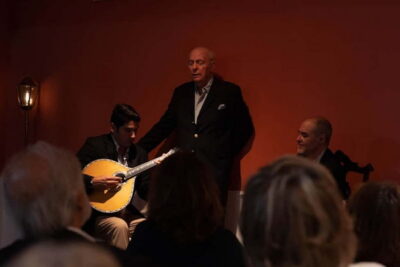
Lisbon: Live Fado Show with Port Wine in Historic Center
Read our review →

Lisbon: Fado Show with Wine in a Historic Venue
Read our review →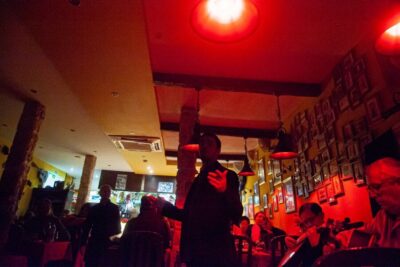
Lisbon: Alfama Tour and Live Fado with Traditional Dinner
Read our review →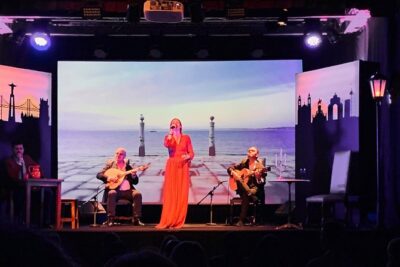
Fado in Chiado – Live Show in Lisbon on Stage for over 15 Years
Read our review →
Lisbon: Fado Night with Dinner in a Typical Fado House
Read our review →
Lisbon Fado Experience: Walking Tour, Dinner and Live Music Show
Read our review →
Lisbon: Fado Night with Dinner with Live Performance
Read our review →Browse the lists this tour appears in