Reviewed · LISBON TOURS
Лиссабон: сверху вниз под правдивые и вымышленные истории
Lisbon makes more sense from above, and this Russian-language walk starts on a hill and works downhill through the city’s main historic districts. With local philologist Katia Literra, you’ll connect viewpoints, churches, tiled maps, old lanes, public transport, and riverfront squares into one clear picture.
I like the small group of no more than seven people, which should make questions and conversation easy. I also like the practical focus: you learn not only what Lisbon’s sights are, but which districts suit a quiet evening, a walk, dancing, or a younger night out. The drawback is the pavement and occasional stairs, so this is not suitable for people with limited mobility.
In This Review
- Key points at a glance
- Why this walk is a useful first look at Lisbon
- Meeting Katia at Largo do Rato
- Príncipe Real and the city from São Pedro de Alcântara
- Seeing the Elevador da Glória in context
- Bairro Alto, where Lisbon changes after dark
- Igreja de São Roque and the quiet side of the route
- Largo do Carmo and the Santa Justa Lift
- Chiado and the walk into central Lisbon
- Rossio, Baixa, and the city rebuilt on a grid
- Pollux and Rua da Prata
- Finishing at Praça do Comércio
- What Katia adds to the walk
- Is $23 a fair price?
- Who should book this Lisbon walk?
- Should you book it?
- FAQ
- Where does the Lisbon tour start?
- How do I identify the guide?
- Where does the tour finish?
- How long does the walk last?
- What language is the tour conducted in?
- How large is the group?
- Is the route physically difficult?
- Are children allowed?
- Are transport tickets included?
- Can I cancel for a refund?
Key points at a glance

- A downhill route from Rato to Commerce Square, covering several central neighborhoods without asking you to climb Lisbon’s steepest streets.
- A tiled map of the city at a viewpoint, a useful way to understand how Lisbon is arranged around its hills and river.
- Church interiors and a former monastery garden, adding quiet, richly decorated spaces to the outdoor sightseeing.
- Lisbon’s lifts, funiculars, and trams explained, so you can make better use of the city after the walk.
- Russian-language guidance from Katia Literra, a Lisbon-based philologist who combines history, anecdotes, legends, and practical advice.
- A three-hour orientation walk for $23, with free cancellation up to 24 hours before the start and payment later available at booking.
Why this walk is a useful first look at Lisbon
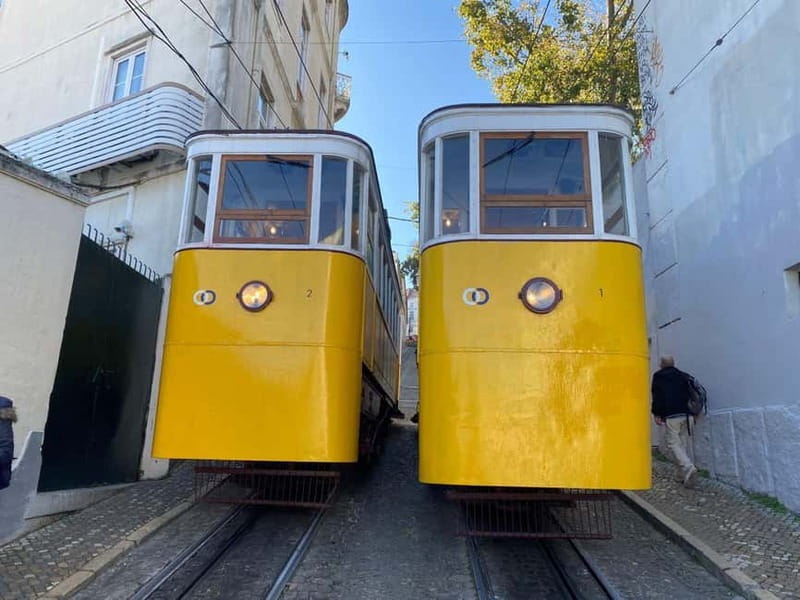
Lisbon can be confusing on your first day. The city rises sharply from the river, streets change character within a few blocks, and the famous yellow trams are part of a transport system that is useful, picturesque, and not always easy to understand at first glance.
This walk tackles that problem directly. It begins at Largo do Rato, high enough to give you a sense of the city’s shape, then moves through Príncipe Real, São Pedro de Alcântara, Bairro Alto, Chiado, Baixa, Rua da Prata, and finally Praça do Comércio.
I like this route because it is not just a parade of monuments. It explains how the pieces connect. You see Lisbon from above, walk through its older quarters, learn about its churches and public spaces, and finish by the river where the city opens toward the water.
At $23 per person, the price is modest for a three-hour small-group walk. You are paying for orientation as much as sightseeing. If this is your first time in Lisbon, the advice about neighborhoods and transport can save you time during the rest of your stay. If you already know the center well, the Russian-language storytelling and church visits may be the main appeal.
The tour is not designed for young children under 12, and it is not suitable for people with mobility impairments. Comfortable shoes are essential. Lisbon’s traditional paving can be uneven, and even a route described as mostly downhill still includes walking and some stairs.
A handful more Lisbon ideas to compare
- Lisbon City Center Tour – The Unmissable Lisbon
★ 5.0 · 22,234 reviews - Lisbon: Sintra, Pena, Regaleira, Cabo da Roca & Cascais
★ 4.7 · 19,656 reviews - Lisbon: Jerónimos Monastery Entrance Ticket
★ 4.1 · 14,164 reviews
Meeting Katia at Largo do Rato
The meeting point is beside the Chafariz do Largo do Rato, near the exit of Rato Metro Station toward Rua da Escola Politécnica. Rato is the final stop on the yellow metro line, and you should leave through the exit toward the Polytechnic School.
Katia will be holding a sign with the GetYourGuide name. The exact starting time depends on the date you choose, so check availability before planning the rest of your day.
The opening location is practical rather than grand. That is part of its value. You begin in a real Lisbon neighborhood, then quickly move toward gardens and viewpoints instead of spending the first half hour gathering at a major monument.
The walk lasts about two and a half to three hours, with the advertised duration listed as three hours. Bring water, sun protection, and rain gear. Drinks are not included, and transport tickets, museum admissions, and other paid entries are also not included.
Príncipe Real and the city from São Pedro de Alcântara
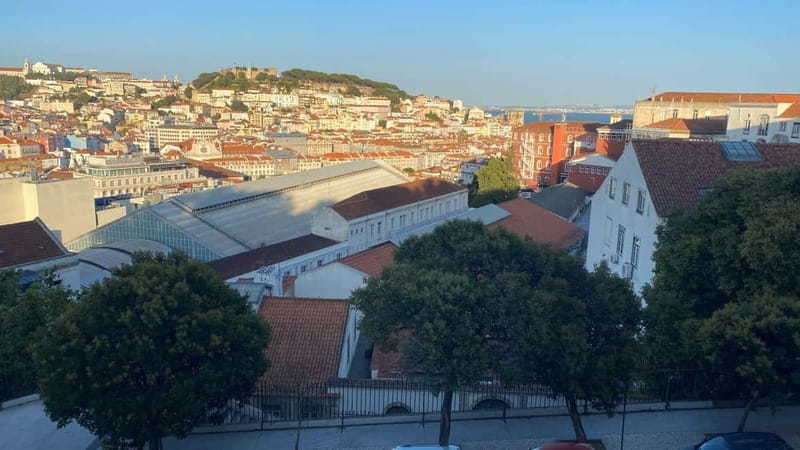
The first major stop is Jardim do Príncipe Real, a pleasant urban garden and a good place to begin thinking about Lisbon beyond its postcard center. The guide spends about 15 minutes here, using the setting to explain the city and its districts.
From there, you walk for about ten minutes to Miradouro de São Pedro de Alcântara. This is one of the strongest moments of the route. You get a broad view across the old city, with the hills and river-facing center spread out below.
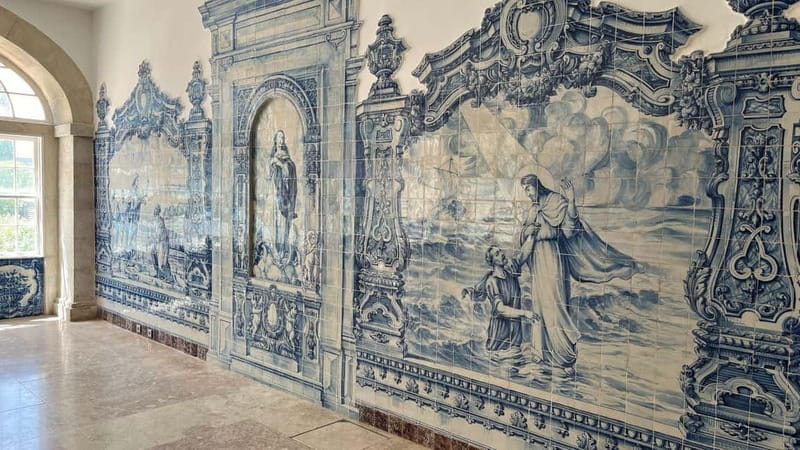
The unusual feature here is a map of Lisbon made from azulejos, the painted ceramic tiles that appear across Portuguese buildings, churches, stations, and public spaces. A city map can sound ordinary, but a tiled map at a viewpoint gives you a physical way to read Lisbon. You can connect the upper neighborhoods with the lower Baixa district and understand why some journeys feel like a workout.
Allow yourself time for photographs. The stop lasts about ten minutes, so it is not a long independent visit, but it gives you a useful visual reference for the rest of the walk.
Seeing the Elevador da Glória in context
The route continues to the Elevador da Glória, one of Lisbon’s famous funiculars. The stop is brief, about seven minutes, but the guide uses it to explain the city’s unusual transport network.
Lisbon’s hills made ordinary street travel difficult, so lifts and funiculars became practical answers to steep grades. They are also part of the city’s character. You will hear about the lifts, funiculars, and trams you may use later during your own sightseeing.
This is an important distinction. The tour does not include transport, and the itinerary does not promise a ride on the funicular. You are seeing the system and learning how it fits into the city. If you want to ride it later, you will need to arrange and pay for that separately.
Nearby in Lisbon, a different day entirely:
- Sintra: Pena Palace and Park Entrance Ticket
★ 4.2 · 17,410 reviews - Lisbon: History, Stories and Lifestyle Walking Tour
★ 4.8 · 10,902 reviews - Lisbon: Sunset Boat Party Cruise with DJ and Open Bar
★ 4.5 · 10,378 reviews - Lisbon: Pena Palace, Sintra, Cabo da Roca, & Cascais Daytrip
★ 4.7 · 9,981 reviews
Bairro Alto, where Lisbon changes after dark
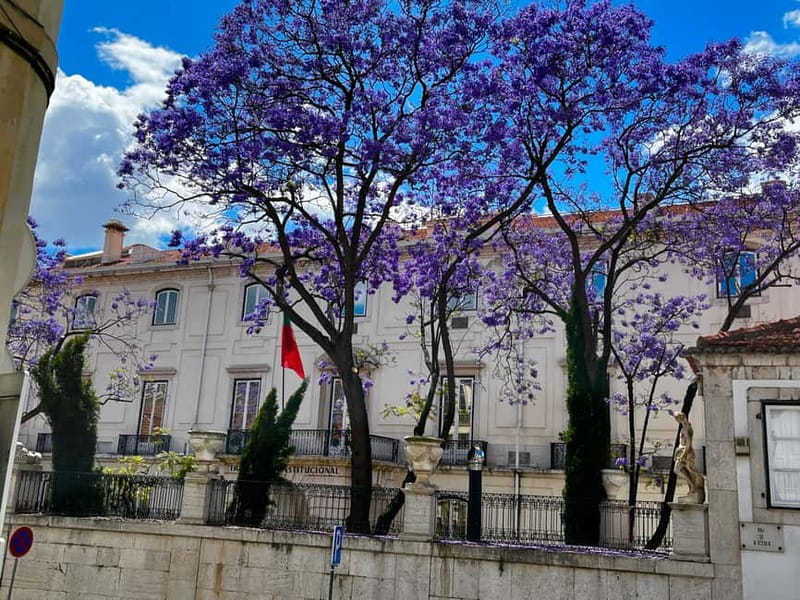
A short walk brings you into Bairro Alto. The visit lasts about 15 minutes and focuses on the neighborhood’s streets, character, and place in Lisbon’s evening life.
The guide gives practical suggestions about different parts of the city. You learn which area may suit a quiet evening, where you can walk along nearly empty streets, where dancing makes sense, and where the mood is closer to a younger party.
That advice is useful because Lisbon’s districts can feel very different at night. A neighborhood that is ideal for a daytime stroll may not be the best choice for a relaxed dinner, while another may become lively late in the evening.
The stop is short, so do not expect a long nightlife tour. Think of it as a map for later. You get enough context to decide where to return once you have settled into Lisbon.
Igreja de São Roque and the quiet side of the route
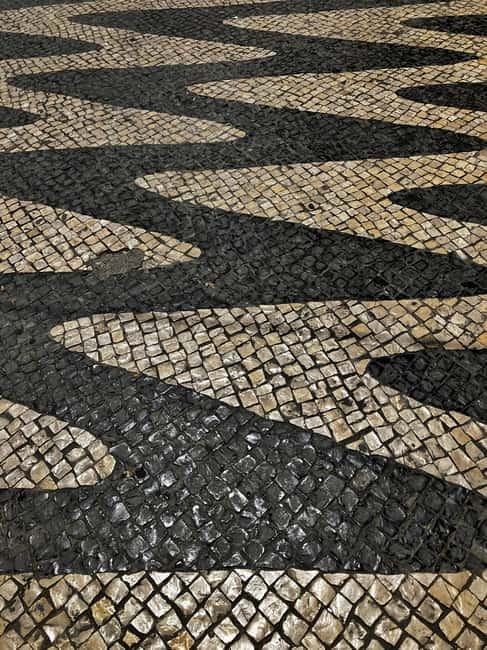
The walk continues to Igreja de São Roque. You have about 15 minutes here for a visit, guided explanation, photographs, and some self-guided looking.
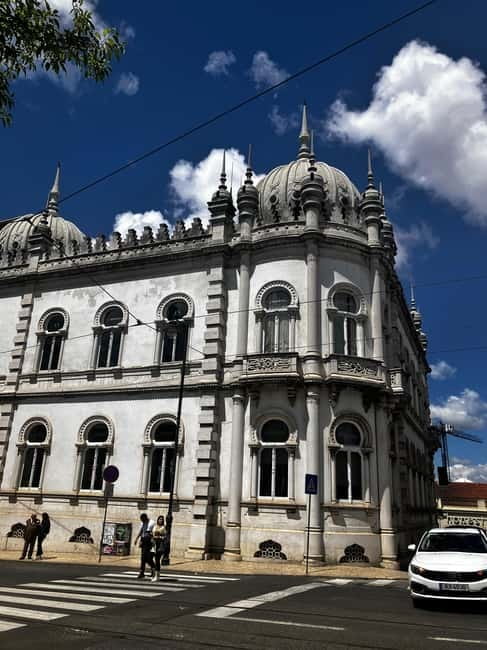
This is where the tour moves indoors and becomes more focused on art and religious decoration. Lisbon’s churches are often easy to pass without entering, especially when you are busy following the streets toward the next viewpoint. A guided visit helps you notice the ornate interiors rather than treating the church as another exterior stop.
The exact access arrangements can depend on opening conditions, so keep your schedule flexible. The experience includes a visit to the church, but the tour price does not include museum tickets or other admissions where applicable.
I like the contrast between São Roque and the viewpoints. The route is not only about getting the perfect city photograph. It also gives you a quiet interior, detailed decoration, and a chance to slow down.
Largo do Carmo and the Santa Justa Lift
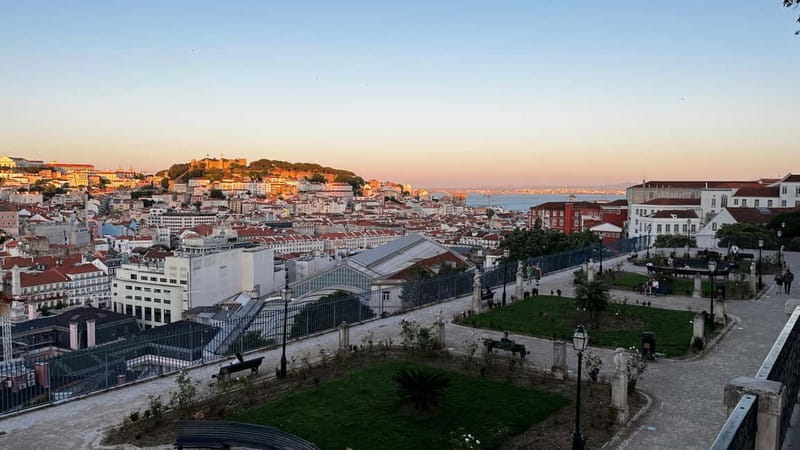
Next comes Largo do Carmo, one of the most atmospheric stops on the route. The visit takes about 15 minutes and may include time for coffee or a local snack, though those purchases are your responsibility.
The square offers another change of pace. You have just been through Bairro Alto and a decorated church, and now you are in an open urban space with room to pause. This is a good point to ask Katia questions about Lisbon’s past and present, since the tour includes time for questions at the end as well.
The Santa Justa Lift follows, with a stop of about ten minutes. Like the Elevador da Glória, it is part of Lisbon’s answer to its steep terrain. The guide explains how these transport landmarks relate to the streets around them.
Again, the lift is viewed and discussed rather than included as a ride. If you want to go up it, plan for that separately. The value here is learning how to identify the city’s transport options, not simply collecting a photograph of a famous structure.
Chiado and the walk into central Lisbon

The route then reaches Chiado for about 15 minutes. Chiado links the older hill districts with the lower center and is one of the places where Lisbon’s historic and commercial sides meet.
You get a guided walk through the area, with attention to how it connects to the streets ahead. This is the sort of explanation that can improve your independent sightseeing. Instead of seeing Chiado as an isolated stop, you understand it as a bridge between Bairro Alto, Carmo, Rossio, and Baixa.
The route is still mostly downhill, but the pavement remains a factor. Lisbon’s stone sidewalks can be slippery when wet and tiring after several hours. Wear shoes with a firm grip rather than smooth city shoes.
Rossio, Baixa, and the city rebuilt on a grid

Rossio Square is the next major public space, with about 15 minutes for sightseeing, photos, and a guided walk. It is a useful place to notice the change in the city’s layout.
The older hill districts feel irregular, with narrow lanes and sudden changes in grade. Baixa is more orderly. The walk introduces you to that contrast and explains how different parts of Lisbon fit together.
In Baixa de Lisboa, you have another ten-minute visit and guided walk, with time for photographs and shopping. This part of the route is valuable for practical reasons. You can get your bearings among the broad streets, understand how the center runs toward the river, and note places you may want to revisit for cafés, shops, or meals.
The pace is fairly steady. You should not expect long shopping breaks or extended time inside stores. The point is to learn the district and mark places for later.
Pollux and Rua da Prata
The stop at Pollux lasts around ten minutes and continues the central-city orientation. It is followed by a similar ten-minute visit to Rua da Prata.
These shorter stops show that the experience is not limited to famous monuments. The guide also points out ordinary streets and useful city details. That is helpful when you want to return on your own and move through Lisbon without depending on a tour group.
Rua da Prata leads naturally toward the riverfront. By this stage, the route has taken you from a hilltop garden through viewpoints, nightlife districts, churches, commercial streets, and the lower center.
The walk’s structure is its main strength. You do not simply hear separate facts. You see the city change as you descend.
Finishing at Praça do Comércio
The final stop is Praça do Comércio, also called Terreiro do Paço, beside the Tagus River. The visit lasts about 15 minutes and includes photographs, a guided explanation, and scenic views along the way.
This is a satisfying endpoint because the square gives you space after the tighter streets of the central districts. It is also easy to continue exploring from here. The square is close to restaurants, cafés, shops, attractions, and the Commerce Square Metro Station on the blue line.
The stated route ends at Praça do Comércio. The meeting information also contains a note saying the activity ends back at the meeting point, so I would confirm the exact finish with the operator before booking if your onward plans depend on it. The detailed route and description identify Commerce Square as the intended endpoint.
From the square, you can continue independently or use the metro. The tour does not include transport, so allow for your own ticket and onward arrangements.
What Katia adds to the walk
Katia Literra is a philologist living in Lisbon, and the experience is conducted in Russian. That combination matters. You receive the practical help of someone who lives in the city, along with attention to language, stories, and how people use the city.
The storytelling includes real events, legends, anecdotes, and tales about kings, knights, and ordinary residents. The mix gives the walk a lighter touch than a strictly academic lecture, while still helping you understand how Lisbon’s streets reflect its past.
The strongest praise for Katia centers on her friendly manner, careful organization, love for Lisbon, and clear presentation of Portuguese history and culture. Those qualities are especially important in a small group, where the guide’s personality shapes the whole afternoon.
The group limit is seven participants. That is small enough for a more personal walk and easier questions, though the experience still follows a set route and timetable.
Is $23 a fair price?
Yes, particularly if you are using this as a first-day orientation. Three hours of guiding across several central districts costs $23, and the group is limited to seven people. You are also getting advice that can shape the rest of your visit, including transport basics and neighborhood suggestions.
The price does not cover water, drinks, transport, or museum tickets. Coffee and local snacks at Largo do Carmo are also not included. This keeps the base price low, but you should carry some money for breaks and any lift, funicular, or metro use afterward.
The value is lower if you want long visits inside monuments, a museum-heavy route, or extensive free time at every stop. It is higher if you want to understand Lisbon quickly and prefer Russian-language guidance.
Free cancellation up to 24 hours before the start gives you useful flexibility. You can also reserve and pay later, which helps if your schedule is still changing.
Who should book this Lisbon walk?
I would choose this for Russian-speaking adults and families with children aged 12 or older who want a clear introduction to central Lisbon. It suits first-time visitors especially well, since the route explains the city’s shape and gives practical ideas for later evenings and independent walks.
It is also a good match if you enjoy stories as much as landmarks. You will hear legends and anecdotes, see decorated churches, study a tiled map, and learn how the transport system fits the hills.
I would think twice if you have difficulty walking on uneven surfaces, need a fully step-free route, or dislike a three-hour city walk. The route is mostly downhill, but it still includes cobblestones, walking between stops, and occasional stairs.
Bring comfortable shoes, water, a hat, and rain protection. Alcohol and drugs are not allowed, and children under 12 are not accepted.
Should you book it?
Book this walk if you want to get your Lisbon bearings while hearing the city explained in Russian by Katia Literra. The combination of viewpoints, churches, neighborhood advice, and transport tips gives you more than a checklist of sights.
Skip it if you need extensive museum time, a completely accessible route, or included rides on Lisbon’s lifts and funiculars. For most first-time visitors who can manage the pavement, $23 is a sensible way to turn Lisbon’s hills and districts into a city you can navigate with confidence.
FAQ
Where does the Lisbon tour start?
It starts beside the Chafariz do Largo do Rato, near the exit of Rato Metro Station toward Rua da Escola Politécnica.
How do I identify the guide?
Katia Literra will be holding a sign with the GetYourGuide name at the meeting point.
Where does the tour finish?
The route is described as finishing at Praça do Comércio, also called Terreiro do Paço, beside the Commerce Square Metro Station.
How long does the walk last?
The experience lasts about two and a half to three hours, with the advertised duration listed as three hours.
What language is the tour conducted in?
The live tour is conducted in Russian.
How large is the group?
The group is limited to seven participants.
Is the route physically difficult?
The route is mainly downhill, but it includes walking on cobblestones and occasional stairs. It is not suitable for people with mobility impairments.
Are children allowed?
Children under 12 are not suitable for this activity.
Are transport tickets included?
No. Transport is not included, and you must pay separately for any metro, lift, funicular, or tram use.
Can I cancel for a refund?
You can cancel up to 24 hours in advance for a full refund. A reserve-now-and-pay-later option is also available.
Fresh finds around Lisbon
- Lisbon: Tuk Tuk City Tour★ 3.6 · 7 reviews
- Fatima Full day Private Tour★ 5.0 · 7 reviews
- Lisbon: Highlights and Hidden Gems Tour★ 5.0 · 7 reviews
- Private Tour to Evora and Monsaraz from Lisbon★ 5.0 · 7 reviews
- Discover Sintra Beauty with a Guided Journey from Lisbon★ 5.0 · 7 reviews
- Private Half-Day Tour to Sintra★ 3.4 · 7 reviews
- Lisbon: Sunset and Wine Catamaran Tour★ 5.0 · 7 reviews
- Nazaré: Beaches of Nazaré Guided E-Bike Tour★ 4.9 · 7 reviews
Lisbon Tours, compared.
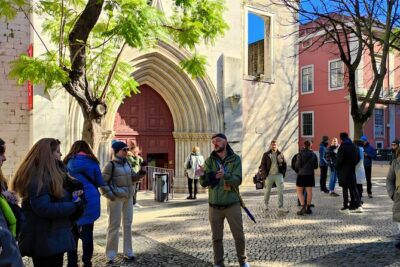
Lisbon City Center Tour – The Unmissable Lisbon
Read our review →
Lisbon: Sintra, Pena, Regaleira, Cabo da Roca & Cascais
Read our review →
Lisbon: History, Stories and Lifestyle Walking Tour
Read our review →
Lisbon: Sunset Boat Party Cruise with DJ and Open Bar
Read our review →
Lisbon: Pena Palace, Sintra, Cabo da Roca, & Cascais Daytrip
Read our review →