Reviewed · LISBON TOURS
Portuguese flavors in a typical village home
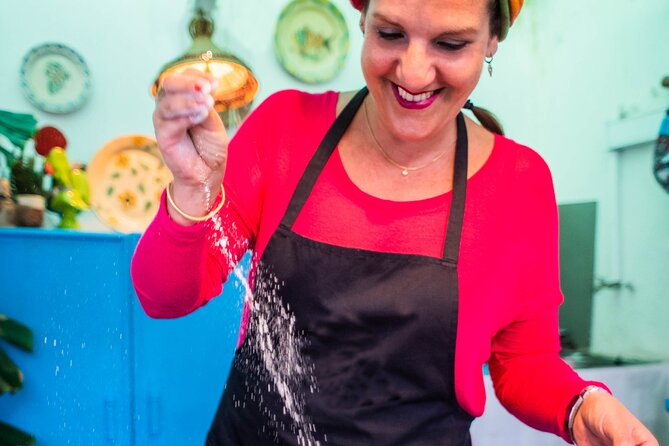
The most memorable part of this experience is not the cooking lesson alone. It is the invitation into Katija’s more-than-100-year-old home in Valejas, a small village about 20 minutes from Lisbon. You prepare a Portuguese meal, sit around the table, and hear stories about the house, the village, and the food.
I like two things especially. First, the group is limited to six people, so the afternoon can feel personal rather than factory-made. Second, the menu changes with the season and can be adjusted for dietary needs. The main consideration is that this is a relaxed home cooking session, not a demanding chef-led class. Some of the preparation may be simple or partly completed before you arrive.
In This Review
- Key points at a glance
- From Lisbon to a quiet village in 20 minutes
- Entering Katija’s historic family home
- Welcome drinks and Portuguese petiscos
- Cooking a seasonal Portuguese main course
- Food stories from Portugal and beyond
- A garden stop and freshly picked tea
- Sitting down to lunch, dessert, and conversation
- What the $106.65 price includes
- Who will enjoy this afternoon most
- Practical details before you book
- Should you book this Portuguese home cooking experience?
- FAQ
- Where does the experience begin?
- What time does it start?
- Is transportation included?
- What food and drinks are included?
- Can the menu accommodate dietary restrictions?
- What is the cancellation policy?
Key points at a glance
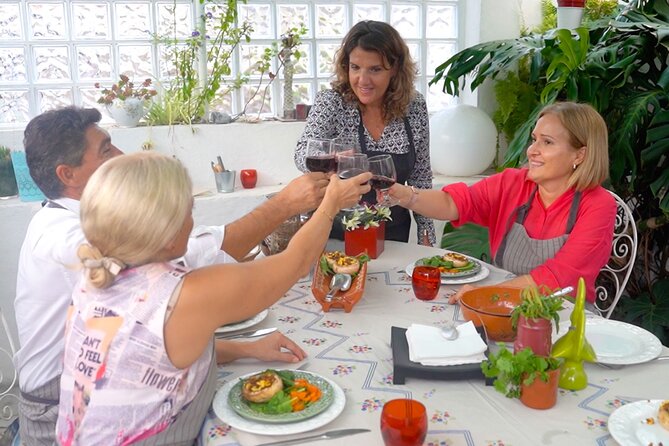
- A 100-year-old family home: Cooking takes place in an intimate village setting with personal stories, family photographs, and old household artifacts.
- Seasonal Portuguese food: Menus change according to the time of year, available ingredients, and your dietary preferences.
- A small group of six or fewer: You have more opportunity to talk with Katija and take part in the meal.
- More than a cooking class: Expect food, local history, garden ingredients, conversation, and a long lunch around the table.
- Easy access from Lisbon: The meeting point is at Igreja de São Bento de Valejas, reachable by car or train from Lisbon, Sintra, or Cascais.
- A recipe e-book afterward: After sharing your opinion, you receive an exclusive e-book with recipes from the experience and other Portuguese dishes.
From Lisbon to a quiet village in 20 minutes
Lisbon is a rewarding city, but its tiled streets, traffic, and busy restaurant rooms can wear you down. This experience gives you a short escape without sending you far from the capital.
The meeting point is Igreja de São Bento de Valejas in Barcarena, at 1:00 pm. Valejas sits between Lisbon and Sintra, and the experience is also practical if you are staying in Cascais. You can arrive by car or train, and the meeting point is near public transportation.
The advertised journey from Lisbon is about 20 minutes, though your actual time depends on your starting point and traffic. Plan your route carefully and allow a little extra time. Private transportation is not included, so getting there is your responsibility.
That small bit of planning pays off. You leave the city behind and enter a village setting where the pace is slower and the experience feels tied to a real home rather than a commercial teaching kitchen.
A handful more Lisbon ideas to compare
- Lisbon City Center Tour – The Unmissable Lisbon
★ 5.0 · 22,234 reviews - Lisbon: Sintra, Pena, Regaleira, Cabo da Roca & Cascais
★ 4.7 · 19,656 reviews - Lisbon: Jerónimos Monastery Entrance Ticket
★ 4.1 · 14,164 reviews
Entering Katija’s historic family home
Katija welcomes you into a house more than a century old. Its age matters because the building is part of the experience, not just a backdrop for the meal.
During the afternoon, she shares stories connected to the home and her family. You might see family photographs and artifacts belonging to earlier generations. This adds a personal layer to the cooking. A recipe becomes more meaningful when you understand the place, people, and memories that surround it.
The home setting also shapes the mood. You are not moving through a series of formal demonstrations. You sit together, talk, help prepare food, and eventually eat what you have made. Several menus have included an outdoor kitchen area or garden time, though weather can change the plan.
For many people, the private-home setting will be the main reason to book. If you prefer a polished studio, fixed menu, and highly structured lesson, this may feel informal. The house is clean and welcoming, but the tone is closer to visiting a local acquaintance than attending culinary school.
Welcome drinks and Portuguese petiscos
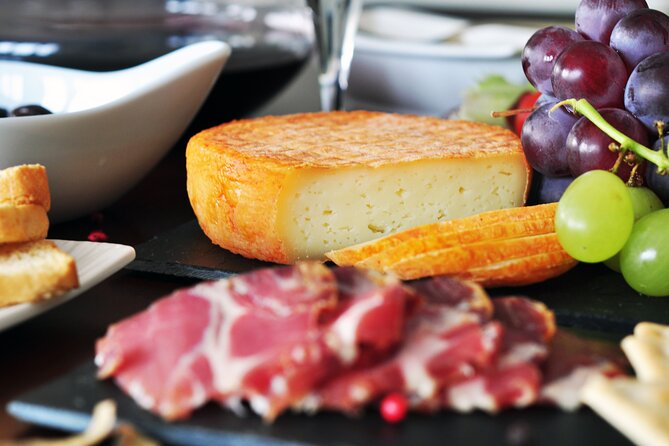
The afternoon begins with simple Portuguese starters. You can expect olives, cheese, local jam, and toast, along with tea, wine, or water.
These small plates are more than filler while the main dish is prepared. Portuguese meals often begin with a spread of little bites, and this gives you an easy introduction to the country’s table customs. You can settle in, meet the other people in the group, and listen as Katija explains what will be cooked.
Red and white wine are included, as are tea and water. This is not a dedicated wine tasting, so book it for the food and conversation rather than for a formal lesson in Portuguese vineyards. If you do not drink alcohol, tea and water are available.
The welcome food also helps set the pace. You are not rushed straight into chopping vegetables. The point is to spend an afternoon at the table, with cooking woven into the conversation.
Cooking a seasonal Portuguese main course
The main dish changes. Katija adapts the menu to the season, dietary restrictions, and personal preferences, so you should not book this expecting one guaranteed recipe.
Past meals have included seafood dishes, octopus rice, cod, chorizo, beans, soup, shrimp, and vegetables. One particularly traditional meal combined beans with squid, chorizo, and vegetables, served with garlic rice. Another focused on octopus rice, while cod featured in a discussion of bacalhau, the dried salted fish used in countless Portuguese preparations.
This flexibility is useful, especially if you have an allergy or avoid particular foods. One family had a menu modified for a food allergy, and the host’s approach is clearly designed to make the meal fit the people at the table.
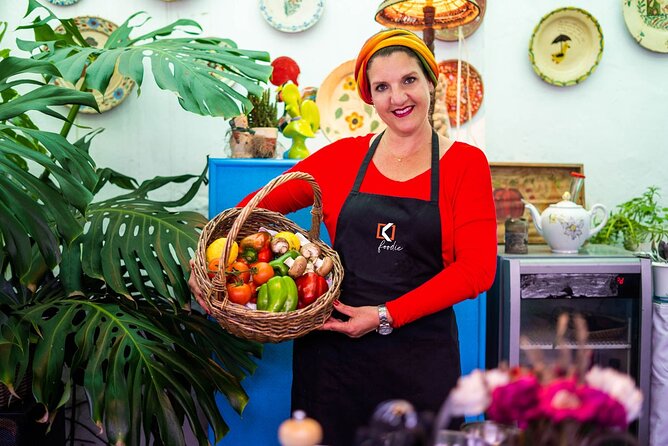
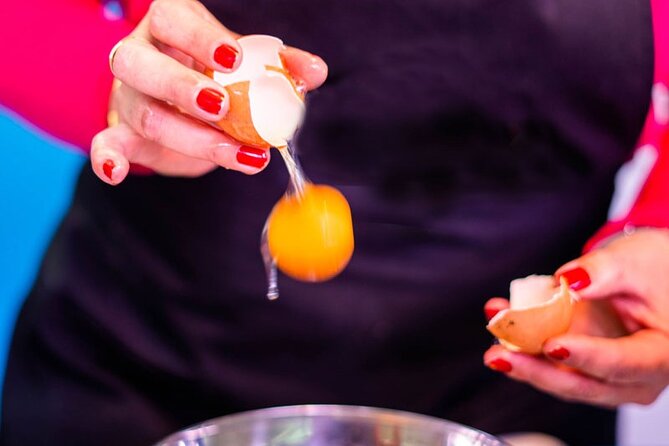
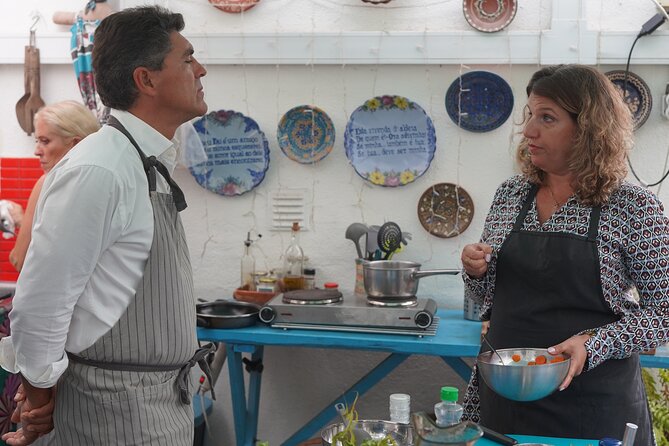
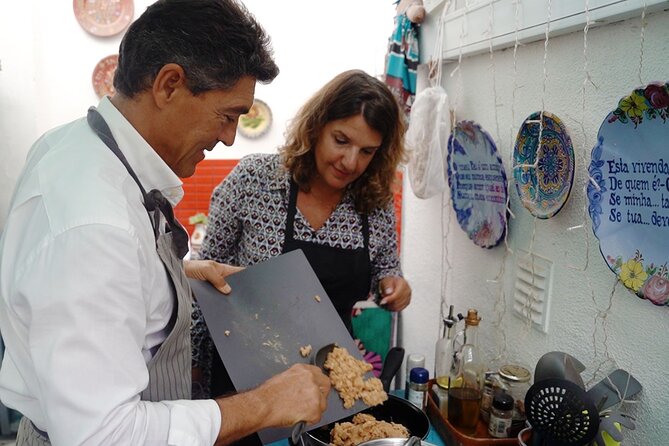
You may help with tasks such as slicing peppers and onions, preparing aromatics, adding rice or seafood, and collecting herbs from the garden. Katija explains the ingredients and connects the dish to Portuguese food traditions. She also discusses ways to preserve the natural qualities of ingredients, including methods that help retain vitamins.
Here is the important distinction: this is not always a full hands-on class from start to finish. Some ingredients may be prepared in advance, and the level of participation can vary. A past participant wanted more complex cooking and more active preparation, finding the dish fairly simple.
I would think of the session as part cooking lesson, part food demonstration, and part cultural conversation. If you are an experienced home cook seeking advanced knife skills or restaurant techniques, the class may not offer enough challenge. If you want to learn how Portuguese home food comes together while talking with a local host, the format makes good sense.
Nearby in Lisbon, a different day entirely:
- Sintra: Pena Palace and Park Entrance Ticket
★ 4.2 · 17,410 reviews - Lisbon: History, Stories and Lifestyle Walking Tour
★ 4.8 · 10,902 reviews - Lisbon: Sunset Boat Party Cruise with DJ and Open Bar
★ 4.5 · 10,378 reviews - Lisbon: Pena Palace, Sintra, Cabo da Roca, & Cascais Daytrip
★ 4.7 · 9,981 reviews
Food stories from Portugal and beyond
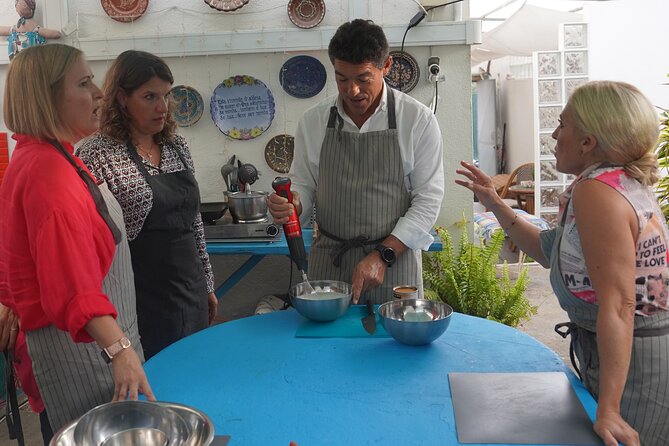
The history here is told through food rather than a formal lecture. Katija explains how Portuguese cooking developed, how local ingredients are used, and why many classic dishes are straightforward.
That simplicity is worth understanding. Traditional home cooking often reflects what families could find, preserve, and afford. Salted cod, beans, rice, vegetables, sausage, seafood, and fruit all appear in different combinations because Portuguese cooks learned to make satisfying meals from practical ingredients.
Bacalhau is a good example. Katija explains how dried cod is prepared, why it became so important, and how many versions appear in Portuguese homes and across the Iberian Peninsula. You do not need to be a seafood expert to enjoy this part. The story gives you context for dishes you are likely to see throughout Portugal.
Katija also shares personal experiences, including growing up in a Portuguese colony and seeing Portuguese food through a wider cultural lens. That makes the discussion feel personal. You are learning about food as lived experience, not just memorizing the names of dishes.
A garden stop and freshly picked tea
When conditions allow, you may visit the garden and collect fresh herbs. One memorable detail from the experience is lemon verbena tea made with leaves picked moments earlier.
This is a small touch, but it shows the difference between a home meal and a standard cooking venue. Ingredients do not simply arrive in labeled containers. Some come from the garden, and Katija uses fresh products selected for the day.
The garden portion depends on weather and the way the afternoon is arranged. The experience requires good weather, and poor conditions can lead to a new date or a full refund. If rain threatens, cooking may move indoors, as it has for earlier sessions.
Do not expect a farm tour or a long gardening lesson. The value is in seeing where a few ingredients come from and understanding how fresh herbs can shape a simple dish.
Sitting down to lunch, dessert, and conversation
Once the main dish is ready, everyone sits down to eat. Lunch includes the starters, main course, dessert, and drinks.
Dessert is selected from the wide range of Portuguese sweets. Some traditional desserts use eggs and dairy, while others turn fruit into something special with a little extra preparation. The exact dessert depends on the day and the menu.
Past desserts have included a whipped cream preparation with coffee served over cookies. One participant described dessert as the favorite part of the meal, which is not surprising in Portugal, where sweets often make generous use of eggs, dairy, sugar, fruit, and spice.
The meal is deliberately social. You may share the table with another couple or a small group, and the conversation can continue well after the plates are cleared. Topics have ranged from Portuguese history and family life to children, travel, and practical advice for the rest of a Portugal visit.
This is where the experience earns much of its value. You are not just paying for ingredients and instruction. You are paying for time in someone’s home, a meal prepared together, and a chance to ask questions that a restaurant server may not be able to answer.
What the $106.65 price includes
The price is $106.65 per person. That is more than you would pay for a basic Portuguese lunch, so the comparison needs to be fair.
Your fee covers the welcome food, main course, dessert, red and white wine, tea, and water. It also covers the host’s preparation, the use of her home, the small group, and the conversation that runs through the afternoon. An exclusive recipe e-book is offered after you share your opinion.
The value is strongest if you want an intimate cultural experience. A couple, parent and adult child, food-minded family, or small group of friends may find the cost reasonable because the meal is only one part of the afternoon.
The value is weaker if you want a technical cooking course. One participant felt the experience was overpriced and found the cooking level elementary. That is a fair warning. The session is built around connection and Portuguese home food, not intensive professional training.
Before booking, ask yourself what you want to bring home. If the answer is restaurant-level technique, compare this with a formal culinary school. If you want a personal story, a seasonal meal, and recipes you can try later, the price is easier to justify.
Who will enjoy this afternoon most
I would recommend it to people who value local contact over a packed sightseeing schedule. It works especially well for couples, solo visitors who enjoy meeting people, families, and small groups of friends.
Food lovers have plenty to explore, but you do not need to be a confident cook. The tasks are manageable, and you can take part at your own level. A keen young cook can enjoy it too. One 12-year-old who loved cooking found the afternoon a highlight of a family trip.
It is also a good choice if you have already spent several days in Lisbon and want a slower change of pace. The village setting makes the city feel close enough for convenience but far enough away for a different kind of afternoon.
People with food allergies or dietary restrictions should provide those details when booking. The menus can be adapted, but you should not wait until you arrive to explain a serious restriction.
Practical details before you book
The experience lasts about three hours and begins at 1:00 pm. It ends back at the meeting point, so allow extra time if you have an evening reservation or a train to catch.
The activity is offered in English and uses a mobile ticket. The group has a maximum of six people, though smaller bookings may occur. One person even had a one-on-one afternoon when no one else signed up, but you should not assume that will happen.
Service animals are allowed, and the meeting point is near public transportation. Private transportation is not included. If you are coming from Lisbon, Sintra, or Cascais, check the route before the day of the experience.
Free cancellation is available up to 24 hours before the start time for a full refund. Changes or cancellations inside that window are not accepted, and the amount paid is not refunded. Since good weather is required, a cancellation caused by poor conditions gives you the choice of another date or a full refund.
The experience is booked, on average, about 40 days ahead. That suggests you should reserve early if your Portugal schedule is fixed, especially if you want a particular date.
Should you book this Portuguese home cooking experience?
Book it if you want a personal afternoon with a local host, a seasonal meal, and stories tied to a real family home. The small group, flexible menu, garden ingredients, and shared table create something more personal than a standard city food tour.
Skip it if you want a rigorous, advanced cooking class or a guaranteed dish. The instruction can be basic, some preparation may be done before you arrive, and the informal setting will not suit everyone.
For most people who want to slow down and meet Portugal through food, this is a strong choice. Katija’s warmth, the old house, the village setting, and the chance to leave with recipes make the experience about much more than lunch.
FAQ
Where does the experience begin?
It begins at Igreja de São Bento de Valejas in Barcarena, Portugal. The activity ends back at the same meeting point.
What time does it start?
The start time is 1:00 pm, and the experience lasts approximately three hours.
Is transportation included?
No. Private transportation is not included. The meeting point is near public transportation and can be reached by car or train from Lisbon, Sintra, or Cascais.
What food and drinks are included?
The experience includes Portuguese starters, a seasonal main course, dessert, red and white wine, tea, and water. Starters may include olives, cheese, local jam, and toast.
Can the menu accommodate dietary restrictions?
Yes. Katija adapts the menu according to the season, dietary restrictions, and food preferences. You should provide those details when booking.
What is the cancellation policy?
You can cancel up to 24 hours before the local start time for a full refund. Cancellations or changes made less than 24 hours before the start time are not accepted. If poor weather causes the activity to be canceled, you can choose another date or receive a full refund.
Fresh finds around Lisbon
- Private Professional Photoshoot at Alfama, Lisbon★ 5.0 · 6 reviews
- Private Tour: Discover the best of Sintra in 1 day avoiding queues★ 5.0 · 6 reviews
- Exclusive Private Sintra Tour★ 5.0 · 6 reviews
- Lisbon: Private Custom Tour with a Local Guide★ 5.0 · 6 reviews
- Private Tour: Cristo Rei, Belem, São Jorge Castle, 360°View.★ 5.0 · 6 reviews
- Algarve and Alentejo in 4 days – Private from Lisbon★ 5.0 · 6 reviews
- Lisbon: Sintra World Heritage & Cascais Village Private Tour★ 5.0 · 6 reviews
- Lisbon tour Oldtown & Viewpoints on a tuktuk!★ 4.6 · 6 reviews
Lisbon Tours, compared.
Lisbon City Center Tour – The Unmissable Lisbon
Read our review →
Lisbon: Sintra, Pena, Regaleira, Cabo da Roca & Cascais
Read our review →
Lisbon: History, Stories and Lifestyle Walking Tour
Read our review →
Lisbon: Sunset Boat Party Cruise with DJ and Open Bar
Read our review →
Lisbon: Pena Palace, Sintra, Cabo da Roca, & Cascais Daytrip
Read our review →