Reviewed · LISBON TOURS
Lisbon: Graça Church | Convent & Terrace viewpoint access
Lisbon opens up beautifully from Graça Church’s terrace, where you look across the rooftops to São Jorge’s Castle, the Tagus River, the old bridge, and Cristo Rei in the far distance. The view is the headline, but the old convent gives the visit its character.
I like the way this $7 visit combines a major viewpoint with a genuine historic building, rather than sending you to a lookout and stopping there. I also like the quiet atmosphere inside the church and convent, especially when the nearby Miradouro da Graça is busy. The main drawback is the climb to the terrace, plus exposure to wind and height, so this is not suitable for wheelchair users or anyone with altitude sickness.
In This Review
- Key points at a glance
- Why Graça Church is more than a viewpoint
- Entering the convent and church
- The cloister’s blue-and-white story
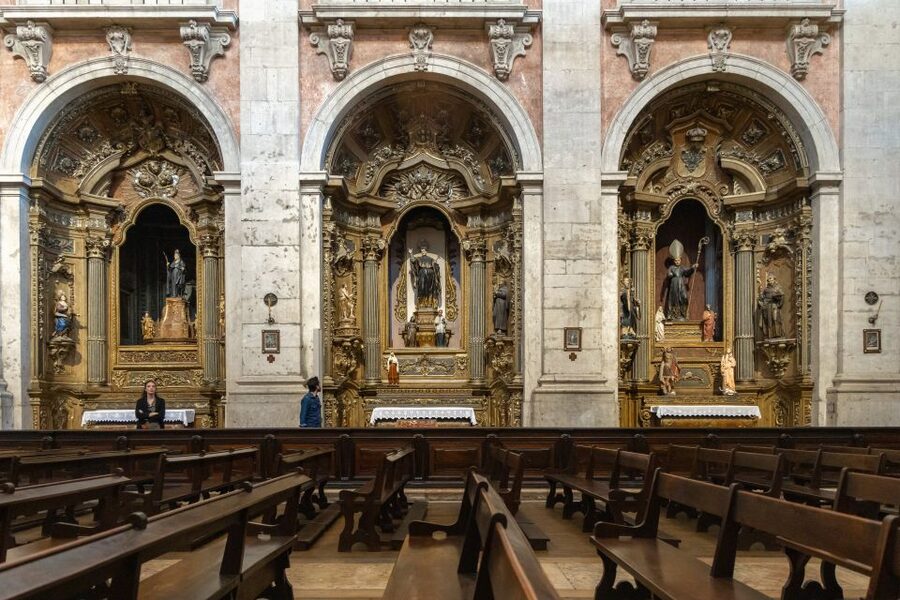
- The gilded church and painted ceiling
- Climbing to the terrace above Lisbon
- A quieter alternative to Miradouro da Graça
- What the $7 price really gets you
- When to go and what to bring
- Who should book the Graça terrace visit?
- Should you book this Graça Church experience?
- FAQ
- How long does the Graça Church and Convent visit last?
- What does the entry ticket include?
- What can I see from the terrace?
- Are English-speaking hosts available?
- What should I bring?
- How do I enter the church and convent?
- Is the experience suitable for wheelchair users?
- Can I cancel the booking?
Key points at a glance
- 700 years of history: See a convent whose story reaches back to 1271 and includes monks, priests, rulers, soldiers, and statesmen.
- Terrace views over Lisbon: Look toward São Jorge’s Castle, the Tagus, the old bridge, and Cristo Rei.
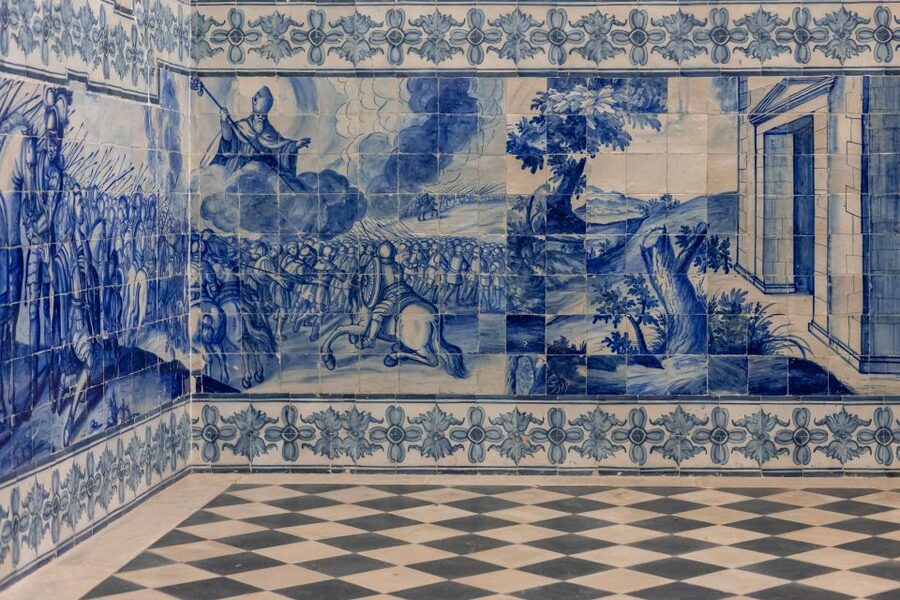
- 18th-century tile panels: The cloister is one of the best reasons to go beyond the viewpoint itself.
- A decorated church interior: Expect gilded woodwork and grisaille paintings on the ceiling.
- Extra-access areas: Your ticket includes the upper cloisters and high choir, not just the main church.
- A short, good-value visit: One hour and $7 makes this an easy addition to a day in Lisbon.
Why Graça Church is more than a viewpoint
The terrace gets most of the attention, and rightly so. Lisbon is a city made for high viewpoints, with tiled roofs, steep streets, church domes, and the wide Tagus all spreading below you. From here, you can see São Jorge’s Castle, the river, the old bridge, and Cristo Rei across the water.
But I would not treat the church and convent as a quick stairway to a photo stop. The building gives you a sense of how Lisbon’s religious institutions shaped the city long before the present-day cafés and lookout points appeared. Its origins reach back more than 700 years, to 1271, when construction began at a place then called Almofala.
The convent began as a house of Saint Augustine. Its dedication changed to Nossa Senhora da Graça in either 1305 or 1362, according to the historical account presented with the site. That uncertainty is a small reminder that medieval Lisbon was not always recorded with modern precision.
The complex you see today is the result of several building campaigns and repairs. It was built in the 13th century, rebuilt in the 16th century, badly damaged by the earthquake of 1755, and later restored in a late Baroque style. You are therefore not looking at one untouched medieval building. You are seeing layers of Lisbon’s past, altered by fashion, disaster, and repair.
That makes the visit more rewarding than a simple photo stop. The terrace shows you the city from above, while the convent explains something about the city beneath your feet.
A handful more Lisbon ideas to compare
- Lisbon City Center Tour – The Unmissable Lisbon
★ 5.0 · 22,234 reviews - Lisbon: Sintra, Pena, Regaleira, Cabo da Roca & Cascais
★ 4.7 · 19,656 reviews - Lisbon: Jerónimos Monastery Entrance Ticket
★ 4.1 · 14,164 reviews
Entering the convent and church
Allow the full hour. This is not a long guided tour with a packed schedule, but there is enough to see that a rushed visit would miss the best details.
You present your voucher at the ticket office and exchange it for an entrance ticket. An English or Portuguese host or greeter is available. The experience provider is listed as Sé de Lisboa and Torre da Igreja, and the visit is designed around access to parts of the church and convent that are not limited to the main public areas.
Start by taking in the overall scale. The Convent of Nossa Senhora da Graça is one of Lisbon’s largest and most imposing convent complexes. Its size helps you picture the religious community that once lived and worked here, rather than viewing the church as an isolated decorative building.
The complex has touched the lives of kings, queens, statesmen, soldiers, monks, and priests. That does not mean every person connected to the convent is explained in detail during the one-hour visit. It does mean the setting carries a long civic and religious story, and you can sense that history in the rooms and passageways.
The building’s survival is especially notable because of the 1755 earthquake. Lisbon’s churches and convents were heavily affected, and Graça was later restored in the late Baroque style. As you look around, keep in mind that the decoration reflects both older foundations and later rebuilding.
The cloister’s blue-and-white story
The 18th-century tile panels in the cloister are among the strongest parts of the visit. Portuguese tiles are often treated as background decoration, but here they help make the convent feel like a place with its own visual language.
Spend time looking at the panels rather than walking through quickly. Notice how the tilework changes the mood of the cloister. The cool surfaces, repeated patterns, and story scenes offer a sharp contrast to the gilding and darker woodwork inside the church.
The cloister is also a useful pause between the indoor rooms and the high terrace. You get a more enclosed view of the complex here, with walls, arches, and tilework framing the space. Then, after seeing the convent from within, you climb toward the open sky and the city beyond.
A practical point: the tile panels are the kind of detail that can disappear if you treat the visit as a viewpoint ticket. If you have only an hour, I would still give the cloister proper attention before heading upstairs.
The gilded church and painted ceiling
The church interior shifts the tone again. Expect gilded woodwork and grisaille paintings on the ceiling, a combination that gives the space a formal late Baroque character.
Gilded woodwork catches the eye first. It creates the sense of ceremony you expect in a major church, but it can also make it easy to overlook the ceiling. Grisaille painting uses shades that imitate sculpture or stone, so look upward and compare the ceiling’s painted forms with the three-dimensional decoration below.
This is a church visit rather than a theatrical show. The value comes from taking a few quiet minutes to read the room visually. Look at how the decoration directs your gaze, how the ceiling works with the altar area, and how the church differs from the plainer convent spaces.
The church also has a connection with Senhor dos Passos. In 1586, the convent became known for housing this religious image. From the following year, a procession began running from Graça to São Roque. That procession became an important part of the convent’s public identity.
You may not see the historic procession itself, of course, but the story adds useful context. The convent was not cut off from Lisbon. It had a role in the city’s religious calendar and drew attention beyond its own walls.
Nearby in Lisbon, a different day entirely:
- Sintra: Pena Palace and Park Entrance Ticket
★ 4.2 · 17,410 reviews - Lisbon: History, Stories and Lifestyle Walking Tour
★ 4.8 · 10,902 reviews - Lisbon: Sunset Boat Party Cruise with DJ and Open Bar
★ 4.5 · 10,378 reviews - Lisbon: Pena Palace, Sintra, Cabo da Roca, & Cascais Daytrip
★ 4.7 · 9,981 reviews
Climbing to the terrace above Lisbon
The final part of the visit is the climb to the terrace. This is where the $7 admission earns its keep for many people.
From above, you get a broad view rather than a narrow city glimpse. São Jorge’s Castle is one of the most obvious landmarks, while the Tagus opens out beyond the dense old city. The old bridge appears in the wider view, and Cristo Rei can be seen toward the horizon across the river.
The height gives you a better sense of Lisbon’s shape. You can see how the city climbs and folds around its hills, though the most important feature here is the combination of old roofs, water, and distant landmarks. Bring a camera. Binoculars are also specifically recommended, and they could help you pick out distant details that are easy to miss with the naked eye.
The terrace is exposed. One visit in late January was described as cold and windy, yet still worth doing. That is useful advice for planning: do not assume a sunny Lisbon day will feel warm on a high terrace. Carry an extra layer, especially outside the hottest part of summer.
The height may also be uncomfortable if you suffer from altitude sickness. The experience is not suitable for people with that condition, and it is not suitable for wheelchair users. The climb and access arrangements are central to the visit, so mobility is an important consideration before booking.
A quieter alternative to Miradouro da Graça
The famous Miradouro da Graça is close by and attracts plenty of people. That makes the church and convent a smart addition if you want the same hilltop setting with a quieter indoor stop.
The two experiences are not identical. The miradouro gives you an open public lookout, while the church visit adds paid access to the convent, the tiled cloister, the church interior, the upper cloisters, the high choir, and the terrace.
I like the contrast. You can enjoy the public viewpoint, then step into a historic complex where the pace is slower. One of the most useful details about this experience is that the church and monastery area can feel calm even when people are gathered at the nearby lookout.
That quiet has practical value. It gives you room to look at the tiles and ceiling without treating the building like a corridor between two photo stops. It also makes the visit a good choice if you want a break from Lisbon’s steep streets and busy central sights, while still seeing one of the city’s best panoramas.
What the $7 price really gets you
At $7 per person, this is a low-cost cultural visit. You are not paying only for access to a terrace. The ticket covers the Convent and Church of Graça, the terrace, the high choir, and the upper cloisters.
That package matters. A standalone lookout can give you a fine view but little sense of place. Here, the church and convent supply the context, while the terrace provides the visual reward at the end.
The one-hour duration also makes the price easy to fit into a Lisbon day. You do not need to set aside half a day or build your schedule around a long excursion. You can combine it with other time in the Graça district, though the information provided does not specify a walking route or transport arrangement, so plan your own way to the church.
The value is strongest for independent visitors who like choosing their own pace. You get an English or Portuguese host or greeter, but this is not presented as a long, detailed guided lecture. If you want a highly structured tour with constant commentary, this may feel brief. If you want access to a historic building and time to look around for yourself, the price is attractive.
A current score of 4.3 out of 5 from 31 ratings fits that picture: strong satisfaction overall, with the main variables likely being weather, comfort with the climb, and personal interest in church interiors.
When to go and what to bring
The terrace is the part most affected by weather. Cold wind can make the experience less comfortable, even when the view remains excellent. I would bring a jacket or extra layer and avoid assuming that Lisbon’s mild reputation applies at this height.
A camera is an obvious choice. The view reaches from the castle to the river and far toward Cristo Rei, giving you several angles rather than one single landmark.
Binoculars are also recommended. They are especially useful for the distant parts of the view, where the Cristo Rei statue and details across the Tagus may otherwise appear small.
You should also wear shoes suited to climbing through an old religious complex. The provided information does not specify the exact number or condition of stairs, so I would not promise an easy, step-free visit. The stated exclusion for wheelchair users confirms that access is not fully accessible.
For booking flexibility, you can cancel up to 24 hours in advance for a full refund, and you can reserve now while paying later. The admission becomes valid for one hour from first activation. Those terms are handy if the weather forecast is uncertain, though the best view may still depend on the conditions when you arrive.
Who should book the Graça terrace visit?
I would recommend this experience to you if you want three things in one short stop: a Lisbon panorama, a historic church, and a look at traditional tilework.
It suits first-time visitors who want a high view of the city, but it also works for repeat visitors who already know the Miradouro da Graça and want to see what lies inside the convent. The fact that someone familiar with the site chose to return says something useful: the building can reward a second look, especially if a previous visit did not include the terrace or upper areas.
It is also a good fit for architecture fans, church interiors enthusiasts, photographers, and anyone who prefers a smaller cultural stop over a full museum visit. The high choir and upper cloisters add extra interest beyond the main nave.
I would think twice if you dislike heights, have altitude sickness, use a wheelchair, or want a fully narrated tour lasting several hours. The one-hour format is a strength for some people, but it limits how much historical explanation you can receive on site.
Should you book this Graça Church experience?
Book it if you want a well-priced, compact visit that combines one of Lisbon’s finest views with a real convent and church interior. The tiles, gilded woodwork, ceiling paintings, high choir, and upper cloisters give you reasons to enter, while the terrace gives you the memorable finish.
Skip it if you only want an open-air lookout, cannot manage the climb, or expect a long guided history tour. For most visitors who can handle the stairs and do not mind bringing a jacket, $7 is a fair price for an hour in one of Lisbon’s most rewarding hilltop settings.
FAQ
How long does the Graça Church and Convent visit last?
The experience is valid for one hour from first activation.
What does the entry ticket include?
The ticket includes entry to the Convent and Church of Graça, access to the terrace, the high choir, and the upper cloisters.
What can I see from the terrace?
You can see São Jorge’s Castle, the Tagus River, the old bridge, and Cristo Rei toward the horizon.
Are English-speaking hosts available?
Yes. The host or greeter service is available in Portuguese and English.
What should I bring?
Bring a camera and consider bringing binoculars for the distant views.
How do I enter the church and convent?
You must present your voucher at the ticket office and exchange it for an entrance ticket.
Is the experience suitable for wheelchair users?
No. The experience is not suitable for wheelchair users.
Can I cancel the booking?
Yes. You can cancel up to 24 hours in advance for a full refund. You can also reserve now and pay later.
Fresh finds around Lisbon
- Private Professional Photoshoot at Alfama, Lisbon★ 5.0 · 6 reviews
- Lisbon: Private Custom Tour with a Local Guide★ 5.0 · 6 reviews
- Private Tour: Discover the best of Sintra in 1 day avoiding queues★ 5.0 · 6 reviews
- Exclusive Private Sintra Tour★ 5.0 · 6 reviews
- Private Tour: Cristo Rei, Belem, São Jorge Castle, 360°View.★ 5.0 · 6 reviews
- Algarve and Alentejo in 4 days – Private from Lisbon★ 5.0 · 6 reviews
- Lisbon: Sintra World Heritage & Cascais Village Private Tour★ 5.0 · 6 reviews
- Lisbon tour Oldtown & Viewpoints on a tuktuk!★ 4.6 · 6 reviews
Lisbon Tours, compared.
Lisbon City Center Tour – The Unmissable Lisbon
Read our review →
Lisbon: Sintra, Pena, Regaleira, Cabo da Roca & Cascais
Read our review →
Lisbon: History, Stories and Lifestyle Walking Tour
Read our review →
Lisbon: Sunset Boat Party Cruise with DJ and Open Bar
Read our review →
Lisbon: Pena Palace, Sintra, Cabo da Roca, & Cascais Daytrip
Read our review →