
Reviewed · CITY TOURS
Lisbon: 2-Hour Private City Highlights Kickstart Tour
Lisbon reveals itself quickly on this private two-hour walking tour, which links the city’s best-known central sights without wasting time on transport. You’ll move from the cafés and churches of Chiado to the broad streets of Baixa, ending beside the Tejo River at Praça do Comércio. I like the route’s strong sense of place, and I like that Carmo Convent entry is included rather than left as a maybe-if-there’s-time stop.
The private format also gives your guide room to adjust the pace and explain what catches your eye. Guides Andre, Mafalda, and Joana have each drawn especially warm praise for their enthusiasm and personal approach. The main drawback is simple: two hours is tight for this many stops, and several places receive only a short explanation rather than a full visit.
In This Review
- Key points to know before booking
- Starting beneath the Chiado cafés
- Two churches, two very different moods
- Trindade’s tiles and the Santa Justa Lift
- Carmo Convent, the tour’s centerpiece
- Rossio, Portas de Santo Antão, and São Domingos
- Casa do Alentejo and the taste of ginjinha
- Rua Augusta and Lisbon’s grand riverfront
- What the private format changes
- Price, pace, and who gets the best value
- Should you book this Lisbon orientation walk?
- FAQ
- Where does the tour begin?
- Where does the tour end?
- How long does the activity last?
- Is the tour private?
- Which languages are available?
- Is entry to Carmo Convent included?
- Is a drink tasting included?
- Can children join the tour?
Key points to know before booking

- Start at A Brasileira: Meet your private guide outside one of Chiado’s traditional cafés at Largo do Chiado.
- Carmo Convent entry included: Skip-the-line access lets you enter the roofless Gothic ruins during the walk.
- A useful central route: The tour connects Chiado, Baixa, Rossio, and Praça do Comércio on foot.
- Four guide languages: Choose from English, Portuguese, Spanish, or French.
- A taste of Lisbon: Ginjinha, Portugal’s popular sour-cherry liqueur, is included.
- Good first activity: The tour gives you an early sense of Lisbon’s geography, landmarks, and central districts.
Starting beneath the Chiado cafés
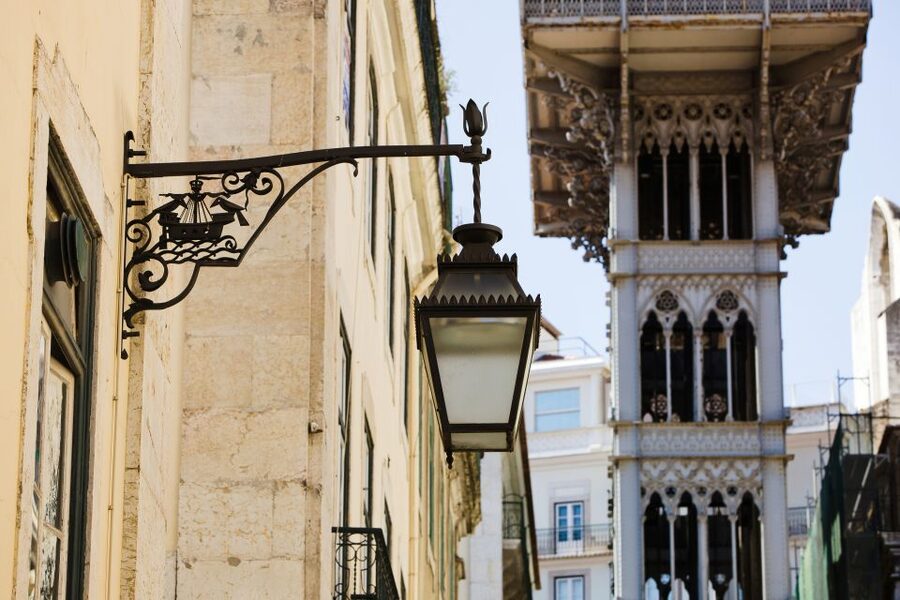
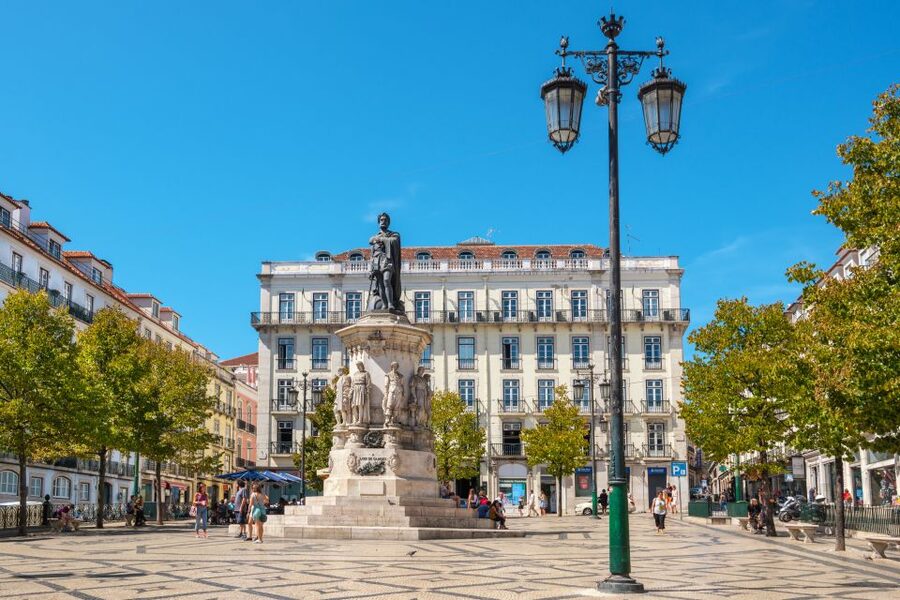
Your meeting point is Largo do Chiado, in front of A Brasileira. This makes practical sense. Chiado is one of Lisbon’s main central districts, and the café gives you a clear landmark for finding your guide. You’ll begin with Praça Luís de Camões, a short guided stop that places you in the middle of the city’s literary and urban center.
This opening is less about checking off a monument and more about getting your bearings. Lisbon’s central streets can feel confusing at first, with steep lanes, grand squares, and sudden views opening between buildings. A private guide can help you understand how Chiado connects with Baixa before the route becomes busier.
The walking begins right away, so wear shoes that feel secure on uneven pavement. The tour is only two hours, and there is no time built in for a long café break or shopping stop.
A handful more Lisbon ideas to compare
- 2 Hour Lisbon Sunset and Wine Sailing Tour
★ 5.0 · 2,680 reviews - 2-Hour Lisbon Traditional Boats Sunset Cruise with White Wine
★ 4.5 · 2,091 reviews - Lisbon: 1 or 2-Hour Cruise along the Tagus River
★ 4.8 · 1,079 reviews
Two churches, two very different moods
The first substantial stops are the Italian Church of Our Lady of Loreto and the Church of São Roque. At the Church of Our Lady of Loreto, you’ll have about ten minutes with the guide. The visit adds a quieter religious note to the lively streets around Chiado.
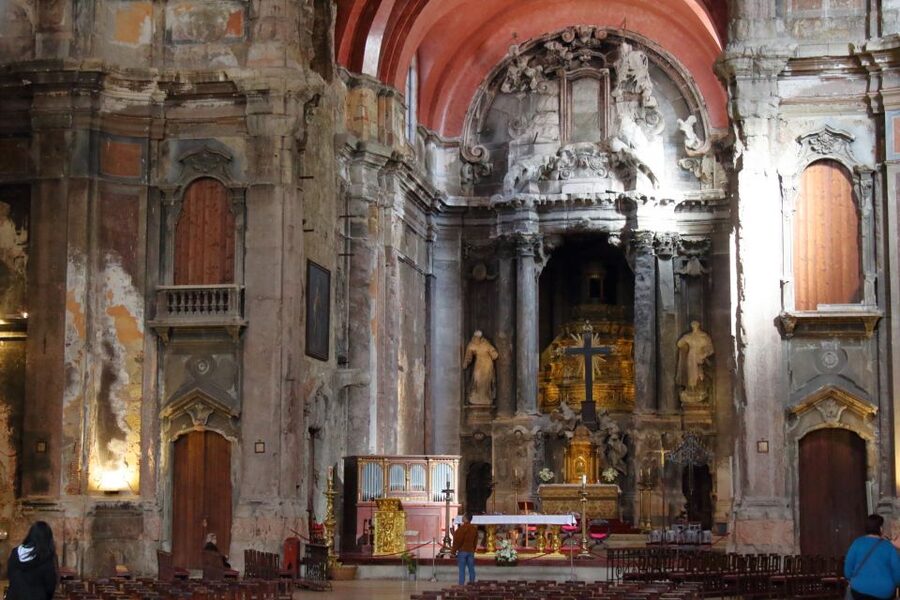
São Roque receives another ten-minute explanation. It is an important stop because its interior gives the tour a sharp change of mood and scale. From the street, Lisbon can look like a city of tiled façades, cafés, and viewpoints. Inside its churches, you see the ceremonial side of the city.
The timing matters here. Ten minutes is enough for an introduction and a look around, but not for a slow examination of every chapel or decoration. If you have a strong interest in church art, ask your guide to focus on the detail that matters most to you. A private tour makes that request easier than a large group outing.
The sequence also helps you compare the two churches instead of seeing them as a blur of religious buildings. Your guide can explain the differences in style and use, then keep you moving toward the next part of the route.
Trindade’s tiles and the Santa Justa Lift
At Rua Nova da Trindade, you’ll visit Cervejaria Trindade, a historic Portuguese restaurant known for its tiles, frescoes, and arches. This is one of the route’s more unusual inclusions. You are not simply being led from one famous square to another. You are also shown a place tied to Lisbon’s everyday restaurant culture and decorative traditions.
The stop is guided for about ten minutes. Since the activity does not include a meal, treat this as a look at the building rather than a dining visit. If you want to eat there later, make a note of its location, but keep the tour moving.
Next comes the Santa Justa Lift. The guide gives you around ten minutes here and points out the views over the city. The lift is one of Baixa’s most recognizable structures, and its ironwork makes it easy to spot among the surrounding streets.
The tour description promises spectacular views, but the exact viewing experience can depend on timing and access. The activity does not say that a ride up the lift is included, so you should not book this tour expecting a full lift experience. You will still get the guide’s explanation and a chance to appreciate its place in central Lisbon.
Carmo Convent, the tour’s centerpiece
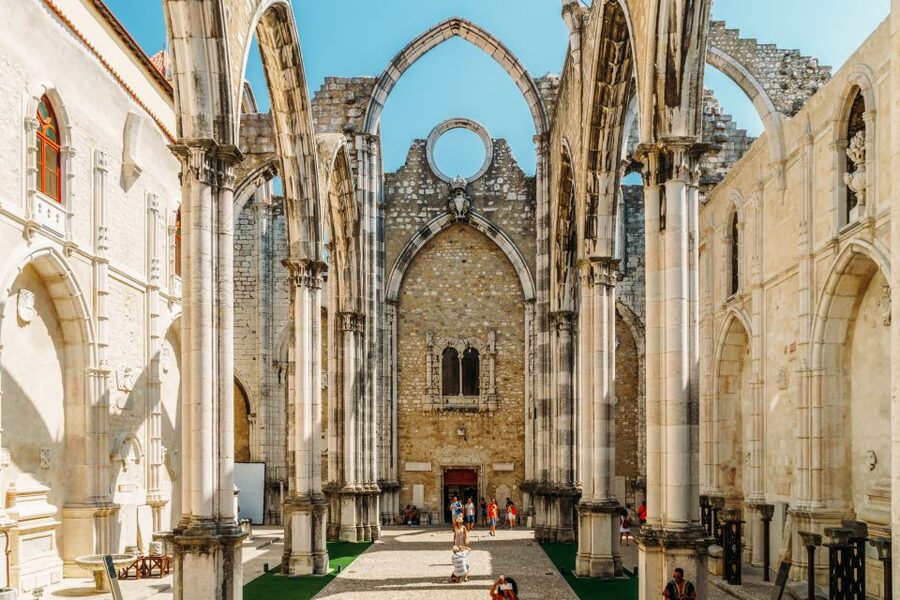
The Carmo Convent is the strongest reason to choose this tour over a simple orientation walk. Skip-the-line tickets are included, with access through a separate entrance. That saves you from arranging the visit yourself and gives the guide a natural place to explain one of Lisbon’s most memorable sites.
The roofless Carmo ruins are striking because the open sky sits where a convent roof would normally be. The arches and stonework create a powerful sense of what was lost, while the surrounding square keeps the stop calm and spacious. The tour allows about 25 minutes at Largo do Carmo and the convent area, the longest pause on the route.
You’ll also have time to relax beneath the trees in Largo do Carmo Square. That small pause matters. The tour moves at a brisk pace, and Carmo gives you a chance to stop, look up, and take in the setting instead of hurrying from one address to the next.
If this is your first activity in Lisbon, Carmo helps anchor the rest of the tour. You begin to see how the city’s grand streets, churches, and ruins fit together. The private setting is useful here because you can ask about the building, its arches, or the surrounding square without waiting for a group to catch up.
Nearby in Lisbon, a different day entirely:
- Lisbon City Center Tour – The Unmissable Lisbon
★ 5.0 · 22,234 reviews - Lisbon: Sintra, Pena, Regaleira, Cabo da Roca & Cascais
★ 4.7 · 19,656 reviews - Sintra: Pena Palace and Park Entrance Ticket
★ 4.2 · 17,410 reviews - Lisbon: Jerónimos Monastery Entrance Ticket
★ 4.1 · 14,164 reviews
Rossio, Portas de Santo Antão, and São Domingos
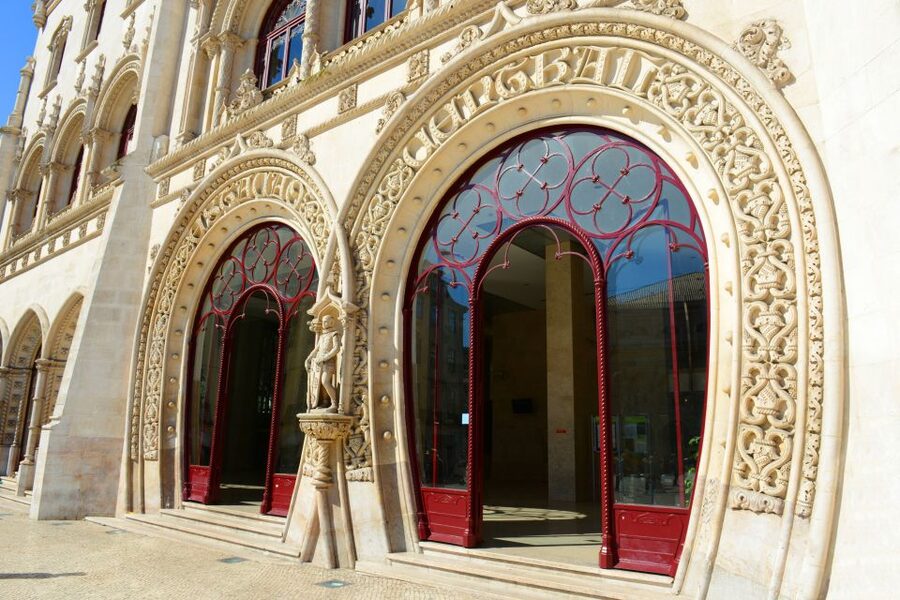
From Carmo, the walk continues toward Rossio Station. You’ll have a short five-minute guided stop to admire its Neo-Manueline façade. This is a good example of why the tour works best as an introduction. You are not spending half an hour at the station, but you are learning to notice a major architectural style as you move through the city.
The route then follows Rua das Portas de Santo Antão for about ten minutes. This street links several central sights and gives you a feel for the older city’s commercial and social rhythm. The guide’s role here is especially practical: instead of seeing the street as a passage between monuments, you get help understanding why it belongs on the route.
The Church of St. Dominic receives another ten-minute visit. Its interior offers a more somber stop after the open space of Rossio and the lively street nearby. The contrast helps keep the walk from feeling like a string of identical churches and squares.
The schedule remains brisk. You’ll get a useful introduction to each stop, but the tour is not designed for extended photography, quiet prayer, or detailed architectural study. If you like to linger, tell your guide early. A private group may allow some flexibility, but the route still has a fixed two-hour shape.
Casa do Alentejo and the taste of ginjinha
Casa do Alentejo is another short but distinctive stop. The former 17th-century palace is known for its neo-Moorish style, giving you a surprising architectural change after the churches and Neo-Manueline station.
The visit lasts about five minutes, so think of it as a quick introduction. You may find yourself wishing for more time, especially if decorative interiors interest you. Still, the stop earns its place because it shows how varied Lisbon’s central buildings can be.
During the tour, you’ll also try ginjinha, the sour-cherry liqueur widely associated with Portugal. This is a small tasting, not a full food experience, but it adds a local flavor to the walk. It gives your guide an easy opening to explain a popular Portuguese drink and lets you try something you might otherwise overlook.
The tasting is included in the $61 price, along with the private guide and Carmo Convent ticket. That package makes the cost reasonable for someone who wants an introduction without paying separately for several small experiences. The value is strongest for couples, families, or small groups who prefer a private guide rather than a larger shared walk.
Rua Augusta and Lisbon’s grand riverfront
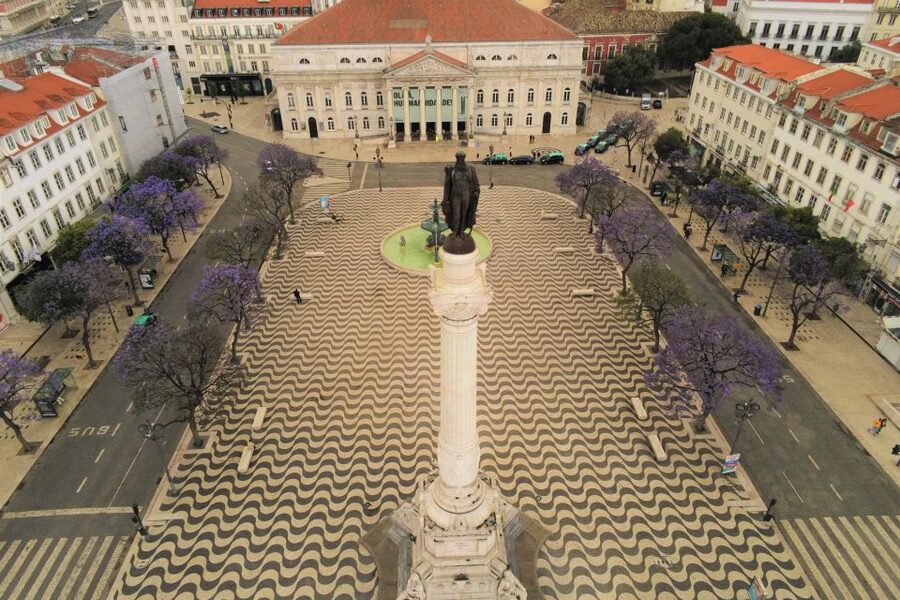
The walk eventually reaches Praça Dom Pedro IV, commonly called Rossio Square, with about ten minutes of guided explanation. This is one of the city center’s key public spaces, and the tour gives it more attention than the brief stop at Rossio Station.
From there, you’ll follow the elegant Rua Augusta toward its famous arch. This broad pedestrian street provides a clear transition from the tighter streets of Chiado and the central squares around Rossio to the open riverfront.
The arch leads into Praça do Comércio, the grand square facing the Tejo River. The tour allows about 15 minutes here and ends at the square, at Praça do Comércio, 1100-148 Lisboa. Finishing beside the river is a smart choice. You can pause, take in the open views, and continue exploring Lisbon on your own afterward.
The route describes Praça do Comércio as the entrance to the city. That idea becomes clear once you reach the broad square. After so many enclosed streets and buildings, the riverfront opens the scene. It is also a useful place to end because you are not left in an obscure side street.
What the private format changes
A private group is the tour’s biggest practical advantage. You are not sharing the guide with strangers, so the experience can feel more conversational and less scripted. You can ask why a building matters, request a little more context at a church, or signal when you need a short pause.
That does not mean the walk becomes slow. The itinerary includes many stops in two hours, so the guide must keep you moving. The private format gives you more control, but it cannot turn a short orientation into a full-day historical tour.
The guide language choices are English, Portuguese, Spanish, and French. If you care about a particular language, check availability when choosing a starting time. Names praised in the feedback include Andre, Mafalda, and Joana. Andre was described as sharing Lisbon’s history and beauty in an informative, casual way. Mafalda was praised for explaining both the city’s past and present, while Joana was singled out as an excellent choice for a first Lisbon activity.
One particularly useful detail is that Mafalda reportedly continued beyond the allotted time because of her passion for Lisbon. You should not count on an overrun, but it suggests that the guide may bring real personal interest rather than simply reciting addresses.
Price, pace, and who gets the best value
At $61 per person, this is not the cheapest way to see Lisbon’s center. You are paying for a private two-hour guide, a ginjinha tasting, and skip-the-line Carmo Convent tickets. For a solo visitor, the price may feel high for such a short activity. For two or more people who value privacy and a direct introduction, it becomes easier to justify.
The strongest value comes from using it as your first Lisbon activity. You’ll learn the basic shape of Chiado and Baixa, identify places worth returning to, and finish at a location where you can continue independently. The tour also suits anyone with limited time who wants a concentrated walk rather than a long sightseeing day.
Families should note that children can participate free of charge. That can improve the price for a family group, though young children still need to manage a two-hour city walk. Since transportation is not part of the activity, you should plan to reach Largo do Chiado on your own.
The tour is less suitable if you want extensive time inside every church, a full ride on the Santa Justa Lift, or a leisurely meal at Cervejaria Trindade. It is also not the right choice if you prefer to explore at a slow, unplanned pace. The schedule is designed to cover ground.
Cancellation is flexible: you can cancel up to 24 hours ahead for a full refund, and you can reserve now and pay later. Starting times vary, so check availability for the date you want.
Should you book this Lisbon orientation walk?
I would book this tour if you want a friendly private introduction to central Lisbon and plan to explore more on your own afterward. The route has a good mix of churches, squares, street scenes, architecture, a small local tasting, and the Carmo ruins. Its finish beside the Tejo River gives the two hours a satisfying shape.
I would skip it if your priority is a slow, specialist visit to Lisbon’s churches or a guaranteed ride up Santa Justa Lift. The pace is fast, and some stops are brief.
For most first-time visitors with limited time, the best use is on your first day. Ask your guide to help you mark places for a later return, pay close attention during the Chiado to Baixa transition, and save a few minutes at Praça do Comércio to enjoy the riverfront. At $61 per person, the tour earns its keep through personal attention and a useful route, not through a long list of included extras.
FAQ
Where does the tour begin?
Meet your guide at Largo do Chiado 17, in front of the traditional café A Brasileira.
Where does the tour end?
The tour ends at Praça do Comércio, 1100-148 Lisboa, Portugal, beside the Tejo River.
How long does the activity last?
The private walking tour lasts two hours.
Is the tour private?
Yes. The activity is for a private group with a private guide.
Which languages are available?
Guides are available in English, Portuguese, Spanish, and French.
Is entry to Carmo Convent included?
Yes. Skip-the-line tickets to Carmo Convent are included, with access through a separate entrance.
Is a drink tasting included?
Yes. The tour includes a tasting of ginjinha, a popular Portuguese liqueur.
Can children join the tour?
Yes. Children can participate free of charge.
Fresh finds around Lisbon
- Lisbon: Tuk Tuk City Tour★ 3.6 · 7 reviews
- Fatima Full day Private Tour★ 5.0 · 7 reviews
- Lisbon: Highlights and Hidden Gems Tour★ 5.0 · 7 reviews
- Private Tour to Evora and Monsaraz from Lisbon★ 5.0 · 7 reviews
- Discover Sintra Beauty with a Guided Journey from Lisbon★ 5.0 · 7 reviews
- Private Half-Day Tour to Sintra★ 3.4 · 7 reviews
- Lisbon: Sunset and Wine Catamaran Tour★ 5.0 · 7 reviews
- Nazaré: Beaches of Nazaré Guided E-Bike Tour★ 4.9 · 7 reviews
City Tours, compared.
Lisbon City Center Tour – The Unmissable Lisbon
Read our review →
Lisbon: Daytime/Sunset/Night City Sailboat Tour with Drink
Read our review →
Lisbon: City Highlights and Viewpoints E-Bike Tour
Read our review →

Lisbon: City Sightseeing Hop-On Hop-Off Bus Tour
Read our review →
Browse the lists this tour appears in