
Reviewed · SELF-GUIDED TOURS
From Lisbon: Alcobaça & Óbidos Self-Guided Tour
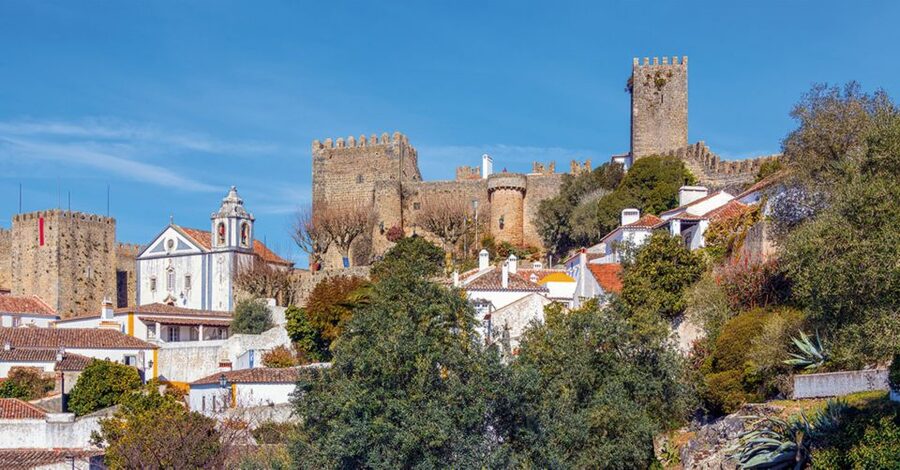
Alcobaça gives this day trip its emotional center: inside the vast monastery church, you can see the carved tombs of King Pedro and Inês de Castro, Portugal’s real-life lovers whose story has often been compared with Romeo and Juliet. Then you move on to Óbidos, a walled village of white houses, flowers, churches, and castle views.
I like the freedom of the format. You get an audio guide and map, but no guide herding you from one doorway to the next. I also like the efficient pairing of Alcobaça and Óbidos, two very different places that are difficult to fit into one short outing without organized transport.
The catch is time. Alcobaça gets about an hour and Óbidos about two hours, and the road transfers take up much of the day. A cramped vehicle or a late arrival in Óbidos, when some churches may already be closed, can make the schedule feel rushed.
In This Review
- Key points to know before booking
- Starting in Lisbon at Marquês de Pombal Square
- Alcobaça and the monastery’s royal tombs
- The 45-minute ride to Óbidos
- Walking through Óbidos inside the medieval walls
- Walking the walls, streets, and castle area
- What the self-guided format really gives you
- Practical details for a smoother day
- Is this Alcobaça and Óbidos trip right for you?
- FAQ
- Where does the tour start?
- Where does the tour finish?
- How long does the tour last?
- Is hotel pickup included?
- Which languages are available for the audio guide?
- What should I bring?
- Can I cancel the booking?
Key points to know before booking
- The monastery is the main historical prize: Alcobaça’s 12th-century Cistercian complex and royal tombs are the most substantial sight on the route.
- Óbidos is best explored on foot: You can walk the medieval walls, browse the narrow streets, and visit churches without following a fixed group route.
- Three hours are spent on the road: The listed transfers total about 2 hours and 40 minutes, before allowing for normal tour-day variation.
- The audio guide comes in seven languages: Choose from Spanish, Chinese, English, French, German, Italian, or Portuguese.
- The schedule favors coverage over depth: This works well for a first look at both towns, not for a slow study of every church.
- Local food gets a small but useful window: Alcobaça gives you free time to try its traditional heavenly sweets.
Starting in Lisbon at Marquês de Pombal Square

The outing begins at the Cityrama Gray Line terminal at Marquês de Pombal Square, at the lower end of Parque Eduardo VII. There is no hotel pickup or drop-off, so you need to reach this meeting point on your own and return there at the end.
That central departure point is useful if you are staying in Lisbon and want a simple base for the day. Still, allow enough time to find the terminal and identify the correct coach. The activity depends on a shared departure, not on a vehicle waiting outside your accommodation.
The first drive lasts about 75 minutes. This is a good moment to settle in, check your audio guide, and look over the map. Since this is a self-guided trip, the quality of your day depends partly on how you manage your time once the coach arrives.
The tour lasts about six hours, but that figure is approximate. The listed drives and visits add up to slightly more than six hours, so you should not plan a tight dinner reservation or another fixed activity immediately afterward.
More Fátima and monastery runs:
- From Lisbon: Fátima, Nazaré, Batalha, and Óbidos Guided Tour
★ 4.7 · 3,060 reviews - From Lisbon: Fatima Batalha Nazaré & Óbidos Small-Group Tour
★ 4.7 · 2,563 reviews - From Lisbon: Fatima, Batalha, Nazare, Obidos – Small Group
★ 4.8 · 2,031 reviews
Alcobaça and the monastery’s royal tombs
Alcobaça is the first stop, with about one hour for a visit and free time. The city is home to the Monastery of Alcobaça, also called the Royal Monastery of Santa Maria de Alcobaça, a UNESCO World Heritage site since 1989.
The monastery began in 1178 under King Afonso Henriques, and Cistercian monks occupied it in 1223. It is one of the order’s largest and best-preserved complexes, which gives you a clear sense of why this is not just a quick church stop. The scale of the site reflects the influence and resources of the Cistercian community.
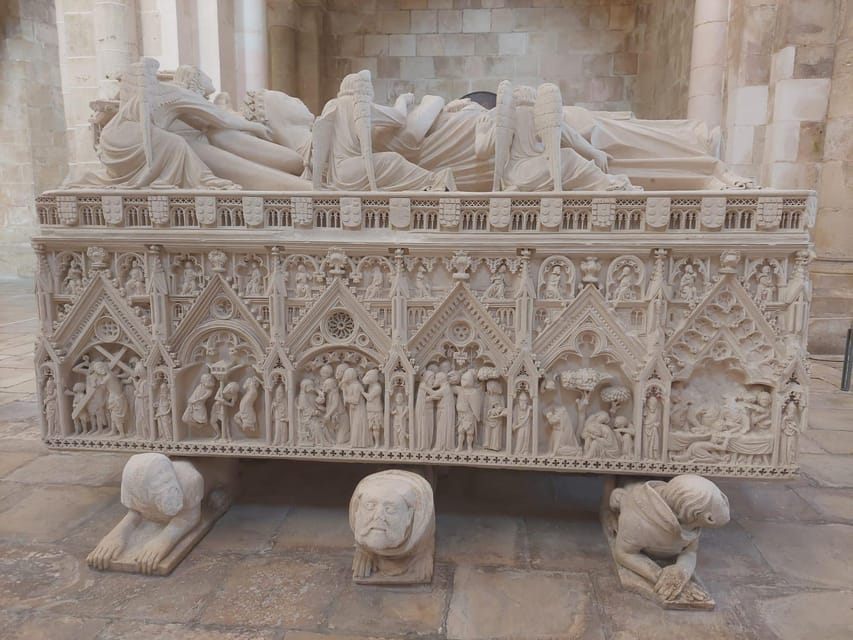
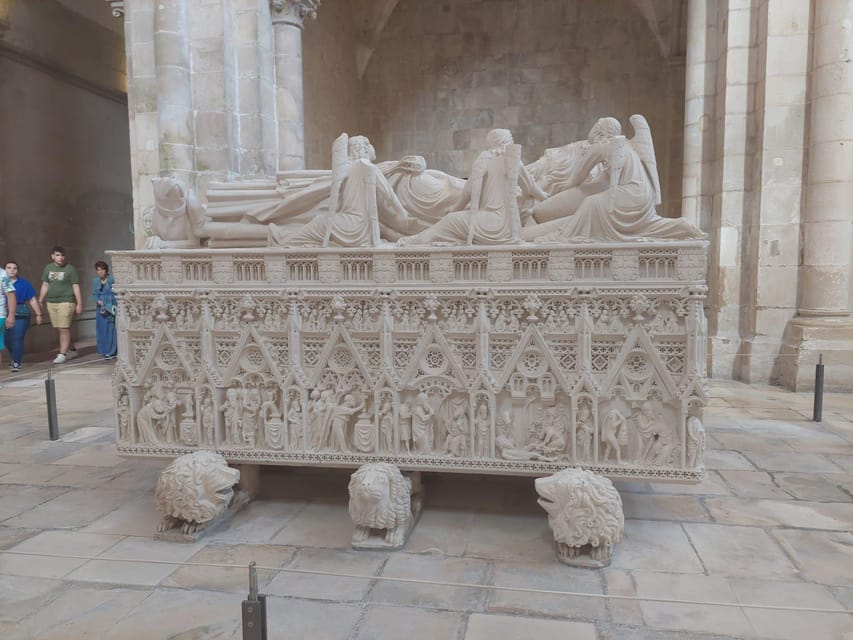
The most memorable detail is the church’s pair of tombs. King Pedro chose Alcobaça as the burial place for himself and Inês de Castro, the woman he loved. Their relationship became one of Portugal’s great tragic stories, and the tombs provide a tangible link between royal politics, personal devotion, and medieval art.
With only an hour, you need to focus. Give priority to the church and the tombs rather than trying to inspect every corner of the monastery complex. If your visit includes a little spare time, use it for the nearby streets and the local sweets rather than letting the clock catch you by surprise.
The food stop is modest but worthwhile. Alcobaça is known for doces conventuais, sweets associated with convent cooking. The phrase heavenly sweets is fitting, since egg yolks and sugar feature heavily in this tradition. The tour leaves free time for tasting them, but it does not include food, so bring money if this is part of your plan.
This is also the point where the self-guided design can feel slightly thin. An audio guide can explain the basic story and major sights, but it will not respond to questions or adjust the pace when you become interested in something unexpected. If you enjoy reading signs, listening carefully, and choosing your own priorities, that tradeoff works in your favor.
The 45-minute ride to Óbidos
After Alcobaça, the coach takes about 45 minutes to reach Óbidos. The route gives you a break between visits, but it also shows the main compromise of this package: much of your six-hour day is spent getting between places.
The pairing makes sense geographically and historically. Alcobaça offers a monumental religious complex, while Óbidos is a compact medieval town where the pleasure comes from walking, looking up, and wandering down side streets.
You should use the transfer to decide what matters most in Óbidos. Two hours is enough for a solid first visit, but not enough for a leisurely tour of every church, the walls, the castle area, and every shop. The audio guide and map help you avoid wasting time finding the main points of interest.
Walking through Óbidos inside the medieval walls
Óbidos was probably founded by the Celts in 308 BC, and later evidence links the area with the Roman city of Eburobrittium. The town was occupied by various groups, including the Moors, before Afonso Henriques conquered it during the Christian reconquest.
The town’s long royal connection adds another layer. Óbidos retained its noble status and served as a place for royal summer stays. King John V spent eight years there on doctors’ advice, using nearby Caldas da Rainha for bathing treatments aimed at his arthritis and obesity.
You do not need to memorize all of this to enjoy the town. The main pleasure is physical: pass through the old gate, follow the lanes, look at the houses and flowers, and climb to the walls if conditions and your comfort allow. The audio guide gives the streets a historical frame while leaving you free to stop for photographs or a short break.
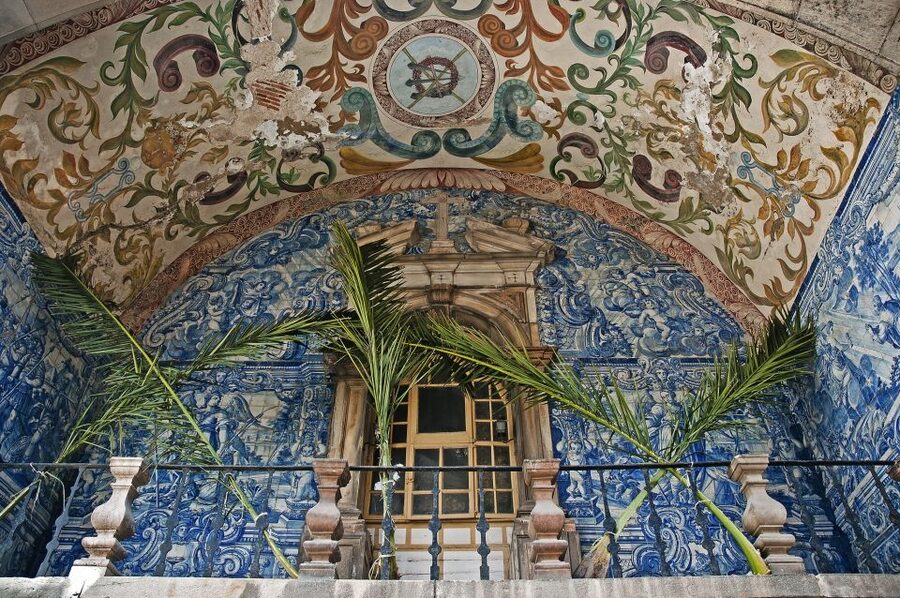
Start at the Town Gate, also called Our Lady of Sorrows, the patron saint of Óbidos. Look for the 17th-century inscription connected with the reign of King John IV. Inside, 18th-century tiles show scenes from the Passion of Christ. This is an easy sight to miss if you rush straight toward the castle.
St. Peter’s Church has a medieval foundation and retains its original portal. It was renovated in the second half of the 16th century and has a single nave with a Baroque wood altarpiece from the period of King John V.
The Pousada of Óbidos occupies what was once the Paço do Alcaide. It was the first pousada in Portugal created from a historic building. Even if you are not staying there, look for its Manueline windows and the doorway with a lintel shaped like intertwined tree trunks.
St. James Church was founded by King Sancho and served the royal family during their stays in Óbidos. Its location and royal connection make it a useful stop for understanding how the town functioned beyond its pretty streets.
St. Mary’s Church of Óbidos occupies the site of an earlier Visigoth temple, which later became a mosque before the Christian conquest. Inside, the wall tiles are a major attraction. You can also see the tomb of D. João de Noronha, a 16th-century mayor of Óbidos, made by sculptor Nicolau Chanterene.
These churches are why timing matters. The town itself remains enjoyable even if a building is closed, but the interiors contain some of the trip’s most specific art and historical details. One reported problem with this schedule is arriving after the churches have closed, leaving the visitor with mainly shops and eateries. Since the exact starting times can vary, check availability carefully and ask how the departure time affects church access before you pay.
More Silver Coast outings:
- Three Cities in One Day: Porto, Nazare and Obidos from Lisbon
★ 4.5 · 3,572 reviews - Peniche: Berlengas Island Trip, Hiking and Cave Tour
★ 4.7 · 1,473 reviews - Peniche: Berlenga Island and Cave Tour
★ 4.7 · 1,432 reviews - From Lisbon: Day Trip to Porto, Óbidos, and Nazaré
★ 4.5 · 1,311 reviews
Walking the walls, streets, and castle area
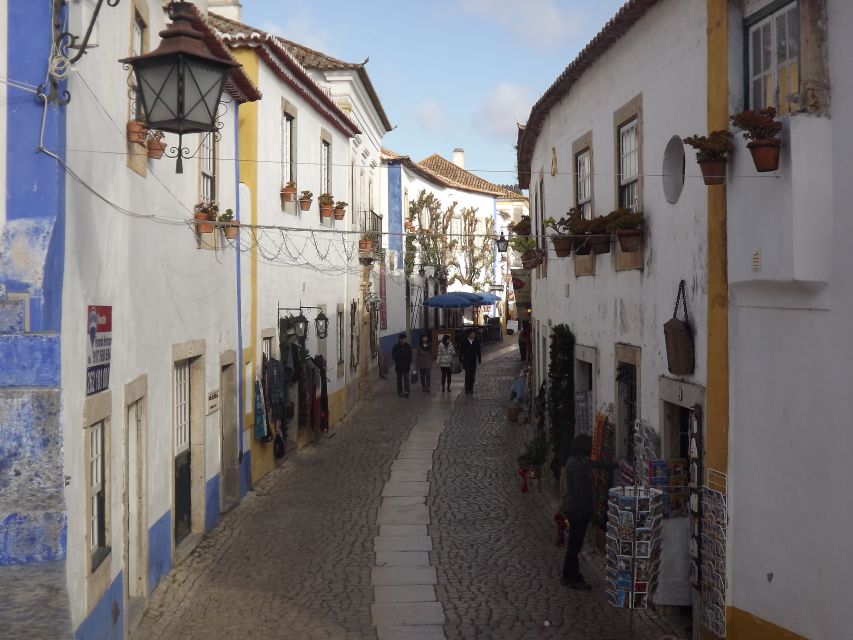
Óbidos rewards slow feet, but the route is not perfectly relaxed. The town’s medieval character comes from uneven streets, steps, narrow lanes, and the walls that surround it. Wear comfortable shoes, as the operator specifically recommends.
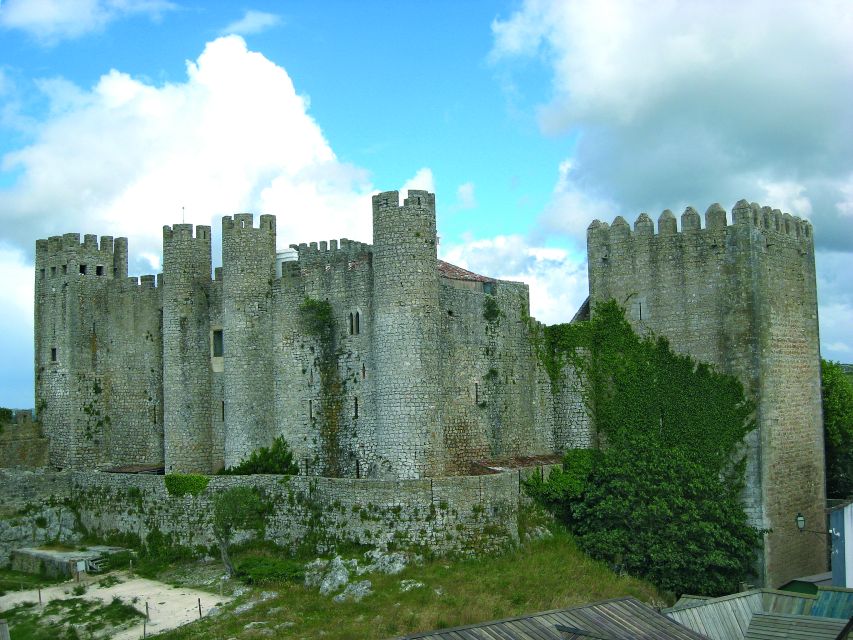
The walls are one of the clearest reasons to visit Óbidos. They let you see the compact shape of the old town and the surrounding countryside from above. Access and comfort may vary by section, so do not treat the wall walk as a race. A careful stroll is more enjoyable than trying to cover every part before the coach departs.
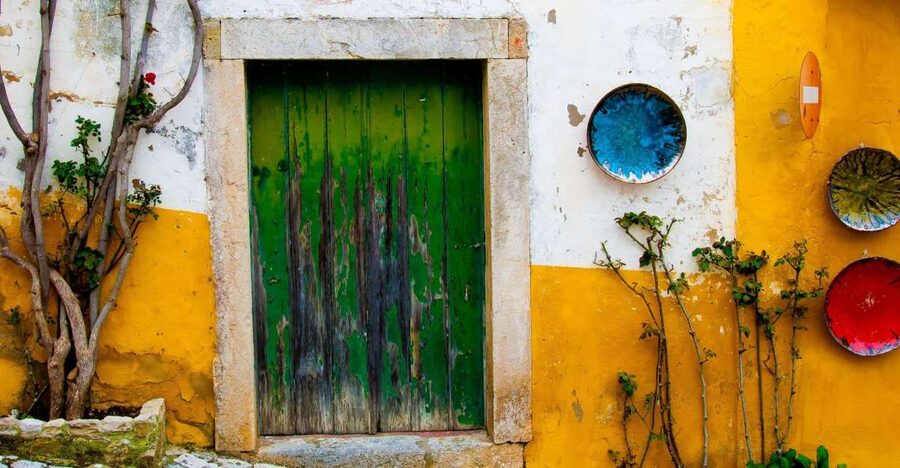
The colorful houses and flower decorations make the town easy to photograph, but try not to let the prettiness become the whole visit. The audio guide’s church and gate information gives you more substance, while the castle and walls show how the town was protected and organized.
Two hours gives you enough time for a focused route. I would enter through the Town Gate, visit the churches that are open, walk a manageable section of the walls, and leave a few minutes to return to the meeting point. Wandering to the far end of town without checking the clock is the simplest way to turn a pleasant stop into a stressful one.
What the self-guided format really gives you

This is not a traditional guided walking tour. The interactive audio guide provides information in seven languages: English, Portuguese, Spanish, French, German, Italian, and Chinese. The map helps you connect the stops and make sensible choices with limited time.
I like this arrangement for independent visitors. You can pause the commentary, skip a sight, take photographs, or spend longer at the tombs in Alcobaça. You also avoid the common group-tour problem of standing outside a sight while someone else finishes a long explanation.
The cost is $50 per person. That price is easiest to justify if you value the transport between Lisbon and both towns, since arranging two separate public-transport connections would take extra planning and could make the same-day visit harder. The ticket does not include hotel transfers, food, or any separately charged entry costs, so check what admission is covered at booking.
The price is less attractive if your main goal is a long visit inside Óbidos’ churches or a detailed monastery tour. The schedule gives you an efficient introduction, not an unhurried day. You are paying for convenience and access to two destinations, with independence once you arrive.
The overall rating is 4.3 out of 5 from 30 reviews, which fits the experience’s strengths and limits. The strongest case for booking is simple: you want to see both places, have only one day, and prefer to explore without a live guide. The main concern is the short schedule, especially if vehicle comfort or church opening hours become a problem.
Practical details for a smoother day
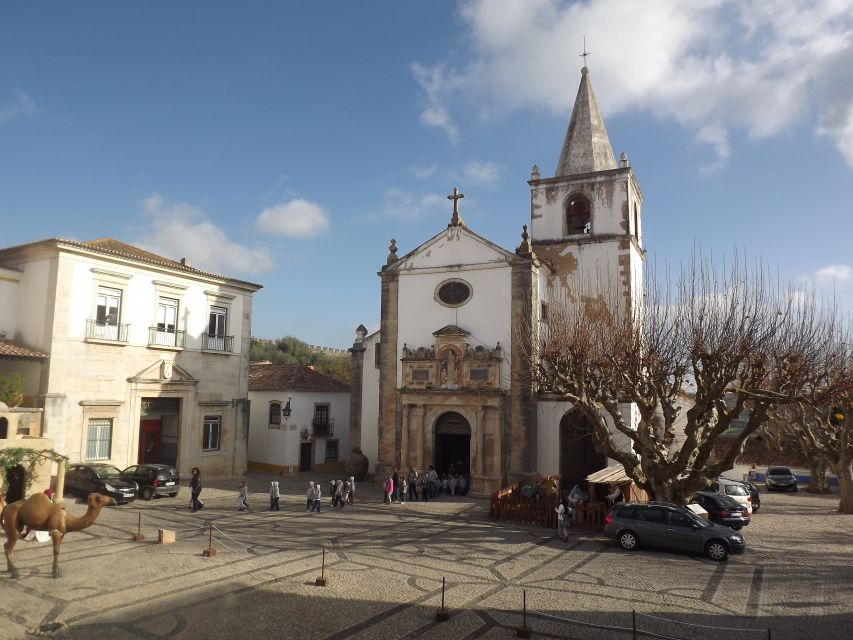
Wear shoes suitable for cobbled streets and walking on historic surfaces. Sunglasses, a sun hat, and a camera are recommended, and you should carry water even though it is not listed among the required items.
Pets are not allowed. The tour returns to the same Cityrama Gray Line meeting point in Lisbon, so you do not need to arrange a separate return transfer.
You can cancel up to 24 hours in advance for a full refund, and the reserve-now, pay-later option keeps payment off your immediate schedule. Cityrama can change or cancel a service for reasons beyond its control, and its terms state that a cancellation for those reasons does not entitle you to a refund.
The most important practical choice is the departure time. Since some sights in Óbidos may close before the coach arrives, compare available start times rather than selecting the first one without checking. If church interiors matter greatly to you, this small decision could shape the whole day.
Is this Alcobaça and Óbidos trip right for you?
Book it if you have limited time in Lisbon and want a straightforward way to reach two historic towns. It suits you if you like audio commentary, self-guided walking, and the freedom to choose between churches, walls, photographs, and food.
Skip it if you want a slow, highly detailed visit or dislike spending several hours in transit. You should also think twice if a cramped vehicle would spoil the day for you, or if visiting Óbidos’ church interiors is your top priority and the available departure time brings you there late.
For most first-time visitors with one open day, the tour offers a useful snapshot: Alcobaça for its monastery and tragic royal tombs, Óbidos for its walls, tiled churches, and charming streets. Just keep your expectations focused. This is a well-packed introduction, not a leisurely study tour.
FAQ
Where does the tour start?
It starts at the Cityrama Gray Line terminal at Marquês de Pombal Square, at the bottom of Parque Eduardo VII in Lisbon.
Where does the tour finish?
The activity ends back at the same meeting point in Lisbon.
How long does the tour last?
The stated duration is six hours, though the total time is approximate. The schedule includes about 75 minutes by coach to Alcobaça, one hour there, 45 minutes to Óbidos, two hours in Óbidos, and about one hour back to Lisbon.
Is hotel pickup included?
No. Hotel pickup and drop-off are not included, so you need to reach the Marquês de Pombal Square meeting point independently.
Which languages are available for the audio guide?
The audio guide is available in Spanish, Chinese, English, French, German, Italian, and Portuguese.
What should I bring?
Bring comfortable shoes, sunglasses, a sun hat, and a camera. Pets are not allowed.
Can I cancel the booking?
Yes. You can cancel up to 24 hours in advance for a full refund. A reserve-now, pay-later option is also available.
More Self-Guided Tours in Lisbon
- Lisbon: São Jorge Castle E-Ticket and Audio Guide
★ 4.3 · 2,182 reviews - Sintra: Quinta da Regaleira E-Ticket and Audio Guide
★ 4.2 · 1,731 reviews - Lisbon: Tram 28 Entry Ticket & Audio Guide with 24-Hour Pass
★ 4.0 · 930 reviews - Lisbon: Jerónimos Monastery E-Ticket and Audio Guide
★ 3.7 · 660 reviews
Fresh finds around Lisbon
- Lisbon: Tuk Tuk City Tour★ 3.6 · 7 reviews
- Lisbon: Highlights and Hidden Gems Tour★ 5.0 · 7 reviews
- Fatima Full day Private Tour★ 5.0 · 7 reviews
- Private Tour to Evora and Monsaraz from Lisbon★ 5.0 · 7 reviews
- Discover Sintra Beauty with a Guided Journey from Lisbon★ 5.0 · 7 reviews
- Private Half-Day Tour to Sintra★ 3.4 · 7 reviews
- Lisbon: Sunset and Wine Catamaran Tour★ 5.0 · 7 reviews
- Nazaré: Beaches of Nazaré Guided E-Bike Tour★ 4.9 · 7 reviews
Self-Guided Tours, compared.

Lisbon: São Jorge Castle E-Ticket and Audio Guide
Read our review →
Sintra: Quinta da Regaleira E-Ticket and Audio Guide
Read our review →
Lisbon: Tram 28 Entry Ticket & Audio Guide with 24-Hour Pass
Read our review →
Lisbon: Jerónimos Monastery E-Ticket and Audio Guide
Read our review →
Sintra: Castle of the Moors & Quinta Entry with Audio Guides
Read our review →
Unforgettable Sintra Tour E-CAR GPS audio-guided route that informs and entertains!
Read our review →
E-Car Self Guided/ Regaleira / Monserrate/ Palacio Pena / Mouros
Read our review →
Sintra: Castle of the Moors Skip-the-Line Ticket+Audio Guide
Read our review →Browse the lists this tour appears in