
Reviewed · SELF-GUIDED TOURS
Alcobaça & Óbidos: Self-guided tour
Alcobaça and Óbidos pack a lot of Portugal into about six hours: royal tombs, a huge Cistercian monastery, a medieval wall, and a town center of narrow lanes. I like the freedom of the self-guided smartphone and the fact that transport from Lisbon is handled for you. I also like the small-group limit of 20 people, which should make boarding and meeting up easier.
I especially like the included map and information folder, useful when you want to put the phone away and simply wander. The main tradeoff is clear: this is not a traditional escorted sightseeing tour. Your guide assistant helps with practical matters and tips, but the history is largely delivered through the device, and some paid admissions are extra.
In This Review
- Key points to know before booking
- Why this pairing works from Lisbon
- Meeting in Lisbon and setting up the device
- Alcobaça and the monastery’s royal tombs
- Entering Óbidos through the old town
- Following Rua Direita to Santa Maria
- Climbing toward Castelo de Óbidos
- Three churches with three different stories
- How the self-guided format feels in practice
- Is $50.88 a good value?
- Who should book this outing?
- FAQ
- Where does the tour start?
- What time does the tour begin?
- Where does the tour end?
- Is hotel pickup included?
- How long does the experience last?
- Is transport included?
- Is castle admission included?
- What is provided for the self-guided visit?
Key points to know before booking

- Two historic towns in one morning: You visit Alcobaça first, then have time in walled Óbidos.
- One smartphone per person: Each customer, including children, receives an interactive guide device.
- Independent sightseeing: You set your own pace instead of following a guide through every street.
- Castle admission costs extra: The exterior and setting are part of the visit, but entry to Castelo de Óbidos is not included.
- Transport begins at 9:00 am: Meet at the Cityrama Gray Line Portugal office in Lisbon, with the tour ending back there.
- Expect steady walking: Cobblestones, slopes, narrow lanes, and castle walls call for sensible shoes and moderate fitness.
Why this pairing works from Lisbon
Lisbon has enough sights to fill several days, but Alcobaça and Óbidos give you a quick look at a different side of Portugal. Alcobaça is monumental and religious, shaped by the Cistercian order. Óbidos is smaller and more playful, with whitewashed buildings, flowered windows, Manueline doorways, and a castle above the town.
I like the contrast. At Alcobaça, you get scale and solemnity. In Óbidos, you get lanes made for slow wandering and views from a fortified hilltop. You do not need to plan regional buses, compare departure times, or find your way back to Lisbon after dark. The included ride is a large part of the value.
At $50.88 per person, the price is reasonable if you value convenience and want both places in a single outing. It is less attractive if you mainly want a detailed history lesson or several hours inside the monuments. The timing is tight enough that you need to accept a sampler rather than a full study of either town.
The experience is booked, on average, 38 days ahead. That does not guarantee it will sell out, but it is a useful sign to reserve early if your Lisbon dates are fixed.
More Fátima and monastery runs:
- From Lisbon: Fátima, Nazaré, Batalha, and Óbidos Guided Tour
★ 4.7 · 3,060 reviews - From Lisbon: Fatima Batalha Nazaré & Óbidos Small-Group Tour
★ 4.7 · 2,563 reviews - From Lisbon: Fatima, Batalha, Nazare, Obidos – Small Group
★ 4.8 · 2,031 reviews
Meeting in Lisbon and setting up the device
The meeting point is Cityrama Gray Line Portugal at Alameda Edgar Cardoso. The scheduled departure is 9:00 am, and hotel pickup and drop-off are not included, so you need to reach the office on your own.
Arrive with enough time to find the meeting point and check in. One practical warning matters here: a French-speaking customer reported being missed at the meeting point and having to walk to the administrative office before being collected. That appears to have been an exception, but it is still wise to confirm the exact departure location and stay alert around the meeting time.
The guide assistant introduces the device before the ride to Óbidos. You receive one interactive smartphone per person, including children, plus a map and information folder. This setup gives you more control than a group walking tour. You can stop for a photograph, linger at a church, or take a side street without holding up a spoken explanation.
The device also changes the feel of the tour. You are not simply listening to a guide while trying to keep up. You are using a tool when you want information, then walking quietly when you do not. The drawback is that anyone expecting a continuously narrated visit may find the experience too hands-off.
Transport is by minibus or bus, depending on group size. The maximum is 20 people. The bus has no bathroom, so use facilities before departure and plan around the roughly six-hour schedule.
Alcobaça and the monastery’s royal tombs
The first stop is Alcobaça, about an hour in the stated itinerary. The town is home to the Monastery of Alcobaça, also called the Royal Monastery of Santa Maria de Alcobaça. Construction began in 1178 by order of King Afonso Henriques, and Cistercian monks occupied the complex in 1223.
The monastery was designated a UNESCO World Heritage site in 1989. Its importance is not just age. It is one of the largest and best-preserved Cistercian complexes, so the visit gives you a strong sense of how religious institutions shaped Portuguese towns and royal life.
The most moving detail is the story of King Pedro and Inês de Castro. Pedro chose the monastery church as the burial place for himself and his beloved Inês, and their impressive tombs can be visited. Even if you know little about Portuguese history, the story gives the church a personal center. These are not anonymous royal remains tucked away in a side chapel. Their tombs are one of Alcobaça’s main reasons to stop.
The schedule lists the stop as one hour, with admission shown as free. Still, read the inclusions carefully. The tour includes transport, the guide assistant, the interactive device, the folder, and the map, while it specifically lists castle admission in Óbidos as not included. It does not promise a separate paid entrance to every monastery area. Ask the guide assistant what access is available on the day rather than assuming the full complex is included.
An hour is enough to appreciate the monastery’s scale and focus on the church and tombs. It is not enough for a slow examination of every cloister, chapel, and architectural detail. I would treat Alcobaça as a concentrated introduction, not a complete museum visit.
Entering Óbidos through the old town
After Alcobaça, the tour moves to Óbidos, a small walled town with a long and layered past. The settlement may have Celtic origins dating to 308 BC, and recent studies connect it with the ancient Roman city of Eburobrittium. Barbarians and Moors later occupied the area, and Afonso Henriques conquered it from the Moors during the Christian reconquest.
The town also kept a close link with Portugal’s monarchy. Óbidos retained noble status and served as a summer retreat. King John V reportedly stayed there for eight years on medical advice, visiting nearby Caldas da Rainha for bathing intended to help with arthritis and obesity. That detail helps explain why the town feels more like a royal retreat than an ordinary hill village.
You have about two hours for the village itself, followed by separate time allocations for Rua Direita, the castle, and the churches. These times may overlap in practical terms, since the sights are all close together. The device and map help you make sense of the route, but you should keep an eye on the agreed meeting time.
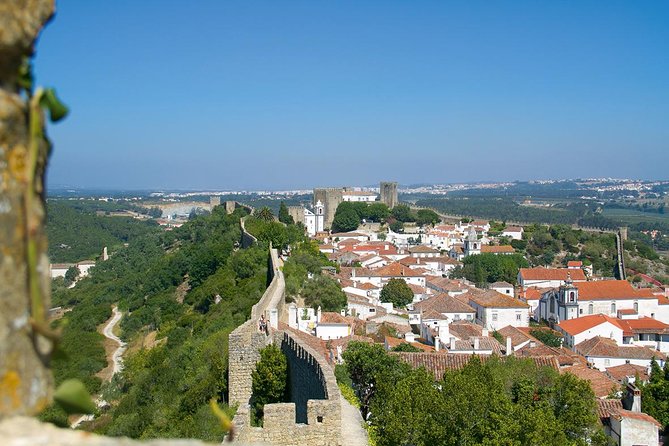
Óbidos is compact, yet it is easy to lose your sense of direction inside the walls. That is part of its charm. White buildings, small squares, flowers, stone paving, and old doorways create a pleasant route with frequent stops for pictures. The same features also mean uneven walking and limited room for large groups.
A guide assistant reportedly brings the group for a small taste of ginjinha on arrival in Óbidos. Ginjinha is a sour-cherry liqueur associated with Portugal, but this tasting should be treated as a welcome gesture rather than a major part of the tour. If you do not drink alcohol, ask what alternatives are available.
More Silver Coast outings:
- Three Cities in One Day: Porto, Nazare and Obidos from Lisbon
★ 4.5 · 3,572 reviews - Peniche: Berlengas Island Trip, Hiking and Cave Tour
★ 4.7 · 1,473 reviews - Peniche: Berlenga Island and Cave Tour
★ 4.7 · 1,432 reviews - From Lisbon: Day Trip to Porto, Óbidos, and Nazaré
★ 4.5 · 1,311 reviews
Following Rua Direita to Santa Maria
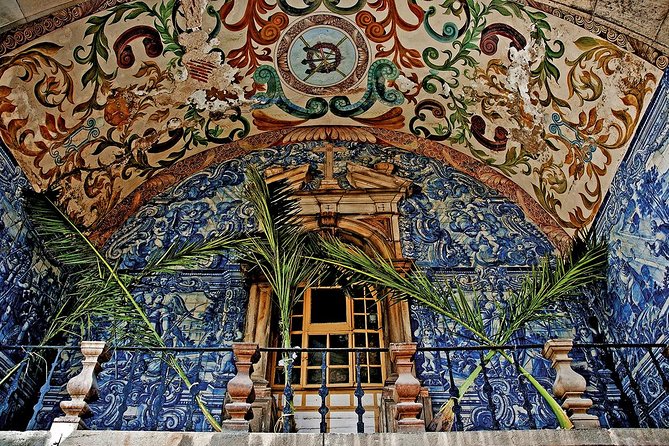
Rua Direita is Óbidos’s main street. It leads toward the Church of Santa Maria through a tight network of lanes decorated with Manueline porticos, flowered windows, and small shops. This is the most natural part of the visit for independent exploring.
The street is not a long avenue. It is a compact historic route where the pleasure comes from details: a carved doorway, a tiled wall, a balcony, or a turn that opens toward the church. I would use the map first to understand the basic route, then let the device fill in the stories as you go.
The schedule allows about 45 minutes here. That is enough to walk the main stretch without rushing, but you may want more time if you stop for food, shopping, photographs, or a drink. Since this is a self-guided outing, you can decide how much of that time belongs to architecture and how much belongs to simply enjoying the town.
The main caution is crowding. Óbidos is a popular destination, and the narrow main street can feel busy at certain times. The tour’s early departure helps, but the experience is still built around the central streets. If you want complete quiet, this format and destination may not deliver it.
Climbing toward Castelo de Óbidos
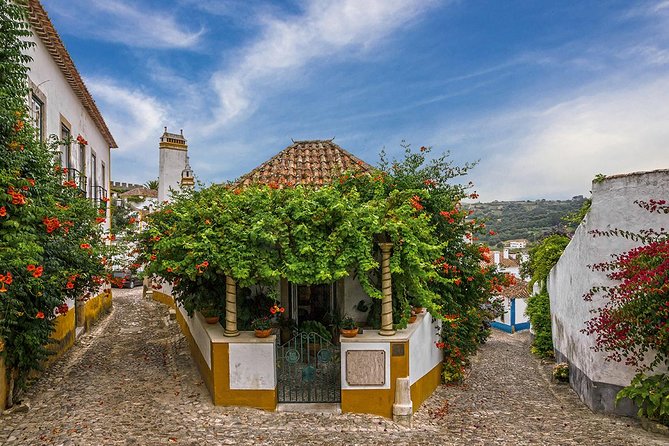
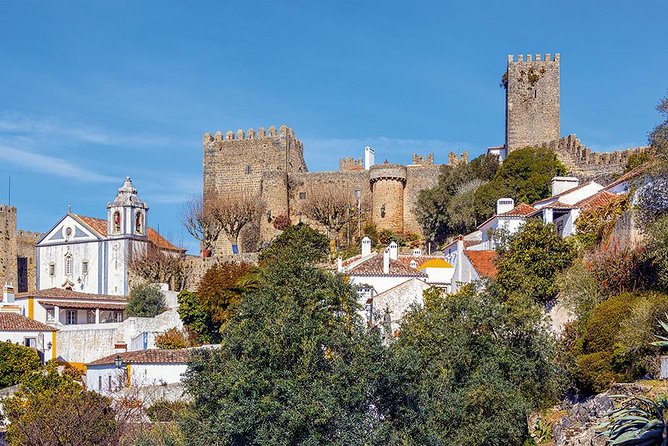
The castle is the town’s strongest visual feature. Its fortifications were originally built by the Arabs on a site already occupied by Lusitanians, Romans, and Visigoths. Afonso Henriques took the castle around 1148 as Portugal expanded during the Christian reconquest.
The castle stop is listed at about 45 minutes. Admission is not included, so budget for a separate ticket if you want to enter. The supplied information does not specify the admission cost, so check the current price before you go.
Even without planning a long interior visit, the castle matters because it explains Óbidos’s shape. The walls, gates, and elevated position show how defense controlled movement through the town. You can also expect good views across the surrounding countryside from the higher sections.
Walking the fortifications requires care. A moderate level of fitness is advised, and the stone surfaces can be uneven. Wear shoes with a secure sole, especially if you intend to explore beyond the easiest streets. If you prefer not to pay extra for the castle, use the time for the town lanes and church visits, but you will miss one of Óbidos’s main historical anchors.
The first Pousada restored from a historic building is another highlight associated with the castle area. A Pousada is a Portuguese historic hotel, and this detail shows how the old fortress has been adapted for modern use. The tour helps you spot that connection, even though it is not presented as an overnight stay or hotel visit.
Three churches with three different stories
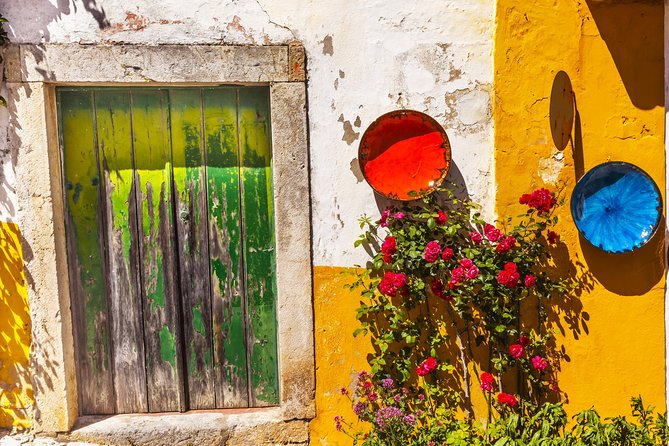
Óbidos gives you more than one church to see, and that is useful because the town’s religious history is spread across several buildings.
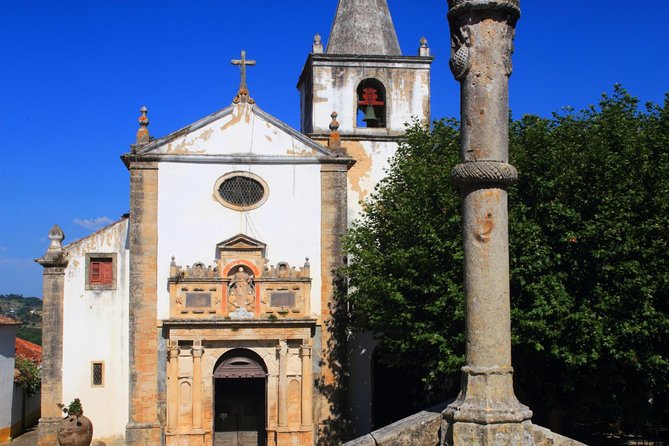
The Church of Santa Maria, or Igreja Matriz de Óbidos, is the main church. It was founded between 1148 and 1185 and sits near the end of Rua Direita. Its place in the center of the walled town makes it an easy anchor for your route.
Santa Maria is also the church most strongly tied to Óbidos’s long story. Its foundation falls close to the period when Afonso Henriques conquered the town, so it represents the Christian rebuilding that followed Muslim rule. Allow about 45 minutes in the schedule, though the amount of time you need will depend on whether the interior is open and how much historical material the device provides.
The Church of St. Peter is another medieval church in the town. It was founded in the seventeenth century, rebuilt after the earthquake of 1755, and changed again in the nineteenth century. That sequence makes it a good reminder that old Portuguese buildings are often a mix of original structure, repair, and later alteration.
The itinerary also refers to three memorable churches with distinct histories, while the listed stops name Santa Maria and St. Peter. Use the folder and device to identify the third church during the walking portion, rather than assuming every church is a formal stop with a separate guide presentation.
These churches are free to visit according to the stated stop information. Opening conditions can change, and the tour itself warns that plans may be altered without notice. Keep your expectations flexible. The value here is the chance to notice several layers of Óbidos without paying an added entrance fee for each one.
How the self-guided format feels in practice
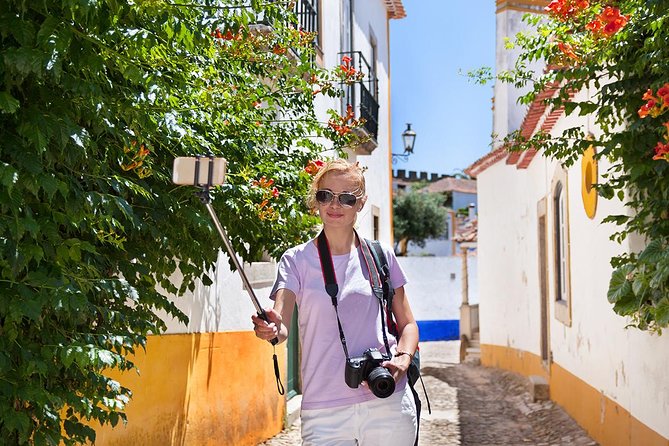
The interactive guide is the heart of this experience. I like it for visitors who want structure without a fixed walking pace. You get a route, historical context, and a map, but you can pause and look around instead of standing in a group while a guide talks.
It also works well for families because every person receives a device, including children. Younger visitors may find the interactive format more engaging than a printed guidebook. Still, the device is not a substitute for a live guide who can answer every question or adjust the story to your interests.
The guide assistant remains important. This person helps with the meeting point, transport, device setup, and practical tips. A good assistant can make the day easier, but the experience does not promise continuous commentary. One customer specifically found the assistant helpful but expected more spoken explanation. That is the right expectation to set before booking.
You should also remember the limits of a half-day. The total duration is approximately six hours, but the schedule includes travel as well as two towns and several stops. You will see the key sights, not every room, side street, or museum.
Is $50.88 a good value?
At $50.88, the package pays for transport from Lisbon and back, a guide assistant, one interactive smartphone per person, a map, and an information folder. For many people, that is a fair price for removing the transport problem and fitting Alcobaça and Óbidos into one morning and early afternoon.
The value is strongest if you are staying in Lisbon without a rental car. You avoid arranging regional connections and can use your limited time for sightseeing. It is also useful if you want some historical help but dislike being tied to a spoken group tour.
The value is weaker if you plan to visit only Óbidos. The town can be explored independently, and this trip gives you only a short visit. It is also weaker if you want included entry to the castle or a long guided tour of the Alcobaça monastery. Those expectations may lead to extra costs or disappointment.
A previous booking ran from 9:00 am until about 2:15 pm, which fits the advertised half-day rhythm. Treat that as a useful example, not a guaranteed return time. Traffic, group size, and changes to the route can affect the schedule.
Who should book this outing?
I would choose this tour if you want an easy day outside Lisbon, like historic towns, and prefer to explore independently. It suits couples, families, and solo visitors who appreciate a clear route but do not want to spend the whole day beside a speaking guide.
It is also a good match for first-time visitors who want a quick introduction to Alcobaça and Óbidos before deciding if either deserves a longer return visit. The castle views, the royal tombs, and the old streets give you three strong reasons to go.
I would choose another format if you need hotel pickup, want a fully narrated tour, dislike walking on uneven surfaces, or want several hours inside the monuments. Confirm the meeting point carefully, wear smart-casual clothing and comfortable shoes, and bring patience for a compact schedule.
Book this experience if convenience and independent sightseeing matter most. Skip it if the main goal is a slow, expert-led examination of the monastery and castle. The self-guided design is the deciding factor: for the right visitor, it gives useful freedom; for the wrong one, it can feel short on explanation.
FAQ
Where does the tour start?
It starts at Cityrama Gray Line Portugal, Alameda Edgar Cardoso, 1070-051 Lisbon, Portugal.
What time does the tour begin?
The scheduled start time is 9:00 am.
Where does the tour end?
The activity ends back at the Lisbon meeting point.
Is hotel pickup included?
No. Hotel pickup and drop-off are not included.
How long does the experience last?
The tour lasts approximately six hours.
Is transport included?
Yes. Transport by minibus or bus is included, depending on the group size.
Is castle admission included?
No. Admission to Castelo de Óbidos is not included.
What is provided for the self-guided visit?
You receive one interactive smartphone per customer, including children, along with a guide assistant, information folder, and map of Óbidos.
More Self-Guided Tours in Lisbon
- Lisbon: São Jorge Castle E-Ticket and Audio Guide
★ 4.3 · 2,182 reviews - Sintra: Quinta da Regaleira E-Ticket and Audio Guide
★ 4.2 · 1,731 reviews - Lisbon: Tram 28 Entry Ticket & Audio Guide with 24-Hour Pass
★ 4.0 · 930 reviews - Lisbon: Jerónimos Monastery E-Ticket and Audio Guide
★ 3.7 · 660 reviews
Fresh finds around Lisbon
- Lisbon: Tuk Tuk City Tour★ 3.6 · 7 reviews
- Fatima Full day Private Tour★ 5.0 · 7 reviews
- Lisbon: Highlights and Hidden Gems Tour★ 5.0 · 7 reviews
- Private Tour to Evora and Monsaraz from Lisbon★ 5.0 · 7 reviews
- Discover Sintra Beauty with a Guided Journey from Lisbon★ 5.0 · 7 reviews
- Private Half-Day Tour to Sintra★ 3.4 · 7 reviews
- Lisbon: Sunset and Wine Catamaran Tour★ 5.0 · 7 reviews
- Nazaré: Beaches of Nazaré Guided E-Bike Tour★ 4.9 · 7 reviews
Self-Guided Tours, compared.

Lisbon: São Jorge Castle E-Ticket and Audio Guide
Read our review →
Sintra: Quinta da Regaleira E-Ticket and Audio Guide
Read our review →
Lisbon: Tram 28 Entry Ticket & Audio Guide with 24-Hour Pass
Read our review →
Lisbon: Jerónimos Monastery E-Ticket and Audio Guide
Read our review →
Sintra: Castle of the Moors & Quinta Entry with Audio Guides
Read our review →
Unforgettable Sintra Tour E-CAR GPS audio-guided route that informs and entertains!
Read our review →
E-Car Self Guided/ Regaleira / Monserrate/ Palacio Pena / Mouros
Read our review →
Sintra: Castle of the Moors Skip-the-Line Ticket+Audio Guide
Read our review →Browse the lists this tour appears in