Reviewed · PRIVATE
5 Days Private Tour In Portugal from Lisbon
Portugal is a country where a short drive can change the entire mood of your day. This five-day private tour from Lisbon links tiled city streets, royal palaces, Atlantic headlands, university halls, Porto wine cellars, and the Douro Valley in one carefully packed route.
I like the private vehicle and flexible schedule, especially for a group that does not want to manage trains, luggage, or public transport. I also like the human touch promised by guides such as Hugo Gonçalves, Rodrigo, Carlos, José, and Ruben, who are associated with the operator’s guide team and are praised for punctuality, communication, and local insight.
The main drawback is the pace. You cover a great deal of Portugal in five days, and hotels, lunches, and many entrance tickets are not included in the $2,017.61 per-person price. You should also confirm exactly where Day 5 ends and how the return to Lisbon is handled.
In This Review
- Key points at a glance
- Why this route works for a five-day Portugal trip
- Lisbon’s two faces, Alfama and Baixa
- Belém and the age of Portuguese voyages
- Sintra palaces, Cabo da Roca, and the Cascais coast
- Fátima and Coimbra’s extraordinary university
- Porto in one concentrated day
- Amarante and the Douro Valley
- What the $2,017.61 price really covers
- Guide quality and how to use the flexibility
- Who should book this private Portugal route?
- FAQ
- How long is the private Portugal tour?
- Which places are included in the route?
- Are hotels included in the tour price?
- Are meals included?
- Is this a group tour?
- Can the itinerary be changed?
Key points at a glance
- Lisbon begins with earthquake-planned Baixa and old Alfama, followed by Belém’s grand monuments beside the Tagus.
- Sintra gives you a palace choice, with Pena Palace, Quinta da Regaleira, or the Moorish Castle competing for your limited time.
- The private car matters most on the long route north, linking Fátima, Coimbra, Porto, Amarante, and the Douro without train changes.
- Porto packs several major sights into one day, including Livraria Lello, São Bento Station, the cathedral, and São Francisco Church.
- The Douro finish includes a winery visit and tasting, with Quinta do Tedo listed as the stop.
- The tour suits families and small private groups, but you should budget separately for hotels, meals, and admission fees.
Why this route works for a five-day Portugal trip
The smart idea here is not simply seeing famous places. It is avoiding the time lost between them. Portugal’s main sights spread across the country, and a private vehicle lets you go from Lisbon to Fátima and Coimbra, then onward to Porto, without building the trip around train timetables.
You travel with only your own group, and the itinerary can be adjusted. That matters when one person wants more time in a church, another prefers food stops, or the whole group would rather choose one Sintra palace instead of racing through three.
The schedule begins at 9:00 a.m. each day. Bottled water, onboard Wi-Fi, transport, taxes, handling charges, and personal accident insurance are included. The vehicle is described as comfortable, with Wi-Fi available, a useful feature on longer drives.
Still, this is an active trip. Several days involve multiple stops, and the northbound route covers a lot of ground. If you prefer a slow stay in each town, this will feel hurried. If you want a strong first look at Portugal and plan to return later, the route makes good sense.
A handful more Lisbon ideas to compare
- Private tour of Portugal 5 days from Lisbon
★ 5.0 · 12 reviews - Best of Lisbon Tour, 5 days with Sintra, Cascais and Evora
★ 5.0 · 9 reviews
Lisbon’s two faces, Alfama and Baixa
Day 1 stays in Lisbon, beginning in Alfama. This old quarter climbs steeply above the river, with narrow streets and a less orderly feel than the straight streets of Baixa. Allow yourself time to look around rather than treating Alfama as a quick photo stop. The contrast between the two districts explains much about Lisbon.
The 1755 earthquake destroyed much of the city. Baixa was rebuilt with straight, perpendicular streets around Rua Augusta, using early anti-seismic building methods. The planned center represents a newer social order, one that gave merchants and financiers a larger role.
That historical detail is useful because it turns a simple walking tour into a lesson in how Lisbon was rebuilt. You are not just seeing attractive façades. You are seeing two different city plans side by side: medieval Alfama and rational, post-earthquake Baixa.
Both stops list free admission, although you should expect walking on slopes and uneven pavement in parts of Alfama. Comfortable shoes will make a real difference.
Belém and the age of Portuguese voyages
The afternoon moves to Belém, the Lisbon district most closely linked with Portugal’s maritime expansion. The Torre de Belém and Jerónimos Monastery are the main draws, both built in the ornate Manueline style and listed as UNESCO cultural heritage sites.
The two-hour Belém visit should give you time to see the tower area and understand the setting beside the Tagus. The Monument to the Discoveries and Praça do Império add to the grand scale, while the marinas, cycle path, and open spaces provide a welcome change after the tighter streets of central Lisbon.
Entrance to the tower and monastery is not included. That is important because these are not minor optional stops. If you want to go inside, set aside extra money and ask your guide how tickets will be handled that day.
Do not leave Belém without trying a pastel de nata from the area associated with these famous custard pastries. The tour specifically points to the Pastéis de Belém, so this is one of the simplest and most enjoyable food pauses in the itinerary.
Sintra palaces, Cabo da Roca, and the Cascais coast
Day 2 is one of the most appealing parts of the trip. Sintra was a retreat for Portugal’s aristocracy, and its old center offers narrow lanes, regional products, cafés, and the well-known Piriquita pastry shop. Try the queijadas or travesseiros de Sintra if you want a local sweet rather than another generic snack.
The plan allows about an hour in the historic center, then roughly two hours for a palace or castle. That means you need to choose wisely. The guide can help you select among:
- Pena Palace, a colorful Romantic-era palace built from the imagination of Ferdinand of Saxe-Coburg Gotha
- Quinta da Regaleira, a nineteenth-century estate known for elaborate decoration and Masonic symbolism
- The Moorish Castle, a medieval stronghold tied to the Islamic presence in the region
I would not try to force all three into this schedule. Each has a different character, and the roads around Sintra can make palace-hopping slow. Pena Palace is the obvious choice for dramatic architecture. Quinta da Regaleira suits visitors who like gardens, symbols, and unusual design. The Moorish Castle is the choice for old stone walls and views.
Admission is extra, and the palace choice affects the day’s timing. Confirm the plan before setting out, especially if someone in your group has limited mobility or dislikes steep paths.
From Sintra, the route heads to Cabo da Roca, the western tip of mainland Europe. The headland is part of the Sintra-Cascais Natural Park and is associated with Luís de Camões’s famous description of the place where the land ends and the sea begins. You get about an hour here, enough for the viewpoint and a short walk, though the itinerary does not promise a longer coastal hike.
The final stops are Cascais and Estoril. Cascais began as a fishing village and grew into a polished Atlantic resort. Estoril is known for its casino, described as Europe’s largest gambling room, and for its link with Ian Fleming’s Casino Royale during the Second World War.
The return to Lisbon follows the Marginal coastal road. This is a fine way to end the day, with ocean views replacing the palace interiors. Cascais and Cabo da Roca are free stops, while palace admission is not included.
Nearby in Lisbon, a different day entirely:
- Lisbon City Center Tour – The Unmissable Lisbon
★ 5.0 · 22,234 reviews - Lisbon: Sintra, Pena, Regaleira, Cabo da Roca & Cascais
★ 4.7 · 19,656 reviews - Sintra: Pena Palace and Park Entrance Ticket
★ 4.2 · 17,410 reviews - Lisbon: Jerónimos Monastery Entrance Ticket
★ 4.1 · 14,164 reviews
Fátima and Coimbra’s extraordinary university
Day 3 turns north. Fátima is a major pilgrimage center, and the visit focuses on the Sanctuary, the Chapel of the Apparitions, the Basilica of Our Lady of the Rosary, and the Basilica of the Holy Trinity.
You can attend Mass if you wish, though it is optional. The Chapel of the Apparitions is especially important because it was built soon after the reported apparitions and occupies the central part of the sanctuary. The older basilica contains the tombs of the children associated with Fátima and the tomb of Sister Lucia.
The Basilica of the Holy Trinity is much newer, completed in 2007, and has space for more than 8,000 people. Seeing the older and modern basilicas together gives you a clearer sense of how Fátima has grown as a religious destination.
The listed stops have no admission charge. Even so, this part of the day may feel less rewarding if religious sites are not a priority for you. Since the tour is private, ask about shortening the visit if your group would rather spend more time in Coimbra.
Coimbra brings a different mood. The university sits above the city, and the two-hour visit includes the celebrated Joanine Library, the Saint Michael Chapel, the Sala dos Capelos, and the Cabra Tower. The library was built in the eighteenth century on the site of the university’s former prison, with painted ceilings and an ornate interior.
The university is one of the key paid attractions on the route. Admission is not included, and timed entry may affect the schedule, so confirm the plan with the guide before the day begins.
After the university, you can see Coimbra’s old center between the Mondego River and the hilltop campus. This is a good place to slow down for a café or pastry. The narrow lanes and small squares retain a local feel, and the city’s long connection with the university gives it a character different from Lisbon or Porto.
The day ends with the drive to Porto, where two nights are listed. The route is efficient, but it is also long. You will want a clear answer about the hotel location and the exact drop-off arrangements before booking.
Porto in one concentrated day
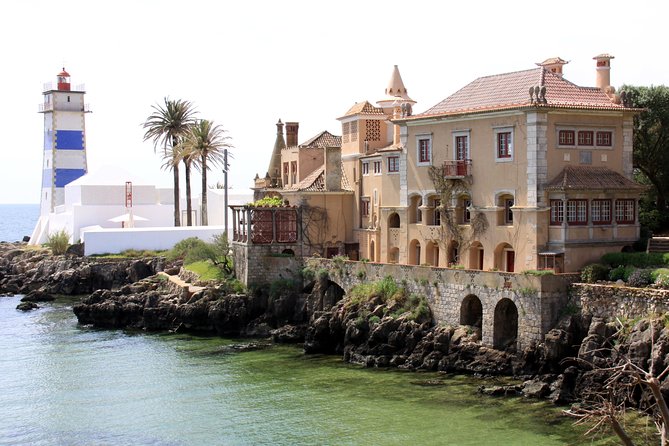
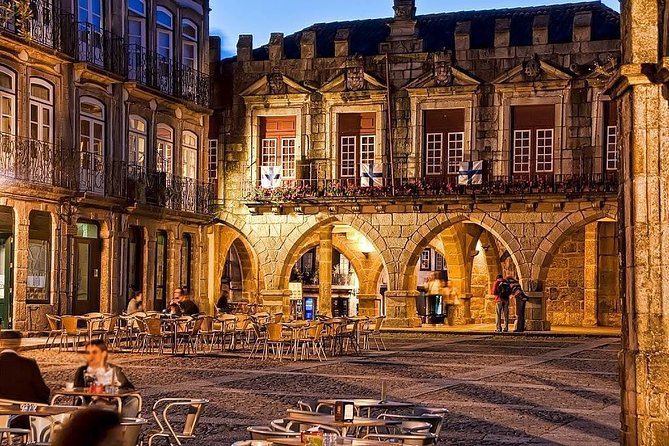
Day 4 covers Porto’s central sights. Start at Avenida dos Aliados, the city’s grand central avenue and the location of the imposing municipal building. It is a useful place to get your bearings before walking into the older center.
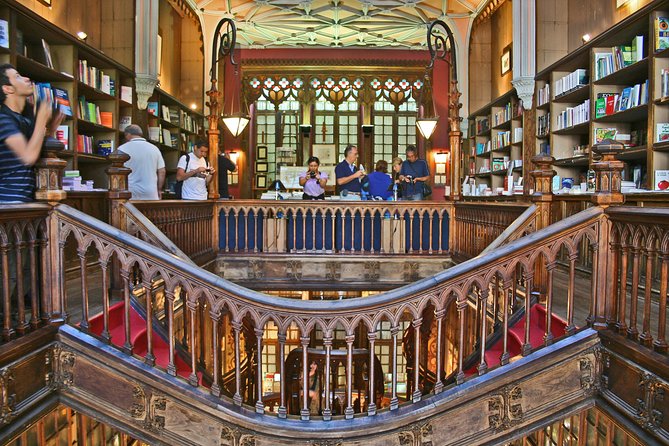
Livraria Lello is the most obvious crowd magnet. Its carved staircase and elaborate interior appeal to architecture lovers and to Harry Potter fans, although the connection with J. K. Rowling is often treated too casually. She lived in Porto while married to a Portuguese man and began writing the first Harry Potter book during that period, but the attraction is worth seeing for its design alone.
Admission to the bookstore is extra. Ask about the ticket arrangement and best timing, since this is one of the stops most likely to affect the day’s flow.
São Bento Railway Station is free to enter and deserves more than a hurried glance. Its main hall contains about 20,000 tiles by Jorge Colaço, showing scenes from Portuguese life and history, including farming, transport, and the production of Port wine.
Porto Cathedral, with Romanesque and Gothic elements and later seventeenth- and eighteenth-century changes, gives the day a more serious architectural counterpoint. The lateral gallery decorated with tiles is a notable feature, as is the medieval rose window.
São Francisco Church is another paid stop, and its interior is far more ornate than its plain exterior suggests. The three naves are covered in gilded wood carving, said to use more than 300 kilograms of gold dust. The Tree of Jesse, a polychrome wood sculpture, is another reason to go inside.
The day crosses the river to Vila Nova de Gaia, where Port wine is aged in cellars. Churchill’s is named as the cellar visit. You can learn how the wine moves from harvest to finished product and taste different styles.
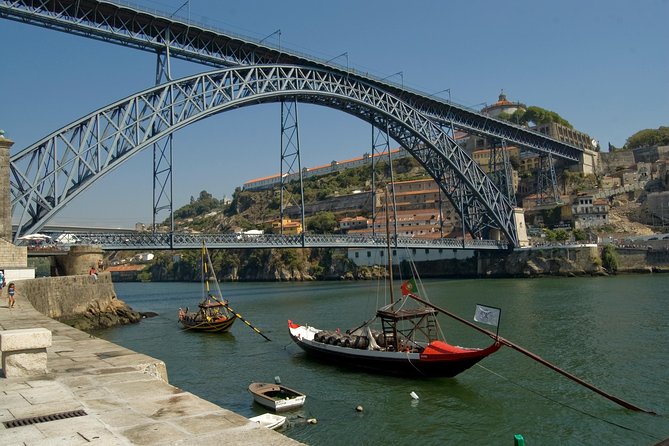
This is a particularly good inclusion because it gives the city context. Port is not just a drink served after dinner. The cellars, riverfront, vineyards, grape varieties, and production methods connect Porto with the Douro Valley you visit on Day 5.
Amarante and the Douro Valley
The final day begins in Amarante, a smaller town with Romanesque and medieval buildings around the São Gonçalo Bridge. The Church and Convent of São Gonçalo are the main sights, and the Amadeo de Souza-Cardoso Museum is another possible point of interest.
Look for the local São Gonçalo sweets sold near the convent. Their shape is deliberately suggestive, which explains their reputation as a source of jokes and curiosity. This is the sort of small local detail that gives the stop personality beyond its formal monuments.
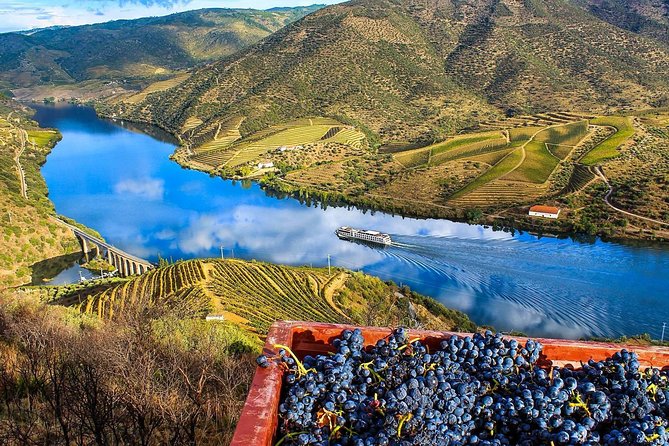
The route continues into the Douro Valley and Pinhão Railway Station. The station’s tile panels show the region’s wine production, from grape harvest and foot-treading to the transport of wine in traditional rabelo boats.
Quinta do Tedo is the winery visit, with about two hours set aside. You can expect an explanation of winemaking, grape varieties, and the difference between the wines produced in the region, followed by a tasting. The winery admission and tasting are not included, so confirm the cost before you arrive.
The Douro is a strong ending because it changes the pace and setting after several urban sightseeing days. The valley is also the reason to think carefully about the tour’s final logistics. The supplied plan does not state whether the vehicle returns you to Lisbon, leaves you in Porto, or ends elsewhere after the winery. Get that detail in writing before you pay.
What the $2,017.61 price really covers
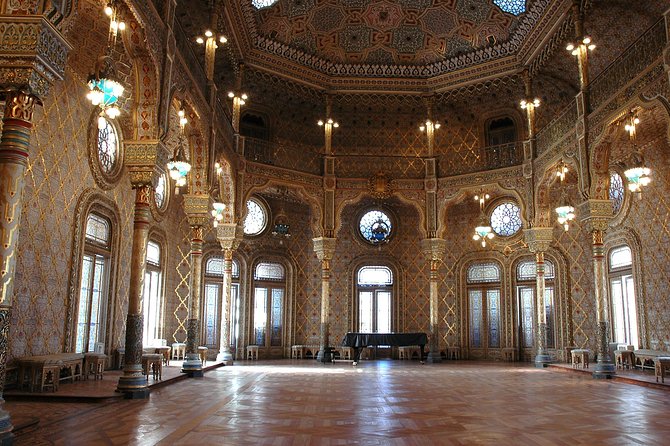
At $2,017.61 per person, this is a major expense. Its value depends heavily on group size. For a couple, it is costly, but you are paying for a private vehicle, a dedicated driver-guide, flexibility, Wi-Fi, water, insurance, and the time saved by moving directly between distant sights.
For four or more people, the price can make more sense when compared with separate private transfers, guide services, and day tours. You also avoid the work of arranging the Lisbon to Porto route, the stops at Fátima and Coimbra, and the Douro excursion.
The price does not include hotels or lunches. It also excludes admission to several major sights, including Jerónimos Monastery, Belém Tower, the selected Sintra palace, Coimbra University, Livraria Lello, São Francisco Church, and the Douro winery. Build those costs into your budget.
The strongest value is convenience, not low cost. I would book it for a family or group that values privacy and wants one company coordinating a complicated route. I would not choose it if I were traveling alone on a tight budget or if I wanted to decide each morning where to spend the day.
Guide quality and how to use the flexibility
The guide is central to this experience. The operator’s team includes Hugo Gonçalves, Rodrigo, Carlos, José, and Ruben, with the exact guide depending on availability. The strongest praise focuses on communication before the trip, punctuality, comfortable vehicles, Wi-Fi, and guides who explain places while allowing time to explore independently.
That flexibility is worth using. Ask for:
- Your preferred Sintra palace before the day begins
- The amount of time you want at Fátima
- Confirmation of all paid admissions
- Restaurant or food-stop suggestions, since lunch is not included
- The exact overnight arrangements in Porto
- The final drop-off point after the Douro Valley
You are not buying a fixed group excursion. Use the private format to shape the days around your interests.
Free cancellation is available when you cancel at least 24 hours before the 9:00 a.m. start time. Changes or cancellations inside that window are not accepted for a refund.
Who should book this private Portugal route?
Book it if you want to see Lisbon, Sintra, Porto, Coimbra, Fátima, and the Douro Valley in one trip without renting a car or managing public transport. It is especially suitable for families, couples traveling with friends, and small groups that value a private vehicle and personal attention.
Think twice if you want long, relaxed stays in each destination. The schedule is ambitious, and the distance between Lisbon and the north means some time will be spent on the road. Also think twice if your budget does not allow for hotels, meals, and several entrance tickets on top of the tour price.
For the right group, this is an efficient first visit to Portugal. It gives you Lisbon’s rebuilt center, Sintra’s palaces, the religious focus of Fátima, Coimbra’s university, Porto’s churches and wine cellars, and the Douro’s vineyards. Confirm the missing hotel and final-transfer details, then book it for the ease of having a capable local team handle the long connections.
FAQ
How long is the private Portugal tour?
The tour lasts approximately five days and begins each day at 9:00 a.m.
Which places are included in the route?
The sample route includes Lisbon, Sintra, Cabo da Roca, Cascais, Estoril, Fátima, Coimbra, Porto, Amarante, Pinhão, and the Douro Valley.
Are hotels included in the tour price?
No. Hotels are not included. Two overnight stays in Porto are listed in the schedule, but you should confirm how accommodation is arranged.
Are meals included?
No. Lunch is not included in the price.
Is this a group tour?
No. This is a private activity, and only your own group participates.
Can the itinerary be changed?
Yes. The itinerary can be adjusted to suit your group’s needs. The guide can also help you choose which Sintra palace or castle to visit.
Fresh finds around Lisbon
- Lisbon: Tuk Tuk City Tour★ 3.6 · 7 reviews
- Fatima Full day Private Tour★ 5.0 · 7 reviews
- Lisbon: Highlights and Hidden Gems Tour★ 5.0 · 7 reviews
- Private Tour to Evora and Monsaraz from Lisbon★ 5.0 · 7 reviews
- Discover Sintra Beauty with a Guided Journey from Lisbon★ 5.0 · 7 reviews
- Private Half-Day Tour to Sintra★ 3.4 · 7 reviews
- Lisbon: Sunset and Wine Catamaran Tour★ 5.0 · 7 reviews
- Nazaré: Beaches of Nazaré Guided E-Bike Tour★ 4.9 · 7 reviews
Private, compared.

True 4Hour Private Tuk Tuk Tour: Discover Lisbon with a Local!
Read our review →

Private Lisbon Sightseeing Tuk-Tuk Tour: Alfama, Belém & More
Read our review →
Lisbon Highlights: Private Tuk Tuk Tour Adventure Sightseeing
Read our review →
Welcome Lisbon Tour with Local Guide in Private Eco Tuk Tuk
Read our review →
Sintra Full-Day Private Tour – A Journey through Wonderland
Read our review →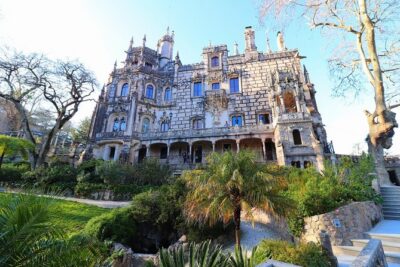
Sintra Private Trip from Lisbon Customizable Dreamlike Experience
Read our review →