
Reviewed · TICKETS
Tomar: Convent of Christ and Templar Castle Tour Ticket
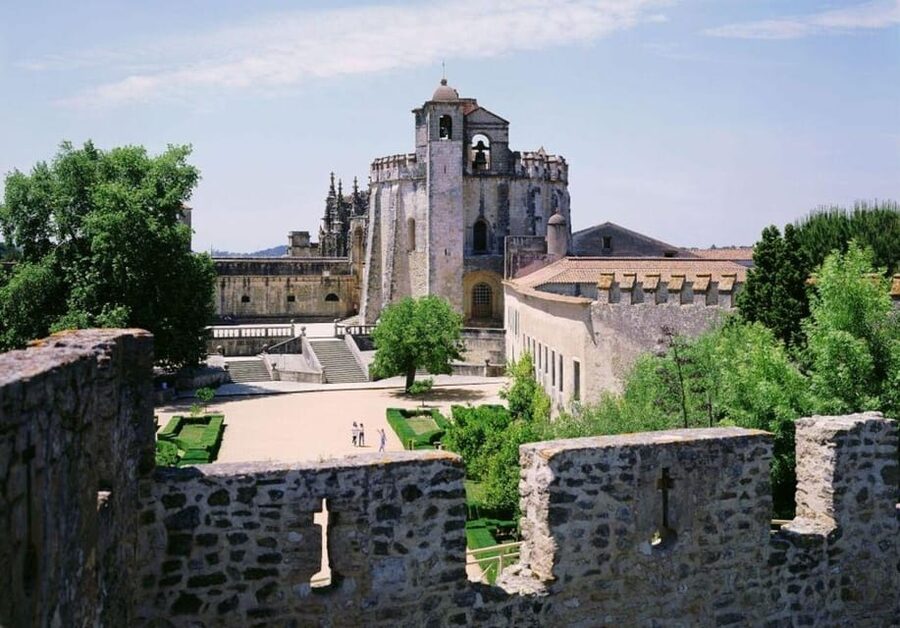
The round Charola temple is the star of this visit. Built by the Knights Templar in the 12th century and inspired by Jerusalem’s Holy Sepulchre, it gives the Convent of Christ a sense of mystery that ordinary church tours rarely match. From there, you move through a medieval castle, a Renaissance convent, five cloisters, and Portugal’s celebrated Manueline decoration.
I like the way this experience joins several centuries in one walk, and I like the freedom of a ticket valid for one day. You can spend time with the Chapter Window, compare the cloisters, and pause when the stonework catches your eye. The main drawback is important: the $17 product may function mainly as an entry ticket, not a fully guided tour, so check your booking details before you expect a guide.
In This Review
- Key points to know before you go
- Why Tomar’s Convent of Christ deserves your time
- Starting at the 1160 Templar Castle
- The Charola, Tomar’s rare round temple
- From the medieval stronghold to the Renaissance convent
- Five cloisters, five different architectural moods
- The Pegões Aqueduct and the wider Tomar setting
- Guided visit or independent exploration?
- Practical details that affect your day
- Who will get the most from this $17 ticket?
- Should you book the Convent of Christ experience?
- FAQ
- Where does the activity start?
- Where does the activity end?
- How long is the ticket valid?
- What is included in the price?
- Are meals and drinks included?
- Is this definitely a guided tour?
- Which guides are associated with this experience?
- Is the site wheelchair accessible?
- Can I take photographs inside?
- What should I bring?
Key points to know before you go
- The Charola is the architectural highlight: This rare round temple links Tomar directly to the Templar world.
- Five cloisters reward slow walking: Each one reflects a different period, from Gothic to Mannerist.
- The Chapter Window tells a maritime story: Its detailed decoration connects the convent with Portugal’s age of ocean exploration.
- The Pegões Aqueduct adds an engineering stop: It gives the visit a grand finish beyond the castle walls.
- Guided and self-guided expectations may differ: Names connected with guided visits include Mark and Anna, but the basic inclusion is the entry ticket.
- Comfortable shoes matter: You will be walking through a large historic complex, with outdoor sections and plenty of stone underfoot.
Why Tomar’s Convent of Christ deserves your time
Tomar is one of Portugal’s best places for seeing how military power, religion, royal ambition, and overseas expansion became joined in stone. The Convent of Christ began with the Knights Templar, later passed to the Order of Christ, and grew over roughly seven centuries.
That long building story is what makes the site so rewarding. You are not looking at one tidy monument built in one style. You are moving from a fortified medieval stronghold into a grand convent shaped by later Gothic, Manueline, Renaissance, and Mannerist tastes.
The entire complex entered the UNESCO World Heritage List in 1983. That label is useful here because it signals the site’s broad importance, but you do not need to be an architecture expert to enjoy it. The best approach is simple: notice how the mood changes as you move from thick defensive walls to decorated religious spaces and then into the open cloisters.
At $17 per person, the ticket is fairly priced for access to a major Portuguese monument of this scale. Its value depends on what you want. If you are happy to read, look closely, and set your own pace, it gives you a full day of historic sightseeing for a reasonable sum. If you are paying mainly for a live guide, confirm that service is included before booking.
More Fátima and monastery runs:
- From Lisbon: Fátima, Nazaré, Batalha, and Óbidos Guided Tour
★ 4.7 · 3,060 reviews - From Lisbon: Fatima Batalha Nazaré & Óbidos Small-Group Tour
★ 4.7 · 2,563 reviews - From Lisbon: Fatima, Batalha, Nazare, Obidos – Small Group
★ 4.8 · 2,031 reviews
Starting at the 1160 Templar Castle
You begin at the main entrance of the Convent of Christ. Arrive 15 minutes early for check-in, even if you expect a simple ticket entry. The site is large enough that a rushed start can make the first part feel confusing.
The castle was founded in 1160, when Tomar’s position called for defense as well as religious purpose. Its walls and fortifications give you the clearest sense of the Templars as an organized military order. This is not just a pretty old church with a few defensive features added later. The castle helps explain why the complex began here at all.
Take your time with the stonework and the general layout before moving on. The medieval sections are strongest when you let the setting speak through its scale, walls, and elevated position. You might find the outdoor areas sunny and exposed, so a hat and sunscreen are sensible, especially in warmer months.
The castle portion also sets up a useful contrast. The Templars needed protection and control. Later builders wanted ceremony, beauty, and space for religious life. You can see that change unfold within the same complex.
The Charola, Tomar’s rare round temple
The Charola is the site’s most unusual room. Its circular form was inspired by the Holy Sepulchre in Jerusalem, a powerful reference for a military-religious order whose identity was tied to the Holy Land.
Most church interiors train you to think in a straight line, from entrance to altar. The Charola asks you to look around. Its round plan creates a different sense of movement and focus, making it easy to understand why this room remains the architectural centerpiece of the visit.
The Charola also gives the Templar Castle more meaning. You are not simply seeing a fortified hilltop with a later church attached. The religious and military sides were planned together, and the round temple expresses that connection in a memorable way.
Photography is allowed, but flash is not. That rule matters here. Flash can damage old surfaces and spoils the quiet mood of the room. Keep your camera ready for the details, but give your eyes the first look.
From the medieval stronghold to the Renaissance convent
After the castle and Charola, the visit moves into the Convent of the Order of Christ. The change is immediate. The complex becomes more formal, more decorated, and more concerned with display.
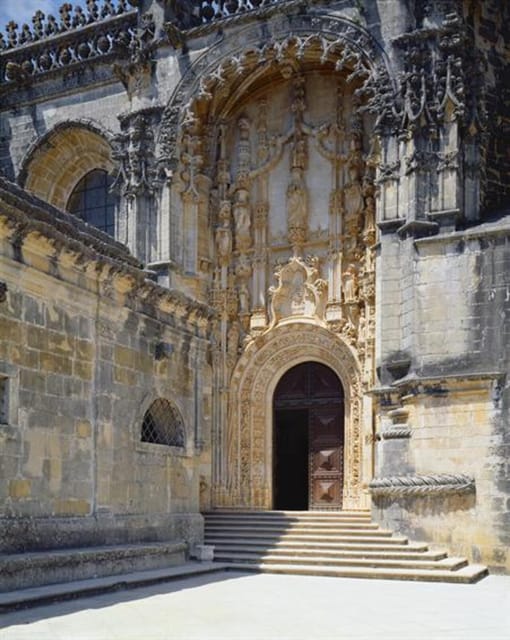
The Manueline nave is one of the key interiors. Manueline design is Portugal’s exuberant late Gothic style, often linked with maritime imagery, carved ropes, botanical forms, and symbols of royal power. Here, the nave helps show how Portugal’s growing confidence at sea found an architectural outlet on land.
The High Choir adds another important viewpoint. Look up and across the interior rather than focusing only on the walls at eye level. Large historic churches often reveal their full design through height, and the choir gives you a better sense of the convent’s scale.
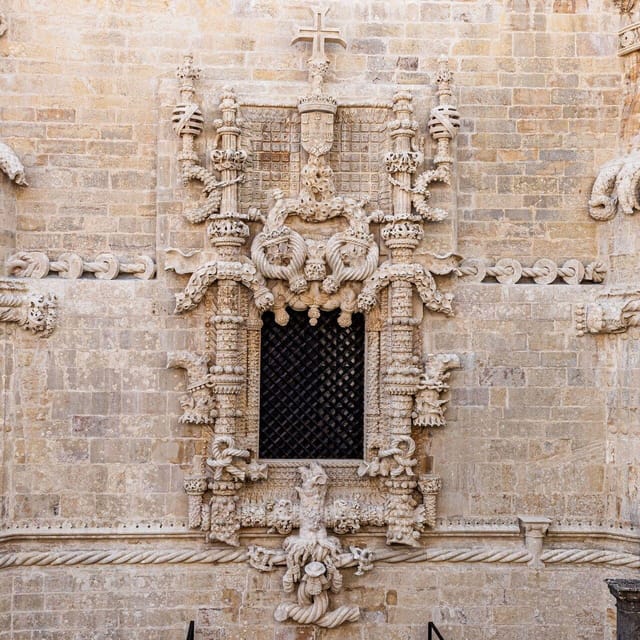
The Chapter Window is another must-see. Its intricate decoration is closely tied to Portugal’s maritime expansion, making it more than an attractive piece of stone carving. It connects the religious complex to the country’s wider ambitions during the age of ocean voyages.
You do not need to rush from one named feature to the next. Give yourself time to notice the workmanship around the main attractions. The value of the visit comes partly from the famous highlights, but also from seeing how decoration, function, and power were combined.
A handful more Fátima ideas to compare
- Batalha Monastery Entrance Ticket
★ 4.3 · 140 reviews - Sintra: Pena Palace and Park Entrance Ticket
★ 4.2 · 17,410 reviews - Lisbon: Jerónimos Monastery Entrance Ticket
★ 4.1 · 14,164 reviews - Lisbon: Oceanário de Lisboa Entrance Ticket
★ 4.6 · 9,943 reviews
Five cloisters, five different architectural moods
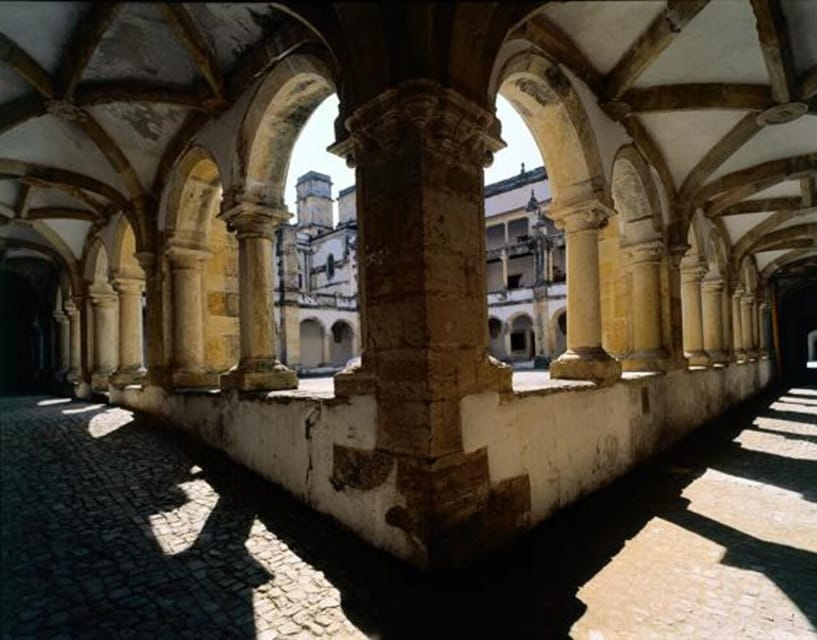
The convent’s five cloisters are a major reason to allow plenty of time. Each reflects a different architectural style, from Gothic to Mannerist, so they work like a compact outdoor lesson in changing taste.
Cloisters are easy to underestimate. At first glance, they may look like quiet courtyards with repeated arches. Walk slowly and compare them. Notice the proportions, the level of decoration, and the way each space frames light and sky.
The Gothic cloister has a more medieval feeling, while later examples show the convent becoming more ordered and formal. The Mannerist work brings a different sense of balance and design. You are watching architectural ideas change without leaving the same religious complex.
The cloisters also provide useful breathing spaces between the larger interiors. After the castle, nave, and Charola, a courtyard lets you pause and reset. This is where the one-day validity helps. You are not forced to treat the site as a quick photo stop.
If you are interested in architecture, plan to spend serious time here. If you mainly want the headline features, you can move through more quickly, but you will miss one of the clearest ways to understand the convent’s long development.
The Pegões Aqueduct and the wider Tomar setting
The Pegões Aqueduct adds a final burst of scale. Built during the period of the Spanish king Filipe, it is an impressive engineering work and a reminder that the Convent of Christ was connected to practical systems as well as grand religious architecture.
The aqueduct changes the rhythm of the day. The castle and convent invite close inspection of carved stone and enclosed rooms. The aqueduct asks you to look along a much larger structure and think about water, construction, and the needs of a major institution.
The experience information presents the aqueduct as the concluding highlight, while the meeting details place the start and finish at the Convent of Christ entrance. For that reason, check the exact arrangements attached to your booking. Do not assume that transport between every feature is provided simply because the aqueduct is included in the description.
The activity ends back at the meeting point, which is useful if you want to continue exploring Tomar afterward. You can treat the Convent of Christ as the main event and then use the central town setting for a separate walk, meal, or further sightseeing.
Guided visit or independent exploration?
This is the most important point to settle before you pay. The core inclusion is an entry ticket to the Convent of Christ. That wording suggests an independent visit rather than a guaranteed guided tour.
Some experiences connected with this attraction have featured guides named Mark and Anna. Mark is praised for putting the historical sequence together and covering the main highlights before leaving you at the convent. Anna is described as explaining difficult ideas in an interesting, accessible way.
Those details point to a possible guided option, but they should not override the actual product description attached to your date. A ticket that includes only admission gives you freedom, but not necessarily interpretation. A guided visit can help you understand why the Templars, Order of Christ, Manueline style, and maritime expansion all appear in one place.
I would choose the independent ticket if you enjoy reading signs, studying details, and controlling your pace. I would look for a clearly marked guided option if this is your first major Portuguese monument or if historical context is the main reason you are going.
Either way, make a simple plan before entering. Start with the castle and Charola, continue through the convent interiors, then slow down in the five cloisters. Save the aqueduct for the end if it is part of your confirmed arrangements.
Practical details that affect your day
The ticket is valid for one day, with starting times dependent on availability. That gives you useful flexibility, but you still need to check the time shown when you book. Arriving 15 minutes early is advised for check-in.
Wear comfortable shoes. The complex includes a castle, convent, courtyards, and outdoor areas, so this is not a visit for uncomfortable footwear. Bring a hat and sunscreen, especially if you expect to spend time outside near the fortifications or aqueduct.
The activity is listed as wheelchair accessible. If accessibility is essential for your visit, confirm the current route and access arrangements when booking, since historic complexes can contain different surfaces and transitions between areas.
Flash photography is not allowed. Alcohol, drugs, explosive substances, and bare feet are also prohibited. Meals, drinks, and personal expenses are not included, so plan those separately.
The activity is non-refundable. That makes it especially important to confirm the date, starting time, and whether you are buying admission only or a guided format before completing payment.
Who will get the most from this $17 ticket?
I think this is a strong choice for history fans, architecture lovers, and anyone who wants to see a major Portuguese monument without paying for a full-day excursion. The combination of a Templar castle, round temple, Manueline nave, Chapter Window, five cloisters, and aqueduct gives you plenty to examine.
It also suits independent visitors. You can move at your own speed, return your attention to a detail that interests you, and avoid being hurried through the cloisters. The one-day validity supports that relaxed approach.
Families and casual sightseers can enjoy it too, but younger children may need help with the slower architectural portions. The castle and round Charola provide immediate visual interest, while the cloisters and Chapter Window reward patience.
I would be cautious if you need a fully organized guided tour and have not confirmed that a guide is included. The difference between an entry ticket and a guided experience is significant here because the complex covers many periods and ideas.
Should you book the Convent of Christ experience?
Book it if you want direct access to one of Portugal’s most unusual historic sites at a sensible price. The Charola alone is memorable, and the five cloisters, Manueline nave, Chapter Window, and Pegões Aqueduct give the visit real depth.
Before booking, check three things: the exact starting time, the meeting arrangements, and whether your purchase includes a guide or admission only. If you value independence, the ticket is good value. If you want the story explained as you go, choose only a version that clearly promises guiding.
FAQ
Where does the activity start?
It starts at the main entrance of the Convent of Christ in Tomar.
Where does the activity end?
The activity ends back at the meeting point.
How long is the ticket valid?
The ticket is valid for one day. Starting times depend on availability.
What is included in the price?
Entry to the Convent of Christ is included.
Are meals and drinks included?
No. Meals, beverages, and personal expenses are not included.
Is this definitely a guided tour?
The included service is an entry ticket. Check your specific booking details to confirm if a guide is included.
Which guides are associated with this experience?
Guides named Mark and Anna are connected with guided visits described for this attraction.
Is the site wheelchair accessible?
The activity is listed as wheelchair accessible.
Can I take photographs inside?
Yes, photography is allowed, but flash photography is prohibited.
What should I bring?
Bring comfortable shoes, a hat, and sunscreen. Arrive 15 minutes early for check-in.
Fresh finds around Fátima
- Fatima Full day Private Tour★ 5.0 · 7 reviews
- Fatima Obidos and Nazare Private Personalized Experience★ 5.0 · 7 reviews
- Alcobaça: Discover the Monastery with a Local Guide Tour★ 5.0 · 7 reviews
- Fátima Half Day Private Tour * Private Tours *★ 4.5 · 7 reviews
- Tomar Templar Private Tour★ 5.0 · 7 reviews
- Óbidos Nazaré Alcobaça Batalha and Fátima Tour★ 5.0 · 7 reviews
- Fátima / Batalha / Nazaré / Óbidos Private tour★ 4.5 · 7 reviews
- Fátima, Batalha, Nazaré and Óbidos day Tour★ 5.0 · 7 reviews
Tickets, compared.

Sintra: Pena Palace and Park Entrance Ticket
Read our review →

Quinta da Regaleira Skip-the-Ticket-Line Entry & Audioguide
Read our review →
From Lisbon: Sintra & Cascais Small Group Tour with Tickets
Read our review →
Lisbon: São Jorge Castle E-Ticket and Audio Guide
Read our review →
Lisbon: 72/96-Hour Hop-On Hop-Off Bus, Tram & Boat Ticket
Read our review →
Sintra: Quinta da Regaleira Entry Tickets with Host
Read our review →Browse the lists this tour appears in