
Reviewed · FáTIMA TOURS
Alcobaça: Discover the Monastery with a Local Guide Tour
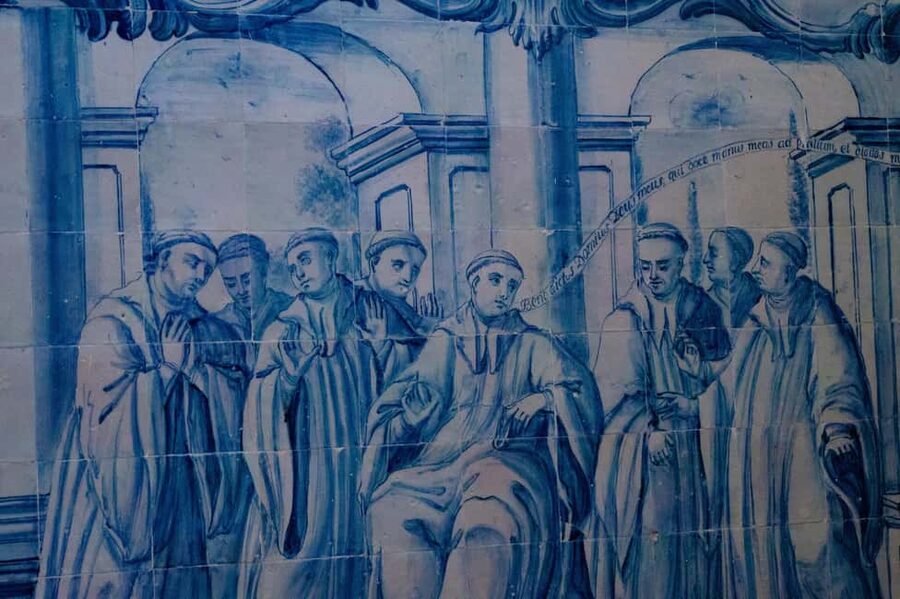
The most powerful moment here comes when you enter the monastery church and see how far its long, bare interior stretches ahead. This is Portugal’s earliest major Gothic masterpiece, built for the Cistercian Order with a clear purpose: remove distraction and turn the building toward prayer. The tombs of Pedro and Inês then add a very human story to all that solemn stone.
I like the way this 90-minute guided visit connects architecture with politics, farming, and religion instead of treating the monastery as a collection of pretty rooms. I also like that you see working spaces such as the kitchen, dormitory, and library, not just the grand church. The main consideration is the price, $47 per person, which is fair if you want context and questions answered, but less appealing if you prefer to explore quietly at your own pace.
Past bookings name guides Ana and Wilson. Ana is described as precise, friendly, and ready to answer questions beyond the planned narration. Wilson used humor to keep the history moving and gave especially clear explanations of the buildings and grounds. Check the accessibility details carefully, though: the activity is marked wheelchair accessible in one section but also says it is not suitable for wheelchair users or people with mobility impairments.
In This Review
- Key Points at a Glance
- Why Alcobaça Monastery Matters
- Entering the Grand Gothic Church
- The Tombs of Pedro and Inês
- The Royal Pantheon and Monastic Power
- Chapter Room, Dormitory, and Library
- The Cloister of Silence
- Kitchen, Refectory, and the Practical Side of Faith
- Is $47 a Fair Price for 90 Minutes?
- Timing, Meeting Point, and Practical Fit
- Who Should Book This Alcobaça Visit?
- Should You Book It?
- FAQ
- Where does the Alcobaça Monastery tour begin?
- Where does the tour finish?
- How long does the tour last?
- What languages are available?
- What does the guided tour include?
- Will I see the tombs of Pedro and Inês?
- Does the visit include the Royal Pantheon?
- Is the tour suitable for young children?
- Is the monastery visit wheelchair accessible?
- Can I cancel the booking?
Key Points at a Glance
- The church is an early Gothic landmark: Its unusual three-aisle design dates from the 12th and 13th centuries.
- Pedro and Inês bring the stonework to life: Their carved tombs tell one of Portugal’s most famous tragic love stories.
- Cistercian ideals shape the whole visit: Simplicity, discipline, prayer, and practical work explain the monastery’s plain design.
- The tour goes beyond the church: You can see the Royal Pantheon, cloister, Chapter Room, kitchen, Refectory, dormitory, and library.
- Two languages are offered: A live guide conducts the tour in English or Portuguese.
- The group can be private: This may suit you if you want to ask plenty of questions or set the pace around a particular interest.
Why Alcobaça Monastery Matters
The Monastery of Santa Maria de Alcobaça is not simply an old church with impressive stonework. It helped give the new Portuguese kingdom religious authority, political weight, and an organized agricultural base.
King Afonso Henriques donated the land to Bernard of Clairvaux in 1153. The gift fulfilled a promise linked to the Christian Reconquest, the long struggle to take territory from Muslim rule. By bringing the Cistercians to Alcobaça, the king gained more than prayers. He supported an order with a strong reputation for discipline, administration, and land management.
That link between crown and monastery is one of the best reasons to take a guided tour. Without explanation, you might notice a huge church and elegant cloisters. With context, you begin to see why a king would invest in such a place and how the monastery helped make royal rule seem legitimate.
The monks also changed the surrounding region through farming and water management. Their methods helped turn the area into one of Portugal’s most productive agricultural zones. The tour does not ask you to admire the monastery only as a work of art. It shows you how religious communities could also function as landlords, employers, engineers, and managers of a large estate.
More Fátima and monastery runs:
- From Lisbon: Fátima, Nazaré, Batalha, and Óbidos Guided Tour
★ 4.7 · 3,060 reviews - From Lisbon: Fatima Batalha Nazaré & Óbidos Small-Group Tour
★ 4.7 · 2,563 reviews - From Lisbon: Fatima, Batalha, Nazare, Obidos – Small Group
★ 4.8 · 2,031 reviews
Entering the Grand Gothic Church
Meet your guide in front of the church entrance. The visit begins with the façade, where centuries of building and decoration give you your first sense of the monastery’s scale.
Inside, the church is the great visual payoff. Its three-aisle layout is unusual for a building from the 12th and 13th centuries, and the design reflects Cistercian restraint. The interior is spacious and direct rather than crowded with decorative distractions.
I find that this is the point where a guide adds real value. A quick visit can leave you with the impression of height and silence. An explanation of Cistercian values helps you understand why the church looks as it does. The simplicity is not a lack of ambition. It is part of the order’s spiritual message.
You will hear about Bernard of Clairvaux, whose influence shaped the Cistercian movement. The order favored a disciplined life centered on prayer and work. That outlook appears in the building itself, where the structure and proportions carry much of the visual force.
Give yourself a moment to look upward and along the full length of the church. The scale is easier to appreciate from inside than from the square outside. Since the tour lasts only an hour and a half, you will benefit from staying close enough to hear the guide while taking in the details.
The Tombs of Pedro and Inês
The story of Pedro and Inês gives Alcobaça its most memorable human drama. Their tombs are intricately carved and are among the monastery’s most famous sights.
Pedro was a prince who loved Inês de Castro. Their relationship became entangled in royal politics, and Inês was killed. Pedro later became king and arranged for her recognition as his queen. The story has been retold for centuries because it combines love, power, murder, and royal ceremony in one stark tale.
Your guide can help you read the carvings instead of seeing the tombs as decorative stone boxes. Look closely at the workmanship and the way the tombs were designed to face each other. The arrangement carries a message about reunion after death and gives the story its lasting emotional force.
This is also a useful reminder that medieval monasteries were tied to the monarchy. The tombs are not only about romance. They show how royal memory was shaped and preserved in a sacred setting.
If you prefer architecture to legends, this section still earns its place. The carving provides a close look at medieval skill, and the contrast between the spare church and the detailed tombs is striking. If you enjoy stories, this may be the part you remember longest.
The Royal Pantheon and Monastic Power
The Royal Pantheon provides another look at the monastery’s connection to Portugal’s rulers. Kings and queens were laid to rest here, placing the monarchy inside one of the country’s most important religious institutions.
A guide can explain why burial in a monastery mattered. A royal tomb was a public statement about faith, family, and authority. The crown gained a sacred setting for remembrance, while the monastery gained a close and continuing relationship with the ruling dynasty.
This part of the tour may feel more formal than the Pedro and Inês story. That is useful. Alcobaça was not only a place of private prayer. It was also a stage for royal identity and national memory.
The visit works best when you connect the rooms rather than treating each stop as separate. The church expresses Cistercian spirituality. The royal tombs show political patronage. The monastery’s work rooms reveal how the community supported itself. Together, they give you a much fuller picture than the façade alone.
A handful more Fátima ideas to compare
- From Lisbon: Fátima, Nazaré, Batalha and Óbidos Guided Tour
★ 5.0 · 922 reviews - From Lisbon: Fátima, Nazaré & Sintra – 3 Cities Guided Tour
★ 4.8 · 329 reviews - Lisbon to Fatima/Batalha/Nazare & Obidos guided tour 8pax group
★ 5.0 · 213 reviews - From Lisbon: Fátima, Nazaré and Sintra Guided Tour
★ 4.7 · 155 reviews
Chapter Room, Dormitory, and Library
The Chapter Room shifts attention from kings to monks. This was a space connected with the daily running of the community, where discipline and shared responsibility mattered.
You will hear about the monks’ vow of poverty and the contrast between their personal lives and the scale of the estate they managed. That contrast is worth thinking about. Individual monks were expected to live simply, yet the community oversaw land, buildings, crops, water systems, and food supplies.
Access to the monks’ dormitory and library adds practical detail. These rooms help you picture the rhythm of monastic life beyond the formal services in the church. The dormitory speaks to communal living and strict routine. The library points to reading, learning, record keeping, and the intellectual side of the order.
The supplied information does not specify the condition or display details of every room, so you should think of these areas as part of the guided route rather than expect a large collection of exhibits. Their value comes from seeing the spaces where the monastery’s people lived and worked.
This is a good section for questions. Past bookings specifically praise the guides for handling questions outside the main narration. If you are curious about daily routines, the estate, or the building’s design, ask directly rather than waiting for every answer to appear in the formal talk.
The Cloister of Silence
The Cloister of Silence offers a change of mood. After the size of the church and the formal atmosphere of the royal areas, this enclosed space feels more inward and controlled.
The cloister was linked to meditation and movement through the monastery. Its quiet layout reflects the Cistercian preference for order and limited distraction. Here, the building’s proportions matter as much as any single carving.
You may find this stop less immediately dramatic than the church or tombs, but it helps explain how the monastery worked as a community. The monks did not spend their entire lives in one grand public space. They moved between prayer, study, meals, rest, and administration.
It is also one of the places where a local guide can point out small architectural details you might otherwise pass. Keep your pace measured here. A rushed walk through the cloister would miss the calm that gives it meaning.
Kitchen, Refectory, and the Practical Side of Faith
The medieval kitchen is one of the more unusual parts of the route. Its hydraulic engineering shows that the monks dealt with water and food supply in highly practical ways.
This is where the agricultural story becomes easier to understand. A productive estate required systems for bringing in supplies, preparing meals, and supporting a large community. Religious devotion did not remove the need for sound engineering. It made such organization possible.
The Refectory brings the monks together around food. You will hear about their austere diet and how physical nourishment fitted into a disciplined religious life. The room helps balance the grand spiritual themes with ordinary needs. Even a monastery built around prayer had to feed its residents every day.
I like these spaces because they stop the tour from becoming a parade of famous names. The kitchen and Refectory show how people actually lived. They also give you a clearer sense of the monastery as a functioning institution, not a silent monument emptied of its original purpose.
Food and drinks are not allowed inside, so plan to eat before or after the visit. The rule is straightforward and fits the nature of the site.
Is $47 a Fair Price for 90 Minutes?
At $47 per person, this is not the cheapest way to see Alcobaça. The value depends on how you like to visit major monuments.
If you already know the Cistercian order, Portuguese royal history, and Gothic architecture, you may find the price harder to justify. You can focus on the building itself and move at your own pace.
If the monastery is new to you, the guide fills in the links between its parts. You get the church, tombs, Royal Pantheon, Chapter Room, Cloister of Silence, kitchen, Refectory, dormitory, and library in a planned 90-minute visit. That makes the cost more reasonable, especially if you prefer asking questions rather than reading a long series of labels.
The private-group option may also change the value for you. A private visit can be useful if your group has a specific interest in medieval architecture, royal history, or monastic life. The available information does not state the private-group supplement, so check the final price before booking.
Past bookings repeatedly praise the guides’ explanations and their ability to keep the visit engaging. Ana is described as friendly and precise, while Wilson is remembered for combining clear historical information with humor. Guide quality can vary by date, so do not assume one particular guide will lead every departure.
Timing, Meeting Point, and Practical Fit
The tour lasts 1.5 hours and begins and ends at the Monastery of Alcobaça. Meet your guide in front of the church entrance, not at a separate transport point.
That simple arrangement matters if you are building a day around the monastery. You do not need to add tour transport time to the visit, and the return to the same place makes it easy to continue exploring afterward.
Starting times depend on availability. Check the schedule before you commit to a tight connection or another timed activity.
The tour is offered in English and Portuguese. A private group is available, and the activity allows cancellation up to 24 hours in advance for a full refund. You can also reserve now and pay later, which helps if your Portugal plans are still shifting.
Dress modestly because the monastery is a religious site. Comfortable clothing is sensible, but the key requirement is respectful coverage rather than a formal dress code.
There is conflicting information about mobility access. One part of the activity information says the tour is wheelchair accessible, while another says it is not suitable for wheelchair users or people with mobility impairments. If this affects your plans, contact the provider, Open Roads Portugal, before paying. Do not rely on the general accessibility label alone.
Children under six are not suitable for this activity. The subject matter and 90-minute format are likely to work best for older children and adults who enjoy history, architecture, or stories about Portugal’s monarchy.
Who Should Book This Alcobaça Visit?
I would choose this tour if you want the monastery explained as a living system of faith, royal power, farming, and daily work. The guided format is especially useful for first-time visitors who want more than photographs of the church and tombs.
It also suits anyone drawn to Gothic architecture. The unusual three-aisle church gives you a specific architectural feature to look for, while the cloister and work rooms show how the same institution functioned behind the grand façade.
The visit may not suit you if you need a slow, fully self-directed pace. Ninety minutes is enough for a strong overview, but not for studying every carving or wandering without a schedule. Mobility needs also require direct confirmation because the supplied access information conflicts.
Should You Book It?
Book this Alcobaça tour if you want the major sights tied together by a clear story. The strongest reasons are the early Gothic church, the tombs of Pedro and Inês, the royal burial spaces, and access to practical monastic rooms that many quick visits might overlook.
At $47, you are paying for interpretation rather than just entry. That makes the tour good value for curious visitors who ask questions and want to understand why Alcobaça mattered to Portugal. If you prefer silence, solitude, and your own pace, visit independently instead.
FAQ
Where does the Alcobaça Monastery tour begin?
The guide waits in front of the entrance to the monastery church.
Where does the tour finish?
The guided visit returns to the Monastery of Alcobaça.
How long does the tour last?
The tour lasts 1.5 hours.
What languages are available?
The live guide conducts the tour in English or Portuguese.
What does the guided tour include?
It includes a guided tour of the Monastery of Santa Maria de Alcobaça, with access to the monks’ dormitory, kitchen, and library.
Will I see the tombs of Pedro and Inês?
Yes. The tour includes the intricately carved tombs and explains their tragic love story.
Does the visit include the Royal Pantheon?
Yes. The route includes the Royal Pantheon, where Portuguese kings and queens are buried.
Is the tour suitable for young children?
Children under six are not suitable for this activity.
Is the monastery visit wheelchair accessible?
The information is conflicting. One section identifies the activity as wheelchair accessible, while another says it is not suitable for wheelchair users or people with mobility impairments. Confirm access with Open Roads Portugal before booking.
Can I cancel the booking?
Yes. You can cancel up to 24 hours in advance for a full refund. Reserve now and pay later is also available.
Fresh finds around Fátima
- Fatima Full day Private Tour★ 5.0 · 7 reviews
- Fatima Obidos and Nazare Private Personalized Experience★ 5.0 · 7 reviews
- Fátima Half Day Private Tour * Private Tours *★ 4.5 · 7 reviews
- Tomar Templar Private Tour★ 5.0 · 7 reviews
- Fátima / Batalha / Nazaré / Óbidos Private tour★ 4.5 · 7 reviews
- Óbidos Nazaré Alcobaça Batalha and Fátima Tour★ 5.0 · 7 reviews
- Fátima, Batalha, Nazaré and Óbidos day Tour★ 5.0 · 7 reviews
- Full-Day Private Tomar, Knights Templar and Castles Tour★ 4.5 · 7 reviews
Fátima Tours, compared.
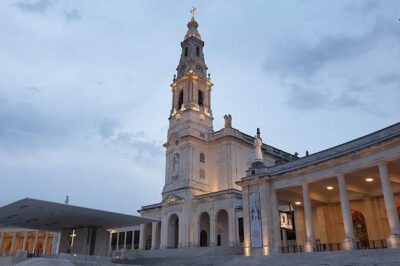
From Lisbon: Fátima, Nazaré, Batalha, and Óbidos Guided Tour
Read our review →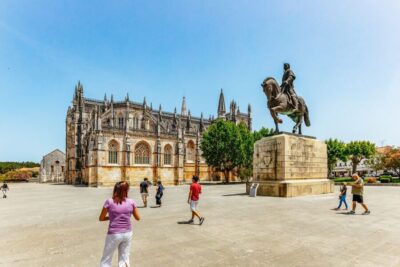
From Lisbon: Fatima Batalha Nazaré & Óbidos Small-Group Tour
Read our review →
From Lisbon: Fatima, Batalha, Nazare, Obidos – Small Group
Read our review →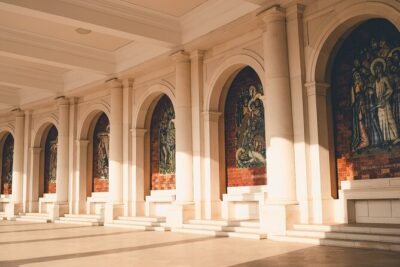
Fatima, Nazare, Obidos 8-People Small Group, Day-Tour from Lisbon
Read our review →From Lisbon: Fátima, Nazaré, Batalha and Óbidos Guided Tour
Read our review →
From Lisbon: Fátima, Batalha, Nazaré, and Obidos Tour by Van
Read our review →
From Lisbon: Fátima, Batalha, Nazaré & Óbidos Full-Day Tour
Read our review →
The Best of the West – Fátima, Nazaré, Óbidos & Batalha
Read our review →Browse the lists this tour appears in