
Reviewed · SAILING
Sight Sailing in Lisbon
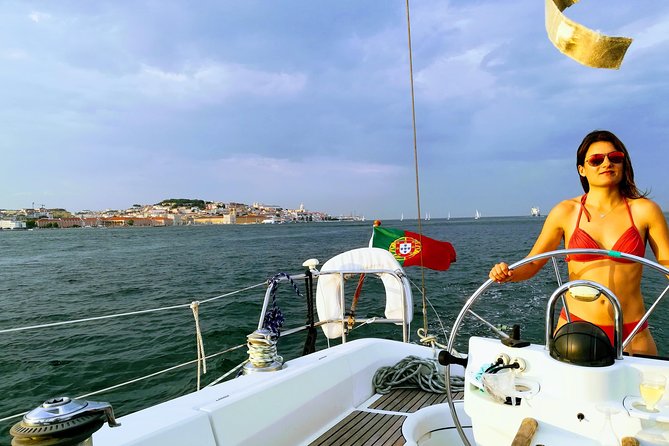
Lisbon makes most sense from the water. On this private 2.5-hour sailing trip, you glide along the Tagus with Belém Tower, the Discoveries Monument, Praça do Comércio, Alfama, and the 25 de Abril Bridge arranged along the shore like a history lesson with a very good view. A welcome drink comes as you board, and Portuguese wine, food, and local stories are part of the experience.
I like two things right away: the private setting, which lets your own group enjoy the boat without strangers, and the chance to see Lisbon’s major sights from a calm, fresh angle. Guides such as Luis, Bruno, Fernando, Luiz, and Tomas have been praised for their friendly service and storytelling. The main consideration is price: at $226.41 per person, this is a special-occasion outing rather than a cheap way to get around.
In This Review
- Key points to know before you sail
- Why Lisbon looks better from the Tagus
- Boarding at Avenida Brasília
- Belém Tower and the first view of Lisbon’s seafaring past
- Jerónimos Monastery, Empire Square, and the waterfront museums
- Praça do Comércio and the city rebuilt after disaster
- The 25 de Abril Bridge and Christ-King across the water
- Alfama, São Jorge Castle, and the oldest city quarters
- Cais do Sodré, Santa Apolónia, and the working waterfront
- Ajuda Palace and the wider riverfront view
- The VTS Tower, dolphins, and the modern scientific waterfront
- Food, wine, and the right time to go
- Is $226.41 per person fair value?
- Who should book Sight Sailing in Lisbon?
- Should you book it?
- FAQ
- How long is Sight Sailing in Lisbon?
- Where does the tour begin?
- Where does the experience finish?
- Is hotel pickup included?
- Is this a private tour?
- What is included in the price?
- Can I use a mobile ticket?
- Is the experience refundable if I cancel?
Key points to know before you sail
- The Tagus is the star: Lisbon’s waterfront monuments look more connected and impressive when viewed from the river.
- A private boat makes it personal: Only your group takes part, making this a good fit for couples, families, birthdays, honeymoons, and small celebrations.
- Wine and Portuguese food are included: You receive a welcome drink, bottled water, alcoholic drinks, wine tasting, and a chance to sample Portuguese gastronomy.
- Sunset can add extra magic: Several outings have been planned for sunset, when the light softens the city and bridge.
- Local hosts add context: Luis, Bruno, Fernando, Luiz, and Tomas are among the crew members praised for warm service and Lisbon stories.
- The price rewards atmosphere, not transport: You are paying for a private sailing experience, hospitality, food, and time on the river, not simply a boat transfer.
Why Lisbon looks better from the Tagus
Lisbon is built on hills, but its most famous monuments sit beside a broad estuary. From street level, you often see one church, square, or viewpoint at a time. From the deck, the city opens up. The old quarters climb the hills behind the waterfront, while the grand monuments of Belém stretch along the riverbank.
That wider view gives you a useful sense of Lisbon’s shape. You can connect the old port, the royal waterfront, the Age of Discoveries monuments, the modern museums, and the southern bank of Almada in a single outing.
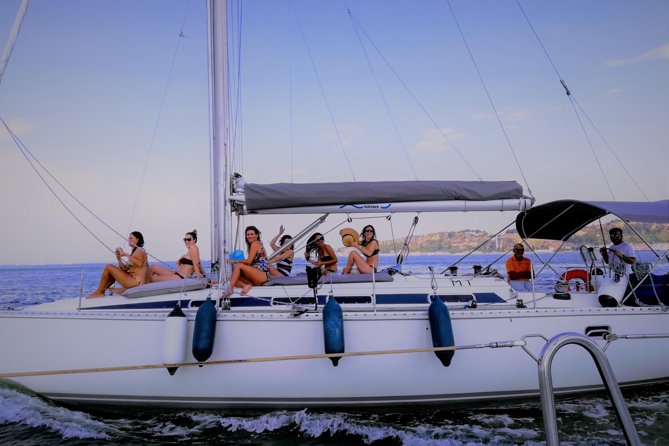
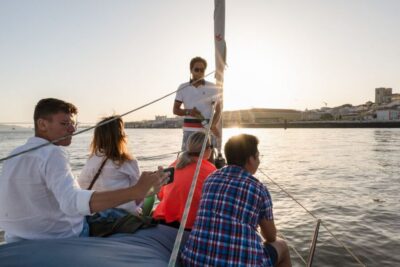
The boat is not presented as a fast sightseeing vessel. This is a private sailing trip, so the pleasure comes from the pace. You can settle into a comfortable spot, sip your drink, listen to stories, and take photographs without rushing from one viewing platform to the next.
The crew is a major part of the experience. Luis is praised for his Lisbon history and storytelling, while Bruno, Fernando, Luiz, and Tomas are also associated with attentive hosting. The precise guide depends on the departure, but you can expect a local crew rather than an impersonal recorded commentary.
More sailings off Lisbon:
- Lisbon: Sunset Boat Party Cruise with DJ and Open Bar
★ 4.5 · 10,378 reviews - Lisbon: Daytime/Sunset/Night City Sailboat Tour with Drink
★ 4.9 · 3,114 reviews - Lisbon: Sunset Boat Tour with Music and Drinks
★ 4.6 · 2,973 reviews
Boarding at Avenida Brasília
The meeting point is Av. Brasília 5, 1350-353 Lisboa, near public transportation. You return to the same place at the end, and hotel pickup and drop-off are not included.
Plan to arrive with enough time to find the quay. A mobile ticket is accepted, and confirmation is provided when you book. The straightforward meeting arrangement is useful, but you will need to organize your own way to the waterfront.
Once aboard, you receive a welcome drink. Bottled water, alcoholic beverages, wine tasting, and Portuguese food are included, so this feels closer to a hosted outing than a bare sightseeing cruise.
Special requests may be worth raising ahead of time. A birthday party arranged particular drinks and menu choices, and an anniversary outing included cocktails and local canapés requested in advance. The supplied details do not promise every dietary request or custom menu, so ask before booking if food is central to your plans.
Belém Tower and the first view of Lisbon’s seafaring past
Belém Tower is one of Lisbon’s most recognizable buildings. Built at the narrowest point of the Tagus estuary, it was designed to help defend the city. When first constructed, water surrounded the tower. A pedestrian bridge now links it to land, helping preserve the sense that it belongs to the river.
From a boat, you see the tower in the setting that explains it. Its defensive purpose becomes clearer when you notice the water around it and the broad approach to Lisbon. The tower is a UNESCO World Heritage Site, recognized since 1983, and it is one of the city’s most expressive monuments.
The nearby Discoveries Monument adds a different note. At 50 meters high, it has the form of a ship with two ramps rising toward a prow. Henry the Navigator leads the sculpted group, joined by figures including Vasco da Gama, Luís de Camões, Fernão de Magalhães, and Pedro Álvares Cabral.
The original monument was built for the 1940 Portuguese World Exhibition from materials that would not last. It was dismantled in 1943, then replaced by the structure seen today. That detail gives the monument more context than its grand silhouette alone.
Jerónimos Monastery, Empire Square, and the waterfront museums
Jerónimos Monastery is a major example of 16th-century Portuguese architecture. It sits in Belém beside Empire Square, in the same riverfront setting linked with Portugal’s maritime expeditions. From the water, the monastery becomes part of a broad historic zone rather than a single building you view from a crowded pavement.
The shore then shifts between old industry and new culture. Central Tejo was a thermoelectric plant that supplied electricity to the Lisbon region from 1909 until 1972. It later became the Electricity Museum, opening to the public in 1990 and reopening after restoration in 2006.
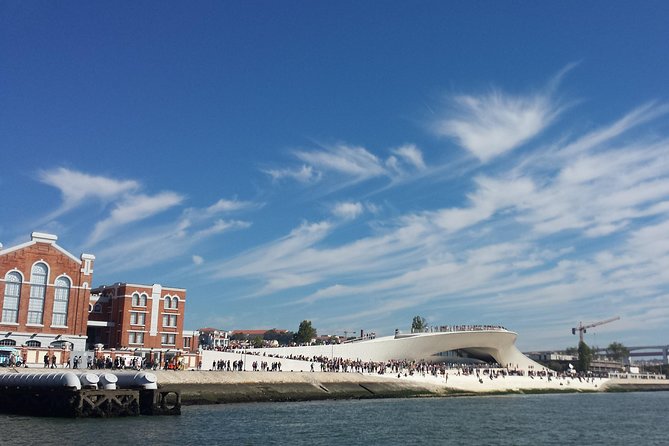
Nearby, the Museum of Art, Architecture and Technology, known as MAAT, offers a sharp contrast. Opened in 2016, it was designed by British architect Amanda Levete and is known for its forward-looking design. Its exhibitions cover contemporary art, architecture, and ideas.
I like this part of the cruise because it shows Lisbon as more than an old European capital. The riverfront includes monasteries, exhibition spaces, former power stations, and modern design. The drawback is that a passing boat cannot replace time inside these museums. Treat the sailing trip as a preview, then return on foot if one of them catches your eye.
A handful more Lisbon ideas to compare
- Lisbon: Sunset Catamaran Boat Tour with Music and Drinks
★ 4.7 · 2,834 reviews - 2 Hour Lisbon Sunset and Wine Sailing Tour
★ 5.0 · 2,680 reviews - Lisbon: Sailing Tour on the Tagus River
★ 4.8 · 2,632 reviews - Lisbon: Champagne Sailing Tours
★ 4.9 · 1,366 reviews
Praça do Comércio and the city rebuilt after disaster
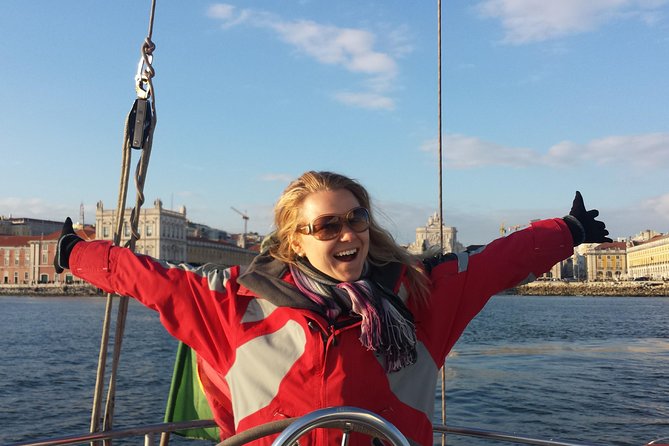
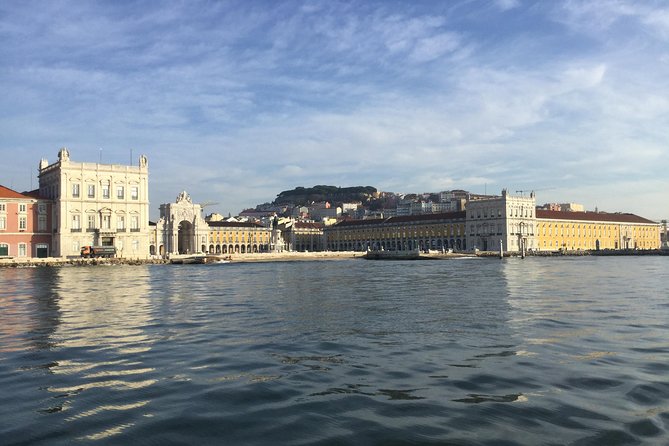
Praça do Comércio, also called Terreiro do Paço, is best understood from the river. Its wide open space faces the Tagus and forms a grand gateway between the water and central Lisbon.
The square took shape after the earthquake of November 1, 1755. The destruction began around 9:30 in the morning, collapsing buildings across downtown and the Chiado hillside. The royal palace, opera house, religious buildings, hospitals, schools, and palaces were among the structures destroyed.
The rebuilt square reflects a new vision for Lisbon: orderly, spacious, and open to the river. From the boat, you can appreciate its scale in a way that is harder from inside the square itself. Today it hosts major events, including a large New Year’s Eve fireworks display.
The South and Southeast River Station sits here too. Opened in 1932, it connects Commerce Square with the southern bank of the Tagus and has undergone several renovations, the latest completed in May 2021. It remains part of Lisbon’s practical river life, not just its sightseeing scene.
The 25 de Abril Bridge and Christ-King across the water
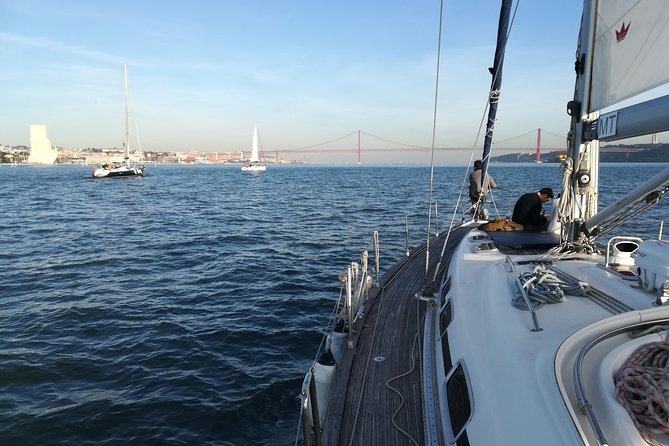
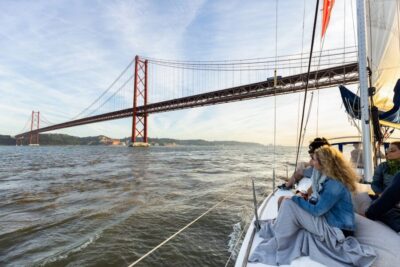
The 25 de Abril Bridge is often compared with San Francisco’s Golden Gate Bridge because of its suspension design and appearance. The same North American company was given the construction work, after more than 50 years of plans and proposals.
It was originally called Ponte Salazar. The bridge was built at lower cost than expected and in record time, and it now links Lisbon with Almada. From the river, its long span gives you one of the clearest photographs of the city and southern bank together.
Across the water, Christ-King faces Lisbon with open arms. The monument includes a 75-meter-high portico, topped by a 28-meter statue. The pedestal and portico reach 82 meters in total.
The monument was built after a vow made by Portugal’s bishops in 1940. They asked for Portugal to be spared participation in the Second World War, and the country remained neutral under António Oliveira Salazar.
The bridge and statue work well together as a pair. One represents transport and modern engineering. The other carries religious and political meaning. A boat gives you time to take in both without climbing a hill or crossing the bridge.
Alfama, São Jorge Castle, and the oldest city quarters
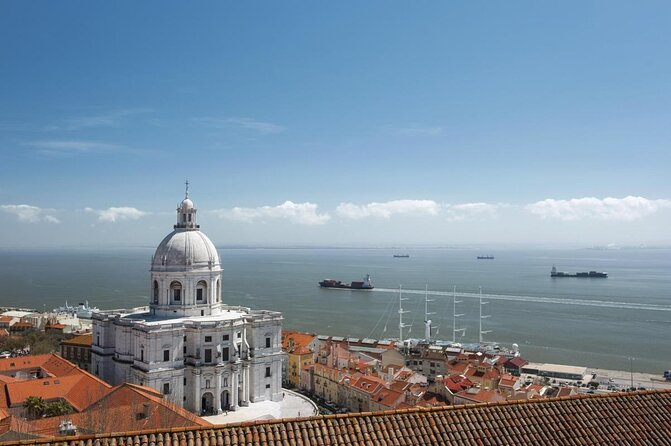
Alfama climbs the hill beside São Jorge Castle and reaches down toward the Tagus. Its narrow cobbled streets, colorful houses, and river views are easier to understand from below, where you can see how tightly the neighborhood rises above the waterfront.
Alfama is also associated with fado, Portugal’s traditional music. The sailing trip does not include a fado performance, but the view gives you a useful reason to explore the district later for a meal and live music.
São Jorge Castle occupies a high position in Lisbon’s historic center. Its foundations date to the 10th and 11th centuries, when Lisbon was an important Muslim port. In 1147, Portugal’s first king, Afonso Henriques, conquered the city and castle from the Moors.
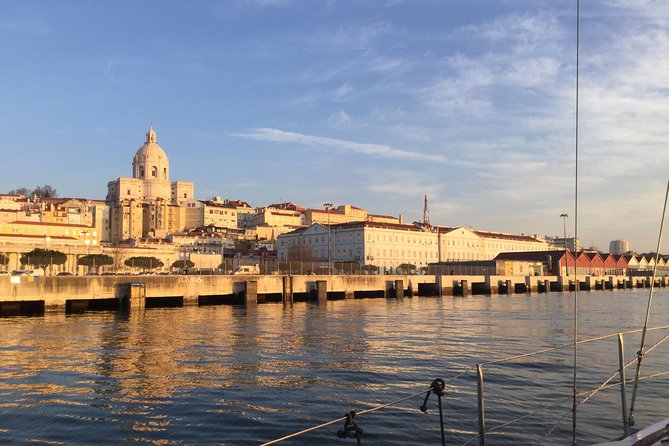
The National Pantheon, also known as the Church of Santa Engrácia, is another Alfama landmark visible from the riverfront. It is a National Monument and houses the remains of notable Portuguese figures. Its large dome and pale stone make it easy to identify from the boat.
You will not explore these neighborhoods on foot during the cruise. That is both the strength and weakness of the river view. You get a clean sense of the city’s form, but you miss the lanes, tiled façades, shops, and fado rooms that make Alfama worth a separate visit.
Cais do Sodré, Santa Apolónia, and the working waterfront
Cais do Sodré is one of Lisbon’s best-known riverfront areas. In the 17th century, it was known as the Port of Vessels, with ships leaving for Portugal’s colonies. By the 19th century, bars and entertainment venues drew sailors and adventurers.
Today, its location beside the Tagus makes it an important transport and leisure point. Seeing it from the water helps you understand how closely Lisbon’s daily life remains tied to the river.
Santa Apolónia Station is another useful landmark. Opened in 1865 in a former convent setting, it was planned as both a railway and river station. It is close to the cruise port and has connected rail, river, and city transport for generations.
Since 2007, it has also served as the final station on one of Lisbon’s metro lines. Part of the building now contains The Editory Riverside Santa Apolónia, a five-star hotel with 126 rooms themed around Portuguese railway heritage.
These places may not be the headline sights, but they add practical context. Lisbon’s waterfront is not just a row of monuments. It is also a transport corridor, port, station, and meeting place.
Ajuda Palace and the wider riverfront view
Ajuda Palace was built in the 19th century as a residence for Portugal’s royal family. It now operates as a national museum, with exhibitions about the royal family, palace architecture, and decoration.
Its position gives it views toward the Tagus and Lisbon. From the water, you may not see the same interiors or detail you would get inside, but the palace helps fill out the city’s royal story.
The National Ancient Art Museum adds another cultural reference along the waterfront. Founded in 1884, it occupies the former Palácio dos Condes de Alvor. Its collection covers more than 500 years, including sculpture, painting, goldwork, and decorative art from Europe, Africa, and the Orient.
The museum itself is part of the appeal. The former palace has an ornate façade and formal design that reflect its earlier role. Again, the boat gives you orientation rather than a full museum visit. If you enjoy art, note its location and plan a separate stop.
Lisbon’s Folk Art Museum has an unusual beginning. It was first built as a pavilion for the Popular Life Section of the 1940 Portuguese World Exhibition. The building was later adapted, and the museum opened in 1948. It now works alongside the Ethnology Museum and presents a different side of Portuguese culture through folk art and everyday traditions.
The VTS Tower, dolphins, and the modern scientific waterfront
The Maritime Traffic Control Centre, also called the VTS Tower, monitors navigation in the Lisbon port area and the Tagus estuary. Controllers use cameras, radar, sensors, and other equipment to track maritime movement and manage the wharves.
The centre covers an area extending up to 16.5 nautical miles around the VTS, with the Vasco da Gama Bridge as the upstream limit. It also houses a dolphin observatory. Dolphin sightings are never guaranteed, but one outing had the good fortune to see several just before sunset.
The Champalimaud Foundation brings another modern note to the shore. Created through the will of António Champalimaud, it focuses on advanced biomedical research and interdisciplinary clinical care. Its researchers have published more than 1,200 scientific articles, and the foundation awards the Champalimaud Prize for Medical Research.
These sights are less familiar than Belém Tower, but they make the cruise more than a checklist of monuments. You see port control, marine life, medical research, museums, and transport all sharing one waterfront.
Food, wine, and the right time to go
Food and drink are included, with wine tasting, Portuguese gastronomy, bottled water, and alcoholic beverages listed as part of the outing. The exact menu is not specified, so you should not book this expecting a particular dish. It is better understood as a light hosted food experience paired with wine and views.
The crew has also served cheese, local canapés, cocktails, and other drinks for special occasions. If you are marking an anniversary, birthday, honeymoon, or group celebration, ask in advance about arrangements. Some special requests have been accommodated, but they should not be assumed to be automatic.
Sunset is a strong choice if the schedule allows it. The bridge, hills, and monuments take on softer color, and the timing can turn a simple sightseeing trip into a memorable evening. Daytime sailing is more useful for clear photographs and easier identification of the buildings.
The river can be bright and exposed, so bring sun protection and a light layer. The supplied details do not specify a boat layout, shade, or motion conditions, so ask the operator if those points matter to you.
Is $226.41 per person fair value?
At $226.41 per person, the cost is high compared with a standard public sightseeing cruise. The comparison is not quite fair, though. This is a private activity with a local guide, crew service, drinks, food, and a two-and-a-half-hour route covering much of Lisbon’s riverfront.
The value improves when you share the boat with a group. For a honeymoon or anniversary, you are paying for privacy and atmosphere. For a birthday or small company gathering, the private format avoids the awkwardness of mixing with a large public crowd.
It is less appealing if you only want a quick look at Belém Tower or the bridge. You can find cheaper ways to see those landmarks. I would choose this experience when the sailing itself matters as much as the sightseeing.
The cancellation terms are strict: the experience is non-refundable and cannot be changed for any reason. Check your dates carefully before paying.
Who should book Sight Sailing in Lisbon?
I would recommend it most for couples, families, and groups who want time together rather than a packed schedule. Children have taken part in group outings, and the private format can work well for mixed ages because nobody has to keep up with a walking tour.
It also suits anyone celebrating a milestone. The crew has handled honeymoons, wedding anniversaries, birthdays, bachelor and bachelorette parties, team events, and conference celebrations.
I would be more cautious if you are mainly interested in entering monuments. The boat passes the city’s major sights, but admission to Belém Tower, Jerónimos Monastery, São Jorge Castle, museums, and the National Pantheon is not listed. Pair the sailing with a separate land day.
Should you book it?
Book this private Tagus sailing if you want Lisbon at an easy pace, with local hosting, Portuguese wine, food, and excellent river views. Sunset is especially appealing, and the guides named in the feedback, including Luis, Bruno, Fernando, Luiz, and Tomas, suggest a strong human side to the experience.
Skip it if $226.41 feels too steep for a sightseeing cruise or if your priority is seeing interiors rather than gaining a broad view. For a special occasion, though, the privacy, welcome drink, local stories, and changing waterfront make this a well-targeted splurge.
FAQ
How long is Sight Sailing in Lisbon?
The sailing experience lasts approximately 2 hours and 30 minutes.
Where does the tour begin?
It begins at Av. Brasília 5, 1350-353 Lisboa, Portugal.
Where does the experience finish?
The activity ends back at the same meeting point.
Is hotel pickup included?
No. Hotel pickup and drop-off are not included.
Is this a private tour?
Yes. Only your group participates in the private activity.
What is included in the price?
The price includes all fees and taxes, a private tour, a local guide, wine tasting, Portuguese gastronomy, bottled water, and alcoholic beverages.
Can I use a mobile ticket?
Yes. A mobile ticket is available.
Is the experience refundable if I cancel?
No. The experience is non-refundable and cannot be changed for any reason.
Fresh finds around Lisbon
- Lisbon: Tuk Tuk City Tour★ 3.6 · 7 reviews
- Fatima Full day Private Tour★ 5.0 · 7 reviews
- Lisbon: Highlights and Hidden Gems Tour★ 5.0 · 7 reviews
- Discover Sintra Beauty with a Guided Journey from Lisbon★ 5.0 · 7 reviews
- Private Tour to Evora and Monsaraz from Lisbon★ 5.0 · 7 reviews
- Private Half-Day Tour to Sintra★ 3.4 · 7 reviews
- Lisbon: Sunset and Wine Catamaran Tour★ 5.0 · 7 reviews
- Nazaré: Beaches of Nazaré Guided E-Bike Tour★ 4.9 · 7 reviews
Sailing, compared.
Lisbon: Daytime/Sunset/Night City Sailboat Tour with Drink
Read our review →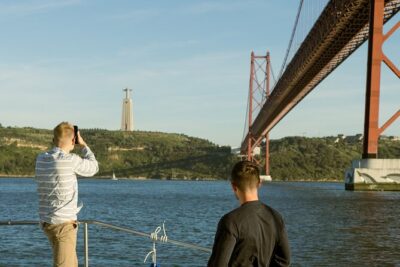
Lisbon: Sunset Catamaran Boat Tour with Music and Drinks
Read our review →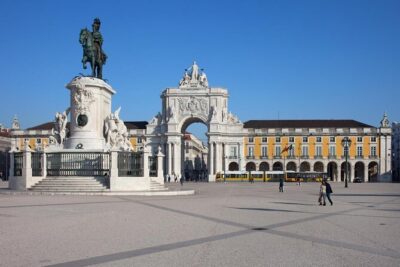

Lisbon Sunset Sailing Tour on Luxury Sailing Yacht with 2 Drinks
Read our review →
Lisbon: Daylight or Sunset on a Vintage Sailboat
Read our review →Browse the lists this tour appears in