
Reviewed · PRIVATE TOURS IN FáTIMA
Batalha Monastery: Private Tour
Batalha Monastery tells a national story in stone. Built after Portugal’s victory over Castile at Aljubarrota in 1386, it became a symbol of independence and one of the country’s finest Gothic buildings. I like the private format, which lets you ask questions, and the focus on the royal tombs, including those of João I, Filipa de Lencastre, João II, and Henry the Navigator.
I also like that the tour connects the building to Portugal’s later overseas expansion instead of treating it as a collection of pretty arches. Guides João and JP are praised for clear English, useful answers, and good local tips. The catch is simple: the monastery admission ticket costs extra, so add that to the $53 price before you compare the tour with a self-guided visit.
In This Review
- Key points to know before booking
- Why Batalha Monastery matters
- The two-hour private format
- Entering the church and Royal Pantheon
- Gothic stonework and the Manueline turn
- The Dominican monastery and six centuries of worship
- What the guide adds
- Is $53 a fair price?
- Who will enjoy this Batalha visit most?
- Practical advice for your visit
- Should you book the private Batalha tour?
- FAQ
- Where does the Batalha Monastery private tour start?
- How long does the guided visit last?
- Is the monastery entrance ticket included?
- What languages does the guide speak?
- Is this a private group experience?
- Can I cancel for a full refund?
Key points to know before booking
- A private two-hour visit gives you direct time with an English or Portuguese-speaking guide.
- The Royal Pantheon holds the tombs of João I, Queen Filipa de Lencastre, João II, Henry the Navigator, and other royal family members.
- The Battle of Aljubarrota explains why this monastery was built and why it matters to Portuguese identity.
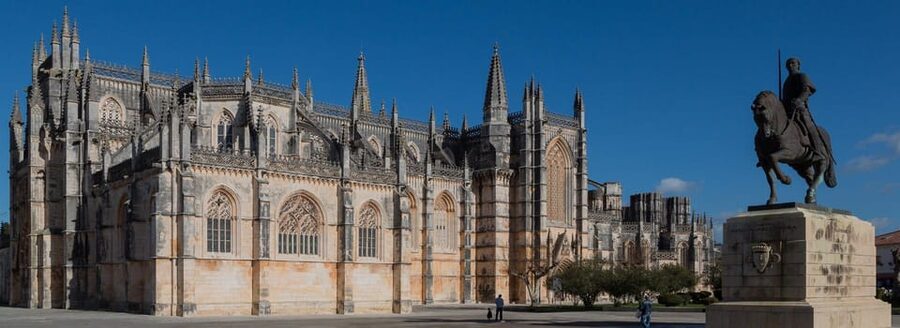
- Gothic and Manueline details make the church and cloisters rewarding for anyone interested in architecture.
- Stained glass adds atmosphere, with the monastery’s cathedral holding the first stained-glass windows of its kind in Portugal.
- Admission is not included, so the $53 tour fee is for the guide and insurance rather than the monument ticket.
Why Batalha Monastery matters
Batalha is not just a grand church beside a small Portuguese town. It is a stone record of the moment Portugal defended its independence.
In 1386, Portuguese forces defeated the Kingdom of Castile at the Battle of Aljubarrota. The victory secured the position of Portugal’s King João I and helped prevent the country from being absorbed by its larger neighbor. João ordered the monastery built to honor the Virgin Mary and commemorate the result.
That background changes how you look at the building. The soaring Gothic design is not decoration for its own sake. It is a royal thank-you, a political statement, and a religious foundation rolled into one.
I find this kind of setting far more rewarding with a guide. Without context, you can admire stone tracery, pointed arches, and carved details, then leave with only a vague sense that the place is old and important. A good guide gives the building a reason to exist.
The monastery was entrusted to Dominican monks, who lived and worshiped here for more than 600 years. Their presence shaped the site’s religious purpose and helps explain why the church, chapels, and cloisters feel like parts of one carefully planned institution rather than separate sights.
More Private Tours in Fátima
- Divine Fátima Full Day Private Tour from Lisbon
★ 5.0 · 308 reviews - Fátima Batalha Nazaré and Óbidos Private Tour
★ 5.0 · 254 reviews - Fatima, Valinhos, Nazaré, Óbidos on Private tour
★ 5.0 · 158 reviews
The two-hour private format
The tour begins at Batalha Monastery and remains focused on the monument for two hours. There is no complicated route between several towns, no bus transfer, and no need to divide your attention between a guide and a large group.
That simplicity is one of the strongest points here. A private guide can adjust the pace to your questions and interests. If you care about royal burial customs, you can spend more time in the pantheon. If architecture is your main interest, you can ask about the change from late Gothic forms to Manueline decoration.
The guide language is English or Portuguese. João and JP are specifically associated with the experience, and both received praise for explaining the site clearly and answering questions well. JP’s English was described as excellent, while João was noted for combining historical insight with suggestions for other towns to visit.
You should still keep your expectations sensible. Two hours is enough for a focused guided visit, but it is not an exhaustive study of every carving and chapel. The value comes from having someone point out what matters most and connect the visible details to Portugal’s past.
A private tour also works well for families or friends who do not want to move at the pace of a large group. You will not be paying for transportation or a full-day excursion. You are paying for concentrated attention at one major monument.
Entering the church and Royal Pantheon
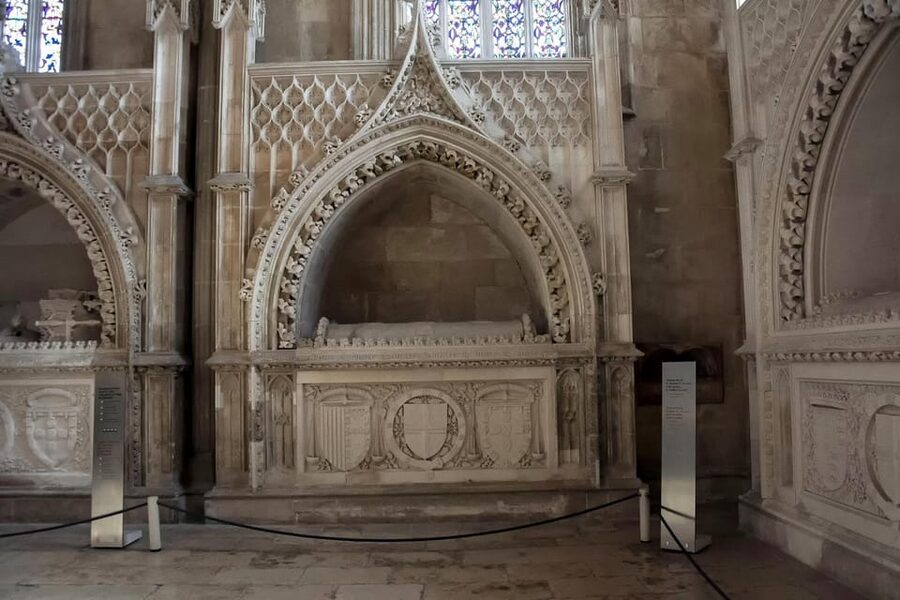
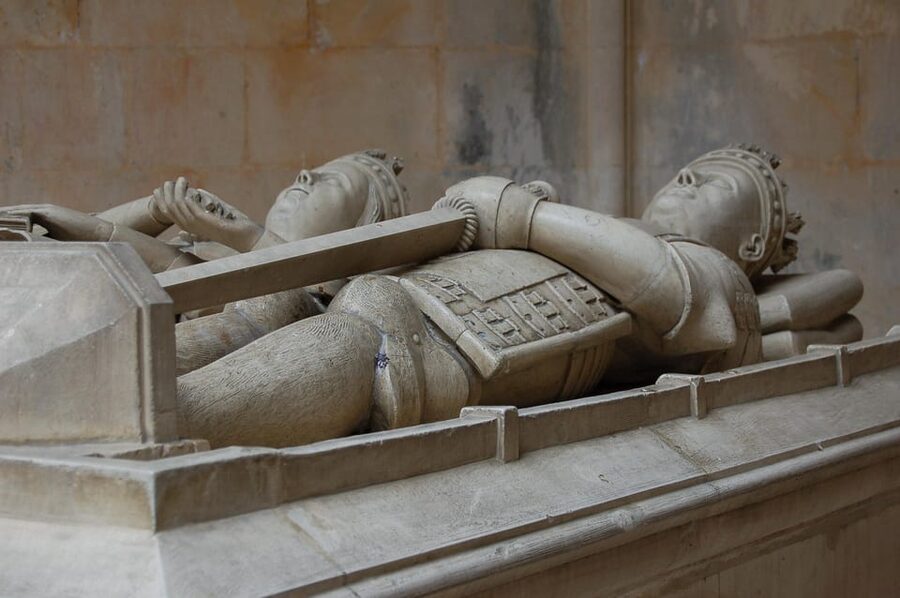
The Royal Pantheon is the emotional center of the visit. Here you see the tomb of King João I and Queen Filipa de Lencastre, a British-born queen whose marriage helped tie Portugal to England.
The tombs are more than names on a church floor. They bring the political story into human scale. João I was the king linked to the victory at Aljubarrota, while Filipa helped establish the royal family that shaped Portugal’s next era.
The pantheon also contains the remains of other members of the royal family, including João II and Henry the Navigator. Those two names connect Batalha to the Portuguese voyages that later carried the country across the Atlantic, around Africa, and into the Indian Ocean.
It is worth pausing over that connection. The monastery was built after a defensive victory, but its royal tombs also point toward an age of exploration and overseas power. The same dynasty that secured Portugal’s independence helped prepare the country for its role as the first global empire.
A guide can make those links clear without turning the visit into a list of dates. Ask about the people buried here and how their choices shaped Portugal. The private setting gives you room to stop and follow the story instead of simply moving along with a crowd.
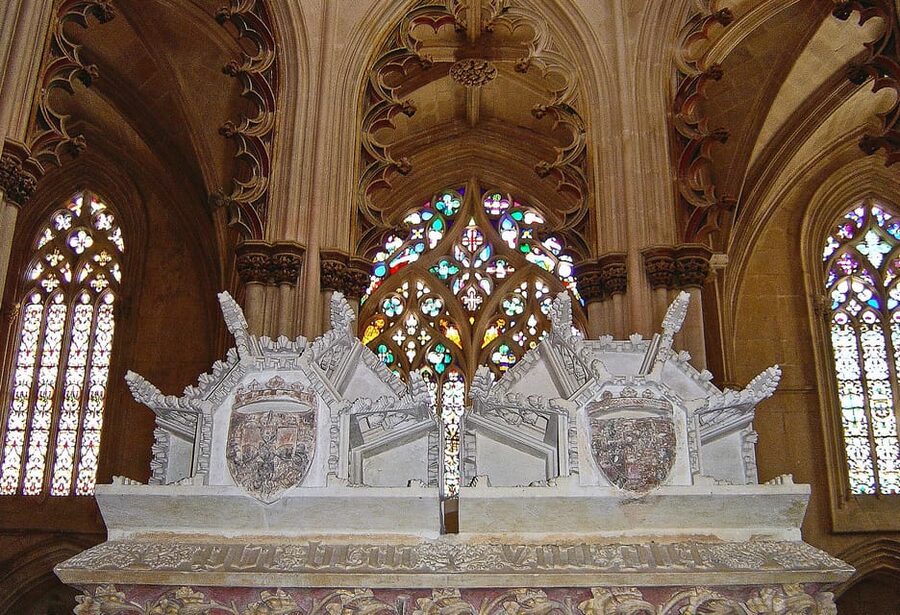
The church itself is a major part of the appeal. The late Portuguese Gothic style gives it height, order, and a sense of upward movement. The colored light from the stained glass adds another layer, especially when the windows cast color across the interior.
Batalha’s cathedral contains the first stained-glass windows of its kind in Portugal. That detail is easy to miss if you are focused only on the large stone structure. I would give the windows a quiet moment, then look back at the surrounding arches and masonry to see how the light changes your sense of the space.
Gothic stonework and the Manueline turn
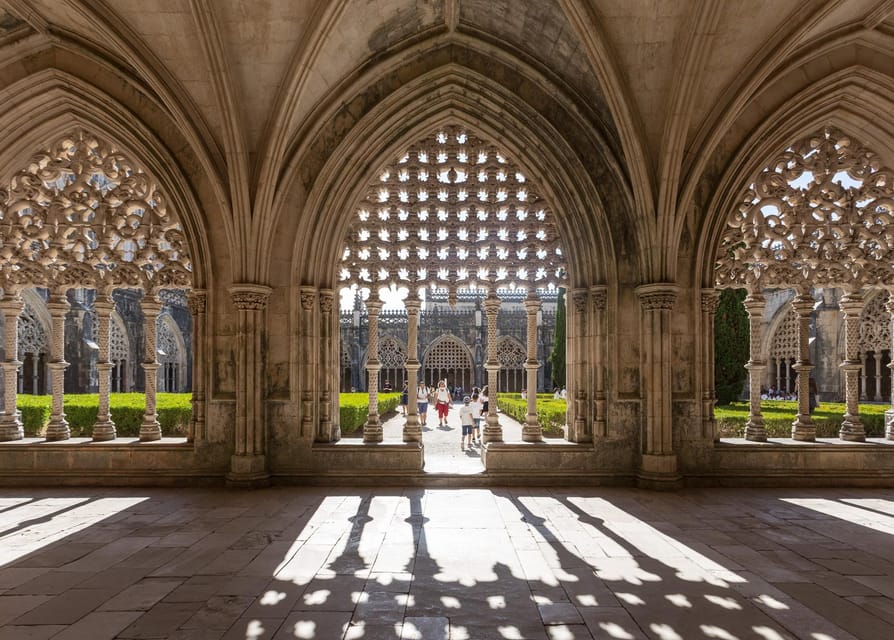
Batalha Monastery is often described through two architectural labels: late Portuguese Gothic and Manueline. You do not need formal training in architecture to notice the difference.
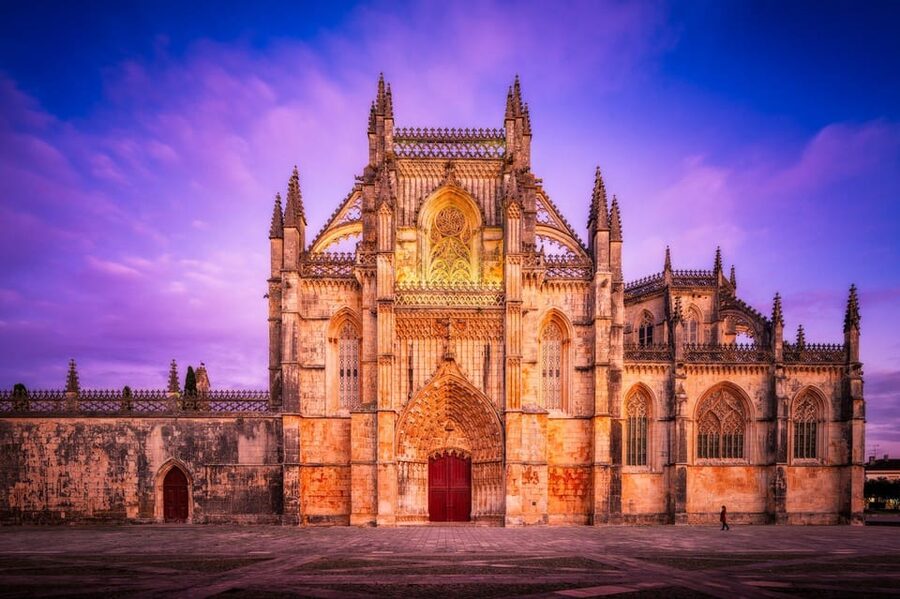
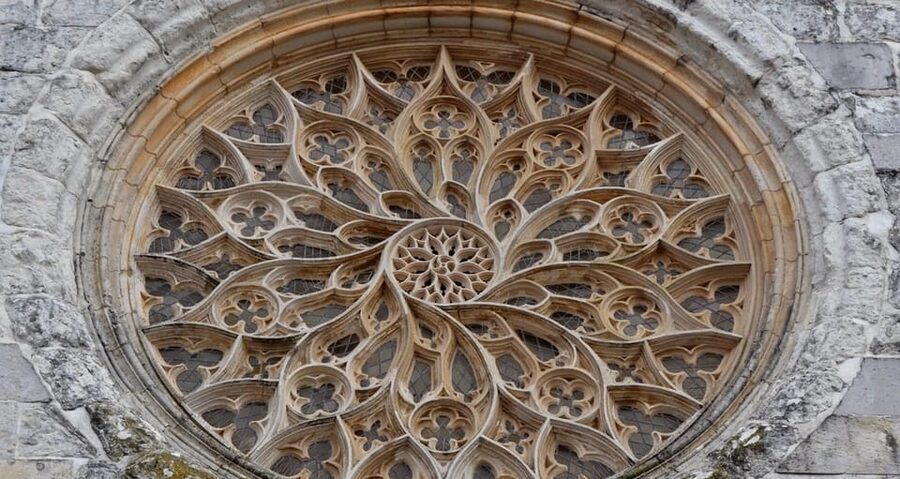
The Gothic work gives the monastery its main structure, with pointed arches, strong vertical lines, and an ordered sense of height. The Manueline style, associated with Portugal’s later period of overseas expansion, adds more elaborate decorative detail.
A guide is useful here because the shift can be hard to spot without help. You might find it in carved surfaces, ornamental details, and the way decoration becomes more expressive. The tour gives you a chance to ask why those changes appeared and what they say about Portugal at the time.
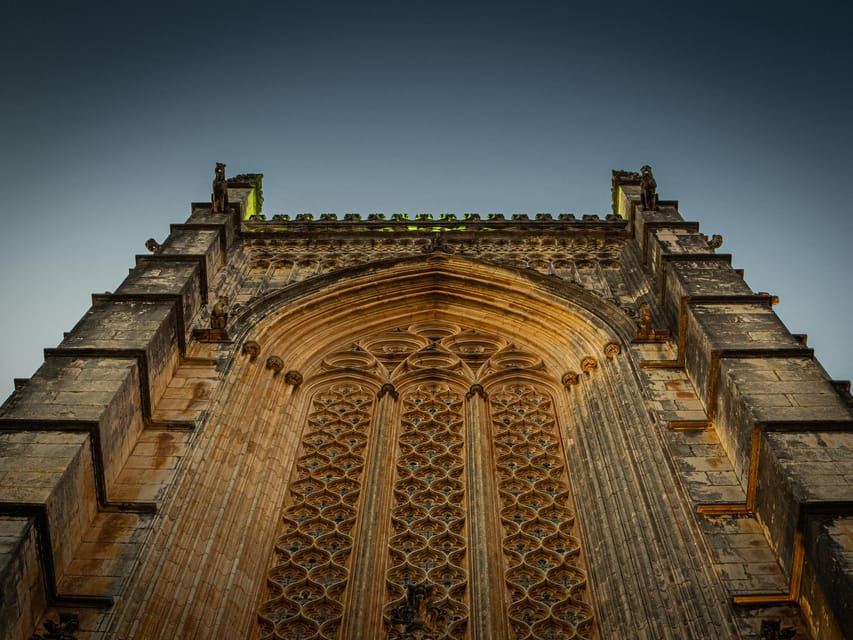
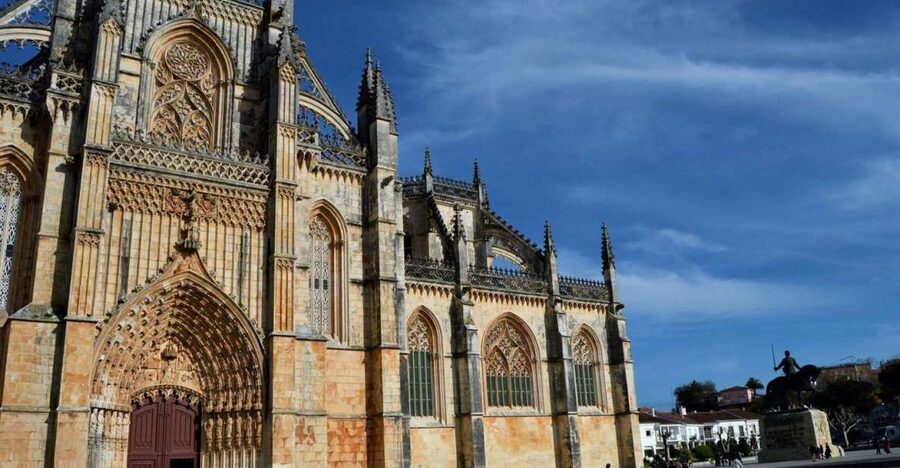
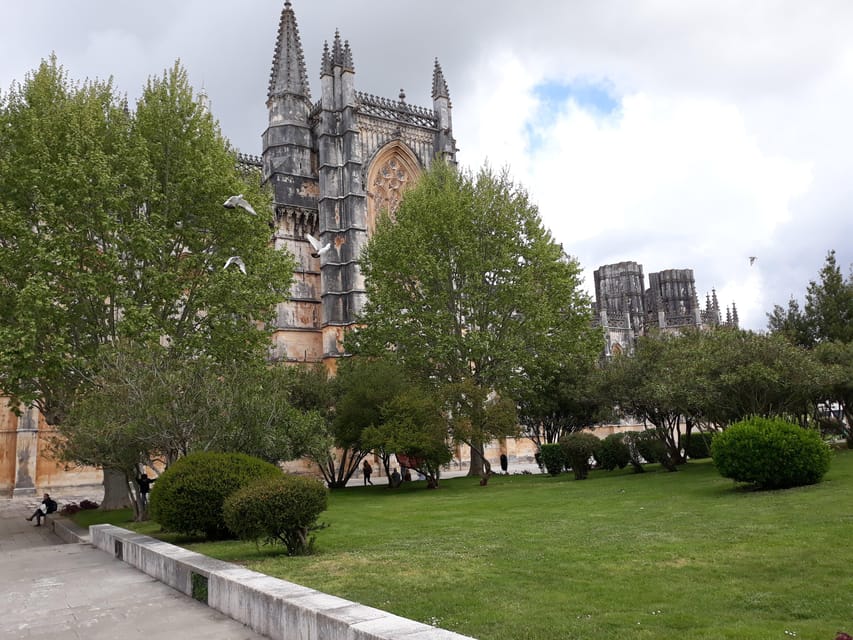
The building is best appreciated slowly. Look up, then look close. From a distance, the monastery reads as one grand Gothic composition. Near the stone, you can pick out the work of individual carvers and the fine treatment of doorways, arches, and religious details.
This is also where a private visit has a practical advantage. You can ask the guide to explain a particular feature instead of worrying that you are holding up a group. If the architecture feels too technical, your guide can bring the explanation back to the larger story.
I would not book this tour only for a quick photo stop. The outside is impressive, but the meaning of Batalha comes from the relationship between the church, royal tombs, Dominican foundation, stained glass, and national history. The guided format is designed for that fuller view.
More Fátima and monastery runs:
- From Lisbon: Fátima, Nazaré, Batalha, and Óbidos Guided Tour
★ 4.7 · 3,060 reviews - From Lisbon: Fatima Batalha Nazaré & Óbidos Small-Group Tour
★ 4.7 · 2,563 reviews - From Lisbon: Fatima, Batalha, Nazare, Obidos – Small Group
★ 4.8 · 2,031 reviews - Fatima, Nazare, Obidos 8-People Small Group, Day-Tour from Lisbon
★ 5.0 · 995 reviews
The Dominican monastery and six centuries of worship
The Dominican monks who ran Batalha lived and worshiped here for more than 600 years. That long period gives the complex a strong sense of continuity.
The monastery was not built as a monument alone. It was an active religious house, with worship, community life, and daily routines taking place alongside royal memorials. The church’s design served both public ceremony and the spiritual life of the order.
I like this part of the story because it keeps the focus from drifting too far toward kings and battles. The royal pantheon is striking, but the monastery also belonged to generations of monks who used the building year after year.
The stained glass becomes especially meaningful in this setting. Colored light was not simply a visual effect for modern sightseers. It helped shape the atmosphere of worship and gave the church a changing, symbolic interior.
Your guide can help you read the monastery as a working religious center, not just an architectural showpiece. That is one of the reasons I would choose a guided visit over wandering through silently with only a brochure.
The experience remains manageable because the visit lasts two hours. You get enough time to understand the site without committing half a day to one monument. At the same time, you should be ready to walk through a historic religious building and spend much of the visit looking up, stopping, and listening.
What the guide adds
The guide is the main reason to choose this activity instead of visiting on your own. The monastery ticket is not part of the package, so the tour needs to provide more than directions from one room to another.
The strongest guide qualities are clear explanation, personal attention, and the ability to answer questions. João and JP are the names connected with the tour, and the feedback about both points to strong command of the subject and a friendly manner.
JP is noted for excellent English and fascinating explanations. João is described as insightful and helpful beyond the formal visit, including suggestions for other towns worth seeing. That extra local advice can be useful if Batalha is one stop in a wider Portugal itinerary.
A private guide also gives you control over the conversation. You can ask about the Battle of Aljubarrota, the royal family, the English connection through Filipa de Lencastre, or the Portuguese Discoveries. You can ask the same question twice if the names begin to blur together. Medieval and royal history comes with plenty of João this and João that.
The guide should not replace your own time with the building. I would listen during the main explanations, then take a few quiet minutes to look again at the areas discussed. The best guided visits give you a framework, then leave you better able to notice things for yourself.
Is $53 a fair price?
The tour costs $53 per person, with a guide and insurance included. The monastery admission ticket is extra, so the true cost is higher than the headline figure.
I see the price as reasonable when you are traveling with a small private party and want a serious explanation of Batalha. You are not paying for transport, meals, or a full-day circuit. You are paying for two hours of focused guidance at one of Portugal’s major monuments.
For a solo visitor, the value depends on how much you care about context and questions. A self-guided visit may cost less once you buy only the entrance ticket, but you will need to supply the connections between the battle, the royal pantheon, the Dominican order, and the Discoveries yourself.
For couples, families, or friends, the private format can make more sense. The guide’s attention is shared only with your group, and you can set the tone of the visit through your questions.
I would compare the $53 fee with your broader plans. If you are already joining several guided tours, you may prefer to explore Batalha independently. If this is your main cultural stop in the area, the added explanation can be worth the cost.
The free cancellation option up to 24 hours before the start and the chance to reserve now and pay later add useful flexibility. They do not change the ticket cost, but they make it easier to fit the visit around changing plans.
Who will enjoy this Batalha visit most?
I would recommend this tour to anyone who wants to understand why Batalha Monastery was built, not only photograph its exterior.
It is a strong choice for:
- People interested in Portuguese kings, royal families, and national independence
- Architecture lovers who want help reading late Gothic and Manueline details
- Visitors curious about the Battle of Aljubarrota and the start of a new period in Portugal
- Families or friends who prefer a private group to a larger scheduled tour
- English or Portuguese speakers who want a live explanation
- Anyone planning to visit other towns and hoping for local suggestions from a guide
It may be less suitable if you want a quick, low-cost stop with no commentary. Since the ticket is separate, the total price will be higher than an independent visit. It is also not a wider Silver Coast tour. You meet at Batalha Monastery and spend the two hours there.
The tour received a top rating from nine verified bookings, with particular praise for guide expertise, clear English, friendliness, and the ability to answer questions. I would treat that as a useful sign of consistent service, while still remembering that the experience is tightly focused on one monument.
Practical advice for your visit
Set aside the full two hours rather than planning another fixed appointment immediately afterward. A private visit may run according to schedule, but questions and pauses are part of what you are paying for.
Check the available starting times when you book. The activity lasts two hours, but the specific start time depends on availability.
Remember that the tour starts at Batalha Monastery. Transportation to the site is not included in the information provided, so you should arrange your own way to reach the starting point.
Bring a genuine interest in the story. You do not need to know Portuguese history in advance, but the experience will reward you more if you pay attention to how one battle leads to a royal dynasty, how the dynasty leads toward overseas expansion, and how all of it is expressed through the building.
I would also keep the names João I, Filipa de Lencastre, João II, and Henry the Navigator in mind before you arrive. Recognizing them makes the royal pantheon easier to follow.
Should you book the private Batalha tour?
Book it if you want Batalha Monastery explained by a guide who can connect its architecture to Portugal’s fight for independence and later overseas expansion. The two-hour private format is efficient, personal, and especially useful for questions about the royal tombs and design.
Skip it if you are comfortable reading the monument on your own and want to keep costs as low as possible. Since the admission ticket is separate, independent visitors have a cheaper option.
For most people with a real interest in Portuguese history or architecture, I think the private tour earns its place in the itinerary. Batalha is a sight you can admire alone, but its full force comes when you understand why this particular church and monastery were built.
FAQ
Where does the Batalha Monastery private tour start?
The tour starts at Batalha Monastery in Portugal.
How long does the guided visit last?
The guided visit lasts two hours.
Is the monastery entrance ticket included?
No. The ticket for the Monastery of Batalha is not included in the tour price.
What languages does the guide speak?
The live guide is available in English or Portuguese.
Is this a private group experience?
Yes. The activity is arranged for a private group.
Can I cancel for a full refund?
Yes. You can cancel up to 24 hours in advance for a full refund.
Fresh finds around Fátima
- Fatima Full day Private Tour★ 5.0 · 7 reviews
- Fatima Obidos and Nazare Private Personalized Experience★ 5.0 · 7 reviews
- Alcobaça: Discover the Monastery with a Local Guide Tour★ 5.0 · 7 reviews
- Fátima Half Day Private Tour * Private Tours *★ 4.5 · 7 reviews
- Tomar Templar Private Tour★ 5.0 · 7 reviews
- Fátima / Batalha / Nazaré / Óbidos Private tour★ 4.5 · 7 reviews
- Óbidos Nazaré Alcobaça Batalha and Fátima Tour★ 5.0 · 7 reviews
- Fátima, Batalha, Nazaré and Óbidos day Tour★ 5.0 · 7 reviews
Private Tours in Fátima, compared.
Divine Fátima Full Day Private Tour from Lisbon
Read our review →
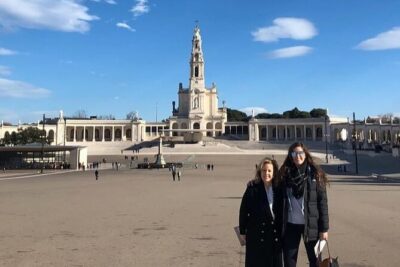
Fatima, Valinhos, Nazaré, Óbidos on Private tour
Read our review →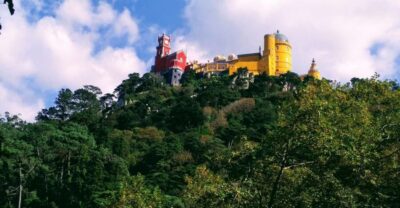
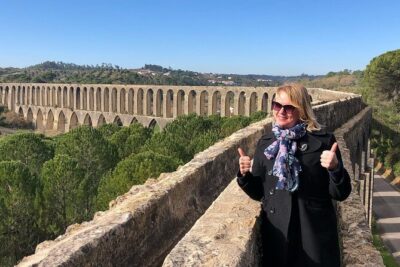
Tour of the Knights Templar’s of Tomar in Private Tour
Read our review →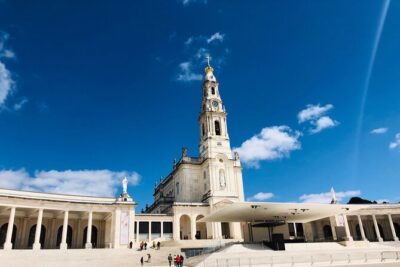
Private Day Tour With Guide to Fatima, Batalha, Nazaré and Obidos
Read our review →
Fatima Private Personalized Half Day Experience from Lisbon
Read our review →Browse the lists this tour appears in