
Reviewed · DOLPHIN WATCHING
Arrábida – Sesimbra: Dolphin Watching
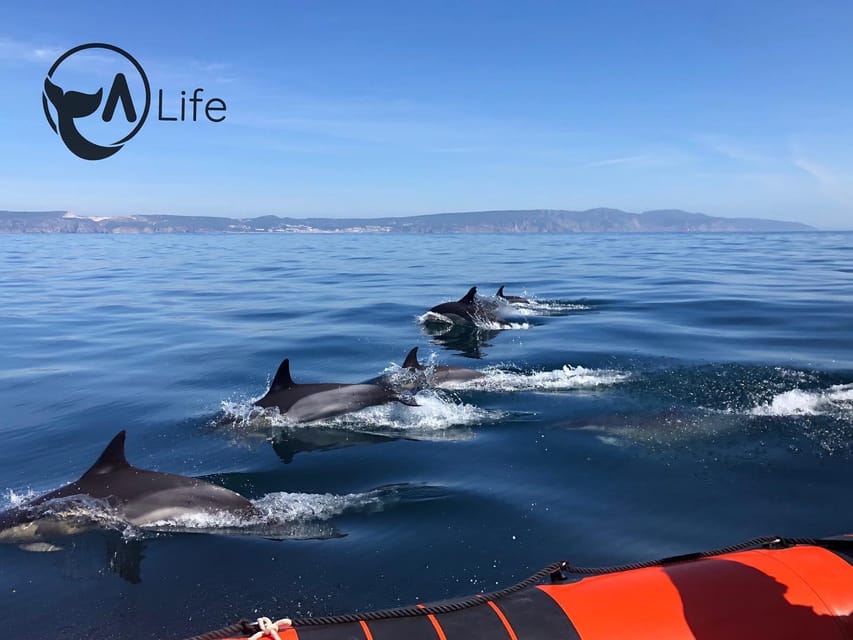
The best part of this two-hour boat trip is that you are looking for dolphins where they actually live, not watching trained animals in a tank. From Sesimbra, you follow the Arrábida coast toward the Sado River Estuary, one of Europe’s few places where bottlenose dolphins live year-round. Wildlife comes first, so sightings are never promised, but the local success rate is about 98 percent.
I like two things here. First, a marine ecologist guides the trip and explains why this coast matters for dolphin protection. Second, you are invited to collect floating plastic during the outing, turning a pleasant boat ride into a small, useful conservation effort. You also get fine views of the Arrábida coast, plus a taste of the local cake called farinha torrada.
The main consideration is simple: dolphins are wild animals, and even a very high success rate is not a guarantee. You may also spend parts of the trip scanning the water rather than watching dolphins up close, so bring patience along with your sunscreen.
In This Review
- Key points at a glance
- Leaving Sesimbra for the Arrábida coast
- Searching for common and bottlenose dolphins
- Why the Sado River Estuary matters
- Collecting plastic from the sea
- Coastal views and a possible cave detour
- What the two-hour format gives you
- The guide’s role makes a difference
- How close might the dolphins come?
- Who should book this experience?
- Should you book the Arrábida dolphin trip?
- FAQ
- Where does the dolphin-watching trip depart from?
- How long does the activity last?
- Which dolphins might I see?
- Are dolphin sightings guaranteed?
- What languages are available?
- What is included in the price?
Key points at a glance
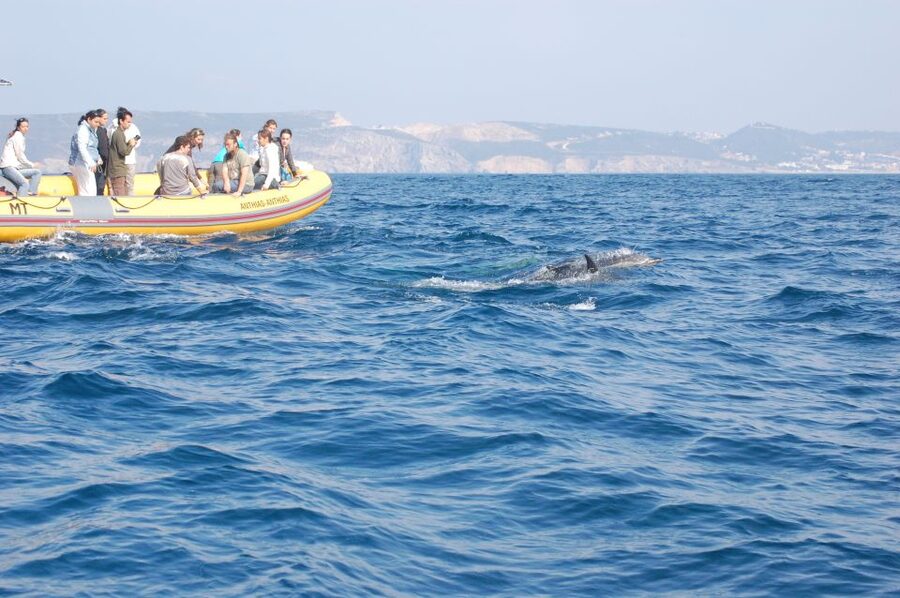
- Wild dolphins near the Sado Estuary: Look for common and bottlenose dolphins in their natural habitat, with a strong local sighting record.
- A working conservation activity: Help collect harmful plastic floating in the sea instead of simply passing it by.
- A marine ecologist on board: Learn about dolphin behavior, the Arrábida coastline, and the need to protect local waters.
- Two hours from Sesimbra: The compact length fits neatly into a day trip from Lisbon District.
- Beautiful coastal views: The route follows Arrábida Natural Park toward the Sado River, with possible views of caves along the coast.
- Practical comforts included: Insurance, a lifejacket, water, and a small serving of farinha torrada are included.
Leaving Sesimbra for the Arrábida coast
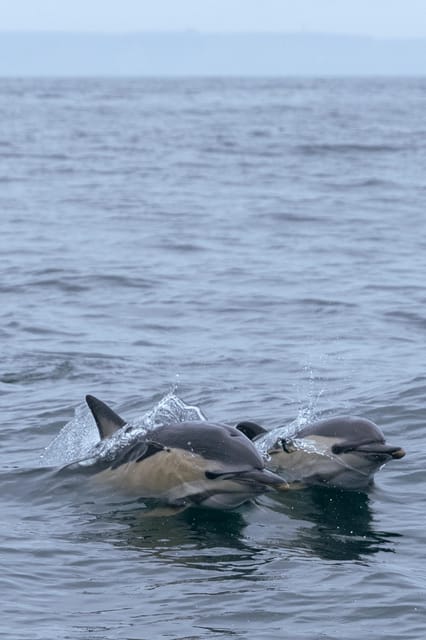
The trip begins in Sesimbra, a coastal town in Portugal’s Lisbon District. You board a boat here and head along the shore of Arrábida Natural Park, keeping watch for movement on the water.
The route is not just a straight ride to one fixed dolphin spot. You explore the coastline toward the Sado River, giving the crew room to search for the animals and showing you more of the protected coastal area along the way. That makes the setting part of the experience, even during a quiet stretch with no fins in sight.
I like the balance between sightseeing and wildlife watching. The coast gives you something to enjoy while the marine ecologist scans for dolphins, and the boat lets you view the cliffs, coves, and shoreline from a position you cannot get on land.
One practical point matters here: conditions at sea can affect how comfortable you feel and how easy it is to spot animals. The supplied information does not specify the boat size or group capacity, so you should not assume a private or small-group outing. Wear comfortable clothing and shoes that suit a boat, and keep your hat and sunscreen handy.
More dolphin trips:
- Sesimbra: Arrábida Dolphin Watching Boat Tour with Biologist
★ 4.9 · 197 reviews - Sesimbra: Dolphin Watching Boat Tour with Biologist Guide
★ 4.9 · 102 reviews - Sesimbra: Dolphin Watching with a marine biologist
★ 4.8 · 7 reviews
Searching for common and bottlenose dolphins
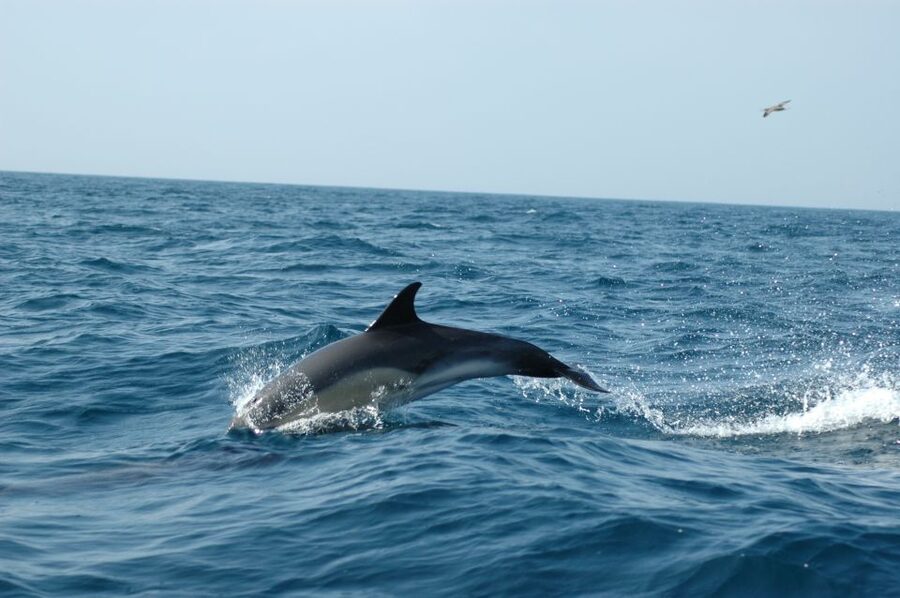
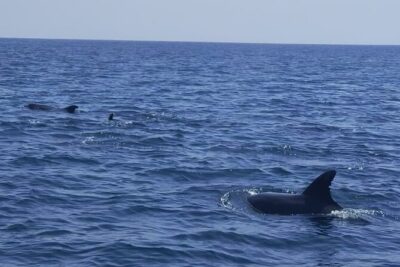
The central activity is the search itself. You look for species that live along this coast, especially common dolphins and bottlenose dolphins. Other marine species may also appear, but the focus remains on dolphins and their home waters.
A marine ecologist is responsible for the activity and provides the live guidance in Portuguese, English, or Spanish. That language choice is useful if your group is mixed, and the guide’s role adds more than simple animal spotting. You learn why this coastline supports dolphins and why the Sado Estuary has such value for conservation.
The animals are not brought to the boat, fed for display, or trained to perform. They decide where to swim and how close to come. Recent outings have included dolphins near the boat and a large group with plenty of observation time, but that should be treated as a possible highlight rather than a promise.
The operator reports a sighting success rate of about 98 percent for the local dolphin species. That is an unusually reassuring figure for a wildlife trip, yet the important phrase remains wild animals in their natural habitat. Weather, animal behavior, and the day’s conditions still matter.
If you want guaranteed close-up photographs, this may frustrate you. If you enjoy watching animals behave on their own terms, the uncertainty is part of what makes the encounter meaningful.
Why the Sado River Estuary matters
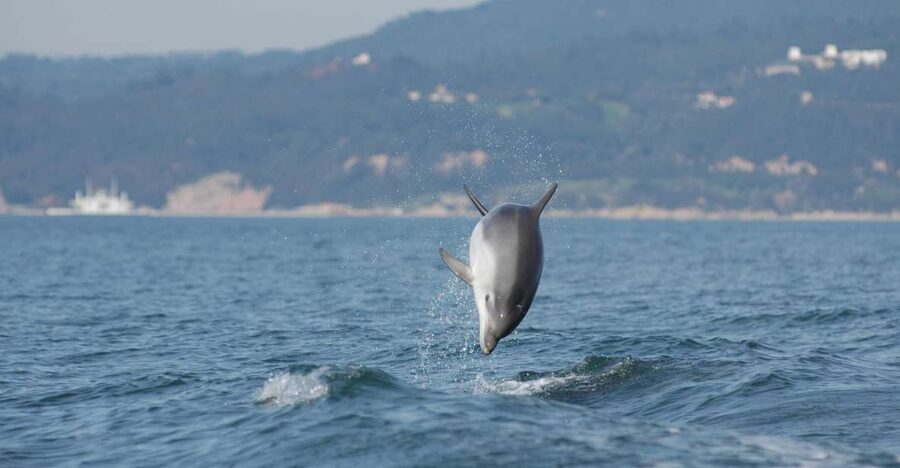
As the boat follows the Arrábida coastline, the trip reaches waters connected with the Sado River Estuary. This area is described as a place of prime importance for dolphin conservation, with bottlenose dolphins living there throughout the year.
That detail gives the outing a stronger sense of place. You are not simply looking for any dolphin in open water. You are visiting a coastal area linked to a resident dolphin population, a rare situation in Europe.
The estuary also helps explain why conservation is practical rather than abstract. The health of the water affects the animals, their food, and the wider marine environment. A guide can connect what you see on the surface with the work needed to keep the habitat safe.
You may not receive a long formal lecture. The activity lasts only two hours, and the exact balance between cruising, searching, watching, and conservation work can vary. Still, the marine ecologist gives the dolphin encounter useful context, which is a major reason I would choose this trip over a basic sightseeing cruise.
Collecting plastic from the sea
The most unusual feature is the chance to help collect floating plastic. When the crew spots harmful rubbish in the water, you can assist in removing it rather than treating it as somebody else’s problem.
This is a modest action, not a full marine cleanup project. You will not transform the entire coastline in two hours. But the activity shows you one direct way human behavior affects the water and the creatures living there.
The rules are clear: littering is not allowed, and you must not touch marine life. Those instructions protect both the animals and the people on board. Follow the crew’s directions when collecting plastic, and never reach toward a dolphin or any other creature.
I appreciate that this part is built into the outing instead of being added as a slogan. You get to see the coast, look for dolphins, and help remove at least some pollution along the way. For families with older children, couples, and anyone who wants a more responsible activity, this gives the boat trip a useful purpose.
Children under two are not permitted. The information does not give a specific age recommendation beyond that, so families should consider the child’s comfort with a two-hour boat ride, wildlife watching, and instructions about staying clear of marine life.
More Arrábida coast days:
- Sesimbra: Arrabida Natural Park & Caves Guided Kayaking Tour
★ 4.9 · 775 reviews - Sesimbra: Ribeiro Cavalo Beach, Caves, & Arrábida Kayak Tour
★ 4.8 · 384 reviews - Sesimbra: Arrábida Beaches & Caves Boat Tour with Snorkeling
★ 4.9 · 191 reviews - Sesimbra: Family Friendly Boat Sea Tour w/ Submarine Vision
★ 4.6 · 175 reviews
Coastal views and a possible cave detour
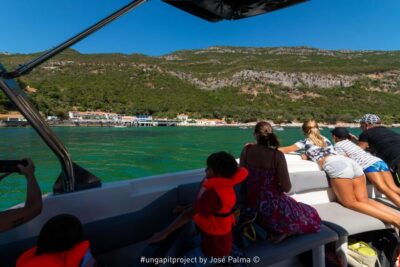
The dolphin search takes place against the Arrábida Natural Park coastline. You can expect attractive views of the shore while the boat moves between search areas, and the coastline itself helps make the trip worthwhile even if the animals remain elusive.
One outing also included a stop at caves along the coast. That feature is not described as a guaranteed part of every departure, so I would treat it as a possible extra rather than a fixed itinerary stop. If the crew has time and conditions allow, a cave visit could add variety to a trip that otherwise centers on scanning open water.
The views are especially useful during slower periods. Dolphin watching often involves quiet observation, and a scenic coast gives you something substantial to enjoy while you wait. You may find the best moments are not all action. A calm stretch of water, a sudden group of dolphins, and the changing coastline can work together to create the day’s character.
Bring a hat and sunscreen even if the weather feels mild at the start. Open water offers little shade, and the reflected light can be strong. Comfortable clothes and shoes are also listed as essentials, which is sensible advice for moving around a boat.
What the two-hour format gives you
At $58 per person, this is not the cheapest way to spend two hours near Lisbon. The value depends on what you want included in the price.
You are paying for a boat trip, an experienced marine ecologist, wildlife searching, conservation instruction, insurance, a lifejacket, water, and a taste of farinha torrada. You also get access to a stretch of the Arrábida coast and the waters around the Sado Estuary, rather than only a short ride close to the harbor.
For someone mainly seeking guaranteed entertainment, the price may feel high if the dolphins stay distant. For someone who values a guided wildlife outing with an environmental purpose, the package is more convincing. The guide’s conservation role and the plastic collection make this more than a standard cruise with a quick animal sighting.
The two-hour length is another part of the value. It is long enough to search a broad section of coast and still fits beside other plans. You could pair it with time in Sesimbra or use it as one part of a day exploring the Arrábida area. The activity does not include hotel pickup, drop-off, meals, or general drinks, so you need to arrange your own transport and food around it.
Water is included, and the regional cake tasting is a pleasant small touch. Farinha torrada is a local specialty, giving the trip a taste of Portugal beyond the scenery. Do not expect a full meal, though. Eat before or after if you need something substantial.
The guide’s role makes a difference
The marine ecologist is central to the experience. This person helps locate the dolphins, explains conservation concerns, and gives meaning to the protected waters you are seeing.
That role can change how you watch. Instead of only waiting for a dorsal fin, you learn to pay attention to the sea and the animals’ behavior. You also get a better sense of why touching marine life is forbidden and why plastic in the water causes harm.
The guides have been praised for being kind, attentive, and competent, and one German-language account specifically describes the crew as friendly and the dolphins as very close to the boat. A French-language account also highlights the team’s warmth. Those details suggest that the human side of the trip is one of its strongest points, though individual guide names are not provided.
The service is available in Portuguese, English, and Spanish. If you need another language, this experience may not be the right fit, since no other guide language is listed.
How close might the dolphins come?
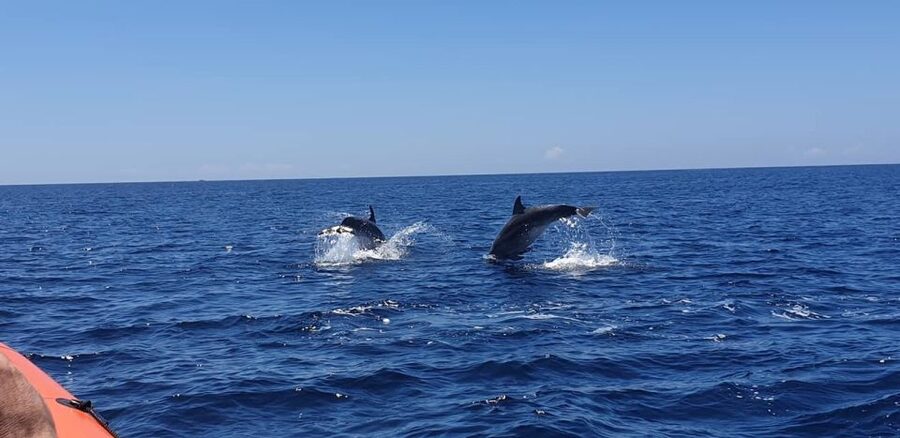
The best-case encounter can be remarkably close. Dolphins have been seen near the boat, and one outing included a large group with substantial time spent watching them.
Still, you should keep your expectations realistic. A wildlife trip is not a performance with a scheduled entrance. The boat may need to search, reposition, or wait. You might see only brief movement, or you might watch a larger group traveling together.
The stated 98 percent success rate is helpful when comparing this outing with other wildlife trips. It indicates that the local partner has a strong record of finding the species in this area. It does not mean every person gets the same distance, duration, or number of animals.
Bring a camera if you want one, but do not let photography take over. The light, motion, and distance may make perfect pictures difficult. Your guide’s instructions matter more than a close shot, especially around wild animals.
Who should book this experience?
I would recommend this trip to you if you like wildlife, coastal scenery, and activities with a clear environmental purpose. It suits couples, solo visitors, families with children over two, and anyone looking for a shorter outing rather than a full-day excursion.
It is also a good choice if you are staying in the Lisbon District and want to see more than the city. The departure from Sesimbra places you close to Arrábida Natural Park and the Sado Estuary, giving you a different side of Portugal’s coast.
You may want to skip it if you dislike boats, have little patience for waiting, or need a guaranteed animal encounter. The high sighting rate is encouraging, but no honest wildlife operator can promise that dolphins will appear on command.
Pack comfortable shoes, a hat, sunscreen, and comfortable clothing. Do not litter, and do not touch marine life. The lifejacket, water, and insurance are included, but hotel transfers, food, and extra beverages are not.
Cancellation is flexible up to 24 hours before the activity for a full refund, and you can reserve now and pay later. That is useful when your Lisbon-area plans depend on weather or changing schedules.
Should you book the Arrábida dolphin trip?
I would book this experience if you want a well-focused two-hour outing that combines wildlife watching, coastal views, and a small hands-on conservation effort. The excellent local sighting record, the year-round dolphins near the Sado Estuary, and the marine ecologist’s guidance give it a stronger basis than a simple boat ride.
The decision comes down to your attitude toward nature. If you accept that wild dolphins set the timetable, $58 is a fair price for the boat, guide, protected coastline, safety equipment, and conservation focus. If you need a guaranteed close encounter or a full meal and hotel transport, budget for those limits.
For most people who can reach Sesimbra and enjoy a little patience, this is a worthwhile way to meet Portugal’s coast on its own terms.
FAQ
Where does the dolphin-watching trip depart from?
The boat departs from Sesimbra in Portugal’s Lisbon District.
How long does the activity last?
The dolphin-watching experience lasts two hours.
Which dolphins might I see?
You may look for common dolphins and bottlenose dolphins, including bottlenose dolphins living in the Sado River Estuary. Other marine species may also be present.
Are dolphin sightings guaranteed?
No. The dolphins are wild animals, so sightings cannot be guaranteed. The local partner reports a success rate of about 98 percent for spotting these species.
What languages are available?
The live guide speaks Portuguese, English, or Spanish.
What is included in the price?
The price includes insurance, a marine ecologist responsible for the activity, a lifejacket, water, and a taste of farinha torrada, a typical regional cake. Hotel pickup and drop-off, food, and beverages are not included.
Fresh finds around Sesimbra
- Sesimbra: Arrábida Natural Park Cabo Espichel Sunset Tour★ 5.0 · 7 reviews
- Sesimbra: Dolphin Watching with a marine biologist★ 4.8 · 7 reviews
- Passeio de Barco em Sesimbra (Publico/Compartilhado)★ 4.4 · 8 reviews
- Arrábida: Boat tour along the heart of Sesimbra★ 5.0 · 8 reviews
- Explore Sesimbra: Sport Fishing All Inclusive half-day trip★ 4.7 · 9 reviews
- Lisbon or Sesimbra: Guided Rock Climbing Tour in Arrábida★ 5.0 · 9 reviews
- Lisbon: Rock Climbing&Abseiling Arrábida Setubal Sesimbra★ 4.7 · 10 reviews
- Lisbon: Sesimbra Underwater Exploration by Seaview Board★ 4.8 · 10 reviews
Dolphin Watching, compared.

Lisbon: Tagus River Cruise to the Ocean & Dolphin Watching
Read our review →
Lisbon: Dolphin Watching with Marine Biologist
Read our review →
Lisbon: Dolphin Watching with Marine Biologist – Small Group
Read our review →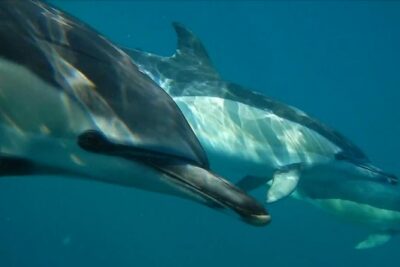
Lisbon: Dolphin Watching with a Marine Biologist – Ocean Safari
Read our review →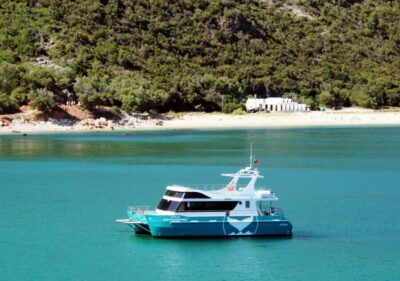
Sesimbra: Arrábida Dolphin and Whale Watching tour with biologist
Read our review →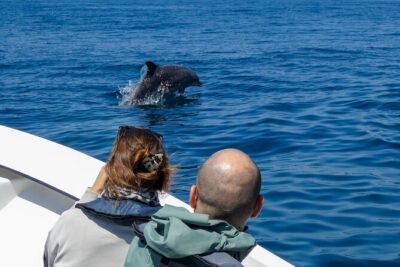
Observation of Dolphins and Whales with Marine Biologist in Arrábida
Read our review →Browse the lists this tour appears in