
Reviewed · TICKETS
Mafra: National Palace of Mafra Entry Ticket
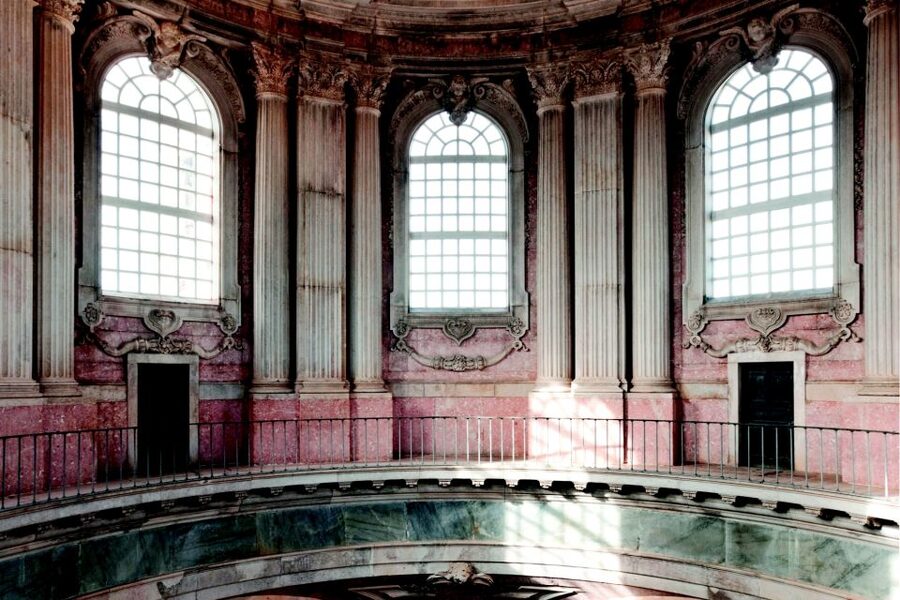
The most striking part of Mafra National Palace is its scale. This 18th-century complex joins a royal residence, convent, basilica, hospital, library, and music spaces in one grand Neoclassical and Baroque building. The six historic organs and the library of more than 36,000 volumes give the visit more depth than a simple palace-room tour.
I like the way the ticket lets you see several sides of Portugal’s royal and religious past in one stop. I also like the Italian sculptures, Portuguese paintings, two carillons, and quiet convent spaces. The main drawback is the price for a self-guided visit, especially since no audio guide or personal guide is included and some key areas may close for restoration.
In This Review
- Key points to know before you go
- Why Mafra National Palace deserves a place on your day trip
- The royal palace: ceremony on a huge scale
- The basilica and its six historic organs
- The library with more than 36,000 volumes
- Italian sculpture and Portuguese painting
- The convent, carillons, and old hospital
- How much time should you allow?
- Is the $17 entry fee good value?
- The simple entry process
- Who will enjoy Mafra most?
- Should you book the Mafra Palace ticket?
- FAQ
- Where is the National Palace of Mafra?
- What does the entry ticket include?
- How long is the ticket valid?
- How long does a visit usually take?
- What are the palace opening hours?
- Is the palace open every day?
- Where do I present the QR code?
- Is a guide or audio guide included?
Key points to know before you go
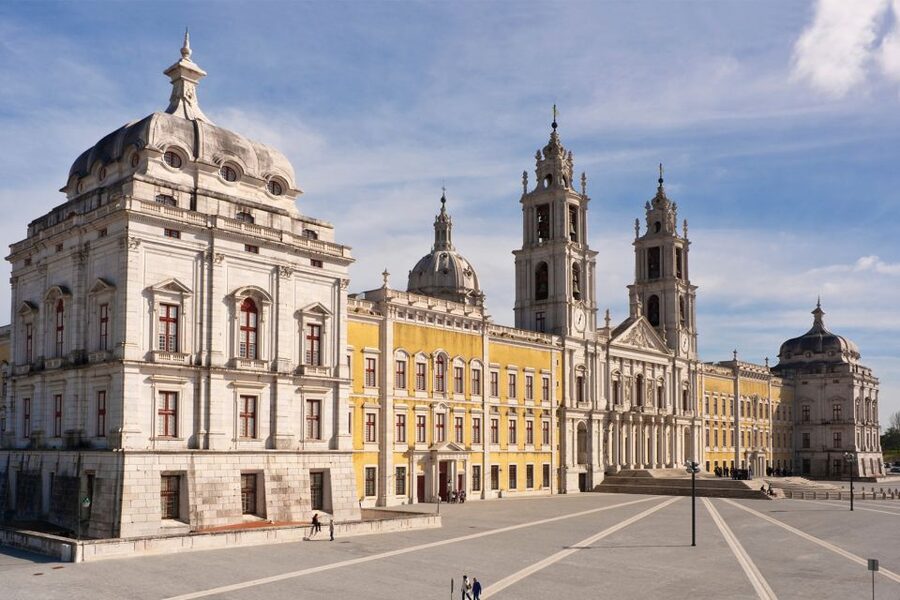
- One ticket covers three major areas: Enter the royal palace, convent, and basilica with one admission.
- The library is the star for many visitors: Its collection includes more than 36,000 book volumes.
- The basilica has six historic organs: This unusual group of instruments is one of Mafra’s most memorable features.
- Plan for one to two hours: That is enough for a useful visit, though you may want longer if you read every display.
- Tuesday is closing day: Opening hours are generally 9:30 AM to 5:30 PM, with last entry at 4:30 PM.
- Check restoration notices before booking: The basilica and library have at times been closed for works, which can greatly reduce the value of the visit.
Why Mafra National Palace deserves a place on your day trip
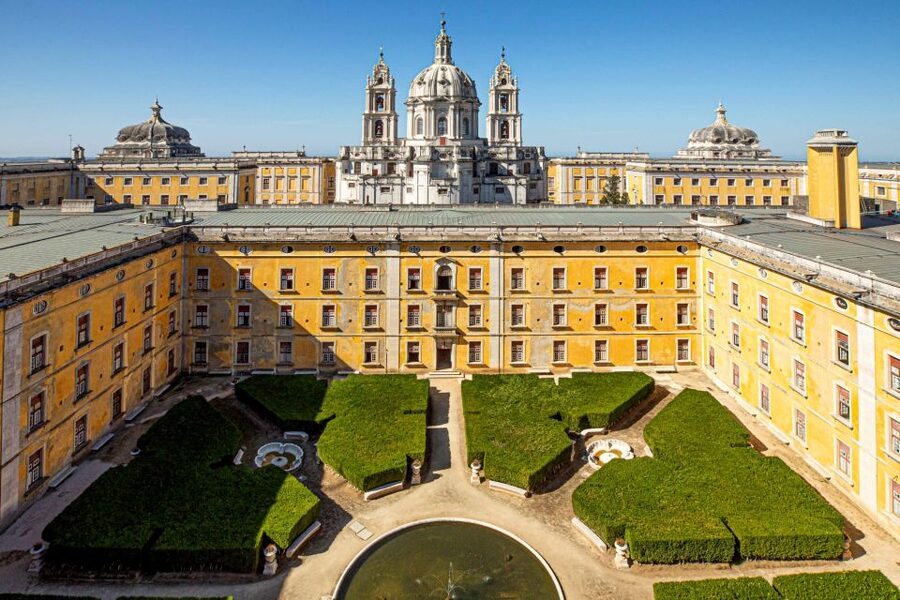
Mafra National Palace is one of Portugal’s grandest royal buildings, and its size is the first thing you notice. The complex was built in the 18th century in a mix of Neoclassical and Baroque styles, giving it both strict symmetry and lavish decorative detail.
This was not simply a palace for royal apartments. It also served as a convent and religious center, with a basilica, hospital, library, and spaces linked to the daily life of the friars. Portuguese kings and members of the royal family came here for religious celebrations and hunting in the nearby game reserve.
That blend is what makes Mafra worthwhile. You are not moving from one decorated bedroom to another. You are seeing how royal power, religion, art, music, and learning were gathered into a single enormous project.
The palace has been listed as a UNESCO World Heritage Site since 2019. That status reflects the importance of the entire complex, not only its grand front facade. Give yourself time to look past the obvious royal decoration and notice how many different purposes the building served.
More Sintra escapes from Sintra:
- Lisbon: Sintra, Pena, Regaleira, Cabo da Roca & Cascais
★ 4.7 · 19,656 reviews - Sintra: Pena Palace and Park Entrance Ticket
★ 4.2 · 17,410 reviews - Lisbon: Pena Palace, Sintra, Cabo da Roca, & Cascais Daytrip
★ 4.7 · 9,981 reviews
The royal palace: ceremony on a huge scale
The royal section gives you the clearest sense of how the complex worked as a place for kings and formal events. Expect rooms connected with royal visits, religious feasts, and court life rather than a small, intimate house museum.
The architecture is the main attraction here. Long corridors and formal interiors help you understand the intended scale of royal power. Italian sculpture and both Italian and Portuguese paintings add visual variety, so you are not looking at the same type of decoration in every room.
I recommend slowing down in the rooms that seem less dramatic. The palace is large enough that the grand views can blur together if you hurry. Notice the contrast between polished royal spaces and the more practical areas connected with convent life.
There is one important limitation. The ticket includes access to the royal palace, but not every room is guaranteed to be open at all times. One area that has been unavailable during works is the old hospital, known as the 18th-century infirmary. If a section is closed, the palace can feel less complete than expected.
The basilica and its six historic organs
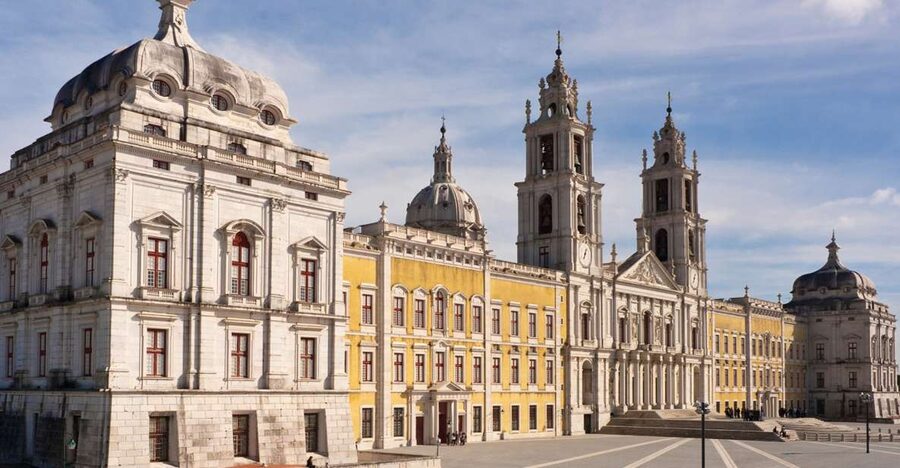
The basilica is one of the strongest reasons to visit Mafra. Its scale matches the rest of the complex, but the six historic organs give it a special musical identity.
Seeing six organs together is unusual. Even if you are not an organ expert, the arrangement helps you understand how important religious music was to ceremonies at Mafra. The instruments are not just decoration. They are part of the building’s story and one of its most distinctive features.
The basilica also helps you read the palace as a working religious site. The royal family came for religious feasts, and this was a place built for major services rather than quiet private worship alone.
Keep in mind that the basilica may be closed during restoration. A closure can make a major difference because the basilica and organs are among the complex’s headline sights. Check the current access information before you pay, particularly if your main reason for coming is the church interior.
The library with more than 36,000 volumes
The library is perhaps the most rewarding stop for anyone who likes historic buildings, books, or old centers of learning. With more than 36,000 volumes, it is described as Portugal’s largest library, and its presence gives the palace a sense of intellectual purpose.
The important point is not only the number of books. The library shows that Mafra was designed as a place for study as well as ceremony. It connects the convent’s religious role with a larger tradition of preserving and using written knowledge.
You may find the library more memorable than some of the royal rooms because it changes the mood of the visit. After the formal palace interiors and grand basilica, the books offer a quieter and more human scale.
Access has not always been available. During recent restoration work, the library was closed, and that closure was not always clear to people before arrival. I would treat the library as an essential feature to confirm, not an automatic guarantee, if you are making a special trip to Mafra.
A handful more Sintra ideas to compare
- Quinta da Regaleira Skip-the-Ticket-Line Entry & Audioguide
★ 4.2 · 3,316 reviews - From Lisbon: Sintra & Cascais Small Group Tour with Tickets
★ 4.8 · 2,224 reviews - Sintra: Quinta da Regaleira Entry Tickets with Host
★ 4.2 · 2,000 reviews - Sintra: Quinta da Regaleira E-Ticket and Audio Guide
★ 4.2 · 1,731 reviews
Italian sculpture and Portuguese painting
The art collection helps fill out the story of the complex. Italian sculptures reflect the international reach of the project, while Portuguese paintings connect the building to the country’s own artistic tradition.
This pairing is useful because it keeps the visit from feeling like a single-style monument. You can look at the palace as architecture, then shift your attention to the objects brought into it and the artistic choices made for royal and religious settings.
The information provided does not specify individual artists or galleries, so I would not arrive expecting a focused, room-by-room art tour. Instead, think of the collection as one part of a much larger experience.
If you enjoy art, allow extra time for the paintings and sculpture. If architecture is your main interest, you can move through these displays more quickly and spend your time on the building, basilica, and library.
The convent, carillons, and old hospital
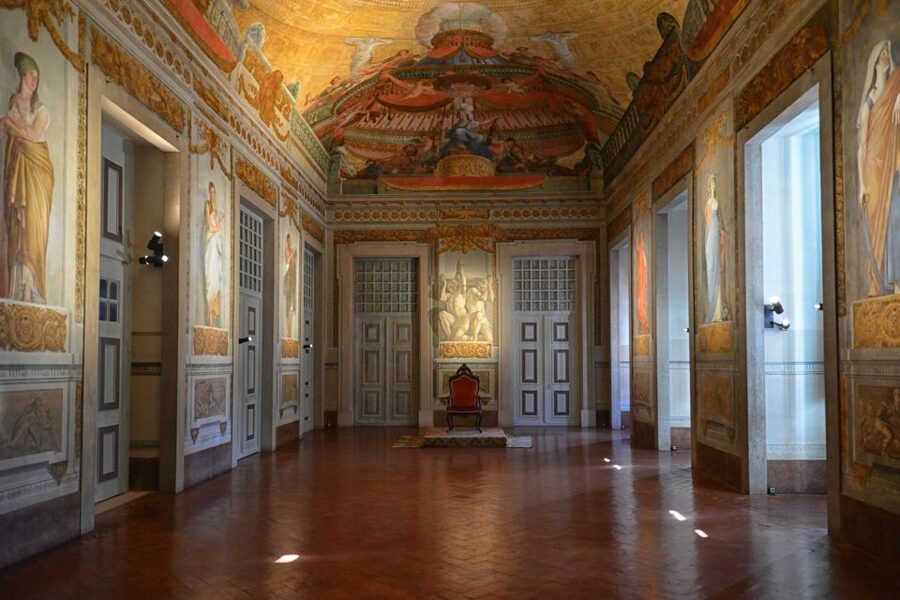
The convent areas add an important counterpoint to the royal rooms. They remind you that Mafra was also home to a religious community, with daily routines and practical spaces behind the public grandeur.
The complex includes two carillons, another unusual musical feature. Together with the six organs, they show how much attention was given to sound and ceremony. The palace was built to be seen, but it was also designed for religious events with music at their center.
The 18th-century hospital is another valuable part of the story. It gives you a chance to think about care, illness, and everyday convent life, rather than only royal display. Unfortunately, access to this area may be restricted during works, so you should not assume the complete hospital route will be open.
This is where Mafra’s value can rise or fall. If the palace, basilica, library, and convent areas are all accessible, the ticket gives you a broad look at the whole institution. If several sections are closed, you may feel you have paid for a partial experience.
How much time should you allow?
The average visit takes one to two hours. That is a realistic minimum for seeing the main spaces without turning the visit into a race.
You can cover the major highlights in that time:
- The royal palace rooms
- The basilica and its six organs
- The library, if open
- The convent areas
- The sculpture and painting collections
- The carillons and any accessible hospital spaces
If you read every label or spend time with the paintings, plan toward the longer end of that range. The palace’s size can also slow you down. This is not a quick photo stop where you see everything from one central hall.
The ticket is valid for one day, so you are not locked into a short timed session. Still, the stated opening hours matter: the palace is generally open from 9:30 AM to 5:30 PM, and last entry is at 4:30 PM. It is closed on Tuesdays, January 1, Easter Sunday, May 1, Ascension Thursday, and December 25.
I would avoid arriving close to 4:30 PM. Last entry may sound generous, but a late arrival leaves little room for the palace’s separate sections.
Is the $17 entry fee good value?
At $17 per person, this is not an expensive admission for a major Portuguese monument, but the value depends heavily on what is open.
When the royal palace, basilica, library, and convent are available, you are paying for a large and varied visit rather than one decorated interior. The six organs, 36,000-volume library, art collections, carillons, and old hospital give the ticket several distinct attractions.
The price feels less comfortable because the ticket includes admission only. There is no audio guide or live guide included, so you must supply your own context or read the information provided on site. One visitor described the entry as too costly without a guide or audio option, and I can understand that view if you prefer a structured museum experience.
For me, the ticket is easier to justify when you care about architecture, religious history, royal Portugal, or historic libraries. It is harder to justify if you expect a polished guided tour or if the library and basilica are closed.
Before booking, check whether restoration affects the spaces you most want to see. A reduced route may still be worthwhile, but the price should match the visit you can actually make.
The simple entry process
To enter, present your QR code at the entrance to the left of the basilica’s main entrance. The ticket is straightforward, and there is no complicated meeting arrangement described for this experience.
This is a self-guided admission, not a tour with a named guide. That gives you freedom to set your own pace, but it also means you will not have someone explaining the royal ceremonies, religious routines, or art collection as you move through the building.
I suggest reading a little about Mafra before arrival or using the visit to focus on the parts that interest you most. Without a guide, a clear plan helps. Start with the areas that may be most important to you, such as the basilica or library, in case access or closing times affect your route.
The activity is non-refundable, so confirm your date and check for closures before purchasing. That detail matters more here than it would for a casual attraction, since restoration has affected major rooms.
Who will enjoy Mafra most?
I would recommend this visit to you if you like large historic buildings, royal architecture, religious art, old libraries, or unusual musical instruments. It is also a good choice if you want to see an important Portuguese monument without committing to a full guided excursion.
Families with older children may find the mix of palace rooms, organs, books, and convent spaces more engaging than a museum made up only of paintings. Architecture students and readers will have plenty to examine, even without a guide.
You may want to skip it, or at least wait for a better access date, if your interest is limited to the basilica or library and those areas are closed. I would also think twice if you need detailed interpretation in English or another language, since no guide or audio guide is included in the ticket information.
The experience is best for independent sightseers. You get room to look, pause, and choose your focus, but you also take responsibility for making sense of the complex.
Should you book the Mafra Palace ticket?
Book it if the palace is open in full and you want a broad look at Portugal’s royal, religious, artistic, and musical past. The combination of a royal residence, convent, basilica, six organs, two carillons, major library, and art collections is unusual, and one to two hours gives you a solid visit.
I would wait or check again if the library and basilica are closed. Those are two of the most distinctive parts of Mafra, and their absence can leave the visit feeling thinner than the headline description suggests.
At $17, this is a fair admission for the complete complex, but not an automatic bargain for a reduced route without an audio guide. Confirm the opening day, arrive well before the 4:30 PM last entry, and use the QR code entrance to the left of the basilica’s main door.
FAQ
Where is the National Palace of Mafra?
The National Palace of Mafra is in Portugal’s Lisbon District.
What does the entry ticket include?
The ticket includes entry to the royal palace, convent, and basilica.
How long is the ticket valid?
The ticket is valid for one day.
How long does a visit usually take?
The average visit takes one to two hours.
What are the palace opening hours?
The palace is generally open from 9:30 AM to 5:30 PM. Last entry is at 4:30 PM.
Is the palace open every day?
No. It is closed on Tuesdays, January 1, Easter Sunday, May 1, Ascension Thursday, and December 25.
Where do I present the QR code?
Present your QR code at the entrance to the left of the basilica’s main entrance.
Is a guide or audio guide included?
No. The ticket includes entry only. A guide or audio guide is not included in the stated activity details.
Fresh finds around Sintra
- Sintra/Lisbon: Sintra & Quinta da Regaleira Tour with Ticket★ 4.4 · 51 reviews
- Private Tour Romantic Sintra, Cabo da Roca & Cascais★ 5.0 · 51 reviews
- Sintra and Cascais Full-Day Private Tour from Lisbon★ 4.5 · 53 reviews
- Wonders of Sintra & Cascais Private Tour★ 4.9 · 53 reviews
- E-bike from Sintra Mountains to Cascais Sea with pickup in Lisbon★ 5.0 · 54 reviews
- From Lisbon: Sintra, Cascais, Cabo da Roca Private Car Tour★ 5.0 · 54 reviews
- Sintra: Epic Full-Day 4×4 Off-Road Adrenaline Tour in Sintra★ 4.8 · 54 reviews
- Lisboa: Sintra, Pena Palace, Cascais and Cabo da Roca★ 4.4 · 55 reviews
Tickets, compared.

Sintra: Pena Palace and Park Entrance Ticket
Read our review →

Quinta da Regaleira Skip-the-Ticket-Line Entry & Audioguide
Read our review →
From Lisbon: Sintra & Cascais Small Group Tour with Tickets
Read our review →
Lisbon: São Jorge Castle E-Ticket and Audio Guide
Read our review →
Lisbon: 72/96-Hour Hop-On Hop-Off Bus, Tram & Boat Ticket
Read our review →
Sintra: Quinta da Regaleira Entry Tickets with Host
Read our review →Browse the lists this tour appears in